
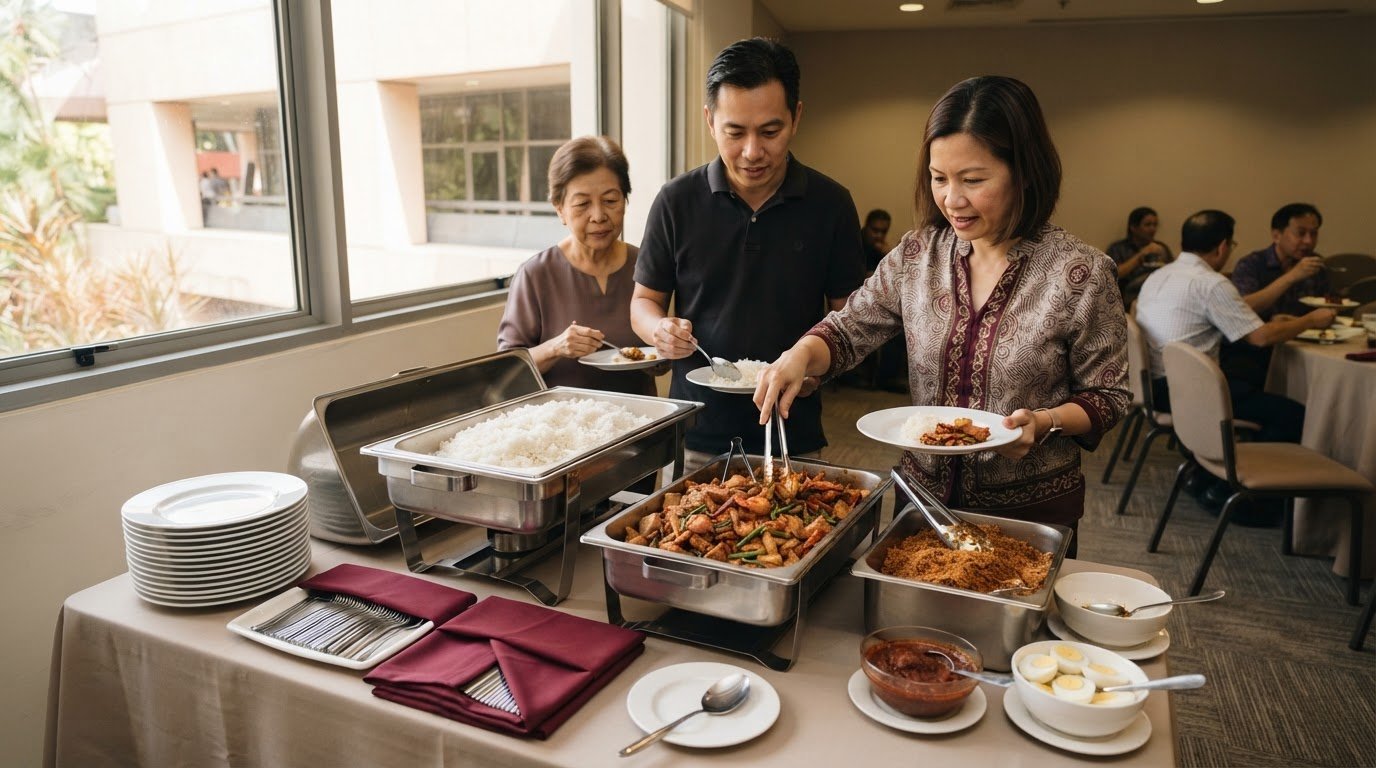

The larger buffet isn’t always the better fit. What to consider when ordering a buffet starts with your guest count, the length and timing of the event, dietary needs, venue space and what’s included in the package. For smaller gatherings, a mini buffet can be more practical; in Singapore, mini buffets can serve groups of 10-20, while standard buffet orders commonly have a minimum headcount of more than 30.
It’s natural to focus first on the menu, but portions and practical details matter just as much. A successful event needs enough food for the guests attending, suitable choices for different dietary needs, and essentials such as plates, cutlery and napkins ready to use.
This guide explains how to estimate portions, plan for dietary requirements, choose between mini and standard buffet formats, and match the package to your event and venue. You’ll also learn which setup details to consider so the meal fits smoothly into the occasion.
Key Takeaways
- Set a clear RSVP deadline and consider the event’s timing, duration and guest mix when estimating food quantities.
- Plan for vegetarian, halal and allergy-related needs so guests can choose dishes that suit them.
- Match the menu and service style to the occasion, guest preferences and available venue space.
- Choose a mini buffet for a smaller gathering or a standard buffet for a larger group, and make sure the format fits the space.
- Review the setup details, including seating, drinks, plates, cutlery and napkins, so guests have what they need.
1. Accommodating dietary needs and allergies
Get a clear picture of guests’ dietary requirements before selecting buffet dishes. Ask invitees to share relevant needs when they RSVP, and set a response deadline alongside the RSVP deadline. Record allergies separately from preferences: a peanut allergy needs different attention from a preference for vegetarian food. This distinction helps shape the menu and gives the catering team useful information before preparation.
Build the menu around the needs guests report. For vegetarian guests, include substantial vegetarian dishes rather than relying only on side dishes. For Muslim guests, choose halal-certified catering in Singapore. If a guest reports an allergy, note the specific allergen and affected dish or ingredient, such as peanuts in a sauce. Clear details are more useful than a general note that someone has an allergy.
Make dietary choices easy to identify at the buffet. Label dishes with key ingredients or dietary categories, such as “vegetarian” or “contains peanuts.” Keep serving utensils with their dishes so guests don’t use the same utensil for vegetarian and meat dishes. If a guest reports a serious allergy, share the details directly with the catering team and discuss how the relevant dish will be handled.
Consider balance as well as restrictions. Include at least one vegetable dish, with lighter options such as salad or tofu. For guests watching their salt intake, the Ministry of Health Singapore notes that menus can include locally grown vegetables and dishes prepared with less salt or lower-sodium alternatives. Familiar dishes alongside a few lighter choices can suit a wider range of preferences.
Plan the venue too. Before ordering, measure the function room, living room or pantry area, then confirm where the buffet table and guest queue will fit. Tell the catering team when they can access the venue, and align the food-ready time with the event programme. Confirm the space, power and equipment needs for the serving setup with the venue.
Share one concise dietary list with the catering team, including guest counts for each requirement when available. For example, note that two guests are vegetarian and one has a peanut allergy instead of sending separate, incomplete messages. Update the list if an RSVP changes. This helps keep menu decisions, dish labels and buffet placement consistent.
Make the menu easy to understand without singling anyone out. Place labels beside dishes, specify allergens clearly, and position suitable options where guests can reach them easily. A well-organised buffet helps guests with dietary needs identify their choices while keeping the meal welcoming for everyone.
2. Estimating guest numbers and food portions
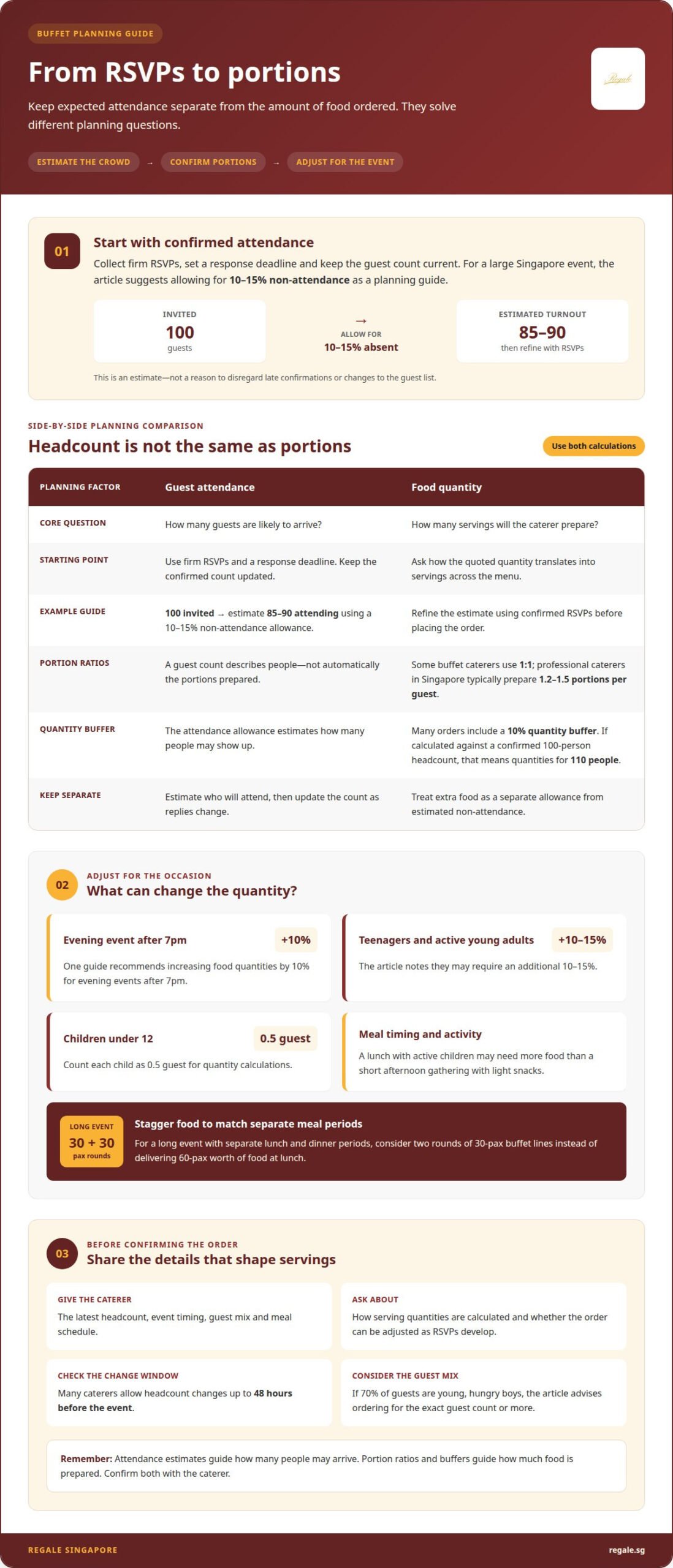
Start with attendance, not invitations. Collect firm RSVPs, set a response deadline, and keep a current count of confirmed guests. For a large Singapore event, allow for 10-15% of guests not attending when estimating turnout. That estimate is a planning guide, not a reason to ignore late confirmations or changes to the guest list.
For example, if 100 guests are invited to a large event, a 10-15% non-attendance allowance gives an estimated turnout of 85-90. Use confirmed RSVPs to refine the estimate before placing the order. If attendance remains uncertain, discuss the likely turnout with the caterer and consider how the meal period, menu and guest mix affect quantities.
Portion ratios differ between caterers, so a guest count does not always equal the number of portions prepared. Some buffet caterers use a 1:1 ratio, while professional caterers in Singapore typically prepare 1.2-1.5 portions per guest. Ask how the quoted quantity translates into servings across the menu, rather than assuming each guest receives a full portion of every dish.
Many catering orders include a 10% quantity buffer. Treat that as a separate allowance from the attendance estimate: one estimates how many people will arrive, and the other adds food to the order. A 100-person order with a 10% buffer would provide quantities for 110 people, if the caterer calculates its buffer against the confirmed headcount.
Then adjust for the event itself. A lunch with active children may need more food than a short afternoon gathering with light snacks. For evening events after 7pm, one guide recommends increasing food quantities by 10%. Teenagers and active young adults may also require an additional 10-15%, while children under 12 can be counted as 0.5 guest for quantity calculations.
Event duration affects serving plans as well as total portions. For a long event with separate lunch and dinner periods, consider two rounds of 30-pax buffet lines instead of delivering 60-pax worth of food at lunch. Staggered service better matches food delivery to when guests eat, rather than relying on one early setup for the entire programme.
Before confirming, give the caterer the latest headcount, event timing, guest mix and meal schedule. Ask how serving quantities are calculated and whether you can adjust the order as RSVPs develop. These details help align the order with expected attendance, portion sizes and the event schedule.
Even with a working estimate, consult the caterer about how much food to order in case all guests attend. When 70% of guests are young, hungry boys, order for the exact guest count or more. For a Singapore buffet, request firm RSVPs and set a response deadline. Before booking, ask caterers about headcount adjustments; many allow changes up to 48 hours before an event.
3. Matching buffet packages and service styles to the event
Choose dishes to suit the occasion, guest preferences and venue layout. A Western buffet can suit corporate events and festive gatherings, with roast meats, creamy pastas and comforting sides. A vegetarian buffet may fit a wellness event, eco-conscious celebration or garden party. For a distinctive menu, balance familiar comfort food with one or two special dishes.
For events in Singapore, match the menu to the guests and the time they’ll eat. A midday business gathering may call for familiar, easy-to-serve dishes. A family celebration may benefit from a broader range of flavours. A key part of what to consider when ordering buffet catering is how well the menu suits the guests and occasion. Make sure the serving layout fits the room without obstructing seating.
Compare packages by menu variety, service style and what you need to arrange. Review the dishes, serving quantities, setup needs and included service elements. More choices may suit guests with varied preferences, while a simpler selection can keep the meal focused. To judge value, consider whether the package meets the event’s needs, not just how many dishes it includes.
Personalisation can help the menu suit the occasion. Some Singapore caterers offer thematic presentation, dish swaps or personalised dish names, which may involve additional charges. Customisation can also account for dietary needs and the venue’s space and layout. Some catering services offer live stations or service staff, creating a different experience from self-service. Consider these options when choosing a buffet style for a particular atmosphere.
Cancellation, amendment and refund terms depend on the order’s stated policy. Before confirming, read the terms for cancellation deadlines, permitted changes, amendment charges and refund conditions. Pay particular attention to changes to guest numbers, menu selections or event timing. Keep the order details and any agreed changes together for easy reference.
Booking lead time depends on the order type and event size. In Singapore, catering companies commonly need 2-5 working days to process a buffet order, while restaurants can typically take orders with 1-2 days’ notice. For events with more than 150 guests, order further in advance to allow for the scale and setup. These timing factors also matter in what to consider when ordering buffet catering.
Before choosing a service style, align the package with the event programme. Confirm venue access timing and match the food-ready time to the schedule. A suitable menu, practical setup and clear order terms help the buffet fit smoothly into the occasion.
4. Providing seating, drinks, cutlery, and napkins
A buffet order covers food, but guests also need a practical place to eat. Map the venue’s seating, buffet table and drink station before arranging the setup. For a home gathering, identify which dining chairs and tables are already available. In a function room, position the serving area so guests can reach food without blocking access to seats or drinks. These details are part of what to consider when ordering buffet catering for an event.
Seating may need to be arranged separately from the food package. Catering tables and chairs generally involve a separate rental fee for transport and setup. An additional delivery fee may apply if equipment comes through a specialised rental company. Tables and chairs with linens can cost more because laundering adds expense. Include these items in your event plan instead of assuming they come with the buffet.
Estimate seating based on the event format and guest flow. A formal meal needs a place for each guest, while a shorter gathering may use a mix of seats and standing space. Check the room’s usable area before arranging furniture. Keep a clear route between the entrance, buffet table and seating, and avoid placing chairs where they narrow the food queue.
Set up drinks in a separate, accessible spot. Place water and other drinks away from the main food queue so guests collecting beverages don’t slow down diners choosing dishes. At a small home event, a side table can serve this purpose. In a function room, position drinks where guests can reach them without crossing the buffet line. This is another point to consider when ordering buffet service.
Confirm the package’s serving equipment and tableware before finalising the setup. Singapore buffet setups commonly include buffet tables with skirting, chafing dishes and serving utensils. Plates, cutlery and napkins may need separate arrangements. Add each item to a checklist, then note whether the caterer provides it or you need to supply it.
Think through what each guest needs at the serving area. Place plates before the food, with cutlery and napkins within easy reach. Keep serving utensils beside their corresponding dishes. For example, a spoon beside a rice dish lets guests serve themselves without searching elsewhere while holding a plate. Small placement decisions make the serving area easier to use.
Finish with a setup check before guests arrive. Confirm that rented tables and chairs have a planned location, the drinks station is separate, and tableware is ready. Match the arrangement to the venue’s available space and event schedule. These details help you plan a buffet package and smooth meal service.
5. Choosing between mini and standard buffets
Choose the format by guest count, venue space and how the meal will be served. In Singapore, standard buffet orders commonly require more than 30 guests, while mini buffets can serve groups of 10-20. A small home gathering may suit a mini buffet delivered in disposable containers without setup. A larger celebration may need a standard buffet’s serving tables and equipment.
For 10-20 guests, a mini buffet guide recommends 4-5 dishes and 3-4 kg of cooked rice. That format can suit a family lunch where guests share food at a dining table, rather than queue at a long buffet line. Consider whether the available surface can hold the dishes and whether guests can serve themselves comfortably.
For 20-30 guests, the same guide suggests 5-6 dishes and 5-6 kg of cooked rice. A mini buffet for 30-50 guests may include 6-8 dishes and 7-10 kg of cooked rice. These examples show how format and quantity shift with group size; the best fit still depends on the event schedule, menu and serving arrangement.
Standard buffet recommendations also scale with attendance. A full buffet for 50-80 guests may include 8-10 dishes, with one serving line sufficient. For 80-150 guests, the guide suggests 10-12 dishes and considering two serving lines. At larger gatherings, additional lines can help prevent queues and keep service moving.
Food safety matters in either format. According to the Singapore Food Agency, food should not be kept at room temperature for more than 4 hours from cooking until consumption. In Singapore’s hot, humid weather, keep hot dishes hot and avoid leaving cold dishes out for too many hours without proper cooling. A mini buffet’s compact containers do not remove the need for sensible serving and storage.
For the minimum order size, standard buffet orders commonly require more than 30 guests, while mini buffets can serve 10-20. Choose a mini format for a smaller headcount or limited home space; choose standard service for a larger group needing a dedicated buffet setup. For a smaller Singapore gathering, explore halal mini buffet options as one suitable format.
The buffet format also shapes the feel of the gathering. Consider the atmosphere you want, guests’ preferences, the time of day and the venue layout when choosing between a compact shared meal and a more formal arrangement. A relaxed occasion may call for dishes that are easy to reach and share, while limited serving space may make a simpler setup more practical. Check guests’ dietary habits before choosing dishes so the menu suits the people attending. Considering these details alongside the headcount can help you avoid a format that feels awkward for the occasion.
Confirm the menu, serving arrangements and any special requirements with the caterer before placing the order. Clarify which adjustments are possible, when to request them and whether they involve an extra charge. This is especially useful when attendance, the venue layout or guests’ preferences are still being finalised. A clear plan helps the caterer prepare the right service and lets you choose an option that fits the event’s atmosphere and practical needs.
Regale Singapore
Regale Singapore brings Western favourites, Indonesian classics and local delights together on its all-day menu. Regale at Science Centre is a full-service restaurant serving all-day Western, local and Indonesian cuisine. For a café experience centred on Malay classics, Pit Stop at Pusara Aman serves the renowned Nasi Sambal Goreng and award-winning Nasi Ambeng. These distinct concepts offer different ways to shape a gathering’s food experience.
As you finalise your event plans, consider how the menu complements your guests’ preferences and the atmosphere you want to create. A clear idea of the occasion, expected attendance and preferred cuisine gives you a useful starting point.
Contact Regale Singapore to discuss your event menu.
Turn your event plan into a clear brief
Your decisions about what to consider when ordering a buffet can shape a useful next step: a concise event brief. Bring together the occasion, preferred menu direction, guest needs and venue arrangements. This gives the conversation a clear starting point and connects the food experience with the atmosphere you want to create.
Think about the impression you want guests to take away. A meal feels welcoming and distinctive when its menu suits the gathering rather than competing with it. Regale Singapore serves Indonesian cuisine, including Nasi Sambal Goreng and Nasi Ambeng, for hosts considering traditional flavours.
Share your event plans and discuss a suitable menu with Contact Regale Singapore. With a clear brief, you can move from planning details to welcoming guests around a meal chosen for the occasion.
Frequently Asked Questions
How many food portions should I order per guest for a buffet?
There isn’t one portion count that fits every buffet. Clarify how the menu’s total quantity is divided among dishes. For example, ask whether a listed portion refers to each main dish or the complete spread, including rice and sides. Then consider whether guests will eat one meal or return for another serving. This makes the catering quantity easier to interpret than a headline portion figure alone.
What dietary, halal, vegetarian, and allergy requirements should I check when ordering a buffet?
Record each guest’s requirement precisely, distinguishing a dietary preference from an allergy. For example, “vegetarian” describes a menu choice, while an allergy identifies an ingredient that may cause a reaction. Note the specific allergen, such as peanuts, rather than writing only “allergy.” For Muslim guests, choose halal catering. Keep the information current if an RSVP changes, and make dish names and ingredient details clear at serving time.
