
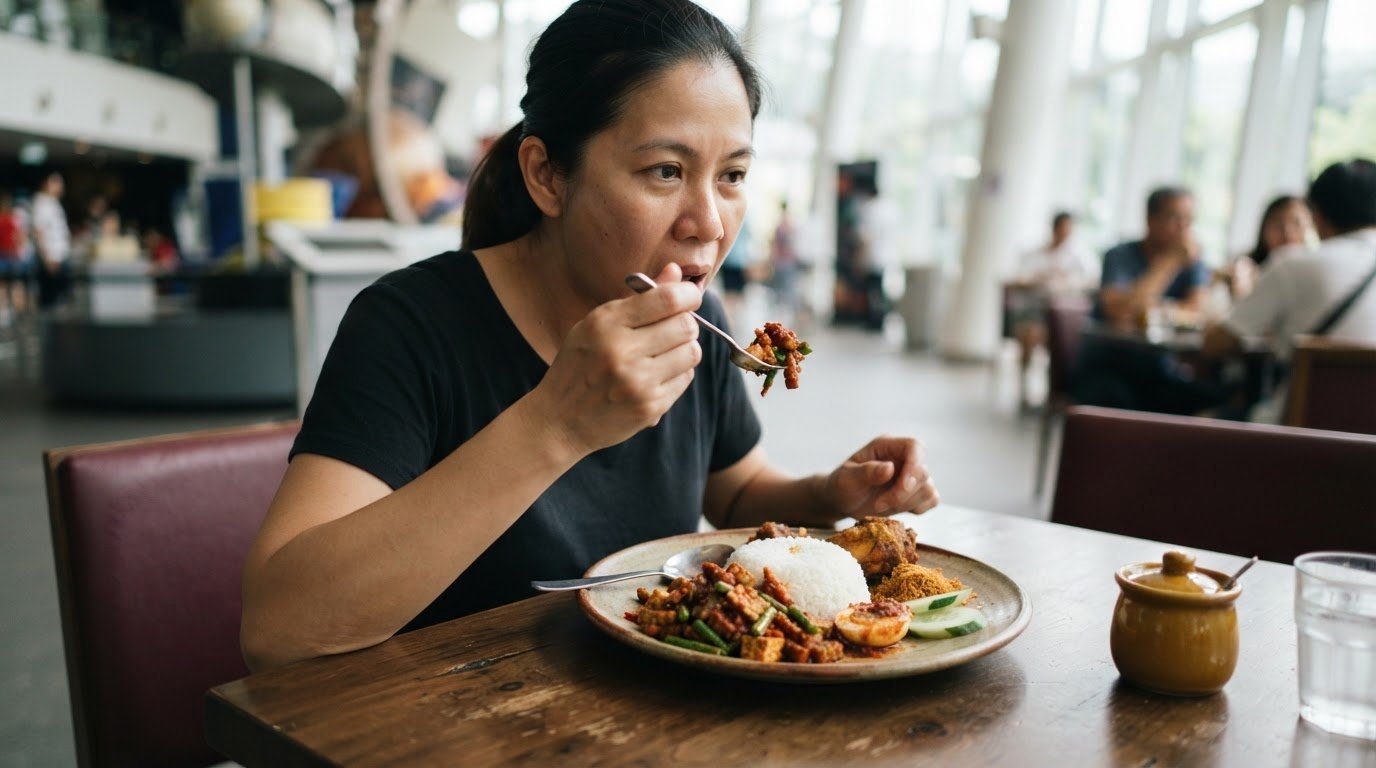

Finding halal dining spots in Singapore is generally straightforward: the island has over 1,200 MUIS-certified halal establishments. For confidence when choosing a meal, look beyond a “no pork, no lard” sign, which does not by itself mean an eatery’s preparation processes are certified.
That distinction matters when you’re choosing where to enjoy local favourites or hawker meals. Understanding halal certification can help you find a place that suits your dining needs and make an informed choice about how its food is prepared.
This guide explains how to identify halal-certified food, find local and hawker options, and choose among different cuisines. Singapore’s dining options range from casual meals to Indonesian and Western dishes, giving you a practical starting point for planning your next meal.
Key Takeaways
- Learn why a “no pork, no lard” sign is not the same as halal certification, and what certification covers.
- Find out how to distinguish Muslim-owned eateries from MUIS-certified establishments when choosing where to dine.
- Explore hawker locations in Singapore known for halal food, including Geylang Serai Market, Golden Mile Food Centre, Lau Pa Sat and Tekka Centre.
- Get ideas for choosing between local dishes, nasi padang and nasi ambeng for different dining occasions.
- Use the regional guide to narrow down dining options and consider what matters when planning a group meal or celebration.
1. The Reality of Finding Halal Food in Singapore: Easy or Difficult?
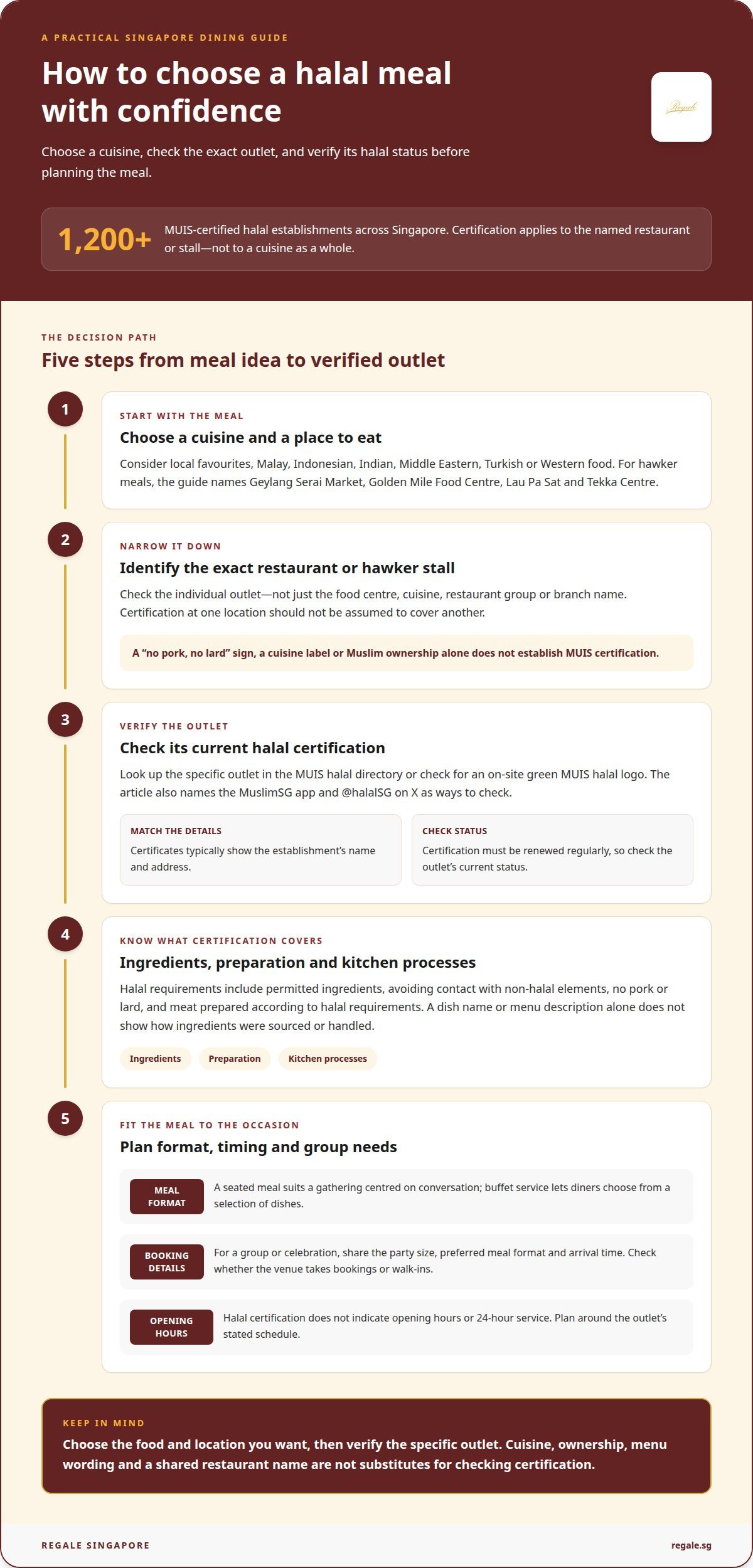
Singapore has over 1,200 MUIS-certified halal establishments, giving diners options across the island. Certification applies to the named restaurant or stall, not simply its cuisine. To verify an outlet, look it up in the MUIS halal directory or check for an on-site green MUIS halal logo. Certificates typically show the establishment’s name and address, and certification must be renewed regularly.
A “no pork, no lard” sign alone does not establish that an outlet’s preparation processes are certified. Halal certification covers ingredients, preparation and kitchen processes. Muslim-owned eateries may serve halal food, but Muslim ownership does not necessarily mean MUIS certification. If certification matters to you, check the outlet’s current status rather than relying on a menu description or ownership label.
For a group meal or celebration, start with the occasion and the group’s needs. A seated meal suits a gathering centred on conversation, while buffet service lets diners choose from a selection of dishes. When arranging a booking, share the party size, preferred meal format and arrival time. For a family celebration, consider whether the menu will suit different tastes and whether it includes options such as smoked items.
A chef’s experience at Michelin-starred restaurants may shape their cooking, but a résumé does not establish an outlet’s halal status. The same applies to Middle Eastern and Mediterranean restaurants: cuisine names describe a food tradition, not the ingredients or kitchen processes at a particular venue. Check certification for the specific outlet rather than inferring it from the chef, menu or restaurant style.
Restaurant groups may operate several locations, but certification at one branch should not be assumed to cover the others. Treat each address as a separate dining destination and check its status individually. This matters when choosing between restaurants that share a name but operate in different neighbourhoods. Using the specific address also helps when coordinating a group meet-up or arranging transport.
Halal certification doesn’t determine opening hours. For late dining, choose a venue based on its stated schedule; not every halal restaurant stays open late or operates around the clock. Certification itself is not a guide to 24-hour service, so plan the meal around the outlet’s hours rather than its halal status.
Reservations are not always required at halal restaurants. For a celebration or larger group, contact the venue to arrange a table and share the party size, date and arrival time. For a smaller visit, check whether the restaurant accepts bookings or serves walk-in diners. These details help you choose a venue that suits the occasion.
2. Where to find halal local dishes and hawker food
For halal local and hawker meals, consider Geylang Serai Market, Golden Mile Food Centre, Lau Pa Sat or Tekka Centre, where halal hawker food is available. For Malay, Indonesian, Indian, Middle Eastern or Western dishes, find a restaurant serving the cuisine you want and assess halal status at the individual outlet. A cuisine label describes its food tradition, not its certification.
Singapore’s food heritage reflects Malay, Indonesian, Indian and other culinary traditions, making a meal a chance to explore distinct flavours. A hawker visit might centre on local favourites, while a restaurant meal could feature biryani, dim sum or comfort food. Dish names alone do not show whether ingredients and preparation meet halal requirements. Certification applies to the establishment’s food and kitchen processes.
MUIS halal certification covers ingredients, preparation and kitchen processes. Halal food must use ingredients permitted under Islamic law, avoid contact with non-halal elements, contain no pork or lard, and use meat prepared according to halal requirements. Chicken, for example, must meet those requirements. A menu description alone does not explain how the meat was sourced or handled.
At a hawker centre, check the individual stall rather than assuming every vendor has the same status. Halal food is available at the four named centres, but certification applies to each establishment separately. You can check certification using the MuslimSG app, @halalSG on X, or an on-site green MUIS halal logo. Match the listing or logo to the stall you plan to visit.
Middle Eastern and Turkish restaurants offer regional flavours, while biryani and other Indian dishes provide another option. Halal dim sum may suit diners looking for familiar shared plates. In each case, use the same outlet-level approach: identify the restaurant, check its halal certification, then choose dishes that suit the group.
Location can shape a meal plan as much as cuisine. If your day includes Marina Bay, look for a halal restaurant or hawker option along your route rather than choosing by food style alone. For a local meal near a market or food centre, factor in the destination and the stall’s operating schedule. This makes it easier to plan dining alongside sightseeing and transport without assuming an entire venue is halal.
Across Singapore, the practical sequence is straightforward: choose a cuisine, shortlist a location, then check the specific restaurant or hawker stall. This helps you explore Malay, Indonesian, Indian, Middle Eastern, Turkish and Western food while keeping ingredients and preparation central to your decision.
A “no pork, no lard” sign does not guarantee that an outlet meets halal requirements, because its preparation processes may not be certified.
3. Halal nasi padang and nasi ambeng
Nasi padang and nasi ambeng both bring Indonesian cuisine to the table, but offer different dining experiences. Nasi padang is commonly served as rice with a selection of prepared dishes, letting diners choose their preferred combination. Nasi ambeng is arranged as a shared platter, making it well suited to a meal enjoyed together. For either dish, choose a halal-certified restaurant if certification matters to you.
With nasi padang, each diner can shape a plate around their preferred flavours. A selection might include savoury meat, vegetables, sambal and rice, with dishes varying by restaurant. Chicken, beef or seafood may appear on the menu, but ingredients and preparation depend on the establishment. Check the restaurant’s halal status rather than relying on the Indonesian name or familiar presentation.
Nasi ambeng offers a communal format. Rice and accompanying dishes are arranged together on a platter for sharing, so diners can sample several flavours in one meal. The combination may include savoury proteins and vegetables, with sides selected by the kitchen. For a group, it creates a shared centrepiece; individual nasi padang plates let guests choose separately.
Both dishes reflect a cuisine shaped by varied ingredients, spice blends and cooking methods. Nasi padang often appeals to diners who enjoy choosing from a broad selection, while nasi ambeng suits those who prefer a shared spread. A buffet also offers variety, but it is a different service format from a nasi ambeng platter. Clarifying the format helps you match the meal to the occasion.
Halal status depends on the food and its preparation, not on whether a dish sounds authentic or Indonesian. Ingredients must meet halal requirements, and kitchen processes matter too. The same recipe can be prepared differently at different restaurants. For dishes containing meat or seafood, the restaurant’s certification offers a clearer basis for choosing than the dish name alone.
For a first taste, choose nasi padang with rice and a few sides, then note which flavours you enjoy. If you like sharing, choose nasi ambeng and explore the dishes together. For a group with different preferences, compare the restaurant’s selection before deciding. These simple steps make it easier to enjoy Indonesian food in a meal style that suits your table.
4. Halal dining by Singapore region
Plan a halal meal around your day’s route, then choose a nearby food centre or restaurant. In the east, Geylang Serai Market is a named stop for exploring halal hawker food. It can anchor a meal before or after other plans in the area. Treat the market as a venue with individual stalls, not as one restaurant with a single menu.
For central Singapore, Golden Mile Food Centre and Lau Pa Sat are two distinct places to consider. Golden Mile suits a food-centre visit, while Lau Pa Sat can be a practical stop on a city itinerary. Halal hawker dishes are available at both, but choose a specific stall and plan around its own service. This makes the outing more purposeful than searching by district alone.
Tekka Centre is a named option for visitors exploring Little India. Pairing a visit with nearby plans can simplify the day’s route, especially for a group choosing lunch. A food centre offers a different setting from a standalone restaurant. For dinner, decide whether a casual hawker meal or a seated restaurant better suits the group’s timing and preferred experience.
These locations are a starting point, not a guarantee that every stall in the area serves halal food. Certification applies to individual establishments. Use the location to create a shortlist, then identify the stall or restaurant that suits your meal. This is especially useful when diners want variety or a group includes people with different preferences.
Menu preferences can help shape the route. One diner may want a classic local plate, while another prefers chicken, seafood or a dish with cheese. Rather than assuming every venue serves each option, choose the food centre or restaurant first, then review its menu. For an enjoyable group meal, agree on the cuisine and format before settling on a meeting point.
For a straightforward plan, match the destination to your day: consider Geylang Serai Market in the east, Golden Mile Food Centre or Lau Pa Sat for a central stop, and Tekka Centre around Little India. Then select an individual halal-certified stall, allow time for the meal, and coordinate a meeting point with the group. This sequence makes dining easier to organise without confusing a centre’s location with every stall’s status.
5. What are the best halal-certified restaurants in Singapore?
There is no single best restaurant for every diner or occasion. The right choice depends on cuisine, dining format, location and current halal certification. Start with the MUIS halal directory to identify certified establishments, then narrow down your options by the meal you want. This keeps the decision practical and avoids treating a popular cuisine or restaurant style as proof of certification.
Next, match the menu to the group. Diners seeking Indonesian flavours may prefer a restaurant focused on that cuisine, while a mixed group may value a wider selection. For a shared celebration, consider whether a buffet or a meal served at the table better suits the occasion. These preferences help you identify a good fit, rather than choosing a restaurant simply because it is nearby.
Location matters too. A meal near Marina Bay may suit a city itinerary, while Geylang Serai Market, Golden Mile Food Centre, Lau Pa Sat and Tekka Centre offer halal hawker options. At a food centre, check the individual stall rather than assuming every vendor has the same status. The best choice fits both the route and the diners’ food preferences.
To check certification, use the MUIS directory or look for an on-site green MUIS halal logo. The establishment’s listed name and address help identify the specific outlet. This matters for restaurant groups with multiple branches, since a shared name does not establish the status of every address. Current, outlet-level information gives you a more precise basis for choosing.
Consider the menu alongside certification. Descriptions such as Malay, Indian, Middle Eastern or Western identify a culinary style, not a restaurant’s certification. Halal requirements cover permitted ingredients, preparation and kitchen processes. A useful shortlist pairs a cuisine the group enjoys with a certified outlet, rather than relying on menu wording alone.
For a planned meal, compare the restaurant’s location, format and menu before settling on a choice. For a group, decide whether guests want individual plates or shared dishes, then choose a certified restaurant that suits the occasion. If you’re considering Indonesian cuisine, explore halal Indonesian dining as one option for your shortlist.
Ownership and certification are separate considerations: in Singapore, Muslim-owned eateries are owned and operated by a Muslim individual or family, but may not be MUIS-certified. Halal certificates in Singapore typically show the MUIS logo and the name and address of the restaurant or hawker stall. Verify a restaurant’s status through the MUIS halal directory or directly with the restaurant, rather than relying on ownership alone. MUIS advises Muslim diners in Singapore to exercise discretion when dining at non-certified establishments.
Use these categories alongside the menu, location and certification when making a shortlist. They can help your group compare options within its budget, while checking the specific restaurant or stall keeps the decision grounded in current, outlet-level information.
Regale Singapore
Regale Singapore gives diners a halal-certified restaurant option at the Science Centre Singapore, with local and Western favourites served for daytime visits. In the evening, the venue shifts to an authentic Indonesian dining experience, making it a considered choice when you want Indonesian cuisine or a different dinner setting.
The menu includes Nasi Sambal Goreng and Nasi Ambeng, alongside Western dishes. This range gives diners distinct choices for a meal together, whether they prefer Indonesian flavours or familiar Western favourites. Nasi Ambeng also brings a shared-meal format to the table.
For a halal restaurant serving Indonesian, local and Western dishes, consider Regale Singapore for your next meal. Visit Regale at Science Centre or Pit Stop at Pusara Aman to enjoy a different dining experience.
Make your next meal a considered choice
Turn your shortlist of halal dining spots in Singapore into a meal that suits everyone at the table. Consider whether you want a relaxed visit, dishes to share, or a setting that makes dinner feel special. Thinking about the group’s tastes and the occasion can make choosing feel more personal.
Regale Singapore brings Indonesian flavours and Western favourites together. Its menu includes Nasi Sambal Goreng, Nasi Ambeng and authentic Indonesian cuisine. These dishes offer a starting point for a meal shaped around shared tastes and local dining traditions.
Choose a dining experience that gives you room to enjoy the food and the company. For a meal at Regale Singapore, contact Regale Singapore to plan your meal. May your next outing bring good food, warm company and a memorable time around the table.
Frequently Asked Questions
Is finding halal food in Singapore easy or difficult?
Finding halal food in Singapore is generally straightforward, with over 1,200 MUIS-certified establishments across the island. For a specific meal, identify the restaurant or hawker stall you plan to visit, then check its certification. This is especially useful when a group chooses a cuisine first and a location second. The number of options makes planning practical, while outlet-level checks help you choose with confidence.
Which halal dining spots in Singapore are popular for local cuisine?
For local hawker dishes, Geylang Serai Market, Golden Mile Food Centre, Lau Pa Sat and Tekka Centre are established places to explore. Choose a specific stall based on the dishes you want, then check its halal status. For a restaurant meal featuring Indonesian and local favourites, Regale Singapore serves Nasi Sambal Goreng and Nasi Ambeng. Choose between a hawker setting and a seated meal based on what suits your group.
What are the best halal fine-dining restaurants in Singapore?
The best fit depends on the occasion, preferred cuisine and whether the restaurant’s halal certification meets your needs. Use the MUIS halal directory to identify certified restaurants, then consider the menu and dining format. Fine-dining style or a chef’s experience does not establish halal certification. If a refined meal is your priority, assess the individual restaurant’s certification and whether its menu suits your gathering.
What should diners know about halal food labeling and Muslim-friendly dining in Singapore?
A “no pork, no lard” label alone does not mean an outlet is MUIS-certified, and Muslim-owned eateries may not hold certification. “Muslim-friendly” can describe an experience, but it is not a substitute for checking an outlet’s status. Look for an on-site green MUIS halal logo or use the MuslimSG app or @halalSG on X. Match the certificate’s restaurant or stall name and address to the place you plan to visit.
