
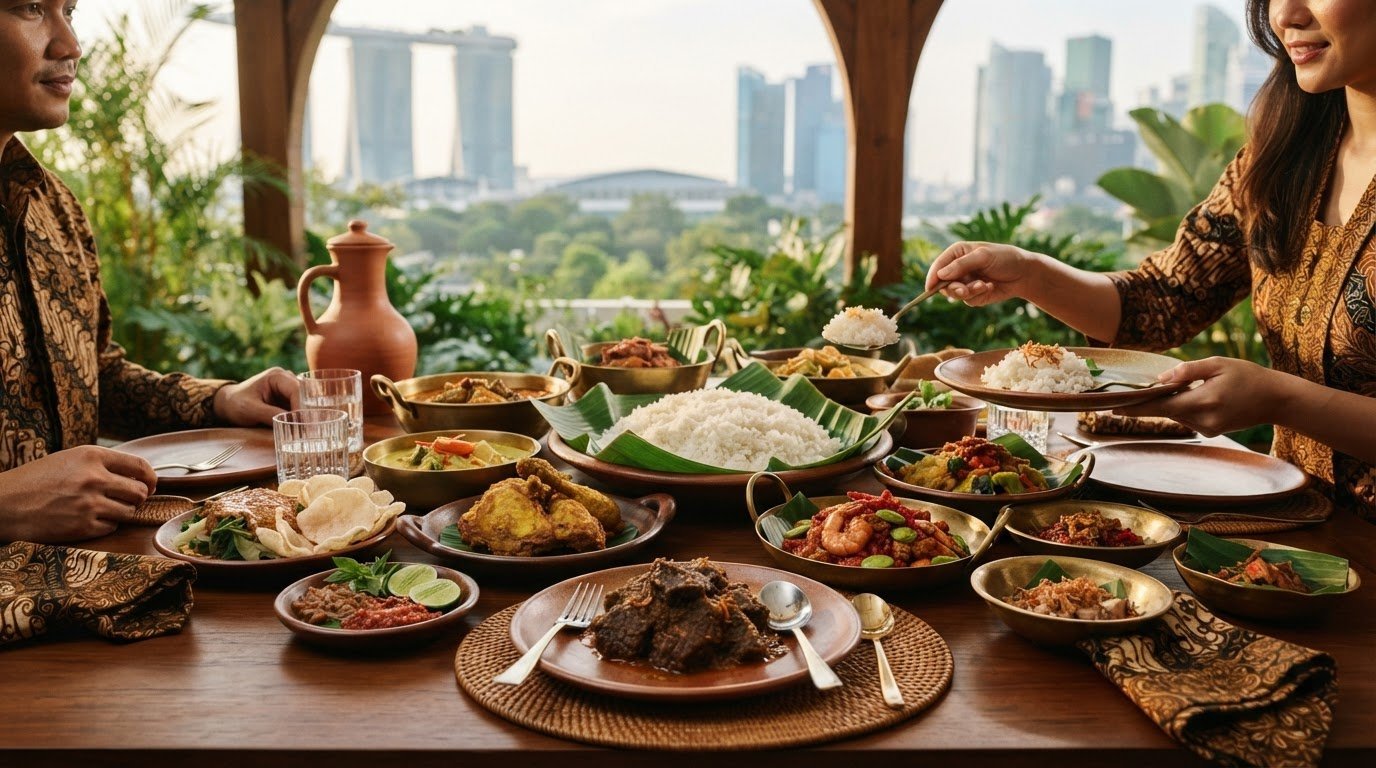

Traditional Indonesian food is easier to understand when you start with how a meal is structured, rather than trying to memorise a long list of dish names. Rice is a central staple in many Indonesian meals, with accompanying dishes known as lauk. This simple framework helps unfamiliar menu terms feel more connected.
Unfamiliar names can be hard to interpret, especially when a menu does not explain how dishes relate to one another. Meal format, spice preferences and dietary needs can all shape your choice. This guide introduces the building blocks of an Indonesian meal, compares familiar dishes by type and offers practical ways to choose with confidence.
You’ll see how staples and accompaniments fit together, then explore examples including Nasi Sambal Goreng, Nasi Ambeng, Nasi Minyak and Briyani. Regale Singapore offers these dishes as part of its halal-certified Indonesian dining experience. With a clearer sense of the menu, you can focus on the format and flavours that suit you.
Key Takeaways
- Traditional Indonesian food reflects many regional culinary traditions, not one defining dish or flavour.
- Staples, main dishes, vegetables and accompaniments can combine in different ways to shape a meal.
- Comparing dishes by type makes menu choices easier without treating one dish as the standard.
- Use meal format, texture and appetite to guide your selection, and ask about spice if a description is unclear.
- Explore Indonesian dining in a halal-certified setting through the dishes on Regale’s menu.
What Is Traditional Indonesian Food? A Clear Introduction to the Cuisine
Traditional Indonesian food covers a wide range of culinary traditions shaped by regional cultures, ingredients and cooking practices. Meals often pair a staple with accompanying dishes and seasonings, but the combinations vary. No single dish, ingredient or flavour profile represents the cuisine in its entirety.
Indonesian cuisine is a collection of regional food traditions connected by meal patterns, not one national recipe or taste. Geography and local customs influence what people cook and how dishes are prepared, so meals can differ from one community to another. The broad overview of Indonesian cuisine also shows why it is more useful to think in terms of variety than a fixed set of defining dishes.
For a first look, consider how a meal is assembled. Rice is a central staple in many Indonesian meals. It may be served with one or more dishes, often described as lauk, a term for accompaniments eaten with the staple. Seasonings contribute flavour, while the dishes alongside rice add variety. The balance depends on the meal, not a universal formula.
Why Indonesian food is more than a list of famous dishes
Recognising names such as nasi goreng, rendang, gado-gado or satay can help you approach a menu, but a list alone does not explain how a meal comes together. Consider the role of each item: what is the staple, what accompanies it, and how do the tastes and textures work together? This is more useful than ranking dishes as must-try choices.
A beginner’s first way to understand an Indonesian meal
Start with the staple, then notice what is served with it. Rice with rendang, for example, combines a staple and an accompanying dish. It is one possible pairing, not a fixed rule. The word lauk helps explain the relationship. Household recipes and cooks’ preferences vary, so familiar dish names can still represent different expressions of the cuisine.
This framework makes a first menu experience more manageable. Identify the meal format and the role each item plays instead of looking for one dish that represents all Indonesian cooking. You can then compare dishes by type and consider what suits your appetite and preferences. The following sections build on this approach to make those choices clearer.
How Traditional Indonesian Meals Bring Staples and Sides Together
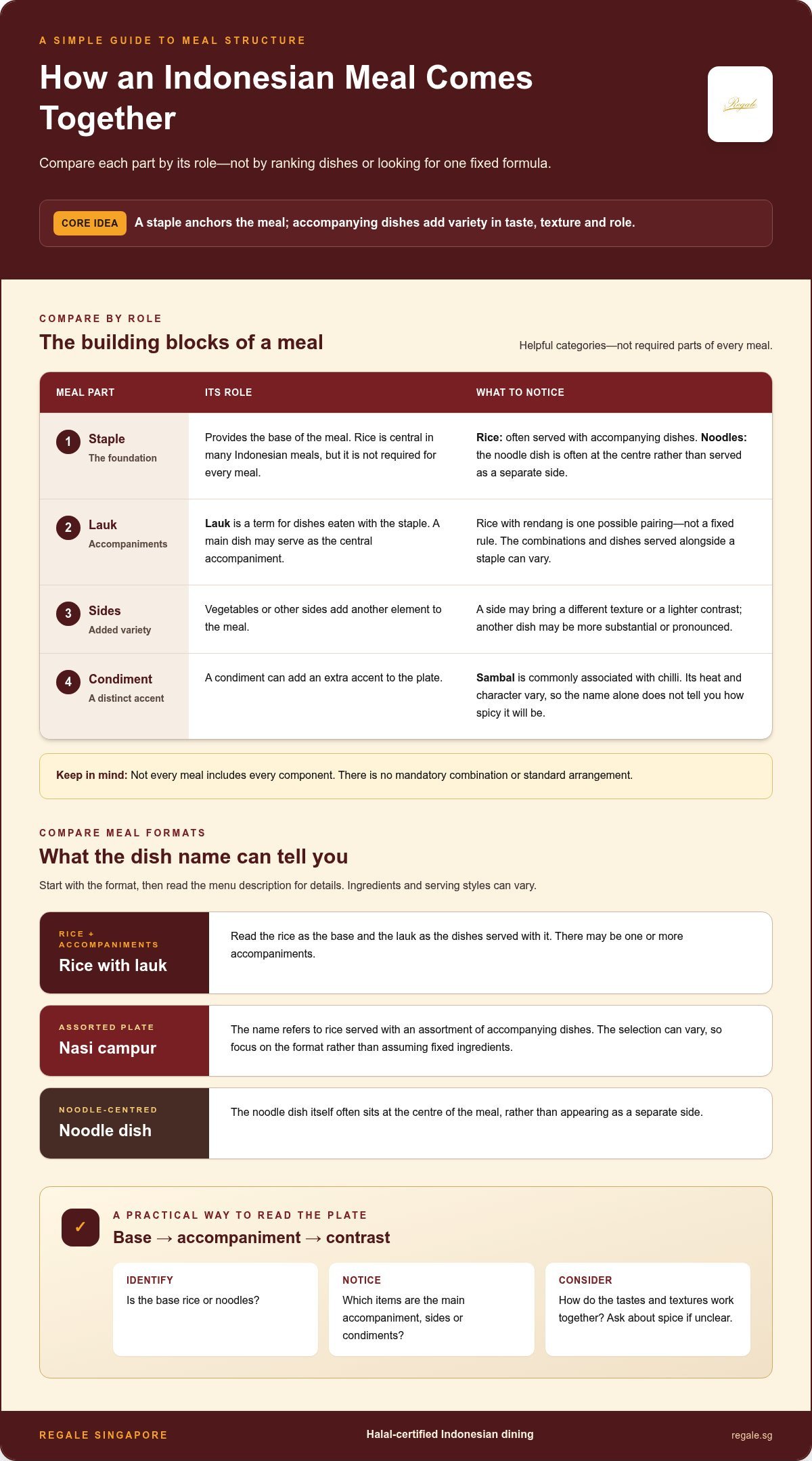
A useful way to read a meal is to distinguish what forms its base from what adds variety. A staple provides the foundation; a main dish may supply the central accompaniment; vegetables or other sides add another element; and a condiment can bring a distinct accent. These are helpful roles, not fixed rules. Traditional Indonesian food does not follow one mandatory combination, and not every meal includes every component.
A staple anchors the meal, while accompanying dishes add variety in taste, texture and role. That variety might come from a soft base alongside a firmer side, or a relatively mild component beside one with stronger seasoning. It does not require a set number of dishes or a standard arrangement.
Rice and other staples as the foundation of a meal
Rice is a familiar foundation, but it is not required for every Indonesian meal. Here, a staple means the central food served as the base of a meal. Noodles offer another familiar format, often placing the noodle dish itself at the centre rather than serving it as a separate side. Identify the staple first to see how the rest of the meal is arranged.
Nasi campur offers a clear example: its name refers to rice served with an assortment of accompanying dishes. The selection can vary, so focus on the format rather than assuming a set of ingredients. Think of the rice as the base and the assorted items as the elements that give the plate variety.
Sides, vegetables and sambal as contrasting accompaniments
Accompaniments can make a meal feel varied rather than repetitive. A vegetable side may bring a different texture or a lighter contrast, while another dish may offer a more substantial or pronounced element. Sambal is a category of condiment commonly associated with chilli. Its heat and character vary, so the word alone does not tell you how spicy a particular version will be.
When reading a plate, consider each component’s role instead of trying to identify every flavour at once. The main dish gives the meal a focal point, sides change its texture and variety, and a condiment can add an extra accent. Indonesia’s food context is broader than any single plate. The World Food Programme’s overview of Food security in Indonesia discusses nutrition and access, while this meal framework describes culinary roles rather than a nutrition standard.
As you explore menus, identify whether the base is rice or noodles, then notice which items are the main accompaniment and which are sides or condiments. This makes unfamiliar combinations easier to interpret without assuming every dish belongs together. For an evening introduction to Indonesian dining in a halal-certified setting, explore Regale’s Indonesian dining experience.
Traditional Indonesian Dishes Compared by Type, Not by Ranking
Dish names are easier to interpret when you compare the kind of dish each one is, rather than treating a menu as a list of winners. Some names point to a rice-based dish, others to a grilled or slow-cooked preparation, while others describe a vegetable-led option. These categories are a starting point, not a complete account of a dish’s ingredients or every way it may be prepared.
The examples below represent a small selection of Indonesian dishes. Use the categories to understand a dish’s general format and role, then read the menu description for details. Recipes and serving styles can vary between cooks, so the same familiar name does not guarantee an identical plate.
| Dish type | Familiar example | What the category helps you recognise |
|---|---|---|
| Rice-based dish | Nasi goreng | A rice-centred dish presented as a composed plate |
| Mixed plate | Nasi campur | Rice served with a selection of accompaniments |
| Grilled dish | Satay | A dish identified with grilling as its preparation style |
| Slow-cooked dish | Rendang | A dish associated with a longer cooking approach |
| Vegetable-led dish | Gado-gado | A dish where vegetables are central to the format |
Rice, noodle and mixed-plate dishes
Nasi goreng is a familiar example of a rice-based dish: the rice is part of the composed dish itself. A mixed plate such as nasi campur works differently, with rice served alongside multiple accompaniments. Noodle-based dishes offer another format, placing noodles at the centre. These distinctions help you anticipate how a dish is arranged without turning the table into a ranked list of recommendations.
Grilled, slow-cooked and vegetable-led dishes
Satay and rendang illustrate distinct categories. Satay is recognised as a grilled dish, while rendang is associated with slow cooking. Gado-gado provides a vegetable-led example. These labels distinguish broad preparation styles or the central focus of a dish, not fixed recipes. Ingredients, seasoning and serving details may differ, so do not assume every version tastes or looks the same.
For a practical menu scan, first decide which format appeals to you: a composed rice or noodle dish, a plate with several accompaniments, something grilled, a slow-cooked dish or a vegetable-led option. Then use the description to refine your choice, especially if you have preferences about ingredients, texture or spice. This makes traditional Indonesian food easier to explore while leaving room for the variety that dish names alone cannot capture.
How to Choose Traditional Indonesian Food for Your Preferences
A good first choice starts with the kind of meal you feel like having, not a search for the one “best” dish. Consider the format, your appetite and the textures you enjoy. Then account for dietary needs and spice preferences. This simple decision path makes traditional Indonesian food easier to approach while leaving room to try something new.
Choosing a dish by format and appetite
Start by identifying the format that suits your appetite. A rice dish is a familiar composed option; a mixed plate brings several accompaniments together; a grilled dish offers a different preparation style; and a soup centres on broth. These categories describe broad formats, not exact recipes, so use the menu description to understand what a particular dish includes.
If you are new to the cuisine, choose a format you already enjoy rather than ordering an unfamiliar spread. Prefer one main dish? Look for a composed rice, noodle or grilled option. Want more variety on the plate? A mixed format may suit you better. Appetite matters too: choose a lighter-feeling option if you want less, or a fuller meal if you are hungrier. There is no single right starting point.
Considering spice, dietary needs and halal dining
Spice levels can differ from one dish or preparation to another. If a description does not make the heat clear, share your preference and ask about the dish’s spice level before choosing. You can also state any dietary needs clearly. Culinary tradition and halal suitability are separate considerations: a dish’s name or style alone does not tell you whether it meets your requirements.
Regale is a halal-certified dining establishment offering Indonesian dining in the evening. Its menu includes Nasi Sambal Goreng and Nasi Ambeng, among other Indonesian dishes. For diners who prioritise halal dining, the certification provides relevant context for exploring the menu. Personal preferences about spice, ingredients and appetite still guide the individual choice.
First-meal checklist: choose a format, match it to your appetite, consider the textures you enjoy, state dietary needs and clarify spice if the description is unclear.
- Format: rice or noodles, mixed plate, grilled dish or soup.
- Appetite: a single composed dish or a meal with more variety.
- Preferences: textures you like, dietary needs and desired spice level.
Use the checklist as a guide, not a rule. A familiar format can make your first choice feel straightforward; a new dish can be your next step once you know what you enjoy. Explore Regale’s Indonesian dining experience in a halal-certified setting.
Explore Traditional Indonesian Food Through Regale’s Halal Menu
Understanding how dishes fit into a meal gives you a practical way to approach a menu. Regale Singapore offers an Indonesian dining experience in the evening at a halal-certified establishment. Its menu includes named dishes that can be first points of exploration, connecting the broader guide to a dining experience without suggesting that a short selection represents the whole cuisine.
A menu starting point for exploring Indonesian dishes
Regale’s Indonesian menu includes Nasi Sambal Goreng, Nasi Ambeng, Nasi Minyak and Briyani. Treat these as examples to explore, not an exhaustive list of Indonesian food. Each name gives you a concrete place to begin. The meal framework in this guide can help you think about the format and dining experience you prefer.
- Nasi Sambal Goreng
- Nasi Ambeng
- Nasi Minyak
- Briyani
A dish name alone does not explain every detail of its preparation, serving style or spice level. Do not assume that two dishes with a familiar word in their names are alike, or that one example stands for a whole tradition. Use the names to decide what you would like to explore, then consider your appetite and preferences as you discover traditional Indonesian food in a halal-certified setting.
Taking the next step from learning to dining
The meal formats discussed in this guide can help you make sense of a menu. Think about whether you would prefer a composed dish or a meal with more variety, then consider what suits your appetite. If a description leaves an important detail unclear, such as spice level, share your preference and ask about that dish.
You do not need to master every dish before enjoying Indonesian food. A few familiar names and a basic understanding of how meal components fit together are enough to make a first choice more considered. Start with one of Regale’s named menu dishes, then let your preferences guide what you explore next.
For an introduction to Indonesian dining in a halal-certified setting, explore Regale’s Indonesian dining experience.
Let Your First Taste Lead to Further Discovery
Exploring traditional Indonesian food does not require you to know every dish before you begin. Let curiosity guide your next choice: try a familiar format, notice what you enjoy, then explore something different another time. Each meal can offer a new way to appreciate the variety of Indonesian cooking.
Dining is also a chance to make the guide personal. Preferred textures, appetite and comfort with spice can shape what you choose, while an open mind leaves room for unexpected favourites. There is no need to find one dish that represents everything. A first meal can simply be a starting point.
Continue exploring with Regale’s Indonesian dining experience. Its halal-certified setting and menu offer a practical next step from reading about the cuisine to enjoying it at the table. Explore Regale’s Indonesian dining experience and take your time finding dishes that suit you.
Frequently Asked Questions
What is traditional Indonesian food?
Traditional Indonesian food includes dishes and eating customs shaped by varied culinary traditions, so no single plate defines it. Familiar examples such as nasi goreng, rendang and gado-gado offer a starting vocabulary, not a complete picture. When reading a menu, notice whether a dish is served as a composed plate or alongside separate items. That distinction can help you understand the meal without knowing every dish name.
Is all Indonesian food spicy?
No, Indonesian food is not uniformly spicy. Heat can depend on the particular dish, how it is prepared and whether a chilli condiment is served with it. If you are sensitive to spice, tell the dining staff what level you are comfortable with and ask about the specific dish rather than relying on its name. You can also ask whether sambal is served separately, but do not assume that it is.
Can traditional Indonesian food be halal?
Yes, Indonesian dishes can be prepared as halal food, though a dish’s name alone does not establish its halal suitability. If halal dining is important to you, choose an establishment with halal certification. Regale Singapore is halal-certified and serves Indonesian dishes including Nasi Sambal Goreng, Nasi Ambeng, Nasi Minyak and Briyani. This gives diners seeking Indonesian food in a halal-certified setting a clear place to start.
What is usually served with Indonesian rice dishes?
There is no one standard pairing. Some rice dishes are composed preparations, while other meals serve rice with separate accompaniments. For example, nasi goreng is a rice-based dish, whereas nasi campur refers to rice served with assorted items. If you are ordering for a group, check how the dish is presented so you know whether it is a complete plate or part of a meal with separate sides.
Is rendang a traditional Indonesian dish?
Yes, rendang is a well-known dish associated with Indonesian cuisine. It is often described as slow-cooked, though the name does not tell you every detail of a particular version. Treat rendang as one distinct dish to consider, not a measure of whether other foods are traditional. When choosing from a menu, use its description to understand how that serving is presented.
What is the difference between nasi goreng and nasi campur?
Nasi goreng is a rice-based dish, while nasi campur describes rice served with assorted accompaniments. The key difference is the meal format: one is a composed rice dish, and the other brings rice together with additional items. Names do not specify every ingredient or presentation, so read the menu description for details. This distinction can help you decide whether you prefer one unified dish or several elements on a plate.
