
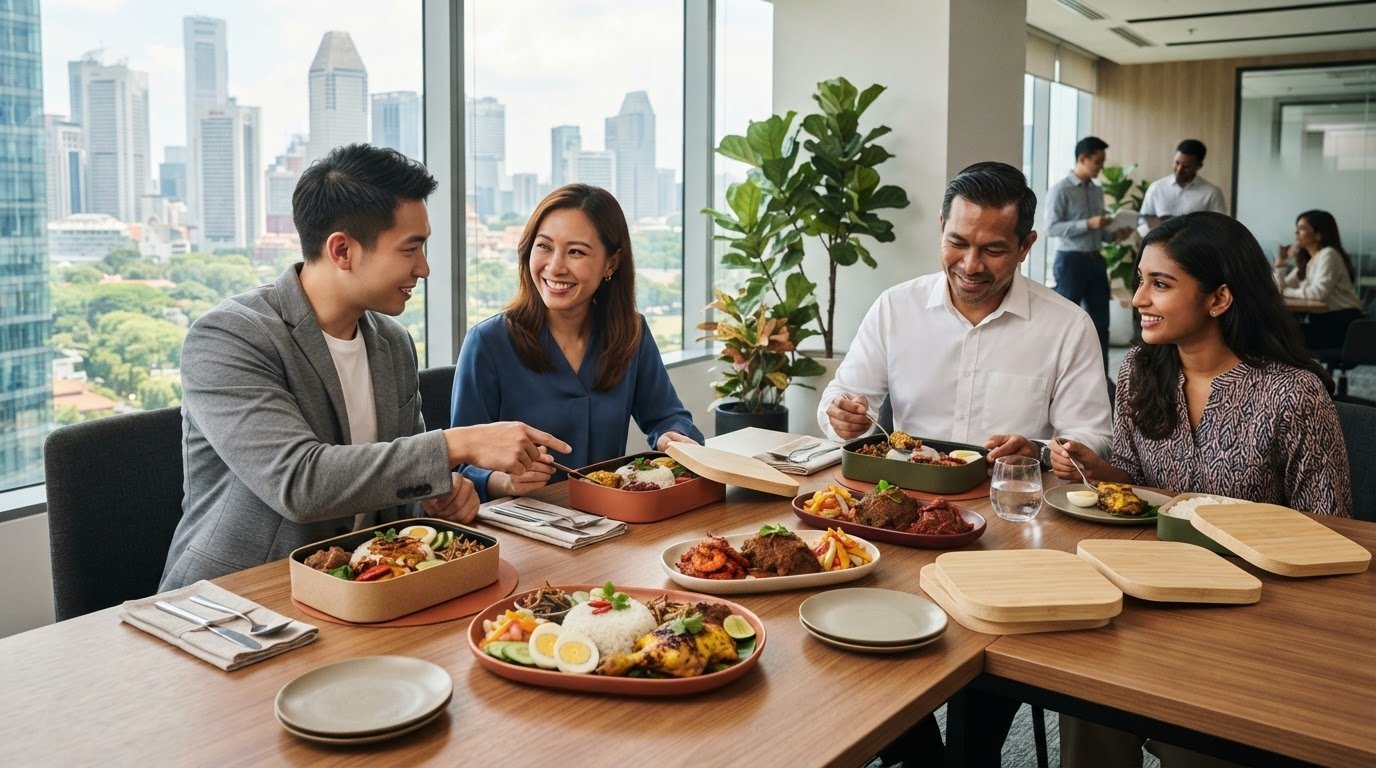

A smooth corporate lunch is decided before the food arrives. Planning corporate lunch box delivery singapore means balancing the occasion, headcount and dietary needs while keeping the order and handover straightforward for a busy team.
It’s easy to focus on dishes and leave portions, menu variety or halal requirements until later. A little structure helps prevent last-minute complications. For a workplace meal, choose a format that suits the gathering and makes it easy for colleagues to enjoy lunch together.
This guide walks through the key decisions: choose a meal format, estimate portions, gather dietary preferences and organise delivery information. It also explains how halal catering can support an inclusive lunch, with Malay and Indonesian choices such as Nasi Sambal Goreng and Nasi Ambeng. Work through the steps in order to shape a welcoming corporate meal around your team and occasion.
Key Takeaways
- Match the lunch format to the occasion, from a focused meeting to a staff appreciation meal or recurring office lunch.
- Compare individually portioned meals with shared catering by considering serving convenience, menu fit and the effort needed to coordinate orders.
- Build a clear menu brief around colleagues’ dietary needs and the tone of the event, with halal-certified dining as an inclusive option.
- Make corporate lunch box delivery singapore easier to coordinate by setting out quantities, timing, access instructions and a day-of contact.
- Consider how Malay and Indonesian specialties can bring a distinctive, culturally rooted character to a workplace meal.
Corporate lunch box delivery in Singapore: start with the occasion
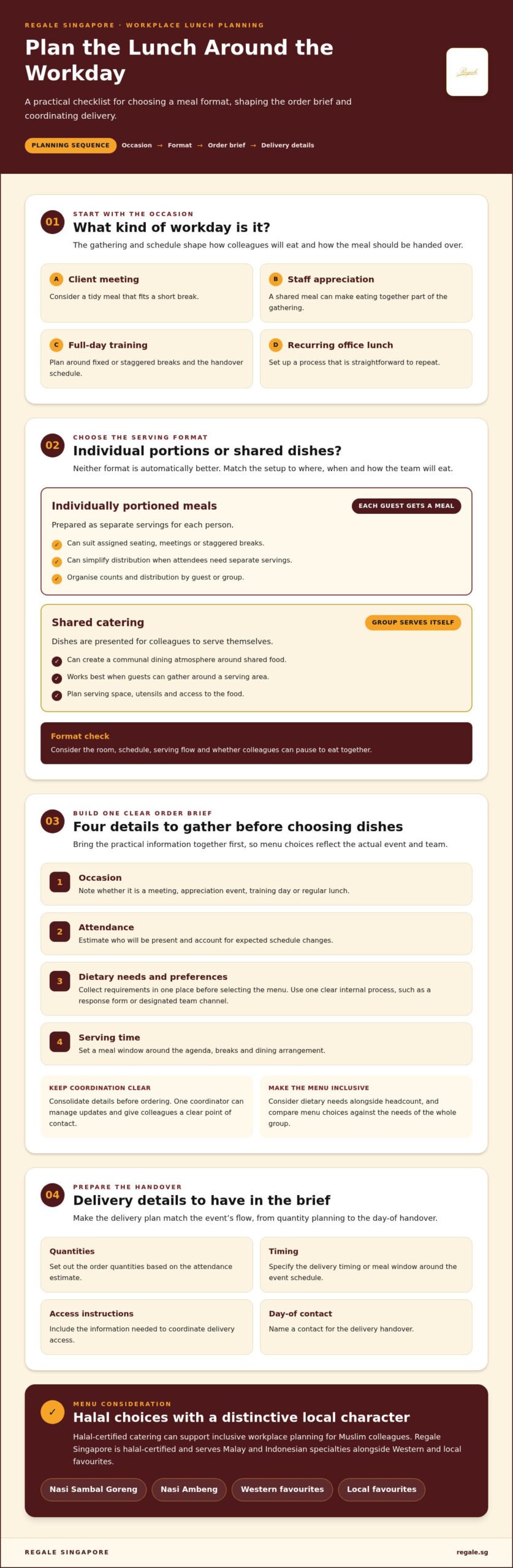
A client meeting, staff appreciation meal, full-day training session and recurring office lunch each call for a different plan. A meeting may need a tidy meal that fits a short break, while a staff gathering may be built around eating together. Training can involve fixed or staggered breaks, and recurring lunches benefit from a process that is easy to repeat.
Corporate lunch boxes are individually portioned meals prepared for each person, while shared catering presents dishes for a group to serve themselves. Neither format is automatically better. Start with how colleagues will gather and eat, rather than choosing dishes first. For corporate lunch box delivery singapore, align the format with four practical inputs: occasion, attendance, dietary needs and serving time.
Choose the lunch format around the workday
Individual portions can simplify distribution when attendees are seated in a meeting, moving through a training schedule or taking breaks at different times. Each person receives a meal without needing to queue at a shared serving area. This can suit a tight agenda, as long as the handover fits the schedule.
Shared catering can suit a team meal intended to encourage conversation around a common table. It gives colleagues a communal way to dine, but the organiser should plan for serving space, utensils and access to the food. Choose the format based on the room, schedule and style of gathering.
Set the order brief before choosing dishes
Start with a realistic attendance estimate, then set a meal service window that works with the event schedule. A meeting with a set break and a training day with staggered sessions may need different handover plans. Singapore’s food culture draws on varied influences, as this overview of Singaporean cuisine illustrates. A thoughtful brief helps guide menu choices towards a meal that suits the team.
Collect dietary requirements and preferences through one clear internal process, such as a single response form or designated team channel. Consolidate the information before selecting dishes so that needs are visible alongside the headcount. One coordinator can then manage the order details, reduce conflicting updates and give colleagues a clear point of contact.
- Occasion: Note whether the meal is for a meeting, appreciation event, training day or regular lunch.
- Attendance: Estimate who will be present and account for expected schedule changes.
- Dietary needs: Gather requirements and preferences in one place before selecting the menu.
- Serving time: Set the meal window around the agenda, breaks and dining arrangement.
With those details in hand, the format decision becomes more practical. Consider where colleagues will eat, whether they can pause together and how meals will be distributed. A concise brief also gives the next steps a clear foundation: compare menus against real needs and make delivery instructions reflect the event’s flow.
How to compare corporate lunch box options in Singapore
Once the event’s needs are clear, compare meal formats by how they fit the team’s dining experience and the organiser’s workload. For corporate lunch box delivery singapore, look beyond dish names: consider how meals will be served, how dietary requirements are handled and how much coordination the setup requires. The delivery market is also evolving, as outlined in this National University of Singapore discussion of trends in Singapore’s food delivery market. A clear event brief makes it easier to compare arrangements against what your team needs.
| Comparison point | Individual portions | Shared dishes |
|---|---|---|
| Service style | Each guest receives a separate meal. | Colleagues serve themselves from dishes arranged for the group. |
| Distribution | Can suit assigned seating, meetings or staggered breaks. | Works best when guests can gather around a serving area. |
| Group interaction | Offers a straightforward personal serving, with less shared serving activity. | Can create a communal dining atmosphere around shared food. |
| Coordination focus | Organise counts and distribution by guest or group. | Plan serving space, access and how the group will share the meal. |
| Menu and packaging | Contents and packaging depend on the selected catering arrangement. | Dish selection and serving setup depend on the selected catering arrangement. |
Individual lunch boxes or shared dishes?
Choose individual portions when guests need separate servings or the schedule makes a common serving break difficult. They can simplify distribution in a meeting or training room. Shared dishes suit occasions where dining together is part of the experience, but the room and service flow need to accommodate a serving point. Neither arrangement is automatically more convenient. The best fit depends on how people will eat.
Compare menus for dietary inclusivity and variety
Record dietary needs and preferences before settling on dishes, then communicate them in one clear order brief. This helps the organiser consider the whole group instead of treating dietary inclusion as a last-minute adjustment. Halal-certified catering can support inclusive workplace planning for Muslim colleagues. Regale Singapore is halal-certified and serves Malay and Indonesian specialties alongside Western and local favourites.
A consolidated menu can make ordering easier to manage while still giving the team meaningful variety. Start with familiar choices, then consider distinctive dishes that add character. Nasi Sambal Goreng and Nasi Ambeng are examples from Regale’s menu. For teams considering halal catering, Regale’s halal catering is a practical option for a workplace meal.
Build a Singapore corporate lunch menu that works for the team
A thoughtful menu brief gives a corporate lunch a clear direction. Begin with the occasion’s tone: a working meeting may call for familiar, easy-to-enjoy choices, while a team celebration can make room for dishes that feel more distinctive. Then consider dietary requirements and the service style before narrowing down the menu.
Menu fit depends on the occasion, dietary needs and service style, not on dish popularity alone. This matters when planning corporate lunch box delivery singapore, because a dish’s suitability also depends on how the meal will be served. Treat menu names as options to consider rather than assuming that a particular dish comes in a specific box or set.
Bring Malay and Indonesian specialties to a team lunch
Regale’s menu includes Nasi Sambal Goreng, Nasi Ambeng, Nasi Minyak and Briyani. These Malay and Indonesian specialties can introduce colleagues to culturally rooted choices and give a business lunch a stronger sense of occasion. Include clear, respectful descriptions in the menu brief for colleagues who may be trying them for the first time.
Variety need not mean an unfocused order. Pair familiar preferences with a distinctive culinary direction that suits the gathering, and keep the selection coherent with the event’s tone. Regale is halal-certified and offers halal catering, making it a relevant option for teams seeking halal dining. These dishes are menu examples, not a specification of what comes in an individual meal.
Plan for dietary needs without complicating the order
Collect dietary requirements and preferences early through one internal process, then share a single, accurate summary with the catering team. Distinguish essential restrictions from general preferences so the brief is useful and easy to act on. Don’t assume that one menu automatically accommodates every colleague. Make each known requirement clear before the menu is settled.
- Set the occasion: Note whether the meal is formal, practical or celebratory.
- Record the team’s needs: Consolidate dietary requirements and preferences in one place.
- Choose a menu direction: Balance familiar choices with dishes that add character.
- State the service style: Explain how the meal will be served so the menu brief reflects the event arrangement.
A well-organised brief keeps the order manageable without flattening the team’s varied tastes. For halal workplace dining with Malay and Indonesian specialties, Regale’s halal-certified offering provides a culturally rooted starting point for shaping the menu around the people and purpose of the gathering.
Coordinate corporate lunch delivery details before the day
A clear delivery brief connects the chosen meal arrangement with the way your workplace runs. For corporate lunch box delivery singapore, record the practical details in one place and align them with the catering arrangement. This avoids assumptions about timing, handover, packaging or order requirements.
Create a clear order and delivery brief
Prepare one final version of the order for the event coordinator. Include the event date, expected attendance, preferred serving time and instructions for reaching the handover point. Add the dietary summary and any meal-labelling requirements agreed for the arrangement. Keeping these details together gives everyone a consistent reference if plans change.
- Set the quantity: Use the latest attendance estimate and record how it was determined. Note expected changes, such as participants joining only part of a training session, so the final count reflects the meal plan.
- State the timing: Provide the preferred meal service window in relation to the meeting, training or staff event schedule. Consider when attendees can pause and how long distribution or serving may take.
- Write delivery instructions: Describe the workplace access route, any relevant entry procedure and the agreed handover location. Include practical directions so the delivery team can reach the intended point without relying on informal assumptions.
- Name a day-of contact: Assign one person to receive the meal and communicate through the agreed channel. Share that person’s contact details with the relevant parties.
Prepare the workplace for meal handover
Before the event, ensure the receiving contact knows where to meet the delivery and what happens after handover. For individually portioned meals, decide how attendees will collect their meals. For shared catering, prepare a suitable serving area and clarify who will oversee the setup. The plan should reflect the selected arrangement and available space.
Think through the transition back to work, too. In a meeting, a designated collection point can help colleagues resume promptly. For a training day, explain where meals will be placed before each break. Communicate schedule changes through the agreed channel, and keep the final order brief accessible to the coordinator so updated instructions don’t conflict with older versions.
Review the order requirements, handover and serving arrangements before the day. This final step helps align the meal with the event instead of leaving key decisions until delivery.
For a workplace meal centred on halal dining, explore Regale’s halal catering as part of your planning.
Plan a halal corporate lunch with Regale Singapore
A workplace lunch can be practical and welcoming while still offering a sense of occasion. Regale Singapore provides halal catering for teams planning a halal meal, with Malay and Indonesian specialties that bring a distinctive, culturally rooted direction to the menu. Start with the event’s needs, then bring the food and logistics together in a clear plan.
Match Regale’s culinary strengths to the occasion
Nasi Sambal Goreng and Nasi Ambeng are examples of Regale’s Malay and Indonesian specialties. Nasi Minyak and Briyani offer further menu choices to consider. Use the event’s tone and the team’s preferences to guide the menu discussion, whether the gathering is a focused business lunch or a shared staff occasion.
Regale is halal-certified, making its cuisine relevant for organisers seeking halal dining as part of an inclusive workplace meal. Share the occasion and menu direction clearly so the catering arrangement reflects the team’s requirements.
Make the next planning step straightforward
Before arranging the meal, prepare a concise brief. This keeps the conversation centred on the event rather than scattered across messages and changing details. Gather the information in one place and identify a coordinator who can communicate the team’s needs consistently.
- Headcount: Record the expected attendance and note whether it may change.
- Dietary needs: Summarise requirements and preferences accurately.
- Timing: State the preferred serving time in relation to the event schedule.
- Menu direction: Indicate familiar choices or Malay and Indonesian specialties the team would like to consider.
The planning sequence is straightforward: define the occasion, choose a format suited to the service flow, plan the menu around the team and coordinate the details. This keeps food choices connected to the way colleagues will gather and dine, while giving the organiser a practical basis for managing the arrangement.
Explore Regale’s halal catering for your corporate lunch. Prepare the key information and plan a well-organised meal with considered menu choices and a welcoming halal-certified dining option for the team.
Make your next team lunch a thoughtful one
A well-planned workplace meal can do more than fill a break. It can help colleagues feel welcomed and give the gathering a sense of care, whether the occasion is a working session or a team celebration. Notice what makes dining together work for your team, then carry those preferences into future planning.
As you arrange corporate lunch box delivery singapore, focus on the experience you want colleagues to share. A clear brief and considered menu choices give the meal purpose without adding unnecessary complexity to the workday.
For a halal-certified option with a distinctive culinary heritage, explore Regale’s halal catering for your corporate lunch. Start planning a welcoming meal that brings your team together.
Frequently Asked Questions
What is included in a corporate lunch box?
Contents vary by menu and catering arrangement, so don’t assume that every lunch box contains the same items. For corporate lunch box delivery singapore, first specify whether you need individual meals or another service style, then share dietary needs and the dining context. A short working break, for example, may call for a different plan from a longer staff gathering.
How far in advance should I arrange corporate lunch delivery in Singapore?
Arrange corporate lunch delivery early in the planning process, since timing depends on headcount, event date and arrangement details. Once the date is set, begin shaping the meal plan rather than leaving it until the final event preparations. This gives the organiser time to settle attendance, dietary information and service expectations. Share updates promptly if plans shift, and base the schedule on the agreed arrangement rather than assuming a standard lead time.
Can corporate lunch catering in Singapore accommodate halal dietary needs?
Yes. Halal catering can support workplace dining plans where halal requirements need to be considered. Identify those needs explicitly and include them in the meal brief rather than assuming any menu is suitable. Regale Singapore is halal-certified and provides halal catering for teams seeking halal dining. Share the event context and dietary requirements clearly so the planned meal aligns with the team’s needs.
How do I estimate the number of corporate lunch boxes to order?
Estimate the quantity from confirmed attendance for the meal, not the total number of invitees alone. Check who will be present during the serving period, including guests attending only part of an event, and update the count as replies come in. Keep dietary requirements alongside the headcount so they’re included in the final tally. Before finalising, have the event coordinator review the number and communicate agreed changes consistently.
What is better for an office lunch, individual lunch boxes or a buffet?
Individual portions can be practical when attendees need to collect meals separately, such as during a short meeting break or staggered training schedule. A buffet or shared-dish arrangement can suit a lunch designed around sitting and eating together, provided there’s room to serve. Consider the event timetable, available space and colleagues’ preferences. The best fit is the option that supports the way the group will dine.
What dishes can I consider for a halal corporate lunch in Singapore?
Regale’s menu includes Nasi Sambal Goreng, Nasi Ambeng, Nasi Minyak and Briyani. These Malay and Indonesian choices give organisers several menu directions to consider in light of the event’s tone and colleagues’ preferences. Treat them as menu examples rather than assuming a particular dish is included in a specific lunch box or set arrangement.
What information should I provide when arranging a corporate lunch?
Provide the event date, estimated attendance, preferred serving time, dietary requirements, meal format and delivery handover instructions. For example, note whether the receiving contact should meet the delivery at reception or another agreed point, and include access details relevant to the handover. Keep the information in one clear brief for the event coordinator. This helps prevent different versions of the arrangements from circulating as the event approaches.
