
A truly premium halal burger is defined by more than just a certification on the wall. It represents a precise science of marbling, temperature control, and textural balance. While the market for the halal burger in Singapore has grown by over 24 percent recently, finding a meal that offers both culinary sophistication and reliable standards remains a challenge for many discerning diners. You might often find yourself disappointed by the inconsistent quality of patties at common fast-food outlets or the limited options for a refined Western dining atmosphere.
We understand that navigating the differences between beef grades like Angus and standard cuts can be confusing when you simply want a high-quality meal. This guide details the essential criteria for a gourmet experience and shows you how to identify venues that prioritize both technical excellence and professional hospitality. You’ll gain a clear understanding of patty types and the logistical markers of a top-tier restaurant. This knowledge ensures your next dining choice is grounded in quality rather than guesswork.
Key Takeaways
- Trace the evolution of the local gourmet scene and learn how MUIS standards help you identify a truly high-quality halal burger.
- Master the technical markers of a premium burger, including the ideal fat-to-lean patty ratios and the importance of artisanal bun selection.
- Gain insights into beef grading systems to understand why Angus beef offers superior tenderness and flavor compared to standard halal cuts.
- Discover how to choose dining venues that offer a professional atmosphere and versatile menus, ensuring a reliable experience for every guest.
- Understand how a hospitable atmosphere and dual-concept menus provide a reliable dining solution for both daily meals and significant group events.
The Evolution of the Halal Burger Scene in Singapore
The landscape of the halal burger in Singapore has undergone a remarkable transformation. For years, the market primarily consisted of international fast-food chains offering standardized, mass-produced options. Today, the scene has matured into a sophisticated gourmet movement. This shift is driven by a growing segment of diners who prioritize culinary craft over convenience. They seek out chilled beef, house-made sauces, and artisanal buns that provide a distinct textural contrast to the soft, processed alternatives of the past.
The Shift from Fast Food to Fine Casual
The transition from a quick-service model to a refined dining experience reflects a change in local values. In 2026, ingredient transparency is no longer optional; it’s a fundamental expectation. Sophisticated palates now investigate beef provenance, favoring specific breeds like Angus for their superior marbling and tenderness. While food court stalls provide accessible entry points, there’s a clear movement toward professional restaurant environments. These venues offer a hospitable atmosphere that accommodates both families and business groups, moving the burger away from a quick snack toward a centerpiece of a sit-down meal. This evolution highlights a demand for service levels that match the quality of the food.
Understanding MUIS Halal Certification for Western Cuisine
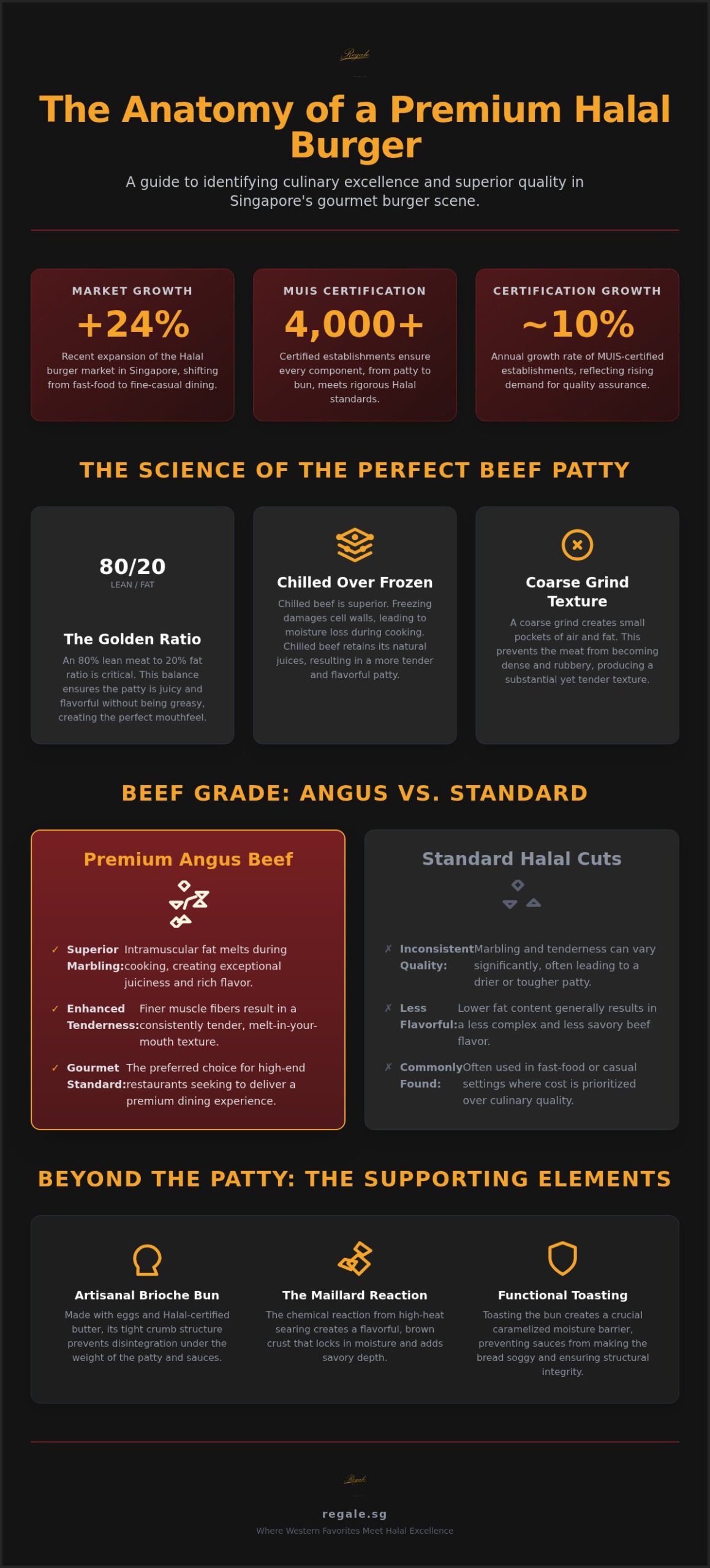
Maintaining the integrity of a premium menu requires a deep commitment to Islamic dietary laws. In Singapore, the Majlis Ugama Islam Singapura (MUIS) sets rigorous standards that govern every component of the kitchen. A true halal burger isn’t just about the meat; it encompasses the sauces, the oils used for frying, and even the ingredients in the artisanal bun. Currently, over 4,000 establishments in Singapore hold this certification, reflecting a growth rate of approximately 10 percent annually.
Professional establishments act as “Cultural Custodians,” ensuring that Western culinary techniques are applied without compromising religious requirements. Full-establishment certification provides a level of reassurance that individual product endorsements cannot match. It signifies that the entire facility follows a strict protocol for food safety and preparation. This logistical readiness allows diners to enjoy complex flavor profiles with complete peace of mind. It reflects a business model that values tradition as much as it values modern culinary excellence.
The Anatomy of a Premium Halal Burger
A gourmet halal burger is defined by a series of deliberate technical choices. While the roots of the local food scene are deeply connected to Singapore’s hawker culture, the modern gourmet movement applies scientific principles to elevate these staples. Achieving the perfect bite requires an understanding of how fat, protein, and starch interact under heat. It’s a process that moves beyond simple assembly toward culinary engineering.
The Science of the Perfect Beef Patty
The foundation of any premium burger is the 80/20 rule. This ratio consists of 80 percent lean meat and 20 percent fat. This specific balance ensures the patty remains moist during the cooking process without becoming greasy. In the halal supply chain, the choice between chilled and frozen beef is critical. Chilled beef is generally preferred because it hasn’t undergone the cell-wall damage associated with freezing, which often results in a loss of natural juices. The coarseness of the grind also dictates the final mouthfeel. A coarse grind allows for pockets of air and fat, creating a tender texture that feels substantial rather than rubbery.
Beyond the Bread: The Role of the Brioche Bun
A standard bun often collapses under the weight of gourmet toppings. This is why brioche has become the industry standard. It’s a rich bread made with a high content of eggs and halal-certified butter. Its tight crumb structure provides the necessary integrity to hold a heavy patty and multiple sauces without disintegrating. Toasting the bun is a functional step, not just a cosmetic one. The heat creates a caramelized moisture barrier that prevents the sauces from soaking into the bread and making it soggy. This ensures the last bite is as structurally sound as the first.
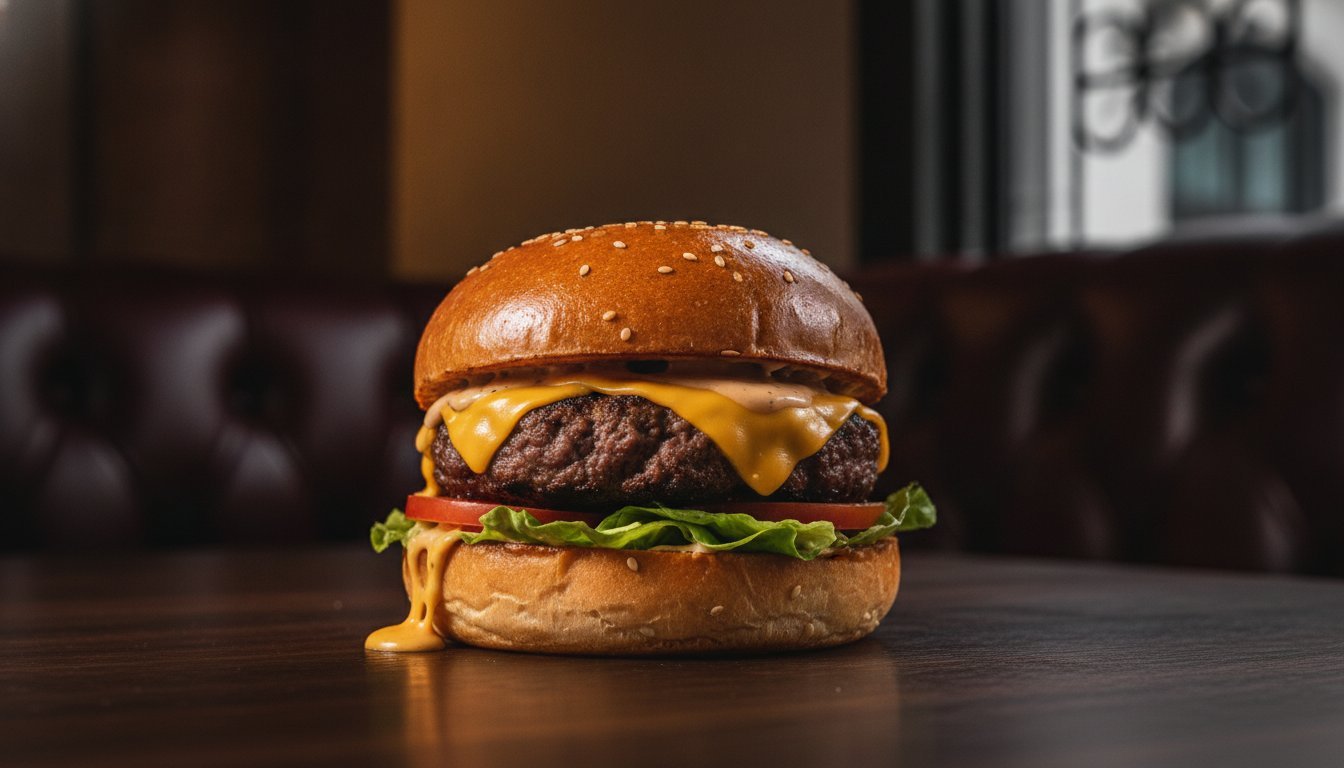
The final touch involves the Maillard reaction. This is the chemical process where amino acids and sugars react under high heat to create a flavorful, brown crust. This sear locks in moisture and provides a savory depth that contrasts with the fresh toppings. A well-constructed sauce should then balance this richness with a touch of acidity, ensuring the meat remains the primary focus. If you’re looking to experience these technical markers firsthand, the Angus Burger at Regale Singapore serves as a practical example of these culinary standards in action. It’s an excellent choice for those who value a balanced, professional approach to Western cuisine.
Choosing the Right Grade: Angus Beef vs. Standard Cuts
The quality of a halal burger depends significantly on the specific grade of meat selected for the patty. While many outlets prioritize high volume and low costs, premium establishments focus on the biological characteristics of the beef itself. Understanding these differences allows you to appreciate why certain burgers command a higher price point and deliver a vastly different sensory experience. It’s not just about the size of the portion but the integrity of the protein.
What Makes Angus Beef Superior?
Angus beef comes from a specific breed of cattle known for its ability to produce high levels of intramuscular fat, commonly referred to as marbling. Unlike standard cuts where fat often sits on the outside of the muscle, Angus genetics ensure that these fine flecks of fat are distributed throughout the meat. When exposed to heat, this marbling melts and naturally bastes the meat from within, resulting in a patty that remains exceptionally tender. Angus beef serves as the gold standard for restaurant-grade burgers due to its consistent quality and superior fat distribution.
The choice between grain-fed and grass-fed options also influences the final flavor profile. Grain-fed Angus typically offers a richer, more buttery taste that many diners prefer in a Western-style burger. Grass-fed beef tends to be leaner and possesses a more mineral, earthy flavor. For those reviewing a guide to halal food in Singapore, identifying restaurants that specify their beef provenance is a reliable way to ensure a premium experience. It reflects a level of transparency that’s common in high-end Western dining.
How to Taste the Difference
A high-grade patty shouldn’t rely on heavy seasoning or thick sauces to provide flavor. When you bite into a premium burger, the primary taste should be the “beefiness” of the meat itself. Standard fast-food patties often feel spongy or overly smooth because they’re highly processed and mixed with fillers. In contrast, a hand-formed Angus patty has a distinct, coarse mouthfeel that breaks apart naturally, providing a more authentic steak-like experience.
Cooking temperature is another factor that distinguishes professional dining. While some Western traditions favor rare meat, most establishments serving a gourmet halal burger cook the meat to a medium-well temperature. This practice ensures food safety while still maintaining the juiciness provided by high-quality marbling. By investing in higher-grade beef, you aren’t just paying for a label; you’re securing a meal that prioritizes texture, flavor integrity, and a professional standard of preparation.
The Dining Experience: What to Look for in a Halal Restaurant
A premium meal is defined as much by its environment as it is by the quality of the ingredients. While the technical markers of a gourmet halal burger are essential, the atmosphere where it is consumed determines the overall value of the experience. Many diners find that the high-traffic, quick-service nature of food courts often lacks the hospitality required for significant family gatherings or professional group meals. A well-run establishment prioritizes operational excellence, characterized by a steady service rhythm and a clean, organized dining hall.
Versatility in Menu Selection
Group dining in Singapore often involves multi-generational families with diverse culinary preferences. While younger diners may specifically seek out a high-quality halal burger, older family members often prefer the familiar comforts of traditional local or Indonesian cuisine. A “dual-concept” menu addresses this logistical challenge by offering both Western favorites and authentic regional dishes like Nasi Ambeng or Nasi Sambal Goreng. This variety ensures that every guest finds a suitable option under one roof, making the restaurant a reliable partner for daily dining and special life events alike. Having these options available concurrently allows for a seamless transition between different service tiers throughout the day.
Professional Hospitality Standards
The hallmark of a professional venue is its ability to adapt its service delivery to the needs of the customer. For daytime visitors and tourists visiting national attractions, efficiency and logistical readiness are paramount. A restaurant must maintain a “Versatile Professional” tone, providing prompt service that respects the visitor’s schedule. In the evening, the atmosphere should transform to accommodate a more relaxed pace, suitable for communal dining and celebration. This steady and purposeful rhythm builds trust with the local community, as it reflects a business that is both modern and deeply rooted in its traditions.
Location also plays a strategic role in the dining trip. Establishments situated near prominent landmarks, such as Science Centre Singapore, offer added value by combining a cultural outing with a refined meal. This positioning makes the venue an approachable guide for both local residents and international visitors. If you are planning your next family outing or group event, consider how a professional atmosphere can elevate your meal. You can explore a menu that balances tradition and modern Western craft at this halal restaurant, where every guest is treated with inherent hospitality.
Regale Singapore: Where Western Favorites Meet Halal Excellence
Regale Singapore serves as a primary destination for those seeking a high-quality halal burger that meets the technical standards outlined in this guide. By prioritizing premium ingredients and professional service, the establishment bridges the gap between casual dining and refined culinary craft. The menu is structured to serve as a reliable partner for both daily meals and significant life events; it ensures that every guest experiences a sense of established reliability and hospitality. Finding a truly gourmet halal burger requires a venue that understands both meat science and religious standards.
The Signature Angus Burger Experience
The Angus Burger at Regale represents the gold standard for the brand’s Western Cuisine service tier. It utilizes the genetic advantages of Angus beef discussed earlier, ensuring a level of marbling that naturally bastes the meat during preparation. This choice reflects a commitment to modern gourmet standards while maintaining the traditional values of a halal-certified kitchen. Each burger is prepared with a focus on structural integrity, utilizing fresh buns and balanced sauces that don’t overpower the natural flavor of the premium beef. It’s an experience designed for diners who value the science behind a perfect sear and a juicy, flavorful bite.
A Destination for National Visitors
Located at Science Centre Singapore, Regale is strategically positioned to serve as a reliable anchor for national visitors and tourists. The venue’s dual-concept menu provides a unique logistical advantage for families. During the day, guests can enjoy a selection of Western favorites, while the evening service often highlights authentic Indonesian cuisine such as Nasi Ambeng and Nasi Sambal Goreng. This versatility allows the restaurant to act as a “Cultural Custodian,” preserving heritage while adapting to modern service needs.
The atmosphere is organized and respectful, providing a professional setting that is suitable for both quick lunches and extended group gatherings. Whether you’re visiting for a family outing or hosting a halal buffet for a special occasion, the service rhythm remains steady and purposeful. Regale projects a personality of quiet competence, ensuring that every halal burger served is rooted in quality and community. We invite you to visit our halal restaurant to experience first-hand how operational excellence and culinary tradition come together in the heart of the country.
Elevating Your Next Dining Choice
Identifying a premium halal burger requires an appreciation for the technical details that separate fast food from gourmet craft. You now understand that the ideal fat-to-lean ratio, the structural integrity of a toasted brioche bun, and the superior marbling of Angus beef are the essential markers of a high-quality meal. These elements, combined with the rigorous standards of MUIS certification, provide the flavor profile and peace of mind that modern diners expect. A professional restaurant environment further enhances the experience, offering a versatile space for both family lunches and significant life events.
Regale Singapore remains committed to these standards of excellence at our location within the Science Centre Singapore. Our kitchen specializes in premium Angus beef burgers and a dual-concept menu that respects both Western innovation and authentic Indonesian tradition. We invite you to view the full menu and plan your visit to Regale Singapore to experience this blend of culinary science and hospitable service. It’s our goal to ensure your next meal is both technically perfect and deeply rooted in our local community’s values. We look forward to hosting you soon.
Frequently Asked Questions
Is Angus beef always halal in Singapore?
Angus beef is not inherently halal; its status depends entirely on the slaughtering process and the certification of the source. In Singapore, all beef served in a MUIS-certified restaurant must originate from an approved halal-certified abattoir. This ensures the meat complies with Islamic dietary laws. While Angus is a premium breed prized for marbling, diners should always look for the official certificate displayed on the premises to confirm its status.
What is the difference between a gourmet burger and a fast-food burger?
The primary difference lies in the quality of ingredients and the technical preparation of the meal. A gourmet halal burger typically features chilled beef with a specific fat-to-lean ratio, such as the 80/20 rule. Fast-food options often rely on mass-produced, frozen patties with fillers. Gourmet versions also use artisanal buns like brioche and house-made sauces, offering a more complex flavor profile and a refined dining atmosphere.
Can I find halal burgers that are suitable for large family gatherings?
Professional halal restaurants often provide the space and menu variety necessary for large groups. Establishments with a dual-concept menu are particularly effective for families because they offer both Western favorites and traditional Indonesian dishes. This versatility ensures that every generation finds a suitable meal. These venues typically maintain a hospitable environment and the logistical readiness to host significant life events or communal family dinners with ease.
Why is a brioche bun preferred for gourmet burgers?
Brioche is preferred because its high egg and butter content provides the structural integrity needed to support a heavy patty. Unlike standard buns that may become soggy, a toasted brioche bun creates a moisture barrier against sauces. This ensures the halal burger remains easy to handle throughout the meal. Its rich, slightly sweet flavor also complements the savory profile of a premium patty, enhancing the overall sensory experience.
What other halal Western dishes are usually served alongside burgers?
Common accompaniments in a Western cuisine menu include items that complement the savory nature of the main course. You’ll often find truffle fries, buffalo wings, or garden salads served as sides. Some professional establishments also offer grilled fish or pasta dishes to provide variety for the table. These options allow for a balanced meal, especially when dining in a venue that combines operational excellence with a diverse range of offerings.
How do I verify if a burger restaurant is truly halal-certified?
You can verify a restaurant’s status by checking for a valid MUIS halal certificate displayed prominently at the entrance or near the counter. In Singapore, MUIS is the sole authority for this certification. You can also use the official MUIS website or mobile applications to search for the establishment’s name. Truly certified venues follow strict protocols, ensuring all ingredients are sourced from approved suppliers and that no non-halal items are present.
What makes a burger “gourmet” in a halal-certified kitchen?
A burger earns the “gourmet” label through a combination of high-grade protein and artisanal craftsmanship. In a halal-certified kitchen, this involves using premium cuts like Angus beef prepared with precise temperature controls. The focus is on the Maillard reaction to create a flavorful crust and the use of fresh, non-processed components. This professional approach to Western dining elevates the meal from a simple snack to a sophisticated culinary experience.