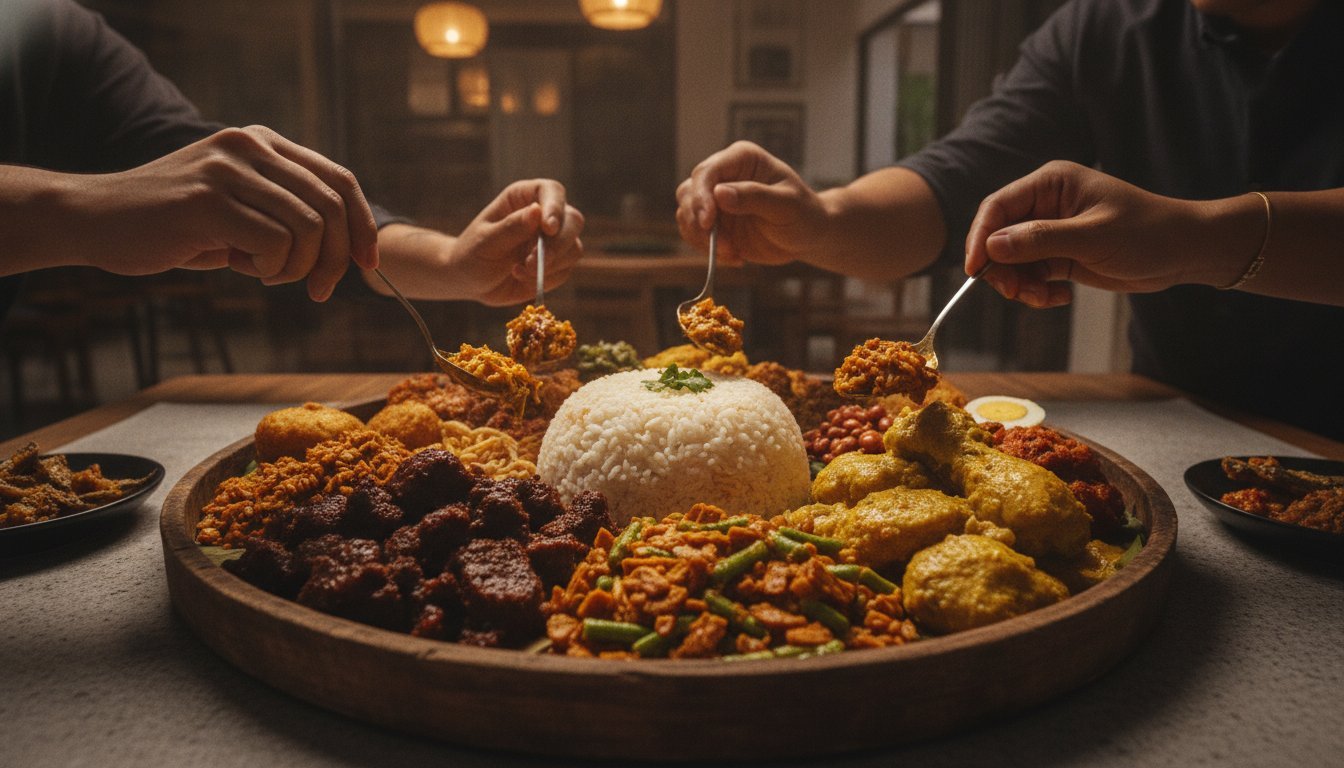

What if the most meaningful meal you ever shared wasn’t defined by individual plates, but by a single, massive tray that required everyone to lean in together? For many, the sight of a towering nasi ambeng platter evokes a sense of “Gotong Royong,” or communal unity, that modern dining often lacks. You might have encountered these impressive spreads at festive gatherings and felt a bit uncertain about how they differ from a standard rice set or how to gauge the right portion size for your group. Finding a truly authentic, halal-certified venue that respects the heritage of this dish can be a challenge.
We believe that a great meal is as much about the connection as it is about the quality of the ingredients. This guide clarifies those distinctions, helping you discover the rich cultural significance of this Javanese-Malay tradition. You’ll learn exactly what side dishes to expect on a premium platter and how the components work together to create a balanced flavour profile. We also provide practical insights on finding a reliable venue for an authentic evening experience, ensuring your next communal meal is both culturally rooted and logistically seamless.
Key Takeaways
- Understand the “Gotong Royong” spirit and how this traditional platter serves as a cultural bridge for communal unity in Singapore.
- Discover the essential components of a premium nasi ambeng, from the central mound of fragrant rice to slow-cooked Beef Rendang and spicy coconut chicken.
- Master the proper etiquette of “makan bersila” and the sensory experience of sharing a meal from a single traditional tray.
- Learn how to identify an authentic dining experience by verifying halal certification and ensuring a diverse range of at least six to eight side dishes.
- Find out how to select a reliable venue that transforms into a dedicated Indonesian dining sanctuary for your evening communal gatherings.
What is Nasi Ambeng? Understanding the Heritage of the Dulang
Nasi ambeng is a traditional Javanese-Malay dish that serves as a profound symbol of community and togetherness. Historically, this meal is presented on a large, circular tray known as a “dulang,” where a central mound of fragrant white rice is surrounded by a diverse array of side dishes. While many diners might mistake it for a standard rice set, the true essence of the dish lies in the concept of “Gotong Royong.” This term refers to a communal spirit of mutual aid and cooperation, where the act of sharing a single platter reinforces social bonds and shared responsibility.
The distinction between this platter and other Malay rice dishes is quite clear. Unlike Nasi Padang, where diners typically select individual portions or share multiple small plates, nasi ambeng is a pre-curated experience designed for group participation. It has evolved significantly over the decades. Once a staple reserved strictly for traditional ceremonies in village settings, it’s now a celebrated highlight in Singapore’s halal dining scene. This transition from private ritual to public dining hasn’t diminished its cultural weight; instead, it’s made the heritage accessible to a wider audience.
The Symbolic Importance of the Sharing Platter
The circular arrangement of the platter is not accidental. It represents equality among diners, as everyone reaches into the same tray to share the same food. This setup removes social barriers, ensuring that every guest is treated with the same level of hospitality and respect. Traditionally, these platters were the centerpiece of Malay weddings and religious commemorations. A kenduri is a traditional communal feast held to celebrate special occasions or offer thanks within the community.
Nasi Ambeng vs. Nasi Sambal Goreng: Key Differences
It’s common for diners to confuse nasi ambeng with Nasi Sambal Goreng, but the two serve different purposes in Malay cuisine. Sambal Goreng is a specific side dish made of stir-fried fermented soy cake, bean curd, and long beans. While this dish is a mandatory component of the larger platter, it also functions as a standalone meal when served as a simple rice set for one person.
The variety of side dishes differs greatly between the two concepts. A standard rice set might focus on one or two items for a quick lunch. In contrast, the authentic sharing platter is an expansive feast that incorporates several proteins and vegetables specifically portioned for three to four people. This focus on multi-person sharing ensures that the meal remains a social event rather than just a quick stop for sustenance.
Anatomy of the Platter: Essential Components and Flavours
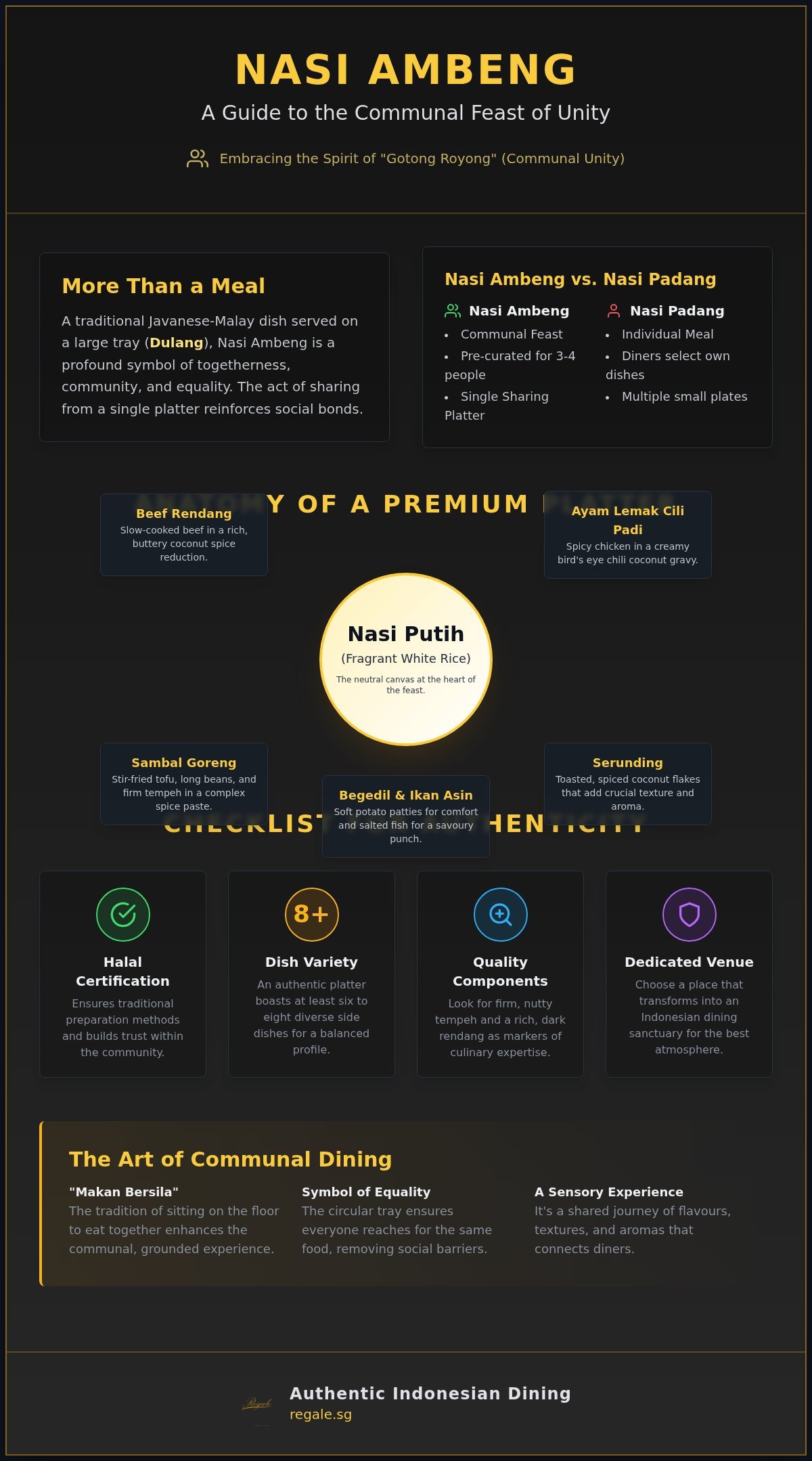
Every authentic nasi ambeng platter is built upon a deliberate structure designed to balance heat, richness, and texture. At the heart of the tray sits a generous mound of Nasi Putih (fragrant white rice). This central anchor serves as a neutral canvas, ready to absorb the diverse gravies and spice pastes that surround it. The proteins are the primary draw, typically featuring Beef Rendang and Ayam Lemak Cili Padi. The rendang is slow-cooked for hours until the coconut milk reduces into a dark, buttery coating, while the chicken offers a sharp, spicy kick from bird’s eye chilies tempered by creamy coconut gravy.
Supporting these stars are the essential side dishes that provide the meal’s backbone. Begedil, a deep-fried potato patty, offers a soft and comforting mouthfeel that contrasts with the bolder flavours. You’ll also find Ikan Asin (salted fish), which provides a punchy, savoury note that cuts through the richness of the coconut-based dishes. These elements ensure that every mouthful of nasi ambeng offers a slightly different experience depending on how you mix your portions.
The Signature Taste of Authentic Sambal Goreng
A true Sambal Goreng is the most critical vegetable component on the platter. It relies on a complex “rempah” or spice paste made from a blend of shallots, garlic, galangal, and dried chilies. This dish combines diced tofu, long beans, and tempeh into a stir-fry that strikes a delicate balance between spicy, savoury, and slightly sweet notes. Culinary experts often look at the quality of the tempeh as a marker of authenticity; it must be firm and nutty, showing that it has been fermented correctly before being fried and tossed in the spice base.
Why Serunding and Kerupuk are Non-Negotiable
Texture is just as important as flavour in this communal feast. Serunding, or spiced coconut flakes, requires a patient toasting process to achieve a dry, fluffy consistency that releases its aroma as soon as it hits the warm rice. Kerupuk (crackers) provides the essential crunch that rounds out the dining experience. Finally, a dollop of pungent Sambal Belacan ties the entire platter together, acting as the bridge between the sweet and spicy elements. If you’re looking for a meal that respects these traditional preparation methods, Regale Singapore offers an evening dining experience that focuses on these exact flavour profiles.
The Art of Communal Dining: Etiquette and Experience
The experience of nasi ambeng extends far beyond the list of ingredients on the tray. It’s a sensory ritual that requires active participation from every diner. Traditionally, a single platter is portioned specifically for four people, a practice that balances the physical size of the dulang with the need for close-knit interaction. This specific number ensures that everyone can comfortably reach the central rice mound while maintaining an intimate atmosphere for conversation. A versatile professional approach to hosting involves managing the flow of the evening so that the communal spirit is preserved without compromising on operational efficiency.
Mixing the various gravies is a key part of the experience. As you combine the Beef Rendang sauce with the Ayam Lemak Cili Padi, the rice becomes a vehicle for a complex, evolving flavour profile. This process isn’t just about eating; it’s an exploration of how different spices interact on the palate. Using the tips of the fingers to compress a small ball of rice and gravy makes the meal easier to manage without the need for utensils, though modern venues often provide them for those who prefer them.
Traditional Etiquette for Sharing a Dulang
Sharing a meal from one tray requires a specific set of social rules to ensure comfort for all. Washing hands before and after the meal is a mandatory step, often facilitated by a “kendi” (water kettle) at the table. In Malay culture, the right hand is used exclusively for eating, while the left hand remains at the side of the tray. This social aspect ensures everyone at the platter has an equal share of the meal.
- Always wash hands thoroughly before touching the communal tray.
- Use the right hand to gather a small portion of rice and mix it with sides.
- Ensure that premium proteins are distributed fairly among the group.
- Avoid taking more than your fair share of a specific side dish until everyone has had a portion.
Modern Adaptations for Group Events and Catering
While the four-person tray remains the standard for authenticity, modern dining needs have led to flexible adaptations. Many establishments now offer sets for two or three people to accommodate smaller families or couples. This flexibility has allowed the dish to become a popular choice for corporate halal catering and mini-buffets in Singapore. Organisers planning a communal dinner should consider the logistical readiness of the venue. A reliable Indonesian restaurant will ensure that the transition from individual service to communal platters is handled with professional care. It’s also vital to communicate any specific dietary requirements, such as allergies to seafood or nuts, which are common in the salted fish or peanut-based components of the platter.
How to Choose the Best Nasi Ambeng in Singapore
Selecting the right venue for a communal feast requires a balance of culinary excellence and logistical readiness. In Singapore, the most critical factor for group inclusivity is Halal Certification. This ensures that all guests can participate in the communal spirit without hesitation. Beyond certification, you should assess the variety offered on the tray. A true, traditional platter must feature at least six to eight distinct side dishes to provide the necessary complexity and balance of flavours. If a platter feels sparse, it likely lacks the depth required for an authentic experience.
Quality indicators often lie in the smallest details. Freshly prepared Serunding should have a distinct, toasted aroma, while the Sambal must be vibrant and punchy rather than dull or overly processed. Venues that offer an “Evening Transformation” are often superior choices. These establishments transition from casual daytime service to a dedicated Indonesian dining atmosphere at night, providing the focused environment needed for a traditional nasi ambeng experience.
Assessing Authenticity and Freshness
When evaluating the food, pay close attention to the Beef Rendang. It should be tender enough to pull apart easily, and the sauce must exhibit the “pecah minyak” or oil-separated stage of cooking. This indicates that the coconut milk has been reduced properly to release its natural oils and deep, caramelised flavours. The rice is equally important; it must be served warm and fragrant to act as the effective anchor for the meal. While some modern venues offer fusion styles, a traditional approach remains the gold standard for those seeking a genuine cultural experience.
Planning for Group Sizes and Occasions
Planning for a large family gathering or a corporate event requires careful calculation. Since a standard dulang is typically designed for four people, you can determine the number of platters needed by dividing your guest count by four. For diverse groups where some may prefer different flavours, choosing a venue that offers both Western favourites, like an Angus Burger, and local Indonesian specialities ensures everyone is satisfied. This dish is also a superior choice for “break fast” (Iftar) during Ramadan, as the communal nature of the platter aligns perfectly with the values of the season.
If you’re ready to host your next gathering, you can book your authentic Indonesian dining experience at Regale Singapore to enjoy a professionally curated communal meal.
Experience Authentic Indonesian Dining with Regale Singapore
Regale Singapore operates as a versatile professional in the local culinary scene, functioning as a bridge between modern service and traditional heritage. As a halal-certified establishment, we prioritize inclusivity and authenticity in every dish we serve. Our commitment to Javanese and Malay traditions is most evident in our evening menu, where we serve as cultural custodians of time-honored recipes. We invite you to experience a dining environment that values operational excellence alongside deep-rooted hospitality, ensuring every guest feels welcomed and respected.
Our approach to dining is methodical and purposeful. We understand that a great meal requires more than just good food; it requires the right setting and a sense of reliability. Whether you are visiting for a casual meal or a significant life event, our team ensures that the transition from the kitchen to your table is seamless. By focusing on traditional preparation methods, we maintain the integrity of the flavours that define our community’s history.
The Evening Transformation: A Unique Dining Atmosphere
The venue undergoes a significant transition as the day progresses. During the morning and afternoon, we offer a range of Western favourites to suit the busy professional. However, as evening approaches, the atmosphere shifts into an authentic Indonesian sanctuary. This transformation marks the arrival of our “Golden Rice Classics,” where the mood becomes more intimate and focused on communal dining. The lighting and service style change to enhance the sensory experience of sharing a meal.
This shift creates the perfect setting for celebratory group meals or intimate family dinners. It’s during these hours that the nasi ambeng takes centre stage, served on traditional dulang trays to encourage the spirit of “Gotong Royong” discussed earlier in this guide. By focusing on this evening transition, we ensure that the communal meal is treated with the respect and focus it deserves, rather than being just another item on a standard menu.
Beyond the Platter: Nasi Minyak and Briyani
While our sharing platters are a major draw, our menu is designed to be inclusive of all dining preferences. For those who prefer individual portions or different flavour profiles, we provide a variety of other traditional specialties. Our Nasi Minyak and Briyani offer rich, aromatic alternatives that maintain the same high standards of authenticity. These dishes are perfect for diners who want to enjoy the depth of Indonesian and Malay spices in a more personal format.
This versatility ensures that diverse groups can find exactly what they need, whether they are looking for a massive sharing tray or a refined individual set. Every dish is prepared with the same attention to detail that defines our signature Nasi Sambal Goreng. We believe that providing these options allows us to serve the community better, ensuring that every guest experiences the best of local culinary traditions. Experience the best Nasi Ambeng in Singapore at Regale and discover why our evening transformation is the preferred choice for authentic communal dining.
Embrace the Spirit of Communal Dining
Sharing a meal is one of the most effective ways to strengthen social bonds and celebrate heritage. By understanding the cultural significance of the “dulang” and the specific components that define an authentic platter, you’re better prepared to host a meaningful group gathering. A truly memorable experience depends on the balance of traditional flavours and a dedicated atmosphere that respects the history of the dish. Choosing a venue that prioritizes these details ensures that every guest feels the warmth of genuine hospitality.
Whether you’re planning a family reunion or a corporate event, a professionally prepared nasi ambeng platter serves as the perfect centerpiece for connection. Our team at Regale Singapore functions as a cultural custodian, offering a halal-certified environment and a traditional Indonesian evening menu. We specialize in authentic Nasi Sambal Goreng and communal platters that stay true to Javanese and Malay roots. We invite you to Book Your Authentic Nasi Ambeng Dinner at Regale Singapore and enjoy a meal rooted in tradition. We look forward to hosting your next communal feast.
Frequently Asked Questions
What is the difference between Nasi Ambeng and Nasi Padang?
Nasi ambeng is a communal sharing platter while Nasi Padang typically involves individual selections or multiple small plates for the table. The former is defined by its presentation on a single large tray, or dulang, where all components are pre-arranged around a central rice mound. While both feature rich Indonesian flavours, the sharing tray specifically emphasises unity and equality among diners, whereas Nasi Padang offers more flexibility for individual preferences.
Is Nasi Ambeng always served on a large tray for sharing?
Traditionally, this dish is always served on a large circular tray called a dulang to facilitate communal sharing. However, modern dining establishments in Singapore have adapted the concept to suit different group sizes. You can now find smaller versions designed for two or three people, though the central theme of sharing from a single plate remains the core of the experience. These adaptations make the meal more accessible for intimate dinners while preserving its heritage.
What are the most common side dishes found in a Nasi Ambeng set?
A standard nasi ambeng set includes a variety of protein and vegetable dishes that balance different textures. You’ll typically find Beef Rendang, Ayam Lemak Cili Padi, and Sambal Goreng, which is a stir-fry of tofu, tempeh, and long beans. Other essential components include Begedil, salted fish, and toasted coconut flakes known as Serunding. These side dishes are carefully arranged to provide a mix of spicy, savoury, and sweet notes in every bite.
Can I find Halal-certified Nasi Ambeng in Singapore for group events?
Yes, finding halal-certified options for group events is straightforward in Singapore. Many established restaurants, including Regale Singapore, hold valid Muis halal certification to ensure that communal meals are inclusive for all guests. These venues often specialise in hosting large gatherings and corporate events, providing the logistical readiness required for serving multiple sharing platters simultaneously. It’s always best to verify the current certification status before booking your group dining experience.
How many people can share a single Nasi Ambeng platter?
A single traditional platter is usually designed to be shared by four people. This specific number ensures that everyone can comfortably reach the food while maintaining the intimate spirit of the meal. Depending on the venue, you might find larger trays for five people or mini-platters for two. When planning for a group, it’s standard practice to order one platter for every four guests to ensure everyone receives an equal share of the proteins.
Is Nasi Ambeng a spicy dish, or can it be customised?
This dish is inherently spicy due to components like the bird’s eye chilies in the chicken gravy and the accompanying Sambal Belacan. While the heat is a defining characteristic of the meal, it’s balanced by milder items like the fragrant white rice and potato-based Begedil. Some restaurants may allow minor adjustments for catering orders, but the traditional flavour profile relies on a specific level of spice to maintain its authentic Indonesian character.
Why is Nasi Ambeng often associated with Javanese culture?
The dish originated in Java, Indonesia, and was brought to the Malay Peninsula and Singapore by Javanese migrants. It’s deeply rooted in Javanese social traditions where communal eating represents “Gotong Royong,” or mutual cooperation. Historically, it was served during festive “kenduri” ceremonies to celebrate religious milestones or weddings. This cultural heritage remains a point of pride, with the dish serving as a living link to Javanese-Malay ancestry and communal values.
Can Nasi Ambeng be ordered for corporate catering or home delivery?
You can certainly order this dish for corporate events or private home gatherings through various halal catering services. Many Indonesian restaurants in Singapore offer specialised mini-buffet or bento options that replicate the nasi ambeng experience for larger groups. Delivery services also provide the convenience of having a fully assembled sharing tray sent directly to your location. This makes it an excellent choice for office lunches or family celebrations where communal dining is the focus.