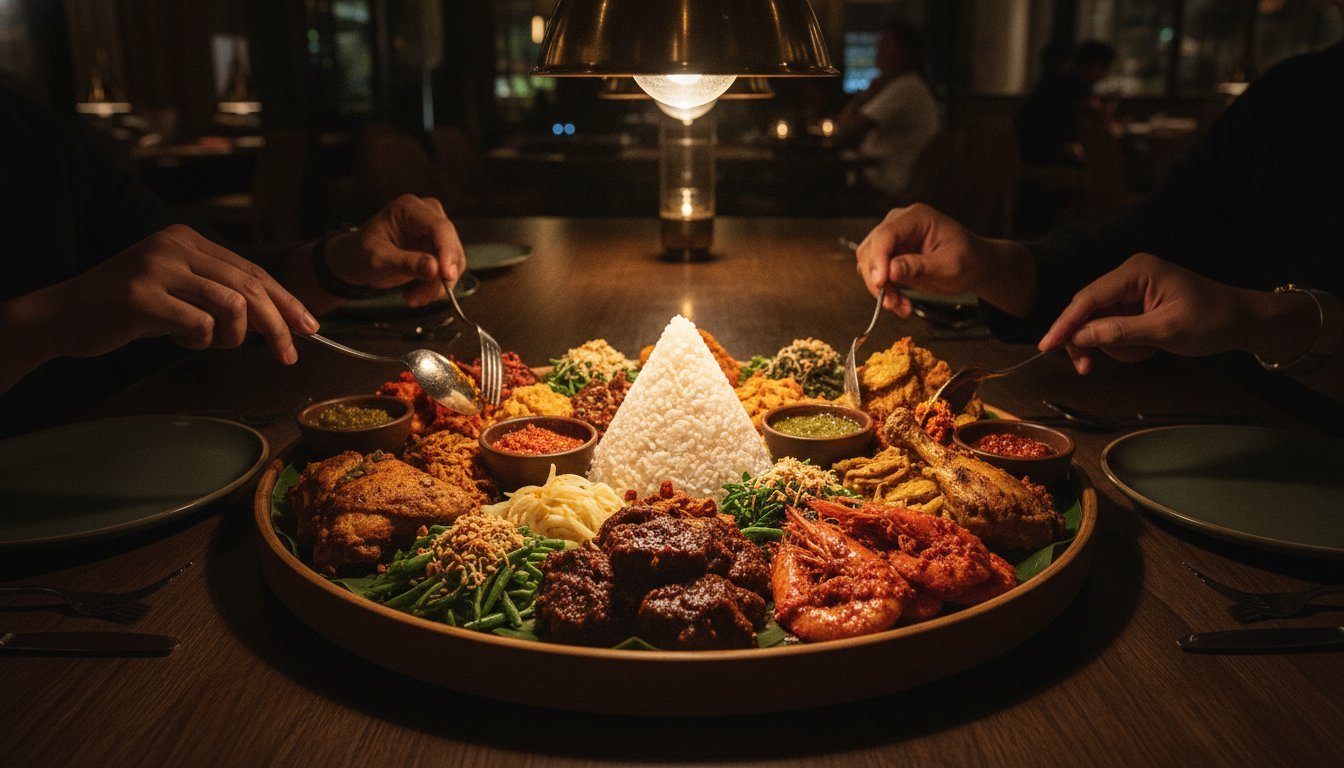

Finding the best Indonesian dinner in Singapore often requires looking past the neon signs of commercialized food courts to find the quiet, methodical balance of heritage spices. You’ve likely noticed that while many spots claim authenticity, few manage to preserve the complex depth of traditional recipes or the generous spirit of communal dining. It’s frustrating to search for a premium halal-certified venue only to find portions that don’t quite suit a family gathering or flavors that feel muted by mass production.
This guide provides the clarity you need to experience a meal that truly respects its cultural roots in 2026. You’ll discover the essential elements that define a high-quality Indonesian evening meal and learn where to find the most flavorful halal-certified heritage dishes in the city. We’ll examine the importance of traditional platters like Nasi Ambeng and provide practical advice on securing a successful group dining experience with portions that reflect true Indonesian hospitality. By the end, you’ll know exactly how to identify a restaurant that functions as both a professional culinary establishment and a dedicated cultural custodian.
Key Takeaways
- Identify why the quality of ‘Rempah’ or spice paste serves as the essential foundation for every authentic heritage dish.
- Compare the layered complexity of Nasi Sambal Goreng with the communal spirit of Nasi Ambeng to choose the best Indonesian dinner for your specific group.
- Understand the cultural importance of the ‘Dulang’ tray service and how it fosters unity through shared portions and traditional presentation.
- Learn how to verify halal certification and identify restaurants that don’t compromise on heritage flavors through specialized evening-only menus.
- Discover how venues located at landmarks like the Science Centre Singapore maintain cultural heritage through professional service and authentic recipes.
What Defines an Authentic Indonesian Dinner in Singapore?
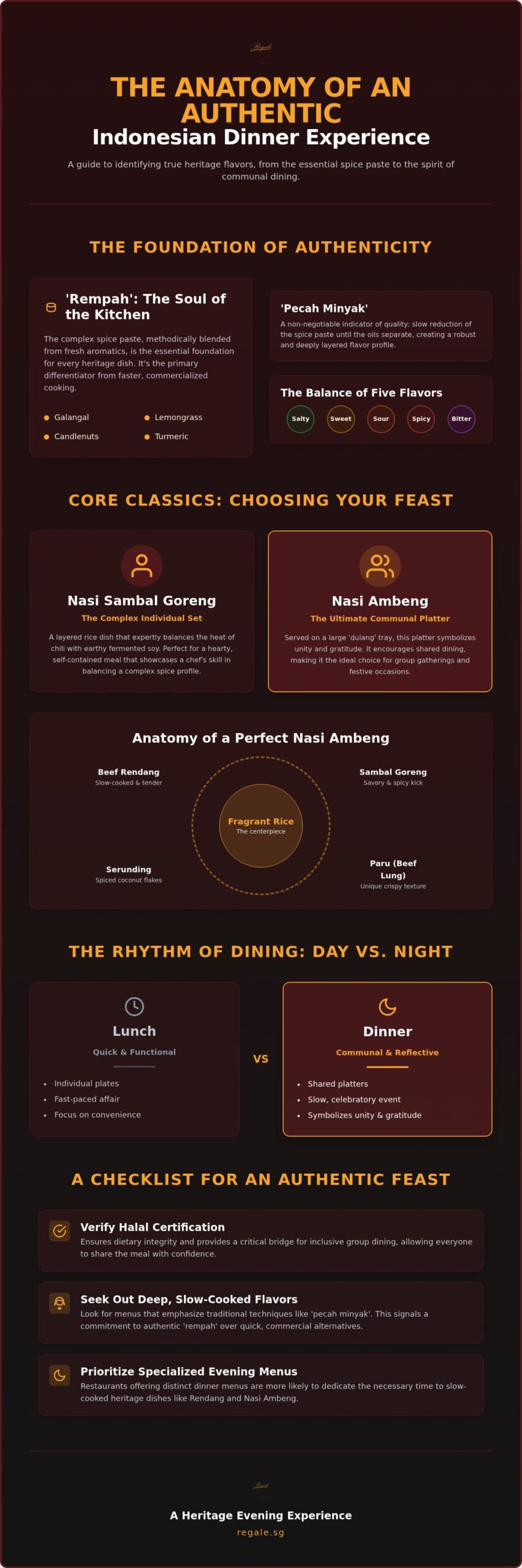
An authentic Indonesian cuisine experience relies on the foundational use of ‘Rempah’. This complex spice paste is the soul of the heritage kitchen. It requires a methodical blending of fresh aromatics like galangal, lemongrass, candlenuts, and turmeric. Unlike Indo-Chinese fusion which often leans on high-heat stir-fry techniques and soy-based sauces, true heritage cooking prioritizes depth through slow reduction. Finding the best Indonesian dinner means looking for dishes that haven’t been rushed. In Singapore, distinguishing between commercialized versions and authentic flavors is essential for a genuine culinary experience.
Distinguishing these styles is particularly important for group events. Authentic Malay-Indonesian heritage focuses on the layering of fresh herbs and the slow reduction of sauces until the oils separate. This process, known as ‘pecah minyak’, is a non-negotiable indicator of a well-prepared base. It creates a profile that is far more robust than the lighter, quicker adaptations found in many food courts.
The Balance of Five Flavors
Authentic recipes achieve a precise interplay between sweet (kecap manis), sour (asam), salty, bitter, and spicy. This isn’t just about heat; it’s about how these elements harmonize through traditional techniques. For example, a proper rendang isn’t just cooked; it’s reduced over hours until the spices caramelize and coat the meat. Evening dishes often feature ‘Lemak’, a rich coconut creaminess that provides a satisfying weight to the meal. This richness is why many diners consider the evening the optimal time for a traditional feast. It’s a time when the palate can fully appreciate the complexity of the best Indonesian dinner.
Cultural Significance of the Evening Meal
Dinner serves as a transition from the functional pace of the workday to a more communal, reflective time. While lunch in Singapore is often a quick affair of individual plates, the evening meal is traditionally a shared event. This is when heritage specialties like Nasi Ambeng take center stage. These platters symbolize unity and gratitude, requiring time to prepare and even more time to enjoy.
Halal certification serves as a critical bridge for inclusive dining in these settings. It allows families, friends, and colleagues to gather with total confidence in the dietary integrity of the meal. Choosing a venue that respects these traditions ensures a successful group dining experience that feels both hospitable and culturally rooted. The shift from quick lunch staples to these slow-cooked dinner specialties marks a commitment to quality that defines a true cultural custodian.
Core Classics: From Nasi Sambal Goreng to Nasi Ambeng
To find the best Indonesian dinner, one must look toward the heritage staples that define festive dining. Nasi Minyak, or ghee rice, often serves as the fragrant base for celebratory meals. It is prepared with clarified butter and aromatics like star anise and cinnamon, offering a much richer profile than plain steamed rice. Similarly, Indonesian-style Briyani distinguishes itself from other regional variants through its specific blend of spices and the inclusion of local accompaniments like acar and emping crackers. These dishes are traditionally reserved for the evening because their preparation requires significant time and methodical care.
Nasi Sambal Goreng is another cornerstone of this culinary tradition. While some diners view it as a simple side dish, it’s actually a complex, layered rice set. It balances the heat of the chili with the earthy tones of fermented soy. This dish highlights the skill of the chef in maintaining the integrity of each ingredient within a collective spice profile. It’s a staple that transitions seamlessly from a hearty individual meal to a central component of a larger spread.
Anatomy of a Perfect Nasi Ambeng
Nasi Ambeng is the ultimate sharing platter. It symbolizes unity and gratitude through its presentation on a large ‘dulang’ or tray. A perfect set features a mountain of fragrant rice surrounded by several traditional sides that provide a spectrum of textures. Beef Rendang provides a slow-cooked, tender centerpiece. Sambal Goreng adds a savory-spicy kick. Serunding, which consists of spiced coconut flakes, offers a sweet, toasted crunch. Paru, or fried beef lung, provides a unique, crispy texture that is a hallmark of authentic heritage cooking. This format is essential for those seeking the best Indonesian dinner because it encourages communal interaction. While a MICHELIN Guide recommendation might highlight specific ala carte Indonesian flavors, the Nasi Ambeng remains the gold standard for group feasts.
The Complexity of Sambal Goreng
The complexity of Sambal Goreng lies in its fermented soy (tempeh) and beancurd (tauhu) base. The secret to a balanced sambal is providing enough heat to stimulate the palate without overpowering the delicate flavors of the ingredients. The tempeh must be fried until it achieves a specific level of firmness, allowing it to hold the spice paste without becoming soggy. At Regale Singapore, we maintain the traditional texture of this classic dish by following heritage recipes that prioritize these specific preparation stages. This attention to detail transforms a standard rice set into a genuine heritage experience. If you are planning a gathering, you can explore our authentic Nasi Ambeng sets to see how these elements come together on a single platter.
Traditional vs. Modern Indonesian Dining Styles
The search for the best Indonesian dinner in Singapore often leads to a choice between two distinct experiences: the polished, minimalist modern cafe and the warm, hospitality-focused traditional space. Modern dining styles prioritize individual plated portions and aesthetic presentation, often catering to the fast-paced nature of city life. In contrast, heritage settings focus on the sensory depth of the meal and the communal atmosphere. These traditional venues are often viewed as more trustworthy because they refuse to compromise on the labor-intensive preparation methods required for authentic flavors.
One of the most debated aspects of modern Indonesian food is spice level. Many commercial establishments adjust their recipes for the general public, often resulting in a muted flavor profile that lacks the characteristic “kick” of authentic heritage cooking. Authentic venues maintain traditional heat levels, using specific varieties of chili to build a complex, lingering warmth rather than just a sharp sting. This commitment to original spice profiles is a hallmark of a true cultural custodian.
The Dulang Experience
Eating from a ‘Dulang’, or a large communal tray, is a tradition that has made a significant comeback in the Singapore dining scene. This style of service is central to the Nasi Ambeng experience, where a single large platter serves as the centerpiece for the entire table. It enhances the social aspect of dinner by encouraging guests to interact and share from the same source of nourishment.
Traditional etiquette for sharing these platters involves a sense of mindfulness and respect for others at the table. It’s a practice that fosters unity and gratitude, making it a popular choice for families and large groups celebrating significant life events. This communal approach transforms a standard meal into a shared memory, which is something a modern individual plate often fails to replicate.
Modern Adaptations: Western-Indo Fusion
Fusion works best when it elevates traditional sauces with high-quality proteins. For example, incorporating an Angus Burger or premium beef cuts into a menu can provide a familiar entry point for diners while still respecting the underlying spice profiles. However, there’s always a risk of losing authenticity if the core recipes are modified too heavily for modern palettes. The best Indonesian dinner experience manages to bridge this gap without diluting the heritage of the dishes.
Regale Singapore manages this balance through a unique dual-concept. We serve Western and local favorites during the day to meet diverse lunch needs, then transform into a dedicated heritage space in the evening. This transformation allows us to focus entirely on authentic Indonesian cuisine when it matters most. We use the same high-quality standards for our Angus Burger as we do for our Nasi Ambeng, ensuring that every guest experiences professional service regardless of their menu choice. This methodical approach ensures that the heritage of the evening meal remains protected and prominent.
How to Choose the Right Restaurant for an Indonesian Feast
Selecting a venue for the best Indonesian dinner requires a methodical approach that goes beyond simple online reviews. Start by verifying halal certification to ensure the meal is inclusive for all guests. This is a non-negotiable requirement for many diners in Singapore and reflects a restaurant’s commitment to professional hospitality. Next, look for establishments that feature an “evening transformation.” These venues often serve lighter, more functional fare during the day but pivot to labor-intensive heritage dishes for the dinner service. This shift indicates a commitment to the slow-cooking processes required for authentic flavors.
Assessing the variety of the platter is also essential. A true heritage feast should offer a comprehensive cross-section of flavors. It should balance the richness of coconut-based sauces with the sharp acidity of traditional pickles. Choosing a restaurant located near landmarks like the Science Centre Singapore allows for a seamless transition from a day of activity to a premium dining experience. This situational convenience is particularly valuable for families and groups seeking a full-day itinerary.
Evaluating the Menu Depth
A professional menu should offer variety beyond standard white rice. Check if the restaurant provides specialty options like Nasi Minyak or Briyani. These fragrant alternatives require a higher level of culinary expertise and signify a deeper respect for traditional festive dining. It’s also important to ensure there are options for non-spicy eaters within the Indonesian framework. While heritage food is known for its heat, a versatile menu includes milder savory dishes that allow children and elderly guests to participate in the feast. Fresh, locally sourced ingredients are the final marker of quality in these settings, as they are necessary to maintain the vibrancy of the spice pastes.
Logistics for Large Groups
Organizing a group feast involves specific logistical considerations that differ from individual dining. Nasi Ambeng sets are prepared with numerous intricate components; they often require advance notice for the kitchen to manage the slow reduction of sauces. Verify the booking policy to avoid disappointment. Consider the seating arrangements as well. A venue should provide comfort for both multi-generational family gatherings and professional corporate dinner settings. Accessibility is another factor for national diners traveling from different parts of Singapore. If you are looking for a venue that combines professional service with traditional flavors, you can book your Indonesian restaurant Singapore experience at Regale.
Regale Singapore: A Heritage Evening Experience
Regale Singapore operates as a versatile professional in the hospitality space, offering a unique dual-concept that caters to different service needs throughout the day. While our daytime menu features Western favorites and local staples like the Angus Burger, the evening marks a significant operational shift. As the sun sets, we transform into a dedicated heritage space focused on providing the best Indonesian dinner experience. This transition is methodical and purposeful. It allows our kitchen to pivot from quick-service lunch items to the slow-cooked, complex preparations required for authentic Indonesian cuisine. Quality remains our priority.
Our identity as a “Cultural Custodian” is rooted in a commitment to preserving the integrity of traditional recipes. We specialize in dishes that require significant time and patience, such as Nasi Sambal Goreng and Nasi Ambeng. By maintaining these high standards, we ensure that every guest experiences the true depth of Malay-Indonesian heritage. Our hospitality is grounded in a sense of established reliability. We’re a dependable partner for families and groups who value both culinary excellence and cultural authenticity.
The Evening Transformation
The atmosphere at Regale shifts noticeably during the dinner service to create a space that respects the heritage of the food. We move away from the functional pace of daytime dining toward a more hospitable, community-focused environment. The shift is complete. This transformation is not just about the menu; it’s about creating a dedicated setting where the aromas of slow-cooked curries and fresh spice pastes can be fully appreciated. For visitors finishing a day at the Science Centre Singapore, this shift provides a perfect conclusion to their visit. It offers a seamless transition from modern discovery to traditional comfort.
Signature Dishes You Can’t Miss
Our signature Nasi Sambal Goreng platter is a essential choice for those seeking a layered, authentic experience. It features our carefully prepared spice paste and traditional accompaniments that have been refined through years of heritage practice. For larger groups, our Nasi Ambeng sharing set is designed for 2 to 4 people. It’s served in the traditional communal style. This platter includes a variety of heritage favorites, including Beef Rendang and Serunding, all centered around fragrant rice. We also offer specialty rice options like Briyani and Nasi Minyak to provide a complete festive experience for our national diners. Every dish is prepared with the same quiet competence that defines our brand.
Experience the best Indonesian dinner at Regale Singapore today.
Experience Authentic Heritage Flavors Tonight
Finding the best Indonesian dinner in Singapore involves more than just selecting a menu item. It’s about recognizing the labor-intensive preparation of traditional rempah and the cultural significance of shared platters like Nasi Ambeng. You’ve learned how to distinguish between commercial fusion and authentic heritage cooking by looking for specialized evening menus and verified halal certification. These elements ensure a meal that respects tradition while providing a professional dining experience for families and groups alike.
Regale Singapore stands ready to host your next gathering with halal-certified heritage recipes that prioritize depth of flavor. Our authentic Nasi Ambeng sharing platters provide the perfect centerpiece for a communal feast at our venue conveniently located at the Science Centre Singapore. Whether you’re finishing a day of discovery or planning a dedicated evening event, our team is committed to serving as your reliable cultural custodian. We invite you to join us for a meal that celebrates community and tradition. Book Your Authentic Indonesian Dinner at Regale Singapore and enjoy a truly hospitable heritage experience.
Frequently Asked Questions
What is the difference between Nasi Ambeng and Nasi Padang?
Nasi Ambeng is a communal sharing platter typically served on a large tray called a dulang, symbolizing unity and gratitude. In contrast, Nasi Padang is usually served as an individual meal where diners select specific dishes from a display. While both feature heritage recipes, the Nasi Ambeng format is specifically designed for group dining. It’s a central feature for those seeking a traditional communal experience during their evening meal.
Is Indonesian food always spicy?
Indonesian cuisine is defined by a balance of sweet, sour, salty, bitter, and spicy elements. While many dishes feature a vibrant kick, the flavor profile isn’t exclusively about heat. Many heritage recipes, such as those involving slow-cooked coconut milk or aromatic ghee rice, prioritize richness and fragrance over spice. This variety makes it possible to enjoy a full heritage meal without every component being fiery or overwhelming for the palate.
What makes a restaurant ‘halal-certified’ in Singapore?
In Singapore, halal certification is issued by Majlis Ugama Islam Singapura (MUIS) after a rigorous inspection of the establishment’s supply chain and kitchen operations. This certification ensures that all ingredients, preparation methods, and storage facilities adhere to strict Islamic dietary requirements. For diners seeking the best Indonesian dinner, this certification provides essential peace of mind, ensuring the venue is inclusive and respectful of diverse dietary needs.
Can I find Western food at Regale Singapore during dinner time?
Regale Singapore operates a dual-concept model to serve different visitor needs. During the day, we provide Western favorites and local staples, including our popular Angus Burger. However, the evening service is a dedicated transformation period where the kitchen focuses exclusively on authentic Indonesian cuisine. This allows us to maintain the high standards required for labor-intensive heritage dishes like Nasi Sambal Goreng and Nasi Ambeng during the dinner hours.
How many people does a Nasi Ambeng platter typically serve?
The Nasi Ambeng sharing platters at our venue are traditionally designed to serve groups of 2 to 4 people. This portioning ensures that every guest can enjoy a generous selection of the various side dishes, such as Beef Rendang and Serunding, without the platter becoming unmanageable. For larger family gatherings or corporate events, multiple sets can be arranged to accommodate the specific size of your dining party comfortably.
Is Regale Singapore suitable for corporate dinners or large family gatherings?
The venue is highly suitable for both corporate dinners and large family events. We provide a professional setting that balances hospitality with the logistical readiness needed for significant group sizes. Located at the Science Centre Singapore, the restaurant offers an accessible national location for guests traveling from various parts of the country. Our team is experienced in managing the specific service levels required for both professional and celebratory gatherings.
What is the best dish to try for a first-time Indonesian dinner?
For those experiencing a formal heritage meal for the first time, Nasi Sambal Goreng is an excellent choice. It serves as a comprehensive introduction to the foundational spices and textures of the cuisine. This dish balances savory, spicy, and earthy notes through its mix of fermented soy and beancurd. It’s often cited as a favorite for the best Indonesian dinner because it showcases the complexity of traditional spice pastes in an approachable format.
Are there vegetarian options available in a traditional Indonesian dinner menu?
Traditional Indonesian menus feature several plant-based staples, including tempeh (fermented soybean) and tauhu (beancurd). These ingredients are central to dishes like Sambal Goreng, providing a high-protein option for those avoiding meat. While these components are traditional, it’s advisable for vegetarians to verify if specific spice pastes contain shrimp paste or other animal-derived aromatics. Our staff can provide guidance on the specific heritage recipes used in our evening menu.