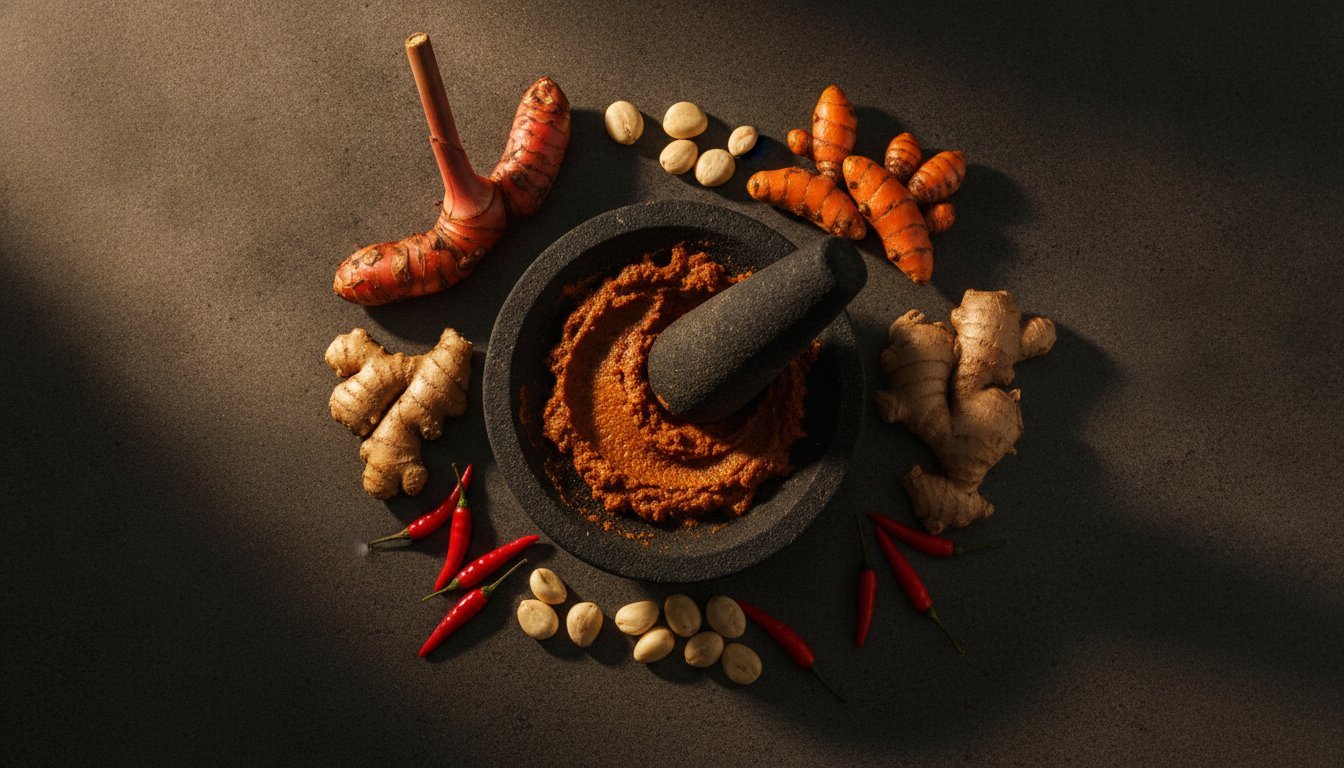

Achieving the legendary depth of a traditional Indonesian platter requires more than just adding heat; it demands a precise, architectural understanding of aromatics. Many home cooks struggle to replicate the soul of a dish because they mistake Indonesian cuisine spices for their Malay or Indian counterparts. While these culinary traditions share some DNA, the specific layering of roots, seeds, and leaves in an Indonesian kitchen creates a profile that is uniquely complex. You might find your home-cooked versions lack that punchy, “restaurant-style” finish because the balance of essential versus optional ingredients remains unclear.
We understand the pride involved in serving a heritage-rooted meal that tastes exactly as it should. This guide will help you identify the core aromatics that create the foundation of authentic flavours, from the pungent kick of galangal to the earthy sweetness of candlenuts. You will discover the concept of Bumbu, the essential spice pastes that act as the engine for dishes like Nasi Sambal Goreng. By the end, you will appreciate the craftsmanship behind traditional platters such as Nasi Ambeng and feel confident in your ability to master the specific aromatics that define this vibrant culinary tradition.
Key Takeaways
- Identify the “Holy Trinity” of Indonesian aromatics—galangal, turmeric, and ginger—and their historical roots in the legendary Spice Islands.
- Learn to distinguish between fresh and dry Indonesian cuisine spices to replicate the bright, sharp citrus notes found in authentic recipes.
- Understand the architecture of Bumbu, the three foundational spice pastes that serve as the essential engine for almost every traditional dish.
- Discover the role of umami-rich ingredients like Belacan in creating the legendary depth and complexity of Nasi Sambal Goreng.
- Appreciate how heritage-rooted preparation methods at Regale Singapore transform these aromatics into sophisticated sharing platters like Nasi Ambeng.
Why Spices Define the Soul of Indonesian Cuisine
Indonesian cuisine spices represent a thousand years of maritime history and cultural exchange. The archipelago’s unique geography, particularly the Maluku Islands known historically as the “Spice Islands,” provided the world with nutmeg, cloves, and mace. In a tropical climate, these aromatics served a dual purpose: they transformed simple ingredients into legendary dishes and acted as natural preservatives before the era of refrigeration. History lives in every mortar and pestle. The heritage of these islands is not found in books, but in the specific, pungent fragrance of a kitchen at dawn.
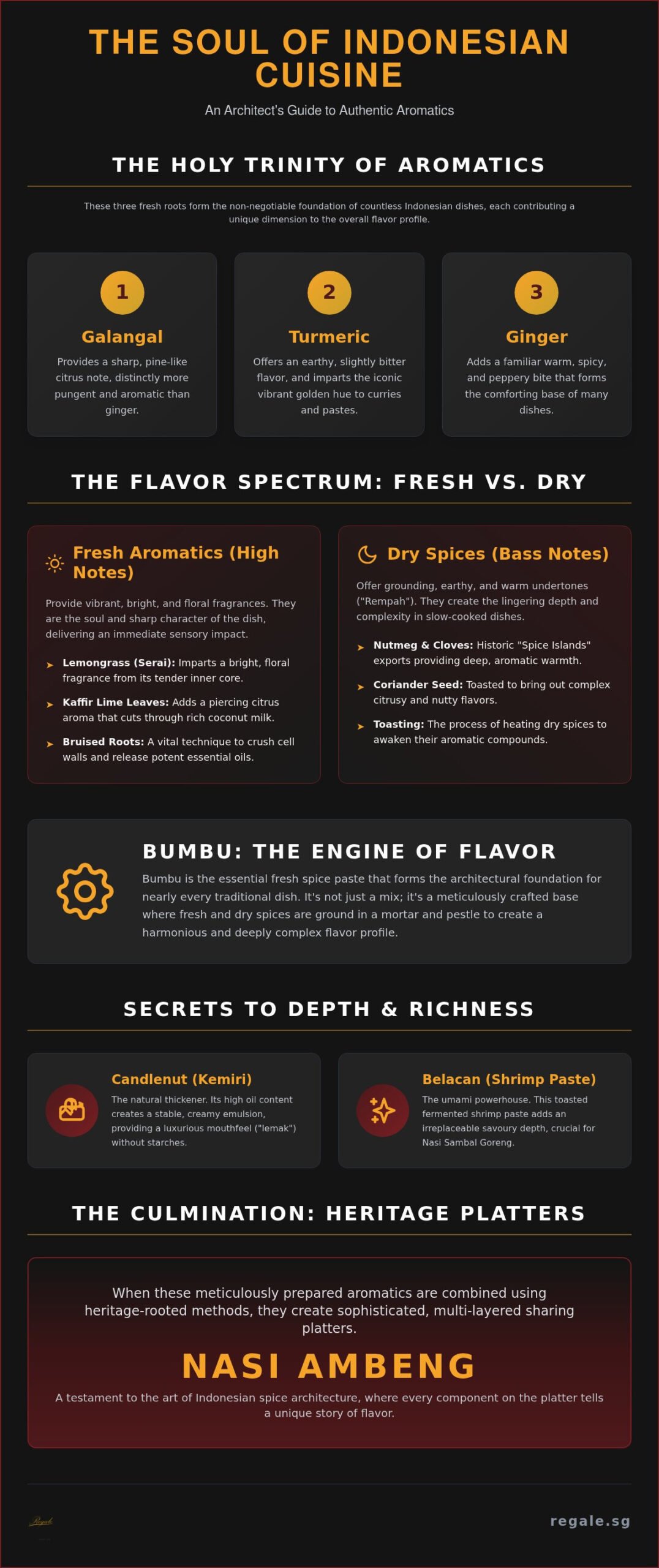
At the heart of this culinary tradition lies the “Holy Trinity” of aromatics: galangal, turmeric, and ginger. While these roots share a similar appearance, their functions are distinct. Galangal provides a sharp, pine-like citrus note; turmeric offers earthy bitterness and vibrant colour; ginger adds a warm, spicy bite. These fresh roots are often combined with dry spices to create the foundation of Indonesian spice blends, which facilitate the slow-cooked depth characteristic of the region. Rempah serves as the backbone of maritime Southeast Asian trade. While “rempah” refers to the dry spices, “bumbu” represents the fresh paste that acts as the engine for every dish.
The Cultural Legacy of the Spice Islands
The vastness of the Indonesian archipelago, with its 17,000 islands, created a natural laboratory for botanical diversity. Each region developed its own signature profile based on local availability, yet the reliance on fresh aromatics remains a constant. These ingredients don’t just flavour the food; they tell the story of a nation that was once the epicentre of the global economy. Using these spices today is an act of cultural preservation, maintaining techniques that have been passed down through generations. Geography dictated the menu, and the results are spectacular.
Sensory Profile: Beyond Just Heat
A common misconception is that Indonesian food relies solely on the heat of the chilli. In reality, the flavour profile is a sophisticated balance of earthy, citrusy, and umami notes. Spices like candlenut and coriander seed are used to create “lemak,” a specific type of richness and mouthfeel. This allows a dish to feel indulgent and satisfying without relying heavily on added fats or oils. Mastering the use of Indonesian cuisine spices requires an appreciation for this balance. The complexity comes from the interaction between fresh roots and toasted dry spices, creating a layered experience that unfolds with every bite.
The Essential Aromatics: Fresh vs. Dry Spices
Achieving the perfect balance of Indonesian cuisine spices requires moving beyond the spice rack and into the produce aisle. Fresh aromatics provide the vibrant, “high-note” flavours that define the archipelago’s cooking, while dry spices offer the grounding “bass-notes.” Several key ingredients are non-negotiable for an authentic profile:
- Galangal (Lengkuas): This fibrous root is tougher than ginger and provides a sharp, pine-like citrus note.
- Lemongrass (Serai): Only the tender white inner core is typically used to impart a bright, floral fragrance.
- Kaffir Lime Leaves (Daun Jeruk): These provide a piercing citrus aroma that cuts through the richness of coconut milk.
- Turmeric (Kunyit): Valued for its mild earthy flavour, antiseptic properties, and iconic golden hue.
The Fresh Root Trio
Ginger, Galangal, and Fingerroot (Temu Kunci) form the foundation of most savoury dishes. Ginger provides a familiar, peppery warmth, while Galangal is sharper and more aromatic. Fingerroot is the most delicate of the three; it’s often used to add a light, herbal lift to seafood or clear vegetable broths. To extract maximum flavour, these roots are rarely just chopped. The technique of bruising, or “titik,” is vital. By crushing the rhizome with a heavy object like a pestle, you break the cell walls and allow essential oils to mingle with the cooking fat immediately. Fresh roots should be stored unpeeled in a ventilated area, though you can freeze them to maintain their potency over several months.
The Role of Nut and Seed Pastes
While roots provide fragrance, nuts and seeds provide the necessary structure. Candlenut (Kemiri) is the secret to the luxurious mouthfeel found in authentic sauces. Kemiri acts as a natural thickener in Indonesian stews. Because of its high oil content, it creates a stable emulsion when ground into a paste with other aromatics. This eliminates the need for flour or starch, keeping the dish’s profile clean. Coriander seeds (Ketumbar) are frequently paired with candlenuts to add a sweet, woody undertone that balances the sharper notes of the fresh roots. This combination of textures and scents is what differentiates a standard curry from a truly heritage-rooted dish. You can experience this meticulous layering of flavours at a Halal restaurant that prioritises traditional preparation methods.
Understanding Bumbu: The Architecture of Spice Pastes
Professional chefs and traditional home cooks don’t treat spices as individual garnishes. Instead, they rely on “Bumbu,” a wet spice paste that serves as the architectural foundation of almost every dish. This method ensures that the complex profile of Indonesian cuisine spices is fully integrated into the ingredients rather than sitting on top of them. Creating a Bumbu involves grinding fresh aromatics into a smooth consistency, which is then fried to release its essential oils. This process, known as “Tumis,” is the most critical stage of the cooking cycle. It transforms raw, pungent roots into a mellow and fragrant base.
The Colour-Coded Kitchen
The Indonesian kitchen operates on a sophisticated colour-coding system that organises flavour profiles into three “mother pastes.” By mastering these bases, you can recreate hundreds of traditional recipes. Bumbu Putih (White) consists primarily of shallots, garlic, and candlenuts; it is used for mild, creamy dishes such as Opor Ayam. Bumbu Merah (Red) incorporates red chillies into the white base, providing the fiery foundation for Balado and various sambal-based dishes. Finally, Bumbu Kuning (Yellow) adds fresh turmeric to the mix. This vibrant paste is essential for Soto and Nasi Minyak, providing both a medicinal earthy depth and a signature golden hue.
Mastering the Sauté
The transition from a raw paste to a cooked base is marked by a specific culinary phenomenon known as “Pecah Minyak,” or oil separation. As you sauté the Bumbu over medium heat, the water content from the fresh shallots and garlic evaporates. Once the moisture is gone, the oil begins to separate from the solids, bubbling around the edges of the paste. This signals that the spices are thoroughly cooked and their raw, acrid edge has been transformed into a mellow, fragrant depth. Skipping this step results in a dish that tastes unfinished and lacks the legendary depth associated with authentic Indonesian cooking. It’s the difference between a simple meal and a masterpiece.
While modern blenders offer convenience, many traditionalists still prefer the “Ulekan,” a stone mortar and pestle. Grinding by hand bruises the cells of the aromatics, releasing more volatile oils than the sharp blades of a processor. Flavour clarity also depends on the order of operations. You should always fry the base paste first before adding delicate aromatics like kaffir lime leaves or lemongrass. Adding these leaves too early can cause them to burn, which introduces a bitter note that masks the intended profile of the dish. This meticulous layering ensures that every Indonesian cuisine spices component serves its specific purpose.
How Spice Blends Elevate Classics like Nasi Sambal Goreng
Understanding individual Indonesian cuisine spices is only the first step. The true test of a chef’s skill is how these aromatics are layered to create signature dishes like Nasi Sambal Goreng. This dish relies on a delicate interplay between heat, acidity, and umami. The foundation is a rich chilli paste, but the secret to its depth is Belacan (shrimp paste). This fermented ingredient provides an essential umami base that grounds the sharper notes of the fresh chillies. Without it, the dish lacks the savoury soul that distinguishes authentic Indonesian cooking from generic spicy stews.
The Anatomy of Sambal Goreng
In a traditional preparation, the chilli paste is tempered with coconut milk to create a creamy, clinging sauce. However, richness alone can be cloying. To counter this, Tamarind (Asam Jawa) is introduced to provide a necessary acidic balance. This acidity brightens the dish and highlights the floral notes of the lemongrass and kaffir lime leaves added during the sauté. The goal is a balanced spice level. It should provide a steady warmth that enhances ingredients like tofu, tempeh, and prawns rather than overwhelming them. Flavour clarity is paramount in every bite.
Aromatic rice provides the perfect canvas for these bold sauces. In dishes like Nasi Minyak or Nasi Briyani, dry spices take centre stage. Cinnamon sticks and star anise are toasted in clarified butter to infuse the grains with a sweet, woody fragrance. This aromatic base ensures that even the rice contributes to the overall sensory experience of the meal. It’s a holistic approach to flavour where every component, from the grain to the garnish, is considered part of a larger narrative.
The Platter Harmony of Nasi Ambeng
Nasi Ambeng represents the pinnacle of this layering philosophy. It’s a communal sharing platter where multiple side dishes are served around a central mound of rice. Each item on the plate uses a different Bumbu (spice paste) to create a specific profile. The sweet and spicy Serunding (spiced coconut flakes) must complement the earthy depth of the Rendang and the savoury richness of the Paru (fried beef lung). Nasi Ambeng is the ultimate showcase of Indonesian spice mastery. The success of the platter depends on how these contrasting elements interact; the sweet, the spicy, and the savoury must exist in perfect harmony.
Experience these heritage-rooted flavours for yourself at an Indonesian Restaurant Singapore that respects traditional preparation methods and the complex chemistry of aromatics. At Regale Singapore, we act as a cultural custodian, ensuring that every Nasi Ambeng platter delivers the authentic depth your palate deserves.
Experience Authentic Indonesian Heritage at Regale Singapore
Regale Singapore operates as a dedicated bridge between historical tradition and modern dining. While our daytime service offers a versatile range of Western and local favourites, the evening marks a significant transition into a specialised Indonesian experience. This transformation allows our kitchen to focus entirely on the heritage-rooted preparation methods required for authentic results. We don’t take shortcuts with our base pastes. Every dish relies on the meticulous layering of fresh Indonesian cuisine spices, ensuring that the Bumbu architecture remains true to its origins. Our role as a cultural custodian means we preserve the techniques that define the archipelago’s soul.
A Halal-Certified Culinary Journey
Maintaining Halal integrity is a core component of our hospitality. In traditional Malay and Indonesian cooking, the purity of ingredients is as vital as the flavour itself. Our Halal-certified kitchen ensures that every spice, protein, and aromatic meets strict dietary standards without compromising on the depth of the meal. We source fresh rhizomes and seeds to replicate the “Holy Trinity” of galangal, turmeric, and ginger in-house. This commitment to quality allows us to serve heritage recipes that resonate with both local diners and those seeking a genuine taste of the region. It’s a professional approach to tradition that builds trust through transparency and consistent excellence.
Plan Your Traditional Feast
The complexity of Indonesian aromatics is best appreciated through communal dining. Our signature Nasi Ambeng sharing platters are designed specifically for group gatherings and family events. These platters offer a curated selection of side specialities, allowing you to experience how different spice profiles interact on a single plate. You can taste the contrast between the umami-rich Nasi Sambal Goreng and the earthy depth of our slow-cooked meats. Every element is prepared with quiet competence and a deep respect for the craftsmanship behind the ingredients.
The evening atmosphere at Regale provides a hospitable setting for significant life events or a high-quality daily meal. We invite you to see how the science of oil separation and the art of the mortar and pestle come together in a professional setting. Book your evening Indonesian dining experience at Regale Singapore to discover the legendary depth of authentic heritage flavours. Whether you’re a long-time fan of the cuisine or a newcomer to these aromatics, our team is ready to guide you through a memorable culinary journey.
Master the Art of Indonesian Aromatics
Understanding the architecture of Bumbu and the specific roles of fresh rhizomes is the first step toward appreciating the legendary depth of the archipelago’s cooking. These Indonesian cuisine spices do more than provide heat; they create a sophisticated sensory profile of earthy, citrusy, and umami notes. By identifying the “Holy Trinity” of galangal, turmeric, and ginger, you can unlock the secrets behind dishes that have defined the region for centuries. Authentic flavour is always a result of patience and precise layering.
Regale Singapore serves as a dedicated cultural custodian for these traditions. Our Halal-certified kitchen focuses on heritage-rooted preparation methods, particularly for our signature Nasi Sambal Goreng and Nasi Ambeng sharing platters. We transition to a specialised Indonesian menu every evening to ensure each dish reflects the true soul of the Spice Islands. It’s a professional approach to tradition that ensures every visit provides a hospitable and reliable dining experience. We look forward to welcoming you for a traditional feast that celebrates the craftsmanship of heritage flavours.
Experience the authentic spices of Indonesia at Regale Singapore
Frequently Asked Questions
What are the most common spices used in Indonesian cuisine?
The most common ingredients include a mix of fresh roots and dried seeds. Shallots, garlic, and chillies form the base of most dishes, while candlenuts provide a creamy texture. Dried seeds like coriander, cloves, and nutmeg are also foundational. These Indonesian cuisine spices are often ground into pastes to ensure the flavours are fully integrated into the protein or vegetables during the cooking process.
Is Indonesian food always spicy?
Indonesian food is not always spicy; it’s defined by a balance of sweet, sour, salty, and umami notes. While many dishes use chillies, others like Opor Ayam rely on a mild, creamy base of coconut milk and candlenuts. The level of heat varies significantly across the archipelago. The goal is usually to create a complex aromatic profile where the heat enhances the other ingredients rather than overwhelming the palate.
What is the difference between Bumbu and Rempah?
The primary difference lies in their form and application. Bumbu refers to a wet seasoning paste made from fresh aromatics like shallots, garlic, and ginger. It’s the engine that starts the dish. Rempah refers to dry spices such as cinnamon, star anise, and cloves. Most traditional recipes require a combination of both to achieve the necessary depth. Bumbu provides the fragrance, while rempah provides the grounding, woody base notes.
Why is Galangal used instead of Ginger in many Indonesian dishes?
Galangal is preferred in many recipes because it provides a sharp, pine-like citrus note that ginger lacks. While ginger offers a warm, peppery heat, galangal’s unique profile helps cut through the richness of coconut milk and fatty meats. It’s essential for dishes like Rendang or Soto. You can’t easily substitute one for the other without fundamentally changing the dish’s character. Bruising the galangal releases these essential oils more effectively.
What gives Nasi Sambal Goreng its unique flavour?
The unique profile of Nasi Sambal Goreng comes from the interplay of fermented shrimp paste, tamarind, and coconut milk. The shrimp paste provides a deep umami foundation, while the tamarind adds a necessary acidic lift. When these are sautéed with a red chilli paste, they create a savoury, slightly sweet, and spicy sauce. This combination ensures that the fried tofu and tempeh are infused with a legendary depth of flavour.
What is the “Holy Trinity” of Indonesian cooking?
The “Holy Trinity” consists of galangal, turmeric, and ginger. These three rhizomes form the aromatic backbone of the Indonesian kitchen. Turmeric provides an earthy bitterness and a vibrant golden colour, while ginger adds warmth and galangal contributes a bright, citrusy finish. They are almost always used together in foundational Indonesian cuisine spices pastes. This trio creates a complex base that is both fragrant and medicinal in its properties.
How is Halal Indonesian food prepared differently?
Halal preparation focuses on the integrity of the ingredients and the purity of the cooking environment. It requires the total absence of pork, lard, and alcohol in any form. This means sourcing certified proteins and ensuring that fermented ingredients, like shrimp paste, are processed according to strict standards. At Regale Singapore, our Halal-certified kitchen maintains these heritage recipes while ensuring full compliance with Islamic dietary laws for our national audience.
Can I find authentic Nasi Ambeng sharing platters at Regale Singapore?
You can find authentic Nasi Ambeng sharing platters at Regale Singapore during our evening service. Our venue transitions from a daytime menu of Western and local favourites to a specialised Indonesian experience at night. We focus on heritage-rooted preparation methods, serving communal platters that feature a variety of spiced side dishes. These platters are designed for groups to experience the harmonious balance of different bumbus and traditional aromatics together.