
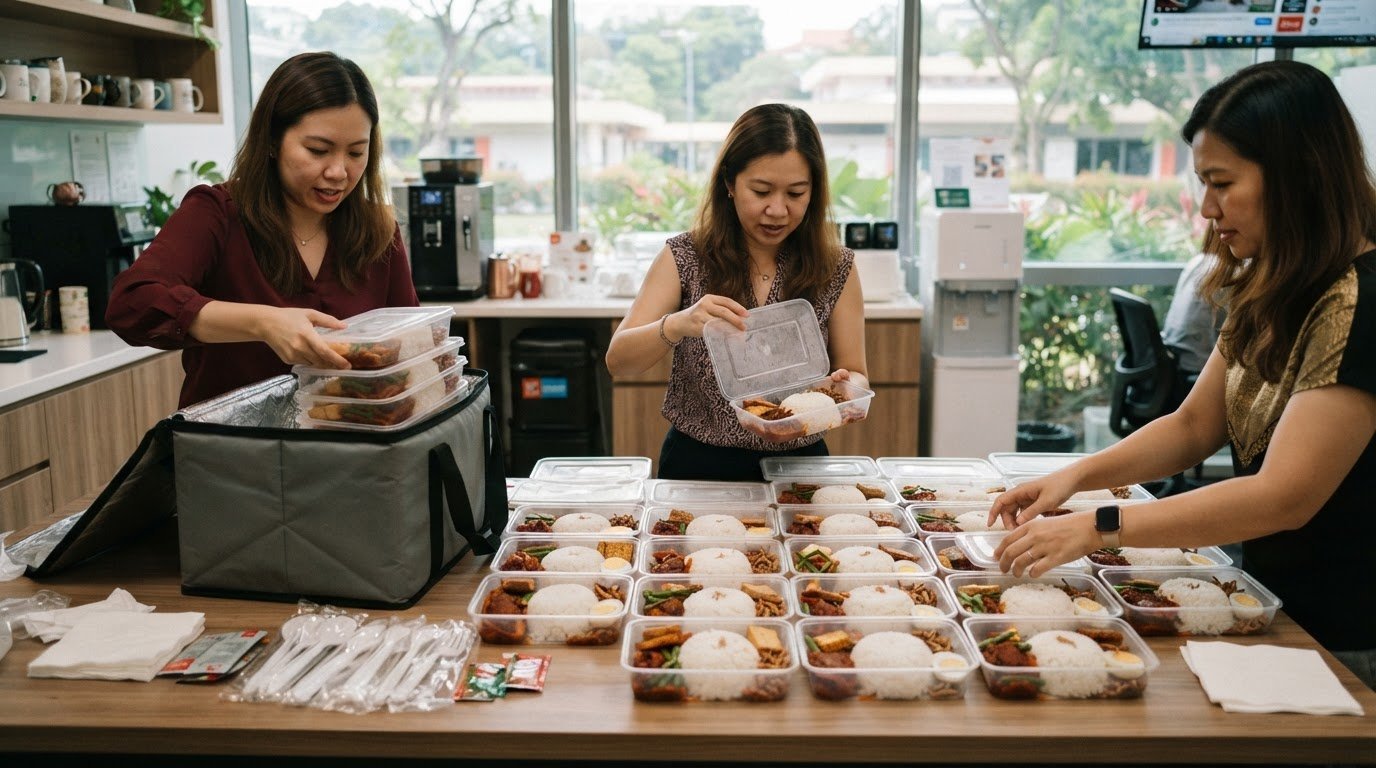

The headcount shapes the plan: for team lunch delivery in Singapore, most daily office meal programmes and bento delivery services require a minimum order of 20 or more employees. Advance booking is recommended for corporate lunch catering, particularly for large-scale events.
Organising team lunch delivery in Singapore involves more than choosing dishes. The order needs to suit different tastes, fit the workday and make serving straightforward. Individually packed meals can help reduce queues and make it easier for employees to get back to work or meetings.
This guide explains how to think through cuisine choices, ordering arrangements, delivery fees and minimum-spend promotions. It also covers corporate accounts, what to look for in customer feedback, and how billing and delivery requirements can shape a lunch plan. With these details in view, you can make a more informed choice for a shared office meal, whether you’re planning a regular lunch or catering for a larger event.
Key Takeaways
- Plan a corporate account around order frequency, headcount and billing needs; some providers offer consolidated monthly billing for recurring meals.
- Match cuisine choices to team preferences and dietary needs, and look for clear labels for options such as Halal, vegetarian, vegan and gluten-free.
- Read customer feedback for recurring details about delivery consistency, food condition and service communication, rather than relying on a single comment.
- Understand how delivery fees and minimum-spend promotions affect the total order, since terms can shape which arrangement suits your team.
- Explore Indonesian and Western cuisine for a team meal with familiar choices as well as distinctive flavours.
Corporate accounts and quotation requests
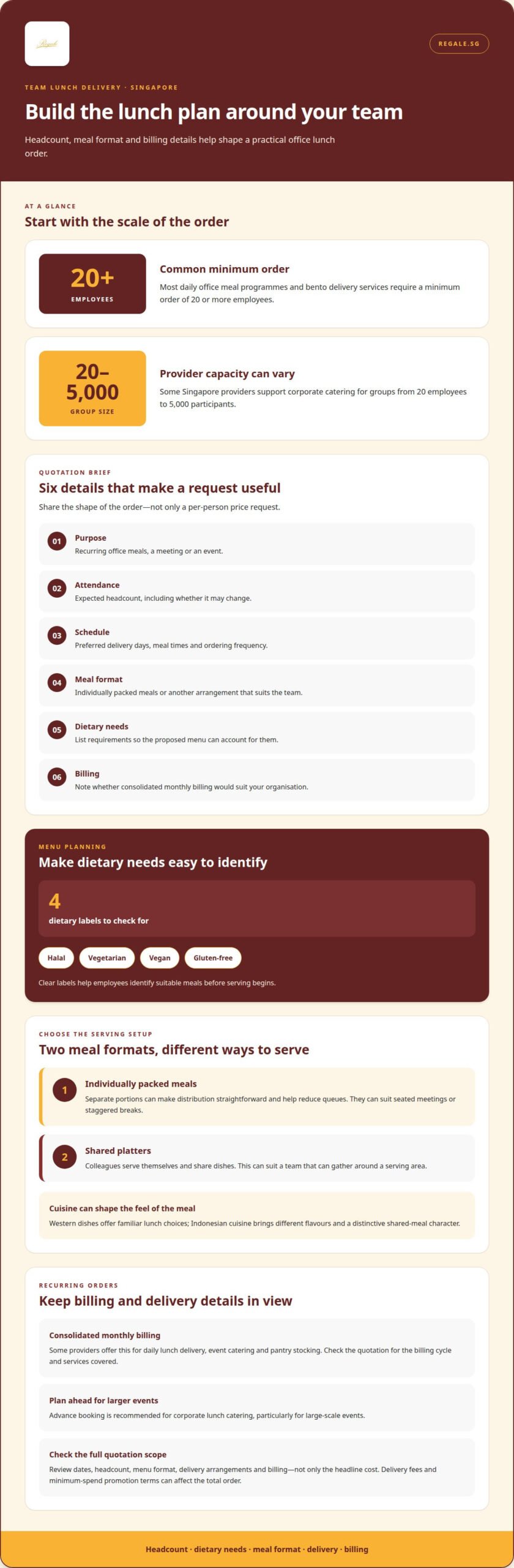
A corporate account can make recurring lunch orders easier to coordinate. Some Singapore providers support corporate catering for groups from 20 employees to 5,000 participants. The scale, schedule and meal format all shape the request. A regular office lunch needs different planning from a one-off team gathering. Start by defining the purpose, expected attendance and delivery arrangement.
Corporate accounts can help organise recurring orders and payment administration. Some providers offer consolidated monthly billing for daily lunch delivery, event catering and pantry stocking. This brings eligible orders together on one bill instead of handling each separately. Check the quotation for the billing cycle and services covered, so finance teams can plan approvals and allocate spending.
Per-person prices vary with menu choices, order size, delivery arrangements and service format. Request a quotation based on your team’s requirements.
A useful quotation request gives the provider enough detail to assess the order. Include:
- Purpose: State whether the request covers recurring office meals, a meeting or an event.
- Attendance: Give the expected headcount and explain whether it may change.
- Schedule: Describe the preferred delivery days, meal times and ordering frequency.
- Meal format: Specify whether individually packed meals or another arrangement suits the team.
- Dietary needs: List requirements so the proposed menu can account for them.
- Billing: Identify whether consolidated monthly billing would suit the organisation.
These details make a quotation more useful than asking for a per-person figure alone. For regular weekday lunches, describe the schedule. For a meeting, state the event format and expected attendance. Clear information helps shape a proposal around the actual order rather than an assumed meal plan.
Review the quotation’s scope, not just its headline cost. Check that it addresses the dates, headcount, menu format, delivery arrangements and billing. If attendance may change, mention this when requesting the quote. A clear record of assumptions helps you understand what the proposal covers and what could affect a revised order.
For recurring orders, keep the approved schedule and ordering details together. Record who submits each order and how invoices are approved internally. If plans change, send updated attendance or timing details with the revised request. These steps help the provider prepare an accurate proposal and make lunch orders easier to manage.
Individually packed meals can reduce queues and help employees return to work or meetings promptly. If this format suits your team, include it in your quotation request so the meal arrangement fits how employees use their lunch break.
Cuisine options
Office menus work best when they reflect the team, not just the organiser’s preference. In Singapore, corporate bento catering can include clearly labelled Halal, vegetarian, vegan and gluten-free options. A clear label helps employees identify suitable meals before serving begins. It also helps the organiser plan a menu that accounts for different dietary requirements.
Providers differ in meal format. Corporate bento suppliers offer individually pre-packaged meals, while catering providers may offer shared platters. Bento boxes give each person a separate portion and can make distribution straightforward. Shared platters suit a meal where colleagues serve themselves and share dishes. The format should match the meeting setup, available space and the way employees will eat.
Choose the menu by considering three practical factors:
- Dietary needs: Identify requirements such as Halal, vegetarian, vegan or gluten-free meals. Clear labels help employees distinguish suitable options.
- Workday format: Individual boxes suit seated meetings or staggered breaks. Shared platters work better when colleagues can gather around a serving area.
- Team preferences: Balance familiar choices with dishes that bring variety to a recurring lunch. A menu with distinct options can make the meal feel considered without complicating distribution.
For a meeting with a fixed agenda, individual meals can help employees eat without waiting in a serving line. A team with a flexible lunch break might prefer platters for a more communal meal. These are practical options, not fixed rules: the timing and layout matter most.
Cuisine also shapes the feel of the occasion. Western dishes can offer familiar lunch choices, while Indonesian cuisine brings different flavours and a distinctive shared-meal character. For a team with varied preferences, organisers can consider how cuisine, dietary labels and meal format work together. The goal is a menu that employees can identify and enjoy within the time available.
Before placing an order, group dietary needs and preferred cuisines into a short menu brief. Separate essential requirements from preferences, then decide whether individual boxes or shared platters suit the setting. This gives the catering arrangement a clear direction and helps prevent a menu from being chosen on cuisine alone. For a culturally rooted option, explore Indonesian dining choices alongside Western dishes.
Individual meals provide separate portions, while shared platters let colleagues serve themselves and share dishes.
Customer feedback on delivery and service
Customer feedback can reveal how an office lunch order performs beyond the menu. One customer described a previous caterer missing two deliveries within 10 days. That account illustrates why delivery consistency deserves attention, especially when lunch is tied to a meeting or a shared break. Treat an individual comment as one experience, not proof of a provider’s overall record.
Read reviews for specific details instead of relying only on star ratings. “Arrived after our meeting started” gives more context than “poor service.” Look for the date, order type and issue described. A review about an event may not reflect the process for a recurring weekday lunch.
Use a simple review-reading sequence:
- Find the event context: Note whether the feedback concerns office lunch, a meeting or another catering occasion.
- Identify the reported issue: Separate late arrival, missed delivery, missing meals and unclear communication.
- Look for repeated themes: Compare several comments before treating one experience as a pattern.
- Read any response: Notice whether the reply addresses the specific complaint and explains a next step.
Delivery timing is only one part of service. Feedback may also describe whether the order matched its details, meals were clearly labelled or changes were communicated. A review about missing meals raises a different concern from one about a late delivery. Separating these issues helps you judge what matters most to your team.
For recurring team meals, look closely at comments about consistency across orders. A single positive event review cannot show how a weekly schedule performs, just as one complaint does not tell the whole story. Compare the details and context, including whether the customer describes a one-off function or repeated deliveries.
Turn useful feedback into practical ordering instructions. If timing matters for a meeting, include the required arrival window. If employees need different meals, provide clear counts and labels. If plans change, keep updated instructions in the same communication thread. These steps address common concerns without assuming every provider handles them alike.
Use customer comments alongside the written order terms and quotation. Reviews describe individual experiences; the order record sets out the agreed menu, timing and quantities. Keeping both in view helps teams assess service thoughtfully and identify details to clarify before the next lunch delivery.
Delivery and food ordering
Office delivery planning depends on the caterer, requested timing and delivery address. In Singapore, confirm how the order reaches the workplace and fits the team’s lunch schedule.
Office Lunch Delivery Providers
Singapore caterers that provide corporate meals may deliver to offices, with arrangements shaped by order size and meal format. To assess the service, focus on how the delivery is organised, not just the menu. A meeting on one floor may need a different handover from a team spread across several departments. State the office address, delivery entrance and intended meal location when placing an order.
A useful order record includes the delivery date, contact person, headcount and meal quantities. Add dietary meal counts and the agreed handover point. A receptionist’s desk, for example, may not work if the team needs meals in a meeting room. Clear instructions align the order with the workplace setup.
Delivery Time Slots
Delivery time slots are set by each caterer’s ordering schedule and delivery arrangements. The available window can depend on the requested lunch period, the order and the delivery route. There is no single time slot that applies across Singapore’s office caterers. Set the required arrival time around the team’s break or meeting, then include it in the order details.
For a scheduled presentation, arrange for the food to arrive before attendees need to eat. A flexible staff lunch may suit a broader arrival window. Include the preferred delivery time, the receiving contact and any access instructions to clarify when and where the handover should happen.
Delivery Coverage Areas
Office lunch coverage depends on the caterer’s delivery area and the specific destination. An address in Singapore alone doesn’t describe the full handover: buildings can have different entrances, loading points and visitor procedures. Provide the building name, street address, unit number and relevant entry details. This gives the delivery arrangement a precise destination instead of relying on a general district name.
For an office in a business park, include the block or tower and the best arrival point. In a multi-tenant building, identify the company or reception desk receiving the meals. This helps distinguish the intended office from nearby premises and clarifies where the order should be handed over.
Some corporate lunch providers in Singapore have 24/7 customer service teams. If a delivery detail changes or an instruction needs checking, ask the provider which contact channel to use and whether the team handles order enquiries outside usual office hours. Confirm the order reference, delivery address, intended arrival time and handover point when making contact, so the issue can be linked to the right meal delivery.
Before confirming, clarify who should be contacted about access, a delayed arrival or a change in headcount, and whether updates should go to the ordering contact or recipient. Keep the agreed arrangements with the order record, and share them with the person receiving the meals. This supports a clear handover without assuming every provider offers the same service.
Delivery fees and minimum-spend promotions
An office lunch total may include food and delivery charges, while promotions may have additional conditions. Review the full cost breakdown before approving the purchase, so the team budget reflects the complete order, not just the menu.
Delivery fees can depend on the destination, delivery arrangement and order details. A central office and a workplace with more complex access may involve different handover requirements. The meal format and order size can also shape the delivery arrangement. Ask for the fee to appear separately from food costs in the quotation, so each part is easy to review.
Minimum-spend promotions come with conditions. The threshold may apply only to food, or the qualifying total may be calculated differently. Delivery charges, add-ons and discounted menu items can affect eligibility. Read the terms for eligible menu items, applicable dates, order deadlines and whether offers can be combined.
Before relying on a promotion, compare its terms with the team’s actual order:
- Qualifying spend: Identify which items count toward the minimum and whether delivery is excluded.
- Eligible meals: Check whether the promotion applies to the selected menu and dietary meals.
- Order timing: Note the required booking or delivery dates and any cut-off time.
- Final total: Include delivery fees and other charges when calculating the budget.
Adding meals to reach a promotional threshold may cost more than the saving. Calculate the revised total using eligible items and delivery charges, then compare it with the original order. Choose what suits the team’s appetite and budget, rather than simply opting for a promotion.
A clear cost review can also prevent internal approval delays. Send finance the itemised quotation, promotion terms and headcount assumptions together. If attendance changes, recalculate the qualifying spend before submitting the final order. This is useful when departments share the bill or the organiser must stay within an approved budget.
Keep a record of the agreed fees and promotion conditions with the order confirmation. That gives the organiser a reference if quantities or delivery details change. For a team meal, finalise the cuisine and expected headcount before assessing the overall cost. You can plan an office lunch order around the dishes and format that suit your team.
Regale Singapore
Regale Singapore brings Indonesian and Western cuisine together for team meals. The menu includes Nasi Sambal Goreng and Nasi Ambeng alongside Western favourites, giving organisers options for a familiar lunch or a meal with distinctive flavours.
For a team considering Indonesian cuisine, Nasi Ambeng is an award-winning traditional choice, while Nasi Sambal Goreng is a renowned Malay classic. Western favourites offer a different direction for colleagues who prefer those flavours. The right fit depends on the occasion and the preferences you want the meal to reflect.
Contact Regale Singapore to discuss your team lunch plans.
Plan a team lunch that brings people together
A thoughtful office meal gives colleagues a chance to gather during a busy workday. For team lunch delivery in Singapore, choose a menu that suits the occasion and flavours your team will enjoy. Regale Singapore serves Indonesian classics, including Nasi Sambal Goreng and award-winning Nasi Ambeng, alongside Western and local favourites.
As you plan your next lunch, consider what would make the gathering meaningful, from familiar favourites to Indonesian flavours shared with colleagues. A clear idea of the occasion gives your menu planning a useful starting point.
Contact Regale Singapore about team lunches to discuss your plans. May your next office lunch bring the team together around a memorable meal.
Frequently Asked Questions
What are the best team lunch delivery services in Singapore?
The best fit depends on your team’s meal preferences, dietary needs and office setup. For example, an office seeking halal catering and Indonesian flavours can consider Regale Singapore, which offers Authentic Indonesian Cuisine, including Nasi Sambal Goreng and Nasi Ambeng. Teams preferring a different menu direction can also look for providers whose cuisine suits the occasion. Match the service to your employees and the type of lunch you’re planning.
What are the minimum order quantities and delivery fees for Singapore office lunch catering?
Most daily office meal programmes and bento delivery services in Singapore require minimum orders of 20 or more employees. Delivery fees vary according to factors such as the destination, order details and delivery arrangement. For a useful budget, separate food costs from delivery charges and include any applicable promotion terms. A smaller meeting order and a recurring office meal may have different requirements, so consider the purpose and format.
Can team lunch deliveries in Singapore accommodate halal, vegetarian, vegan, and dietary requirements?
Yes, corporate bento catering in Singapore can include clearly labelled Halal, vegetarian, vegan and gluten-free options. For example, an organiser can plan separate meal counts for employees with different dietary needs, helping staff identify suitable dishes at lunchtime. Regale Singapore offers halal catering for teams seeking that cuisine requirement. Keep individual dietary preferences distinct from essential requirements when preparing the meal plan, so the menu brief is clear and practical.
How far in advance should I order a team lunch delivery in Singapore?
Plan ahead, especially for a large event. Early preparation gives the organiser time to coordinate the menu, attendance, dietary meal counts and workplace access details. For a lunch tied to a meeting, align the delivery timing with the agenda and room arrangements. Set the event date first, then prepare the order details in good time to manage changes.
Which providers offer individual meal boxes versus shared platters?
Individual meals provide separate portions, while shared platters let colleagues serve themselves and share dishes.
Which Singapore lunch delivery services support recurring corporate orders and invoicing?
Corporate accounts can help manage recurring orders and payment administration. Some providers offer consolidated monthly billing for daily lunch delivery, event catering and pantry stocking.
