
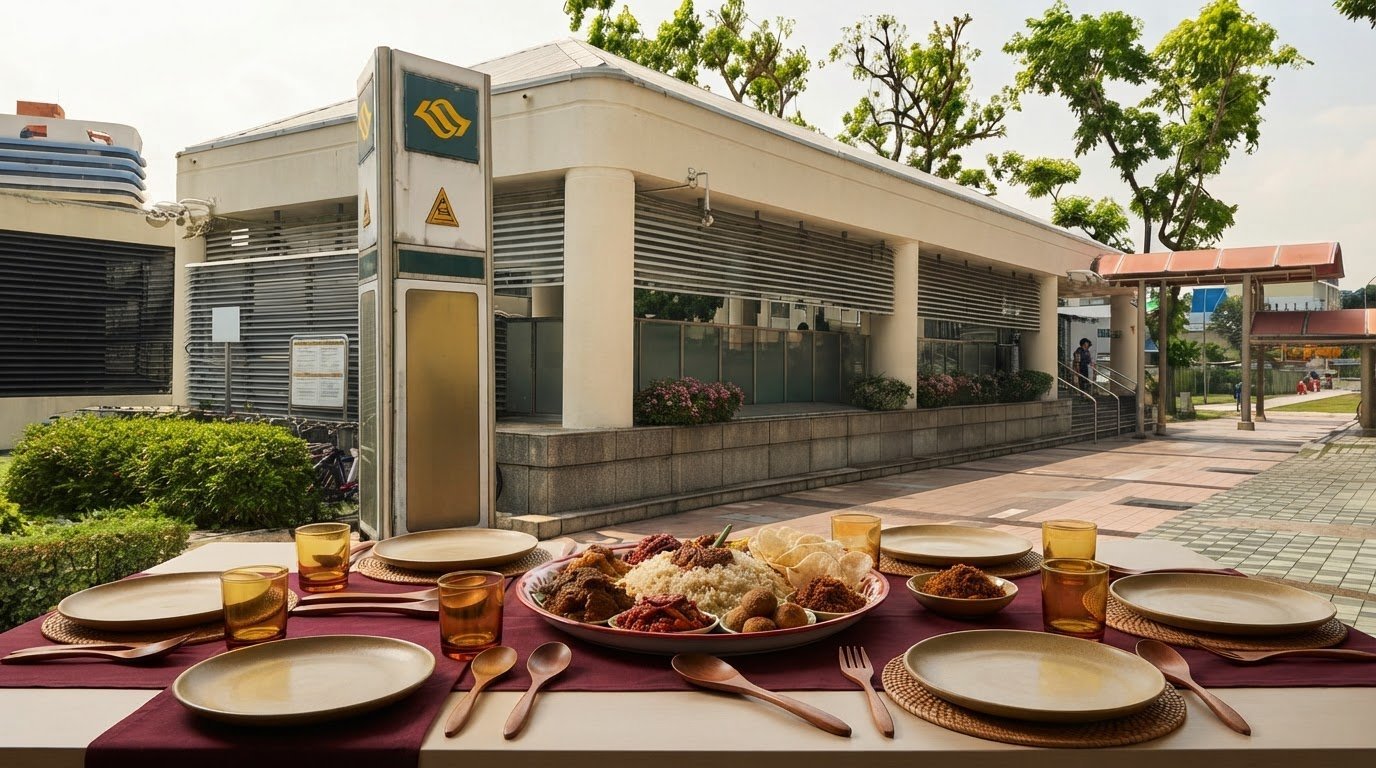

A group meal works best when the venue, halal arrangements and booking plan are clear from the start. For a halal restaurant for group booking in Singapore, plan 2 to 3 days ahead; for groups of 10 or more, book a week ahead and pre-order food.
Choosing a place everyone can enjoy takes more than finding a large table. Guests may have different halal requirements, dietary needs, and preferences for shared dishes, so consider these before settling on a venue.
This guide covers restaurants for celebrations, corporate lunches and shared meals, with options around Bugis MRT and beyond. You’ll find practical ways to assess halal status, plan a group booking and choose dishes for the table, along with location details such as Kampong Glam, about a 5-minute walk from Bugis MRT Exit B. Whether you’re arranging a work lunch or bringing family together, these details can make the meal easier to organise and more comfortable for everyone.
Key Takeaways
- For group plans, book 2 to 3 days ahead; groups of 10 or more should book a week ahead and pre-order food.
- Kampong Glam is about a 5-minute walk from Bugis MRT Exit B, making it a practical area to consider for central gatherings.
- For a mixed group, look for current halal certification at the specific outlet, rather than relying on an old listing or a pork-free menu alone.
- Discuss guests’ halal needs, allergies and prayer arrangements early so the venue can plan the meal with care.
- For shared dining, choose halal-safe dishes for the table and keep any non-halal food separate with its own serving utensils.
1. Halal restaurants for celebrations and group dining
For a halal restaurant for group booking, match the venue’s format to the occasion. A birthday dinner may suit a private dining area, while a team gathering may need flexible seating and straightforward service. For a family celebration, shared dishes can bring guests together without requiring identical individual orders. Start by deciding whether conversation, a formal programme, or easy food service matters most.
Private dining can give a celebration a more defined space for speeches, cake, or family conversation. Ask how the room is arranged, whether guests share one table, and how food is served. For example, a seated meal allows a host to plan a toast between courses. A buffet gives guests more freedom to choose their portions and return as the gathering continues.
For a workplace meal, consider how colleagues will move between tables and food stations. A buffet restaurant can suit a team with varied appetites, while a set meal can make service more orderly. Nasi padang is one example of a meal built around rice and accompanying dishes. Platters also support shared eating, especially when guests can see ingredients and serve themselves comfortably.
Halal suitability matters throughout the meal, not just in a dish’s name. Ask guests privately about their comfort with the venue and any arrangements they need. A pork-free dish alone does not establish that a kitchen meets every halal diner’s requirements. Ingredients and food handling matter too. Choosing halal dishes for the whole table helps Muslim guests share the meal without having to assess each plate.
Prayer times can affect a celebration’s schedule, particularly around Maghrib. Plan around guests’ needs rather than assuming everyone follows the same routine. For a mixed group, offer appealing non-alcoholic drinks and discuss preferences before choosing the menu. These details help you respect different practices without asking any guest to explain them publicly.
Cancellation, refund, and no-show policies differ by restaurant; the reservation’s stated terms determine what happens if plans change. Read those terms before finalising a group booking, especially when the venue requests a deposit or a confirmed headcount.
A restaurant’s menu, seating, and layout determine how well it can accommodate dietary needs, children, and wheelchair access. Include allergies, children’s seating needs, and access requirements in the booking details. A wheelchair user may need an accessible route and suitable table placement, while a child’s allergy calls for careful attention to ingredients.
2. Restaurant location and distance from Bugis MRT
Bugis MRT gives groups a useful starting point for planning a central Singapore meal. Kampong Glam is about a 5-minute walk from Bugis MRT Exit B. The listed Bugis-area halal restaurants are all within a 10-minute walk. That makes walking a practical option for guests meeting near the station, especially when everyone arrives around the same time. Choose a meeting point first, then share the restaurant’s address and walking route with the group.
When guests are travelling from different parts of Singapore, compare their journeys to the restaurant, not just its neighbourhood. One person may reach Bugis MRT easily, while another may need a bus connection or a longer transfer. Choose a venue that works for the routes most guests can use. For an after-work gathering, for example, guests could meet at Bugis station and walk together rather than find an unfamiliar entrance separately.
Transport access also affects how convenient the final stretch feels. Check which MRT exit serves the chosen street and consider the walk to the restaurant entrance. For older relatives, young children, or guests with mobility needs, a shorter, simpler route may matter more than a central-sounding address. Share the meeting point and restaurant location in one message so late arrivals can follow the same route.
Restaurant hours vary, so plan the meal around the venue’s operating schedule and give guests enough time to travel. A lunch near Bugis MRT, for example, calls for a different arrival plan from an evening gathering. Check the chosen venue’s current hours before finalising the itinerary, especially when a restaurant has multiple locations.
Restaurants with multiple locations need branch-specific planning. Transport access, seating, menus, and halal certification can differ between outlets. Choose the exact branch first, then use its location for directions and booking details. A chicken dish or halal label alone does not establish the status of a different branch’s kitchen. Include the venue name and address in invitations to help guests reach the right place.
When comparing venues across Singapore, consider guest travel routes, nearby MRT stations, and bus access. A central location may suit a group coming from several areas, while a venue near one workplace or home may reduce travel for most guests. Apply the same checks to every option: exact location, route, operating hours, and halal suitability. This keeps the decision practical wherever guests are meeting.
3. Halal-certified restaurants and Muslim-owned eateries
For a group meal in Singapore, a MUIS-certified restaurant that accepts reservations and can seat your party is a useful starting point. The Islamic Religious Council of Singapore issues MUIS halal certification. Match the venue to your preferred location and meal style, then arrange the booking for the whole party.
Certification and Muslim ownership are related considerations, but they are not interchangeable. A Muslim-owned eatery may serve authentic halal food, while ownership alone does not tell guests how every ingredient is sourced or handled. A certified restaurant provides a more direct reference for halal suitability. For a casual group meal, the distinction can help hosts choose confidently without asking Muslim guests to explain or defend their personal standards.
Halal food excludes pork and alcohol as ingredients, uses meat slaughtered in the prescribed way, and avoids cross-contamination with non-halal items during preparation, cooking, and serving. A pork-free dish does not establish that the restaurant’s kitchen is halal. Lard, pork-based stock, gelatine, mirin, and cooking wine can also appear in dishes. At a non-certified venue, hosts should ask the owner about ingredients and food handling.
For a mixed group booking, a MUIS-certified outlet is a practical choice because it gives halal diners a shared basis for choosing food. Certification status can lapse, and businesses can change hands, so don’t rely on an old online post. Look at the exact restaurant branch, since certification may differ between outlets in the same chain. Halal-certified restaurant listings can help identify options, but the specific branch matters.
Which halal-certified restaurants in Singapore accommodate group bookings? Choose a MUIS-certified branch that takes reservations and has seating suited to your party. Casual restaurants and venues with varied menus may suit different groups. The best fit depends on where guests are meeting and how they want to dine.
Use a short planning sequence to keep the choice clear:
- Identify the exact outlet and its current certification status.
- Choose a dining format, such as individual meals or shared dishes.
- Tell the restaurant about the group’s dietary requirements and allergies.
- For a non-certified venue, ask its owner about ingredients and food handling.
These steps help distinguish a certified restaurant from an eatery chosen through ownership or menu description alone. They also help you find a venue that suits the whole group, rather than relying on one dish or a broad listing. Choosing a specific branch makes the meal easier to plan for Muslim guests and the wider party.
4. Group and corporate lunch venues
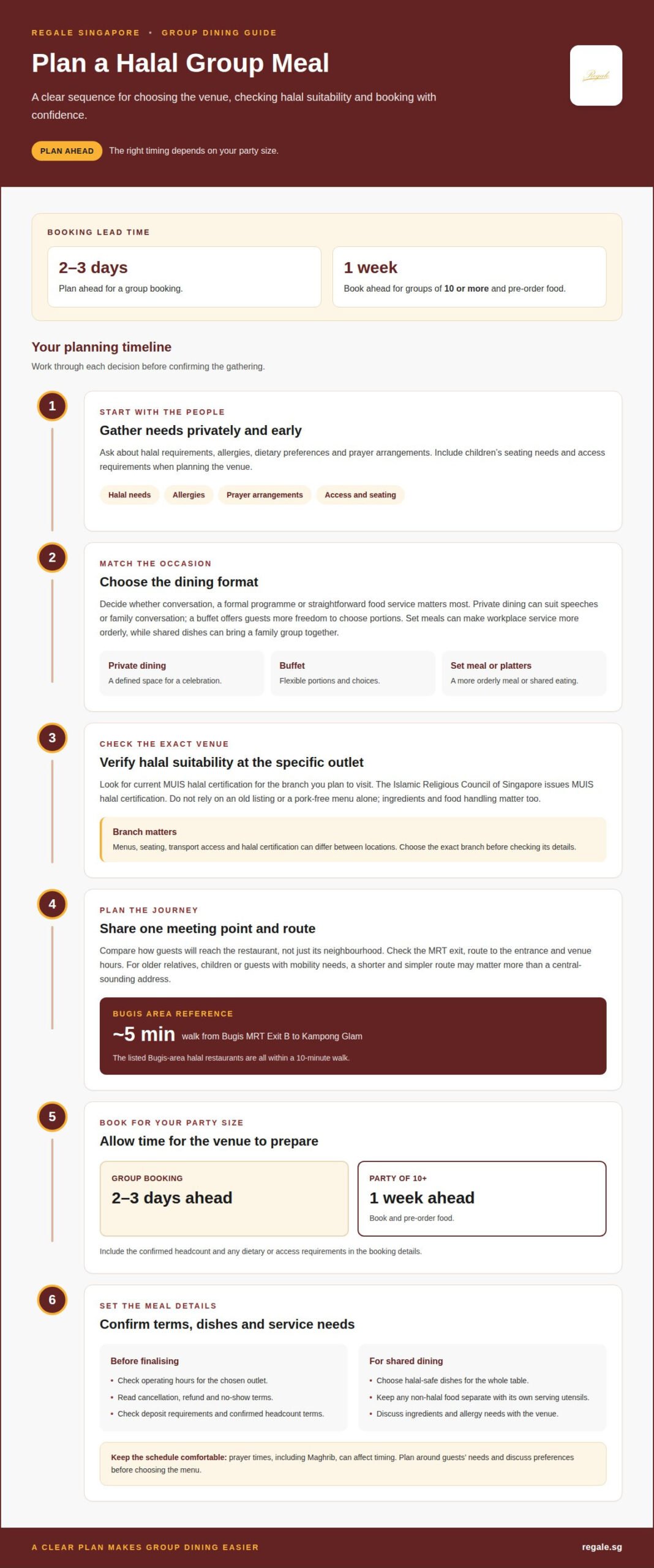
Start a corporate lunch or group dinner by setting the date, venue, and expected headcount. For a group reservation, book 2 to 3 days ahead. Groups of 10 or more should book a week ahead and pre-order food. These steps give the restaurant time to plan service and help organisers settle the meal format before guests arrive.
For larger parties, call ahead because certified restaurants can fill up around Friday prayers, weekends, Ramadan, and Hari Raya. These periods can bring more diners to halal venues, so an early reservation helps the group secure a suitable time. Share the event’s purpose, such as a team lunch, client meeting, or family dinner, when arranging the booking. A restaurant can then understand whether the party needs a relaxed meal or a more structured dining arrangement.
Choose between à la carte ordering and a group set menu based on the occasion. À la carte gives each diner the freedom to choose a preferred cuisine or dish. A set menu can simplify ordering for colleagues with limited lunch time. Ask whether the restaurant offers a group set menu and confirm current prices directly with the venue. A team with varied tastes may prefer individual choices, while a planned dinner can benefit from a shared menu.
Plan for halal requirements and allergies together. Tell the restaurant about both when arranging the meal, rather than treating them as separate details. For a mixed team, identify dishes that suit the group and note any ingredients guests need to avoid. A clear list helps staff understand the request and reduces confusion when food reaches the table. Include dietary details in the booking information.
Before the event, confirm the final headcount with the restaurant a day before. This gives the venue a current number for seating and food preparation. Assign one organiser to handle updates, so the restaurant receives a single clear message instead of conflicting changes from several diners. If colleagues are arriving from different offices or streets, share the meeting time, address, and reservation name together. A short itinerary also helps diners know whether they are meeting for lunch or dinner.
For a corporate meal with a signature cuisine, give the menu a role in the event. A familiar classic can keep the meal approachable, while a distinctive dish can make a client dinner feel more considered. Match the menu to the meeting’s pace: a concise lunch needs an efficient format, while an evening gathering allows more time for conversation. With the booking, pre-order, dietary details, and final headcount organised, the restaurant has the essentials for preparing the group’s meal.
5. Sharing platters and group-friendly dishes
Shared dishes make a group meal more participatory, but the table needs a clear serving plan. For a mixed group, choose halal-safe dishes for everyone to share, so Muslim diners don’t need to assess each plate separately. A mixed-grill platter can suit a table looking for several flavours in one order. The guide’s serving estimate is one mixed-grill plate for every 3 to 4 people.
A larger sharing platter can also simplify ordering. One platter can cover a group of 8 to 12 people without separate orders. Use that format when guests want to sample several dishes together, then add individual meals for different appetites. Ask how a platter is portioned and what ingredients it contains, especially if seafood or sauces are included. Clear dish descriptions help guests decide what they’re comfortable eating.
Malay and Cantonese dining traditions both include dishes intended for sharing, though menus and preparation vary by eatery. A table might combine Malay-style rice dishes with Cantonese-style plates if every selection suits the group’s halal requirements. Don’t assume a cuisine label settles that question. Ingredients, preparation, and serving practices matter, particularly for sauces and dishes with several components.
If a meal includes non-halal dishes, keep those plates separate from halal food. Give each dish its own serving spoon and identify it clearly. Separate platters and utensils help prevent accidental contact during serving. For example, place dishes apart rather than grouping mixed platters in the centre of the table. This makes choices clearer for everyone.
For a friendly, relaxed meal, plan the table layout before ordering. Put shared dishes within everyone’s reach, leave room for serving utensils, and avoid crowding a small table with too many platters. A seafood dish, rice platter, and vegetable side can provide variety without turning the meal into a long list of separate orders. Confirm dish ingredients and any allergy requirements as part of the group’s menu planning.
A Michelin mention reflects restaurant recognition, not halal status or the suitability of every dish for Muslim diners. Treat awards and cuisine descriptions as separate from ingredient and handling information. For a group booking, make the shared menu easy to understand: name each platter, note its serving utensil, and keep any non-halal food clearly apart. Plan a halal group meal around dishes suited to sharing and the needs of your table.
Regale Singapore
Regale Singapore offers a halal-certified dining option for groups looking for Indonesian, local, or Western cuisine. Its menu includes Nasi Ambeng, Nasi Sambal Goreng, and Western favourites, giving hosts a choice of familiar dishes and distinctive flavours. Consider Regale for a celebration, team gathering, or meal with family and friends.
For a group, the right menu depends on the occasion and how guests prefer to dine. Nasi Ambeng offers a traditional Indonesian shared-meal option, while Western Cuisine provides another direction for the table. Regale Singapore is located at Science Centre Singapore, making it an option beyond central Bugis for gatherings planned around that area.
Contact Regale Singapore to discuss your group meal and choose a menu that suits the occasion.
Make your next gathering one to look forward to
The right venue can turn a meal into a meaningful occasion. When choosing a halal restaurant for group booking, consider the experience you want guests to share, from relaxed conversation to a meal centred on Indonesian flavours. A clear plan brings the menu and gathering together.
Regale Singapore serves Nasi Sambal Goreng and Nasi Ambeng alongside authentic Indonesian cuisine. These dishes offer a distinctive way to bring guests together around a shared meal. Choose what best suits your gathering, whether you’re hosting relatives, friends, or colleagues.
Take the next step by sharing your group dining plans with Regale Singapore. Contact Regale Singapore about group dining and start planning a welcoming occasion around food and company. May your next gathering bring everyone to the table with something to enjoy.
Frequently Asked Questions
What is the minimum and maximum group size for restaurant bookings?
Group size limits depend on each restaurant’s booking policy, table layout, and available seating. A small party may fit a standard table, while a larger one may need several tables arranged together. Give the restaurant your expected headcount and mention whether it may change. This helps staff suggest a suitable arrangement and explain any group booking terms before you finalise plans.
Which halal restaurants have private rooms or large group dining areas?
Private rooms and larger dining areas vary by restaurant, so there isn’t one list that fits every occasion. For a private celebration, consider whether the space suits conversation and planned speeches. For a team gathering, think about table layout and how guests will be served. Share the event type and party size when discussing arrangements.
What are the set-menu and buffet prices per person for groups?
Set-menu and buffet prices aren’t a single standard amount across Singapore. For Regale Singapore, price depends on the case and is given after a quote request. The menu format, group size, and selected dishes affect the proposed arrangement. Tell the restaurant whether you’re considering a buffet or a set menu, and describe the meal occasion so the quote can reflect your group’s plans.
Are there minimum spending requirements or deposits for group bookings?
Minimum spending and deposit terms depend on the restaurant and booking arrangement. Before accepting a reservation, read the terms for any deposit, minimum spend, payment timing, headcount changes, and no-shows. A private space and a standard table may have different conditions. Keep the reservation details with the event information so everyone follows the same agreement.
How far in advance should I book a halal restaurant for a large group?
Book 2 to 3 days ahead for a group reservation. For groups of 10 or more, the recommended lead time is a week, with food pre-ordered. Allow extra planning time around Friday prayers, weekends, Ramadan, and Hari Raya, when certified restaurants can fill up. Once the booking is arranged, give the restaurant the final headcount a day before the meal.
Which halal restaurants are convenient for groups near MRT stations or popular Singapore areas?
Choose a restaurant near an MRT exit that suits the group’s travel routes, then share one meeting point and walking directions. Convenience depends on where guests are coming from, not just the venue’s district. A central location may help colleagues travelling from different parts of Singapore, while a venue near one workplace may suit a team gathering there.
