
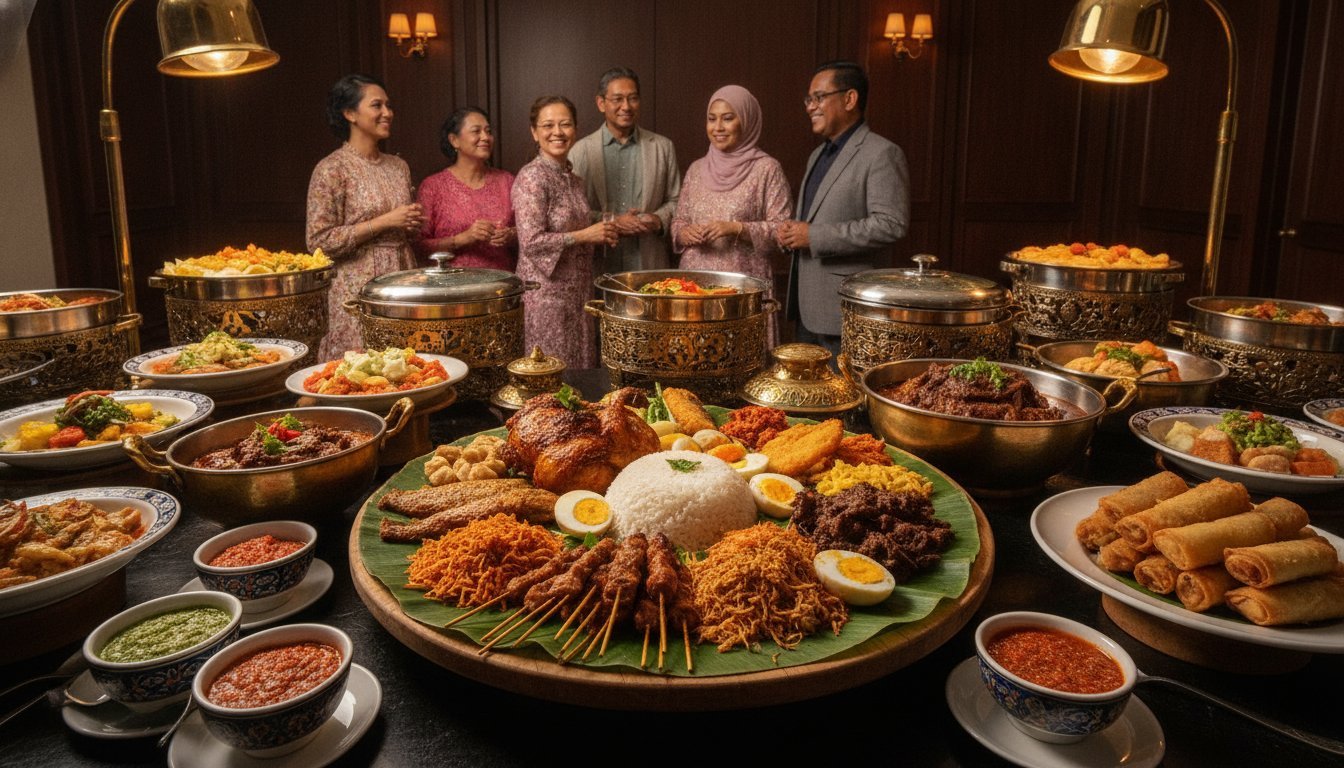

The most successful events in Singapore are rarely defined by generic international spreads, but by the authentic heritage flavours that bring people together. Choosing a Halal Buffet often feels like a compromise between strict religious certification and actual, soul-warming quality. You’ve likely faced the frustration of menus that lack the punch of true Indonesian or Malay cooking, or the logistical stress of ensuring every guest is catered for correctly. It is difficult to find a service that balances professional efficiency with the deep, traditional tastes of home.
This guide helps you navigate the complexities of premium catering, ensuring your next event features heritage staples like Nasi Sambal Goreng and Nasi Ambeng without the usual administrative headaches. You’ll learn how to select the right service tiers, from full setups to flexible mini-buffet options, while maintaining total confidence in halal requirements. We provide a clear path to securing a stress-free dining experience that honours local culinary traditions. By focusing on quality and logistical readiness, you can transform a standard meal into a significant cultural experience for every guest at the table.
Key Takeaways
- Understand the rigorous standards of MUIS certification and why heritage-focused dining is defining the modern culinary scene in Singapore.
- Identify the essential components of an authentic Halal Buffet, including signature staples like Nasi Ambeng, Nasi Minyak, and Nasi Sambal Goreng.
- Learn how to choose between full buffet setups, mini buffets, and sharing platters based on your specific event size and venue requirements.
- Master the logistics of event planning by accurately calculating portions and accounting for diverse dietary needs alongside halal requirements.
- Discover how a dual-concept dining approach provides versatility for both professional corporate lunches and authentic Indonesian evening events.
Understanding the Halal Buffet Landscape in Singapore (2026)
The Singaporean dining scene is currently witnessing a significant shift toward specialized culinary experiences. For many years, a Halal Buffet was often associated with broad, international spreads found in major hotels. While these Pan-Asian options offer variety, they frequently lack the depth found in heritage-specific menus. Modern diners now prioritize authenticity, seeking out establishments that specialize in the nuanced flavours of Malay and Indonesian traditions rather than generic “no pork, no lard” alternatives.
Understanding what constitutes a truly halal dining experience requires looking beyond simple ingredient exclusions. It involves adherence to specific Islamic dietary laws that govern every stage of food preparation, from sourcing to service. This rigorous approach ensures that every dish, whether it is a complex beef rendang or a simple side of sambal, meets the highest standards of religious compliance and hygiene. For the local community, authenticity has become the primary driver, leading to a rise in specialized heritage buffets that focus on quality over sheer quantity.
The Importance of Halal Certification
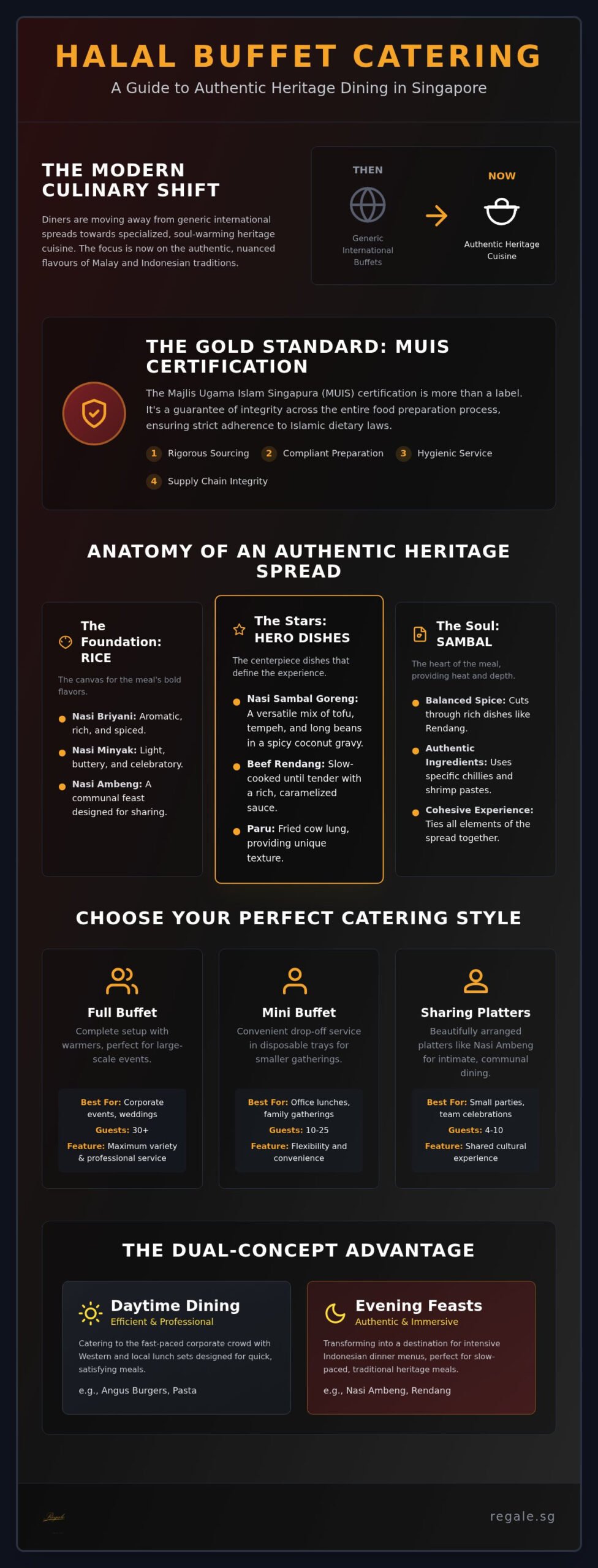
In Singapore, the Majlis Ugama Islam Singapura (MUIS) serves as the definitive authority for certification. This endorsement is the gold standard for any Halal Buffet because it guarantees supply chain integrity from start to finish. For corporate event planners and families, seeing the MUIS seal builds immediate trust. It confirms that the establishment has undergone strict audits, ensuring that large-scale catering operations remain compliant across all menu items. This level of oversight is essential for maintaining inclusivity in our multicultural society and ensuring that every guest feels respected.
Daytime vs. Evening Dining Concepts
Versatility is a hallmark of the modern Singaporean eatery. Many professional establishments now employ a dual-concept model to better serve their community across different times of the day. During the afternoon, the focus often rests on efficient Western or local lunch sets, such as an Angus burger or pasta, which cater to the fast-paced corporate crowd. As evening approaches, the kitchen transforms to offer intensive Indonesian dinner menus. This shift allows diners to choose the right atmosphere and menu complexity for their specific gathering, whether it’s a quick professional meal or a slow-paced heritage feast.
The Anatomy of an Authentic Halal Heritage Spread
An authentic heritage spread is defined by its complexity and the careful orchestration of spices. Unlike international buffets that offer a bit of everything, a specialized Halal Buffet focuses on the deep, earthy profiles of Indonesian and Malay cuisine. This requires a precise balance of heat, acidity, and richness across several main dishes and sides. A successful spread isn’t just about the number of items, but how each dish complements the next to create a cohesive dining experience.
The foundation of any such spread is the rice. Nasi Briyani offers aromatic richness through its blend of spices and ghee, while Nasi Minyak provides a lighter, buttery alternative often served at celebratory events. Nasi Ambeng represents the pinnacle of communal dining. It’s typically presented as a mountain of fragrant rice surrounded by diverse side dishes, designed to be shared. Each variety serves a specific purpose in the meal’s structure, acting as the canvas for the bolder flavours of the proteins.
Sambal is the soul of this culinary experience. It provides the necessary heat and depth to cut through richer meat dishes like rendang. To maintain the integrity of these traditional recipes, chefs must follow official Halal standards in Singapore. This ensures that every ingredient, including the specific chillies and shrimp pastes used in sambals, meets strict religious and quality guidelines. When the spice profiles are balanced correctly, the meal feels satisfying rather than overwhelming.
Hero Dishes: Nasi Sambal Goreng and Nasi Ambeng
Nasi Sambal Goreng is a perennial favourite in Singapore due to its versatile mix of fried tofu, tempeh, and long beans in a spicy coconut-based gravy. It pairs perfectly with Beef Rendang, which should be slow-cooked until the meat is tender and the sauce has caramelized into a rich, dark paste. Other essential sides include Paru, which is fried cow lung, for texture and Sambal Goreng for a consistent baseline of flavour. These dishes form the core of a heritage meal, providing a taste of tradition that guests truly appreciate.
Western and Local Fusion Options
While heritage dishes are the highlight, catering to diverse palates is vital for modern events. Integrating Western favourites like Angus burgers or local lunch staples ensures that every guest finds something they enjoy. This is particularly important for daytime corporate gatherings where some attendees might prefer familiar Western profiles. A professional service can blend these cuisines without losing the cultural focus of the event. If you’re planning a gathering, exploring the menu at Regale Singapore can provide inspiration for a balanced heritage spread that satisfies all guests.
Comparing Full Buffets, Mini Buffets, and Sharing Platters
Selecting the most appropriate service format depends entirely on the scale and nature of your gathering. While the food quality remains constant, the delivery method significantly impacts the guest experience and logistical ease. A traditional Halal Buffet serves as the anchor for large-scale events, but modern catering has evolved to include more flexible options for intimate groups. Understanding these differences ensures that your event remains professional and your guests remain satisfied.
The Logistics of Full Buffet Catering
A full setup is the preferred choice for major corporate functions or large family celebrations where the guest count exceeds fifty. This format requires careful planning regarding floor space, power access for induction warmers, and specific timing for the setup team to arrive before the event starts. Professional presentation through tiered displays and uniformed servers adds a layer of credibility to any corporate event. Beyond aesthetics, this format is essential for managing food safety for large groups. It ensures that heritage dishes, which often contain coconut milk or delicate spice pastes, are kept at optimal temperatures throughout the service duration. This operational readiness is what distinguishes a professional caterer from a standard restaurant delivery.
The Rise of the Halal Mini Buffet
The Halal Mini Buffet has become a vital solution for smaller office lunches or home gatherings of 10 to 20 pax. It offers a “drop-and-go” convenience that eliminates the need for bulky equipment or on-site staff. This format is exceptionally cost-effective while maintaining the same variety found in larger spreads. You can still provide a comprehensive selection of proteins, vegetables, and rice without the overhead of a full catering setup. It’s an ideal way to enjoy authentic flavours in a compact, manageable format that fits easily into a standard meeting room or dining table. Because the portions are pre-packed in disposable trays, the cleanup process is significantly faster for the host.
Sharing platters offer a more intimate, communal dining experience that is gaining traction for executive meetings and small family reunions. This format draws directly from Singapore’s Malay food heritage, where eating together from a central dish signifies unity and community. Platters are particularly effective for heritage items like Nasi Ambeng, where the visual arrangement of side dishes is part of the appeal. It reduces the footprint of the catering setup while maximizing the social interaction between guests. By choosing platters, you prioritize the cultural significance of the meal while simplifying the logistics of the service.
Planning Your Event: Logistics and Portioning for Halal Catering
Organizing a successful Halal Buffet involves balancing traditional hospitality with modern logistical precision. In Singapore, events ranging from corporate celebrations to communal gatherings require careful portioning to ensure every guest is satisfied without excessive waste. A common mistake is over-ordering starches while underestimating the demand for signature proteins. To avoid this, professional caterers suggest a 10% buffer on the total guest count, especially for popular items like Beef Rendang or Ayam Masak Merah. This ensures that late arrivals enjoy the same quality of food as those at the front of the queue.
Timing is equally vital for a seamless experience. Singapore’s event calendar is often packed during peak seasons such as Ramadan, the year-end festive period, or around National Day. You should secure your booking at least four to six weeks in advance to ensure availability and logistical readiness. This lead time allows the kitchen to source the freshest ingredients and coordinate specialized transport. Reliable delivery is essential to maintain food integrity while navigating traffic to venues across the island.
Determining the Right Menu Mix
A balanced heritage menu typically follows a recommended framework of three protein options, two vegetable dishes, and one primary starch. For celebratory events, Nasi Briyani or Nasi Minyak are preferred over plain white rice because they signify a festive occasion and offer a more aromatic profile. When you select appetizers, prioritize items like Begedil or Epok-Epok. These choices stay fresh and maintain their structural integrity throughout the duration of the service. It’s also professional to include vegetarian-friendly proteins, such as Tahu Telur, to accommodate guests with diverse dietary requirements beyond halal certification. This inclusive approach ensures that every attendee feels respected and well-fed.
Setting the Scene: Atmosphere and Service
The dining experience is defined by more than just the flavours on the plate. It’s about the hospitality and the environment you create for your guests. Transforming a standard corporate venue into an authentic Indonesian dining space requires attention to table arrangements and professional presentation. High-quality service staff who understand the cultural nuances of the menu can significantly elevate the guest experience. This ensures that every attendee feels welcome from the first course to the last. Professional setup and island-wide delivery ensure that your event maintains a consistent standard of excellence regardless of the location.
Planning a high-stakes event requires a partner who understands both heritage and logistics. You can explore a wide range of menu options and professional services at Regale Singapore to ensure your next gathering is truly memorable.
Regale Singapore: Elevating the Halal Dining Experience
Regale Singapore operates at the intersection of operational excellence and culinary tradition. As a Halal-certified establishment, it’s established itself as a reliable partner for those seeking an authentic Halal Buffet that transcends generic international spreads. The business prides itself on a professional transformation. It operates as a daytime cafe serving Western and local favourites before shifting into an intensive Indonesian dining experience in the evening. This dual-concept approach ensures that whether you’re hosting a high-level corporate lunch or a significant heritage dinner, the menu is precisely calibrated to the time of day and the expectations of your guests.
Maintaining a high standard across different service levels requires logistical readiness and a deep respect for the craft. Regale Singapore supports national events and local celebrations with the same level of quiet competence. By focusing on fresh ingredients and traditional cooking methods, the kitchen ensures that every catering order maintains the integrity of the original recipe. This commitment to quality makes them a versatile professional in the Singaporean food landscape, capable of handling complex requirements with hospitality and precision.
Authenticity You Can Taste
The signature Nasi Sambal Goreng serves as the cornerstone of the menu. It’s prepared using traditional methods that prioritize depth of flavour over speed. The secret lies in a specific blend of aromatics and chillies that creates a sambal with genuine soul. This dedication to heritage extends to other specialties like Nasi Ambeng and Nasi Minyak. These dishes aren’t just food; they’re cultural markers. By avoiding shortcuts and staying true to Indonesian roots, Regale Singapore ensures that heritage matters in every bite. Guests don’t just eat; they experience the rich history of the region through a carefully curated Halal Buffet spread.
Versatile Solutions for Every Client
The brand functions as a cultural custodian that adapts to diverse client needs. For corporate stakeholders, the Western cuisine options provide a polished lunch experience that’s both familiar and high-quality. The Angus burger and various local staples offer a versatile solution for daytime professional needs. Meanwhile, the restaurant’s presence at the Science Centre Singapore offers a family-focused dining environment that’s accessible and hospitable. Whether you require a full-service setup for a major function or a flexible mini-buffet for a small office group, the logistics are handled with professional care. You can book your next heritage-rich dining experience by visiting Regale Singapore to explore their comprehensive catering tiers and specialized menus.
Securing Your Next Heritage Dining Experience
Choosing a successful catering service requires a balance of cultural authenticity and operational precision. You’ve learned how heritage-focused dishes like Nasi Ambeng and Nasi Sambal Goreng provide a deeper connection for guests than generic international menus. Selecting the right service format, whether it’s a full-scale setup or a compact mini-buffet, ensures your event runs smoothly without unnecessary logistical stress. Professionalism in the Singaporean culinary scene is defined by strict MUIS Halal certification and the ability to maintain quality across national catering coverage.
By prioritizing traditional cooking methods and fresh ingredients, you transform a standard Halal Buffet into a significant communal event. Every detail, from portioning to timing, contributes to a hospitable atmosphere that respects your guests’ dietary needs. We remain committed to helping you navigate these choices with quiet competence and ease. View our authentic halal buffet menus and book your catering today. We look forward to bringing the best of Indonesian and Malay heritage to your next gathering with the quality and hospitality your guests deserve.
Frequently Asked Questions
What is the difference between a full halal buffet and a mini buffet?
A full Halal Buffet includes a complete professional setup with induction warmers, linen-draped tables, and on-site service staff to manage the food presentation. This format is designed for large-scale events where temperature control and formal aesthetics are priorities. In contrast, a mini buffet is a flexible drop-and-go solution where food arrives in disposable trays. It’s ideal for smaller groups of 10 to 20 pax who don’t require a full catering setup.
How far in advance should I book halal catering for a large event in Singapore?
You should secure your booking at least four to six weeks before your event date to ensure logistical readiness. This lead time is essential during peak periods in Singapore, such as Ramadan, the year-end festive season, or around National Day. Early booking allows the kitchen team to source specific heritage ingredients and coordinate professional delivery to your venue. For very large corporate functions, even earlier notification is recommended to guarantee your preferred time slot.
Does Regale Singapore provide vegetarian options in their halal buffet?
Regale Singapore offers several vegetarian-friendly dishes that align with traditional Indonesian and Malay flavour profiles. Options such as Tahu Telur, vegetable-based Sambal Goreng, and various stir-fried greens ensure that guests with diverse dietary needs are well-catered for. These dishes are prepared with the same attention to authentic spices as the meat-based proteins. Including these items ensures your event remains inclusive while maintaining a high standard of heritage dining for every attendee.
What are the must-have dishes for an authentic Nasi Ambeng platter?
An authentic Nasi Ambeng platter is defined by a central mound of fragrant rice surrounded by a specific variety of side dishes. Essential components include Beef Rendang, Sambal Goreng, Paru, and Begedil, often topped with Serunding. These items are arranged carefully to facilitate communal dining and reflect the cultural significance of the meal. The balance of spicy, savoury, and earthy flavours is what makes this traditional sharing platter a highlight of any heritage-focused spread.
Can I customize the menu for a corporate halal lunch?
Menu customization is a standard feature for corporate clients who need to balance different culinary preferences. You can choose to integrate Western favourites, such as an Angus burger or pasta, alongside traditional Indonesian specialties like Nasi Sambal Goreng. This dual-concept flexibility allows you to impress stakeholders with a versatile spread that suits a professional daytime setting. A customized menu ensures that the dining experience is precisely calibrated to your specific event goals and guest demographics.
Is Regale Singapore MUIS halal-certified?
Regale Singapore is a fully MUIS halal-certified establishment, which is the gold standard for religious and hygiene compliance in the country. This certification ensures that the entire supply chain, from ingredient sourcing to final food preparation, meets strict regulatory requirements. For event planners, this provides total confidence that the food is suitable for all Muslim guests. It reflects the brand’s commitment to being a reliable and respectful partner for significant life events and corporate gatherings.
What is included in a standard halal buffet setup?
A standard Halal Buffet setup includes everything required for a professional dining experience, such as induction warmers, serving utensils, and linen-covered tables. The service also provides disposable cutlery, napkins, and trash bags to ensure a fuss-free cleanup process after the event. Clear food labels are included for every dish to help guests identify heritage items and manage their dietary choices. This comprehensive approach allows the host to focus on their guests while the logistics are handled by the catering team.
How do I calculate the right amount of food for 50 guests?
To ensure adequate portioning for 50 guests, it’s professional practice to apply a 10% buffer and order for 55 pax. This accounts for varying appetite sizes and ensures that late arrivals still enjoy a full selection of dishes. You should follow a menu mix of three proteins, two vegetable sides, and one primary starch like Nasi Briyani or Nasi Minyak. This ratio provides enough volume and variety to satisfy a large group without leading to excessive food waste.
