
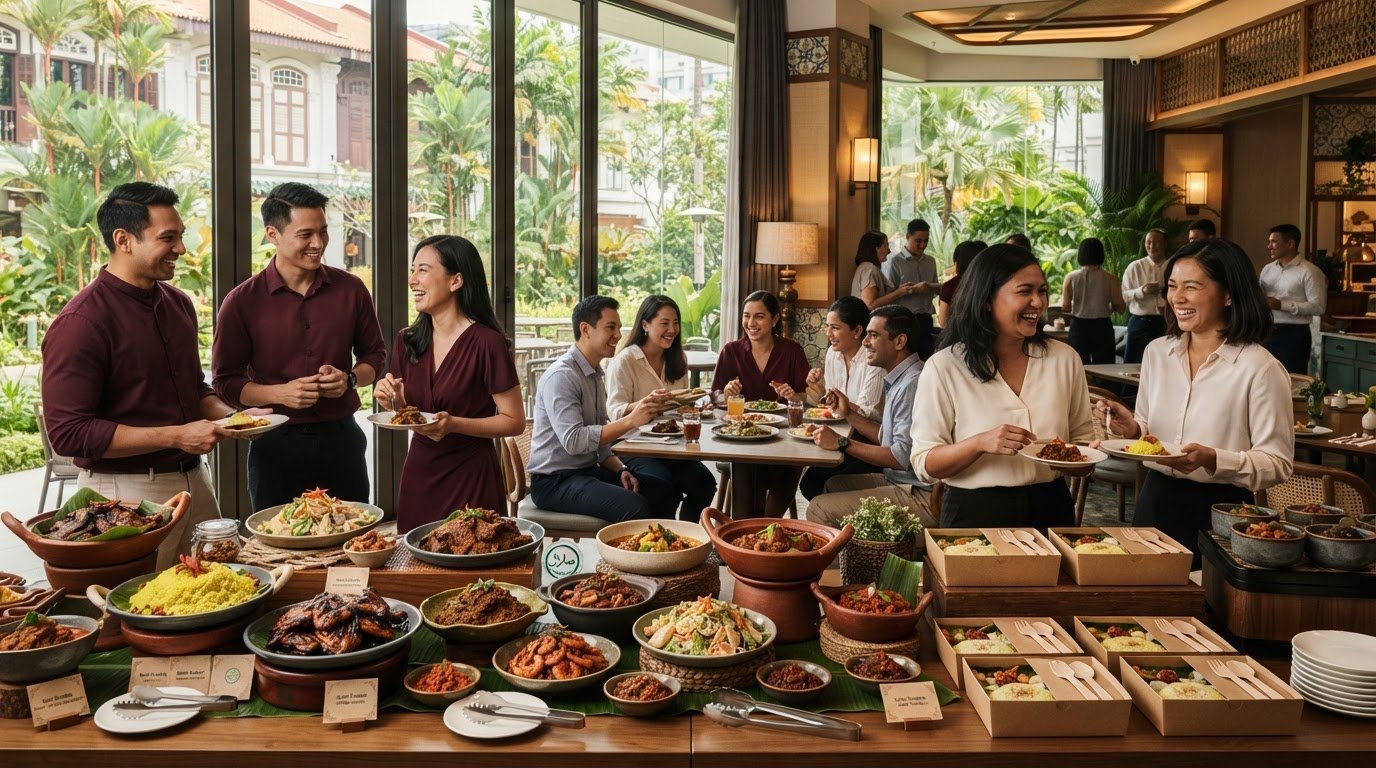

A restaurant outing isn’t automatically the most sociable choice for a team lunch. The right format depends on your activity, available time and how you want colleagues to connect. Start with the event, then choose from halal team building lunch ideas that suit the group and the schedule.
A shared meal can create space for relaxed conversation, but it also needs to work for different preferences and dietary needs without disrupting the day. Decide where lunch will happen, how colleagues will be served and how much time the group has before the next activity.
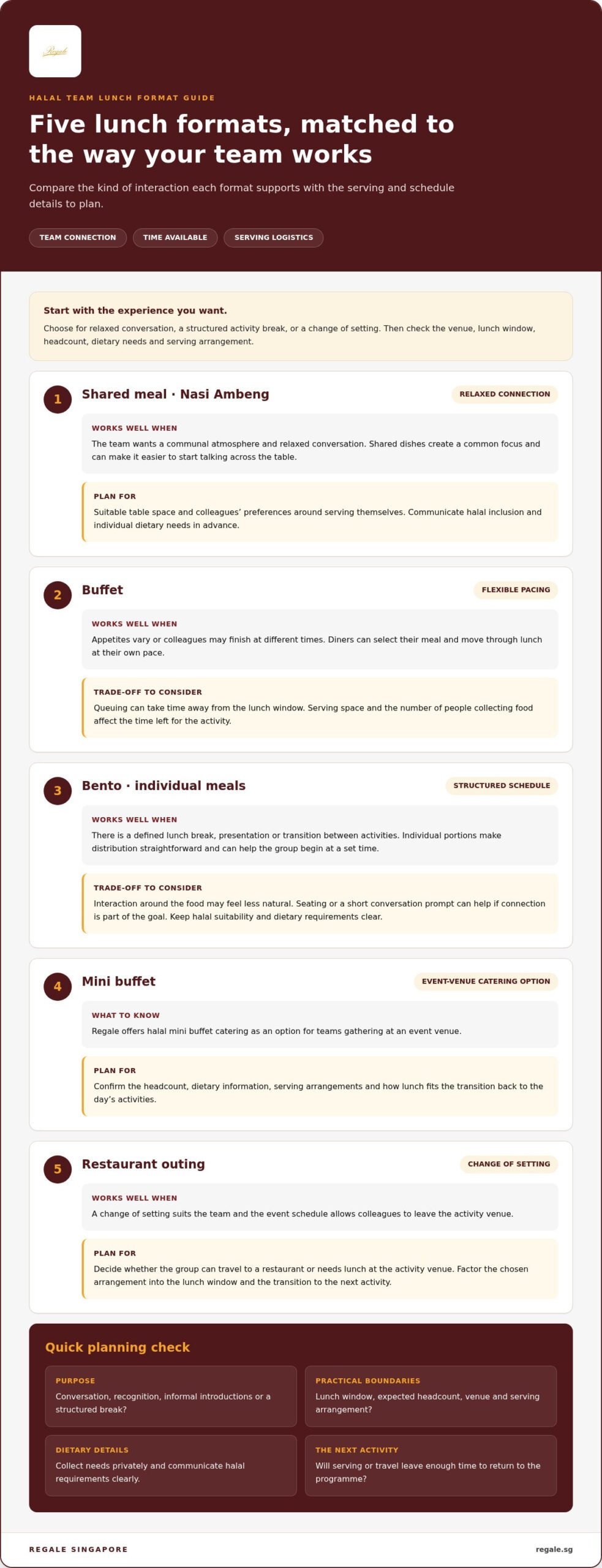
This guide compares five formats: a restaurant outing, individually packed lunches, a buffet, a mini buffet and a shared meal centred on Nasi Ambeng. You’ll see which settings each format suits, how it can support conversation and what to consider when planning the logistics. Regale Singapore serves Indonesian and Western cuisine alongside local favourites, with specialties such as Nasi Ambeng and Nasi Sambal Goreng to consider for a team gathering.
Key Takeaways
- Start with the team experience you want, such as relaxed conversation, recognition or informal introductions, then choose a meal format that supports it.
- Use these halal team building lunch ideas to match the group’s mood and activity, rather than choosing a format by habit.
- Compare options by how naturally they encourage interaction and how well they fit the venue and schedule.
- Plan headcount, dietary information, serving arrangements and the transition back to the day’s activities.
- Regale’s halal catering, buffet and mini buffet options can suit a team gathering at an event venue.
Halal Team Building Lunch Ideas: Start With the Experience You Want
Planning an inclusive team lunch takes more than finding food everyone can eat. You’re also making room for colleagues to connect, feel recognised and enjoy a shared pause in the day, while keeping the meal and schedule clear. The most useful halal team building lunch ideas begin with the experience you want to create, then work backwards to the food and arrangements.
A team lunch can encourage informal introductions between colleagues who don’t often work together, give a project group time to talk outside a meeting or mark a team achievement. The meal itself can also become part of the activity, with shared dishes providing an easy conversation starter. Choose a format that serves the event’s purpose and fits the time available.
Keep the meal experience separate from the venue decision. First decide whether the group needs a relaxed shared meal, a brief pause between activities or a moment of recognition. Then choose where and how to serve it: at a restaurant, in a meeting space or at the activity venue. For organisers who want background on halal food and its wider context, What is Halal? offers an overview that can help frame the conversation respectfully.
Match the lunch to the team-building objective
For informal connection, prioritise shared dishes and enough unhurried time for conversation. Nasi Ambeng is one example of a shared meal with cultural roots. Individual meals may suit colleagues who prefer more personal space or a clearly defined serving arrangement. For a structured activity, choose a format with predictable serving and clearing so the group can return to the programme on time. For recognition, make the meal feel considered through a thoughtful setting or menu. A short appreciation message can be meaningful without putting anyone on the spot.
Set the practical boundaries before choosing food
Write down the lunch window, expected headcount, event setting and serving arrangement before comparing menus. These details help you decide whether colleagues can leave the venue or need lunch at the activity location. They also reveal whether serving could take up too much of the break, leaving less time for conversation or the next session.
Collect dietary needs privately, then share relevant information clearly with the organiser and food provider. Avoid asking people to explain personal requirements in front of the group. Decide how attendees will identify suitable meals and where they will be served, so the process is straightforward on the day. Communicate halal requirements alongside other dietary needs rather than relying on assumptions.
Finally, decide whether the group will travel to a restaurant or eat at the activity venue. A restaurant outing creates a change of setting, while catering at the venue can reduce travel and simplify transitions. Neither choice is automatically more sociable. Choose the arrangement that supports the intended interaction and lets the day continue smoothly.
Five Halal Team Lunch Formats for Different Kinds of Groups
There isn’t one meal style that suits every team-building session. A close-knit group with time to talk may enjoy sharing dishes, while colleagues moving between scheduled activities may benefit from individually packed meals. Choose a halal format that fits the group’s comfort, the event rhythm and the serving arrangements, rather than treating one option as the default.
Format affects participation, pacing and serving logistics. Choose the option that brings colleagues together without working against the event.
Shared platters for a communal atmosphere
Best fit: Teams seeking relaxed conversation and a sense of togetherness. Shared platters give colleagues a common focus and can make it easier to start talking across the table. Nasi Ambeng is a culturally rooted example of a shared meal. The trade-off is that shared dining needs suitable table space and may not suit everyone’s preferred way of serving themselves. Make halal inclusion clear in the meal plan and communicate individual dietary needs in advance.
Buffet spreads for flexible meal pacing
Best fit: Groups with varied appetites or colleagues who may finish at different times. A buffet lets diners select their meal and move through lunch at their own pace, while the shared setting can encourage conversation. The practical trade-off is queuing. Serving space and the number of people collecting food affect how much of the lunch window remains for the activity. Regale’s halal buffet and mini buffet catering are options for teams gathering at an event venue. Explore halal buffet catering as one way to plan a shared spread.
Bento and individual meals for a structured schedule
Best fit: Teams with a defined lunch break, presentation or activity transition. Individually portioned meals make distribution straightforward and reduce the need for colleagues to queue or serve themselves. They can also help the group start lunch at a set time. The trade-off is less natural interaction around the food, so plan seating or a short conversation prompt if connection is part of the goal. Keep halal suitability and communicated dietary requirements clear in the meal arrangements.
Interactive dining for hands-on groups
Best fit: Colleagues who enjoy participating in meal preparation. Shared cooking or assembling food can give people an activity to do together and create easy conversation. It takes more time, though, and the group’s pace may vary. Choose this style when the lunch window allows for participation, and plan the dining arrangement to support halal inclusion without making anyone feel singled out.
Restaurant outings for a change of setting
Best fit: Teams that would benefit from stepping away from the office or activity venue. A restaurant meal changes the atmosphere and can make lunch feel like a distinct occasion. The trade-off is coordination: travel, arrival times and returning to the programme all need to fit the schedule. A restaurant outing works best when the team has enough time to enjoy the change of scene without rushing through the meal.
How to Compare Halal Team Building Lunch Options
Halal status is a baseline requirement for the meal. The format determines how lunch fits the event: whether colleagues sit together, serve themselves or collect individual meals, and how much time is needed before the next activity. Compare those practical differences to choose among halal team building lunch ideas without assuming that one style suits every group.
The most interactive option isn’t automatically the best. Shared cooking can prompt conversation, but a structured activity may need a predictable meal break. A buffet gives people flexibility, yet requires room for a serving queue. Consider the team’s schedule and preferred level of participation together.
| Format | Best fit | Interaction | Logistics |
|---|---|---|---|
| Shared platters | Relaxed groups | High, with a common meal | Needs shared table space |
| Buffet | Flexible appetites and pacing | Moderate, around the spread | Allow room and time to serve |
| Individual meals | Structured schedules | Lower during serving | Plan clear distribution |
| Interactive dining | Participatory groups | High through shared activity | Allow time for preparation |
| Restaurant outing | A change of setting | High at the table | Coordinate travel and timing |
Choose based on team size, schedule, and participation
Group size matters because it affects how colleagues move through the meal, not because there is one ideal headcount for each format. A seated meal can keep everyone in one conversation, while self-service may suit a group whose members prefer to eat at slightly different times. Individually served meals offer a more defined start, which can help when the lunch window is fixed.
Think about participation, too. If lunch is a pause between facilitated activities, a simple serving arrangement can preserve the programme’s rhythm. If the meal is meant to bring people into a shared experience, a more participatory format may be worthwhile. Choose according to how much structure the group needs and how much time is available.
Compare cultural familiarity and menu variety
Familiar local dishes can help create a comfortable atmosphere, while varied choices can welcome colleagues with different preferences. Regale’s menu specialties include Nasi Sambal Goreng, Nasi Minyak and Briyani, offering Malay and Indonesian flavours to consider for a team gathering. A dish name alone doesn’t describe every ingredient or establish suitability for every attendee, so keep individual dietary requirements in view when planning.
Use the comparison as a decision aid, not a scorecard. First identify the schedule and participation style the event calls for. Then weigh the setting, serving flow and menu familiarity. This sequence keeps the meal aligned with the activity and gives colleagues a clear, considerate way to share lunch.
Plan a Halal Team Building Lunch Without Disrupting the Day
A smooth lunch begins before food is served. A clear brief aligns the meal with the activity, communicates halal and other dietary needs, and helps keep colleagues together without squeezing out the rest of the programme. Use this sequence to turn halal team building lunch ideas into a manageable event plan.
Build a clear event meal brief
Bring the essential details into one organiser brief: the event purpose, date, lunch window, expected headcount and serving location. Note whether numbers are confirmed or still changing, and identify who will communicate updates. A concise brief reduces the risk of different people working from different assumptions.
- Set the meal window. Work backwards from the next activity or scheduled restart. Include time for serving, eating and clearing, rather than treating the full break as time at the table.
- Gather dietary requirements. Give colleagues a private way to share relevant needs. Communicate those requirements clearly in the organiser brief, including which meals or arrangements they relate to. Avoid asking individuals to explain personal needs in front of the group.
- Choose the serving format. Match the arrangement to the event flow. A buffet can suit a flexible break, a mini buffet can support a shared meal at an event venue, and individual meals can make distribution more structured. Account for the available space and the time colleagues have to eat.
- Confirm where lunch will happen. Decide whether the group can travel to a restaurant or should remain at the activity venue. If travel would divide the group or disrupt the agenda, halal catering can make a meal at the gathering part of the plan and simplify the transition back to the programme.
Make serving and transitions comfortable
Before the event, consider how colleagues will reach the food, identify their meals and take their seats. Keep serving routes clear and arrange tables so diners can talk without blocking access. For self-service, allow enough of the lunch window for everyone to collect food at a comfortable pace. For individually served meals, make the distribution point easy to find.
Build the return to the activity into the plan. Share a simple cue for when lunch is ending, and leave time for colleagues to clear their places and move back to the next session. A calm transition is especially helpful when the team has a facilitated activity or a fixed agenda immediately after lunch.
For a team meal at an event venue, explore Regale’s halal catering options, including buffet and mini buffet formats, as part of your lunch plan.
Bring the Lunch Together With Regale’s Halal Catering and Cuisine
With the format and event logistics in view, the next step is to choose food that gives the gathering a sense of occasion and fits the team’s plans. Regale is a halal-certified culinary establishment offering halal catering, buffet and mini buffet options, alongside Malay, Indonesian, local and Western dishes. This range gives organisers options to consider for both the meal’s character and the setting in which colleagues will eat.
For teams gathering at an activity venue, catering can make lunch part of the event rather than adding travel to the schedule. A buffet or mini buffet can anchor a shared meal. Choose between them based on the lunch window, available space and atmosphere you want. A considered meal doesn’t need to interrupt the programme; it can become a natural pause within it.
Choose a shared meal rooted in Malay and Indonesian cuisine
Nasi Ambeng is one of Regale’s specialties and a culturally rooted option for colleagues sharing a meal. It can make lunch feel communal, giving the team a shared point of focus without requiring a separate activity. The value lies in bringing people to the table and making space for conversation, not in assuming that every team wants the same dining style.
Regale’s other menu specialties include Nasi Sambal Goreng, Nasi Minyak and Briyani. These offer Malay and Indonesian flavours to consider when choosing a meal with local and regional character. Dish names alone don’t describe every ingredient or establish suitability for every individual dietary need. Include dietary requirements in the planning so the menu can be considered with attendees’ needs in mind.
For a team with varied preferences, a familiar culinary tradition can make the meal feel distinctive while still fitting a professional gathering. Lunch doesn’t need to be a formal performance. Offer colleagues a welcoming setting in which they can eat together, talk naturally and return to the activity with a shared experience.
Take the next step with a suitable meal format
Buffet and mini buffet catering can support a group meal at an event venue, helping keep colleagues together when leaving the location doesn’t suit the agenda. Consider how the team will move through the meal, how much of the lunch window is available and whether the occasion calls for an easygoing shared spread or a more structured pause. The format should serve the team’s schedule and intended atmosphere, rather than dictate them.
As you finalise your halal team building lunch ideas, bring the event brief, meal timing and dietary information together before settling on the menu arrangement. Regale’s Indonesian and Western cuisine, together with its halal catering, buffet and mini buffet options, can help shape a meal around the gathering. Explore halal catering and menu options with Regale for your team lunch.
Make Your Next Team Gathering Meaningful
A well-planned lunch can give colleagues a point of connection that carries into the rest of the workday. Choose an atmosphere that feels natural for your team, then let the food and schedule support it. The best halal team building lunch ideas make participation comfortable and leave colleagues with a shared experience, not just a break between activities.
Start with one clear intention for the meal, whether that’s welcoming new colleagues, recognising a contribution or creating space for conversation. From there, you can build an event that feels thoughtful without overcomplicating the day.
Explore Regale’s halal catering and menu options as you plan a team lunch that brings people together. With a considered choice of meal and setting, your next gathering can feel both welcoming and memorable.
Frequently Asked Questions
What are good halal team building lunch ideas?
Good halal team building lunch ideas include a shared meal for conversation, a buffet for flexible pacing or individual meals for a tight agenda. To make the choice more purposeful, pair lunch with a simple social moment, such as inviting colleagues to share one team win or introduce themselves to someone they work with less often. Keep the activity optional so lunch remains comfortable for different personalities.
How do I choose a halal lunch format for a work team?
Choose a format by matching the meal to the schedule and the way colleagues will participate. A short lunch between workshop sessions may work better with meals distributed at a set time, while a relaxed celebration can allow for a longer shared meal. Consider the venue layout, too. A format that looks suitable on paper may be awkward if there is little space for people to sit together.
Is a buffet a good choice for team building?
A buffet can work well when colleagues appreciate choice and the lunch period allows time for people to serve themselves. It can also give attendees a natural reason to move around and speak with different coworkers. For a very short break, a queue may reduce the time available to eat and connect. A simple seating plan or staggered serving approach can help the meal feel more organised.
Can halal catering be served at a team-building venue?
Yes. Regale offers halal catering, which can make a meal at the activity venue an alternative to travelling elsewhere. Before the event, include the venue’s access arrangements, serving area and available dining space in the event plan. This helps the organiser coordinate where food will be placed and how the group will move between the activity and lunch. Keep the meal timing aligned with the venue schedule.
What food works well for a team lunch?
Food that is easy to serve and comfortable to eat in the available setting usually suits a work lunch. Consider whether colleagues will be seated at tables, eating between sessions or sharing a more leisurely meal. Regale’s menu includes Malay, Indonesian, local and Western dishes, with specialties such as Nasi Ambeng and Nasi Sambal Goreng. Communicate individual dietary needs separately, since halal status alone doesn’t address every preference or requirement.
How can I make a team lunch more interactive?
Give colleagues a light, optional way to take part without turning lunch into another formal exercise. You might invite table groups to share a project highlight, discuss a prompt related to the team’s goals or welcome a new colleague. Rotate seating only if it feels appropriate for the group. A relaxed structure can encourage conversation while leaving people free to enjoy their meal without pressure.
How should I plan dietary requirements for a halal team lunch?
Collect dietary requirements privately during event registration or through a direct message to the organiser. Record only the information needed to plan the meal, then share it clearly with the person coordinating food. Distinguish halal requirements from allergies, intolerances and personal preferences, since they may call for different considerations. Before serving, make it easy for attendees to identify which meal is intended for them, without asking anyone to disclose personal details publicly.
