
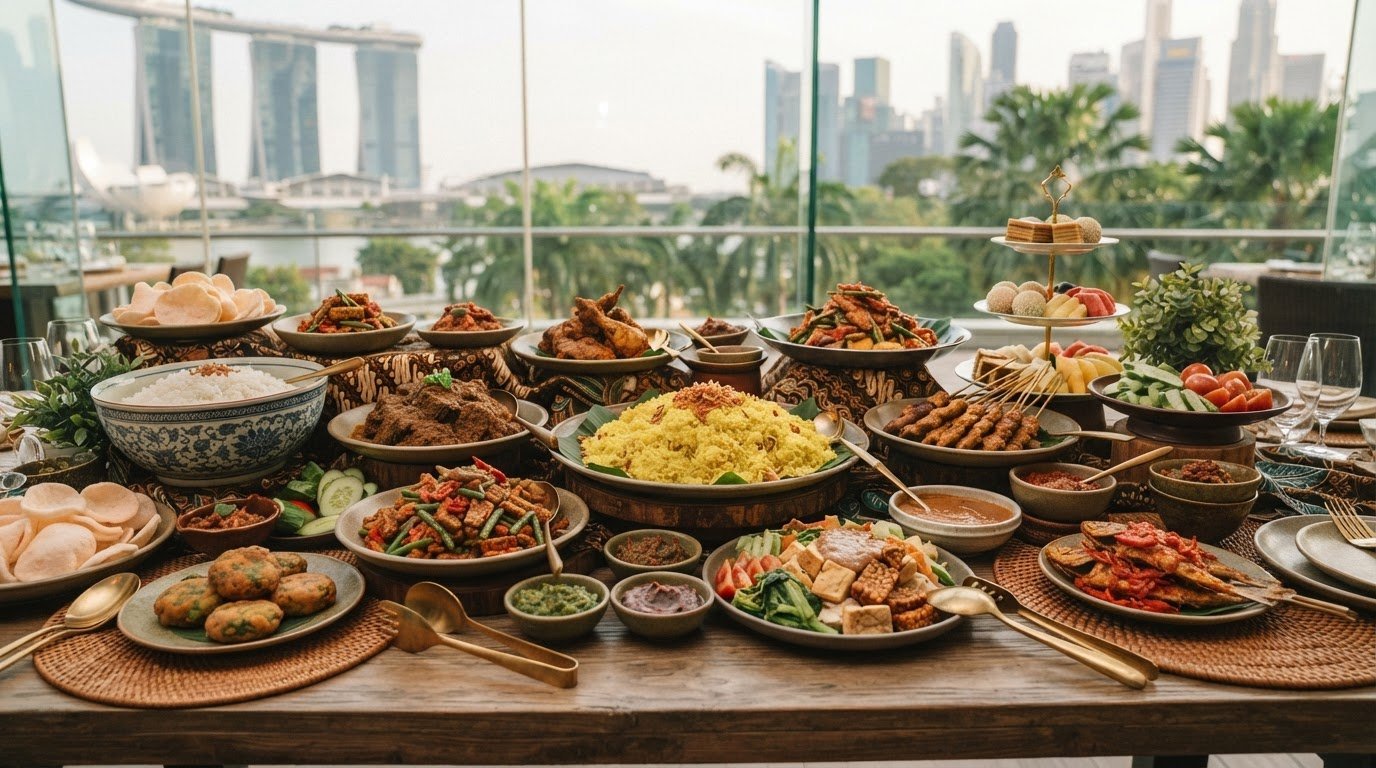

Halal party platters in Singapore can be chosen by matching the serving count to your guest list and checking that the food’s halal status suits your gathering. There’s no minimum order for platters, while menu, portion size and delivery arrangements shape what works for each event.
Planning food for an office gathering or family celebration means balancing variety with enough servings. Clear menu details make that easier, and halal certification can give guests confidence in how food is prepared and handled.
This guide explains how to assess halal certification, compare platter prices without confusing market examples with a caterer’s own rates, and estimate serving sizes. It also covers office catering, advance ordering and the practical considerations around same-day delivery in Singapore, so you can plan the menu and timing with greater confidence.
Key Takeaways
- Use halal certification and careful food handling as part of your planning, especially when guests have different dietary needs.
- Compare platter prices by looking at the item count, variety and portion style, then match these details to your event budget.
- Estimate servings from the number of pieces and the role the platter plays in the meal, whether it is a light spread or part of a fuller menu.
- For office gatherings, ask about allergies and dietary restrictions, and label dishes clearly to help guests choose with confidence.
- Plan made-to-order platters ahead: allow at least three days’ notice, and place orders up to 60 days in advance.
Halal-certified catering and party platters
Halal party platters in Singapore can combine savoury bites, meal portions and sweet items for sharing. Choose finger foods for a meeting or a mix of dishes for a family gathering, depending on the event format, guests’ dietary needs and whether the platters are refreshments or the main meal. Start by matching the food to the occasion, then estimate portions and serving space.
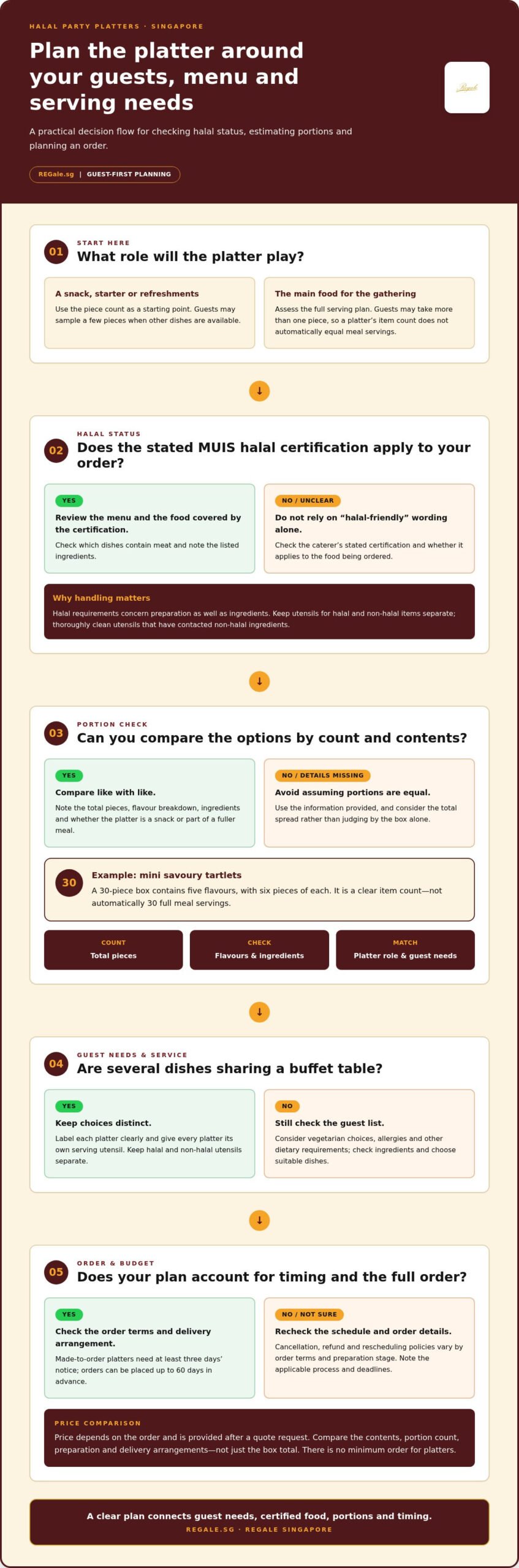
“Halal” means “permissible” in English and describes what is lawful under Islamic law, or Sharia. When ordering catering, distinguish certified halal status from general descriptions such as “halal-friendly.” Look for the caterer’s stated MUIS halal certification and check that it applies to the food you are ordering. This lets guests make an informed choice instead of relying only on dish names or menu descriptions.
Halal certification concerns more than the ingredients visible on a platter. Halal meat requires slaughter by a Muslim who is of sound mind and has reached the age of maturity, in the name of Allah, using a swift and humane method. Pork and its derivatives, along with alcoholic beverages, are restricted under halal dietary laws. These requirements help explain why preparation and handling matter as well as the finished menu.
For a practical planning check, review the menu and serving arrangements before placing an order:
- Confirm the selection: identify which dishes contain meat, and note the listed ingredients.
- Check certification details: distinguish MUIS halal certification from wording that simply describes food as suitable.
- Plan separate handling: keep utensils for halal and non-halal items separate.
- Clean carefully: thoroughly clean utensils that have contacted non-halal ingredients to minimise cross-contamination.
These checks are useful when guests have different food preferences or several dishes share a buffet table. Clear labels help guests identify each platter, while separate serving utensils keep dishes distinct during service. Give every platter its own utensil rather than moving one between trays.
Cancellation, refund and rescheduling policies vary according to the order terms and preparation stage. Read the terms before paying, and note the process and deadlines for changes. This is especially useful for made-to-order selections, as preparation may have begun when plans change. Keep the order details together so the organiser can understand the applicable policy and communicate changes clearly.
Prices and serving sizes
Compare platter prices by checking the contents, piece count and intended serving role. A boxed selection of 30 mini savoury tartlets, for example, contains six pieces of each of five flavours. That count gives a clear starting point for planning, but it doesn’t automatically equal 30 full meal servings. Guests may take more than one piece, especially when tartlets are the main food rather than one part of a larger spread.
Price depends on the case and is given after a quote request; the menu, portion count, preparation and delivery arrangements affect the total. Compare like with like: a box of savoury bites is different from a meal-oriented spread. A selection with cheese, vegetarian items or several flavour profiles may suit varied preferences, while the final cost also reflects what the box contains. Avoid judging value from the box total alone. Consider the number of pieces and how the food fits your celebration.
Use this order of checks before choosing a box:
- Count the pieces: record the total and note whether flavours are divided evenly.
- Define the role: decide whether the platter is a snack, a starter or the main food.
- Review variety: check whether the selection includes vegetarian choices and familiar flavours.
- Compare the full order: include every selected box and the delivery arrangement in your budget.
For example, the 30-piece tartlet box provides five flavours, with six of each. That gives an organiser a simple way to distribute variety across a table. For a small gathering, consider how many pieces each guest may take. For a larger celebration, assess the total spread, not just one box. Add other dishes when the platter is not intended to carry the meal. This prevents a visually generous assortment from being mistaken for a complete serving plan.
Compare box prices using consistent details: the named contents, total piece count and flavour breakdown. If one box lists a precise assortment and another gives only a general description, compare the information provided rather than assuming portions are equal. Vegetarian options, cheese and savoury fillings offer different choices for guests. Portion planning still depends on the event format and accompanying food.
For a meal-led gathering rather than a snack-only spread, consider halal catering options as part of the menu plan. Match the order to the event’s purpose, then use item counts and dish variety to organise servings.
Sharing platters for different group sizes
Choose a platter by matching its listed pieces and ingredients to your guest list and event format. Address vegetarian, allergy-related and other dietary requirements through suitable dish choices, clear ingredient information and separate serving utensils.
Portions and Serving Headcounts
Use the stated piece count as your starting point, then decide how the platter fits the meal. At a reception with other dishes, guests may sample a few pieces; at a snack-focused gathering, the platter carries more of the food plan. Note the headcount and each platter’s role before choosing quantities.
Next, compare portions across the full table. One platter may suit a tasting spread, while several selections can add variety for a larger group. Include other food in your estimate and consider whether guests will arrive together or serve themselves over time. This helps prevent one small selection from carrying the entire menu.
Assortment Sizes and Flavours
Assortment size describes the range and quantity of items in a box, while flavour variety describes what guests can choose. Review the item count, flavour breakdown and ingredients together. A classic savoury selection can anchor the table, with contrasting flavours adding choice without making the spread difficult to serve.
For a mixed group, compare each assortment with guest preferences rather than choosing by appearance alone. Check for vegetarian ingredients and identify items that may not suit particular dietary needs. Clear ingredient descriptions help organisers plan labels and serving positions before the platter reaches the table.
Build the order with a simple planning sequence:
- List guests: note the expected attendance and any dietary requirements shared with the organiser.
- Set the platter’s role: decide whether it is a snack, part of a meal or the main food.
- Compare assortments: weigh piece counts, flavour mix and ingredient details together.
- Plan the table: place distinct selections separately and provide serving utensils for each.
For example, an office gathering with a vegetarian guest needs more than a total-piece estimate. Review ingredients, select suitable options and keep them identifiable on the table. At a family celebration, a classic flavour alongside an assorted selection can offer familiar and varied choices. The right balance depends on the event menu and guests’ needs, not simply platter size.
Keep a written tally of selections and serving roles as you plan the order. This makes it easier to spot gaps, such as a spread with plenty of variety but too few substantial items. Share ingredient information with guests who have dietary requirements, and keep each serving utensil with its platter. These steps make the assortment easier to understand and serve.
Office parties and corporate meetings
For an office occasion, organise the menu around the meeting schedule and serving setup. A morning briefing may call for easy-to-serve bites, while a team celebration may need a broader spread. Ask guests about dietary restrictions and allergies before choosing dishes, then share those details with the person arranging the order. This helps the menu reflect the attendees rather than assumptions about the group.
Once you have gathered preferences, turn them into a simple menu plan. Note which dishes suit specific requirements and make the menu information easy to see. For example, a guest with an allergy should be able to identify relevant ingredients before selecting food. Clear labels help guests choose confidently when several platters are served together in a shared pantry or meeting room.
Keep halal and non-halal dishes separate to reduce confusion and mix-ups. Label each dish, provide its own serving utensil and place it apart from the others. This is useful when colleagues bring additional food alongside the catering. It also makes the serving area easier to navigate during a busy lunch break, when guests may arrive at different times.
Use this planning sequence for a corporate order:
- Set the occasion: identify whether food is for a meeting, a team celebration or a client gathering.
- Collect requirements: ask guests about dietary restrictions and allergies before finalising the menu.
- Prepare labels: identify dishes and relevant ingredients in clear, readable wording.
- Arrange service: separate halal and non-halal dishes, with utensils kept beside their matching platters.
For a client presentation, place food where guests can reach it without interrupting the meeting. For a staff gathering in a shared office, arrange labels toward the serving side of each platter. These small setup choices make the menu easier to navigate and help the occasion feel considered. Keep a copy of the menu with the event organiser, so questions about dishes can be answered consistently.
Timing matters, too. Set out refreshments before a scheduled break rather than during a presentation. For a working lunch, prepare a clear serving area before attendees leave the meeting table. Assign an organiser to oversee labels, dish separation and replenishment while colleagues focus on hosting. Dividing these tasks helps the gathering run smoothly.
For a polished office spread, balance guest needs, menu clarity and room layout. A well-labelled selection can delight guests without distracting from the meeting’s purpose. Before serving, review the labels, check that each utensil stays with its dish, and make the menu information available to attendees. These final steps support a considerate experience for colleagues and visitors alike.
Advance ordering and same-day delivery
For made-to-order canapés and platters, allow at least three days’ notice. Orders can be placed up to 60 days ahead, giving organisers time to coordinate food with venue access, guest numbers and the event schedule. For example, once a gathering date is fixed, record the delivery address, preferred arrival time and menu choices together. This gives the organiser a clear order plan and reduces last-minute decisions.
Made-to-order platters require three days’ notice, so they are not suitable for same-day delivery. If your gathering is today, choose a plan that does not depend on a made-to-order platter arriving that day. Ordering in advance also gives you time to organise savoury selections, serving space and guest information.
Use this sequence to keep the order organised:
- Set the date: enter the gathering date in the event plan as soon as it is known.
- Work back from service: allow at least three days for made-to-order canapés and platters.
- Choose ahead: orders may be scheduled up to 60 days in advance.
- Prepare the venue: note the delivery address, access details and table location.
- Brief the organiser: keep menu choices and serving arrangements in one shared record.
Plan serving time around delivery, too. Canapés and platters are best enjoyed within about two hours of delivery, so avoid arranging delivery far ahead of the meal. If a meeting has a scheduled break, for example, align food service with that break. This keeps the platter in step with the event timetable.
For an office gathering, assign someone to receive the delivery and prepare the serving area. They can arrange the platters, set out utensils and make the menu information available. For a family celebration, the host can prepare the table before guests arrive. A clear receiving plan avoids leaving food unattended while the organiser handles other tasks.
Before finalising arrangements, write down the delivery date, address, access instructions and intended serving time. Keep those details together with the selected menu, so anyone helping with the event can follow the same plan. For a same-day gathering, avoid building the schedule around made-to-order platters; for planned occasions, use the advance-order window to coordinate food and venue logistics.
Plan your halal gathering with the event date and serving schedule in mind, so food arrangements fit the occasion.
Customers can also collect orders for free from the flagship store at 34 Arab Street.
Regale Singapore: Nasi Sambal Goreng
Regale Singapore serves Nasi Sambal Goreng, a distinctive Indonesian meal. If your gathering calls for more than finger food, consider Nasi Ambeng or other Indonesian cuisine. Western dishes offer a different option when you are planning for varied tastes.
Regale Singapore’s dishes can complement an event when a shared meal suits better than a platter-only spread. Choose according to the occasion and the style of food you want to serve, keeping guest preferences in mind. Regale brings Indonesian and Western choices together for diners looking beyond snack-style selections.
Visit regale.sg to explore Regale Singapore’s food options.
Shape a Gathering Around the Meal
With the practical details settled, let the food help set the tone for your gathering. A platter can suit a relaxed office break, while a fuller meal creates a more substantial shared occasion. Choose the format that fits how you want guests to come together, then build the menu around that experience.
For a meal with Indonesian character, Regale Singapore serves Nasi Sambal Goreng, Nasi Ambeng and other Indonesian dishes. These options can suit a gathering when a platter selection alone is not the meal you have in mind. Choose what brings the occasion and your guests’ preferences together.
If you’re ready to plan halal party platters in Singapore, take the next step by discussing your gathering and menu needs with Regale Singapore. Contact Regale Singapore to plan your platter, and make your next shared meal feel considered from the first selection to the final serving.
Frequently Asked Questions
Which caterers in Singapore offer halal party platters?
Regale Singapore offers halal catering, halal buffet and halal mini buffet options, with dishes including Nasi Sambal Goreng, Nasi Ambeng and other Indonesian cuisine. Consider whether a catered shared meal or restaurant dining better suits your gathering, then choose the menu style that fits. These options offer a starting point for planning a halal meal.
What halal certification should I check when ordering party platters in Singapore?
Check whether the caterer holds MUIS halal certification and whether it applies to the food service you are ordering. Read the menu details, especially for dishes containing meat, sauces or mixed ingredients. If guests need ingredient information, identify those dishes before ordering and make the details accessible at the serving table. Certification and clear menu information address different planning needs.
How much do halal party platters cost in Singapore?
There is no standard price for every platter. Prices depend on the selection and are provided after a quote request, while portions, preparation and delivery arrangements affect the total. Compare menu contents and serving format alongside the quoted amount so a savoury snack selection is not mistaken for a full meal. This helps you assess value against your event’s food plan.
What are the minimum order quantities and serving sizes for platter packages?
There is no minimum order for platters. Serving sizes depend on each package’s contents, so use the item count and the food’s planned role to estimate quantities. A platter served alongside a buffet, for example, plays a different role from one set out as the main refreshment. If guests arrive in stages, plan how the selection will be presented and shared.
How far in advance should I order halal party platters in Singapore?
Allow at least three days’ notice for made-to-order canapés and platters. Orders can be placed up to 60 days ahead, which helps you coordinate the menu with venue access and the event programme. Same-day delivery isn’t a suitable assumption for made-to-order items. For a gathering happening today, plan a different food arrangement rather than relying on a last-minute platter order.
