
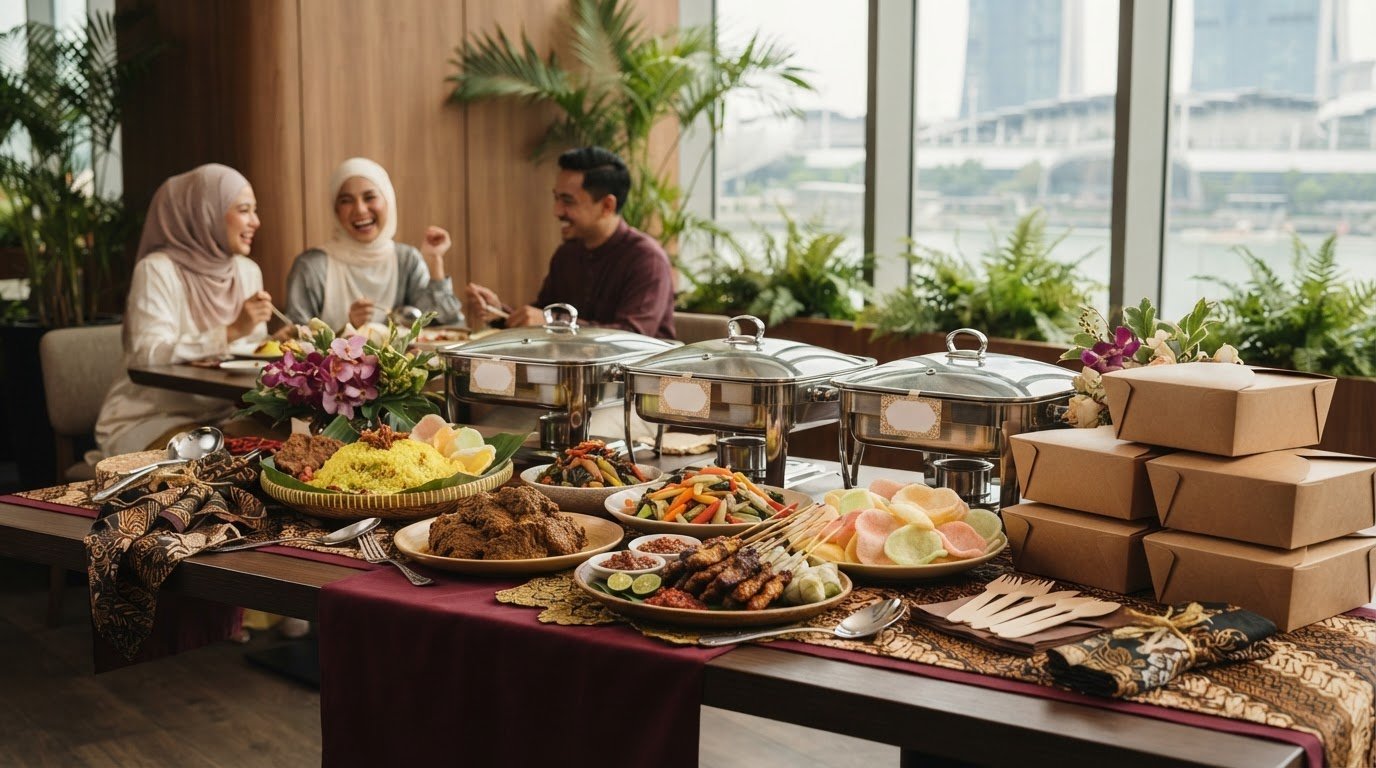

Yes, a small group can order halal mini-buffet catering in Singapore: some orders start at a minimum of 10 to 15 people. Full halal buffets commonly require 30 to 50 guests, so a Singapore list of halal-certified caterers can help you compare formats that suit your gathering.
When planning a home party or corporate event, look beyond the menu. Serving style, minimum order and delivery arrangements all affect whether a caterer suits your plans.
This guide explains buffet and mini-buffet catering, per-person and per-set pricing, and delivery details that shape the total cost. It also covers menu considerations for events with halal and non-halal guests, helping you compare options clearly.
Key Takeaways
- Some halal mini-buffet orders in Singapore start at 10 to 15 people, while full buffets commonly require 30 to 50 guests. Match the format to your guest count.
- Compare menus by cuisine, serving style and event setting to narrow down options for a corporate gathering or home party.
- When comparing quotes, distinguish per-person pricing from per-set pricing and account for delivery arrangements in your event budget.
- Use the MUIS website to look up a caterer’s halal certification as part of your selection process.
- For Indonesian and Western cuisine, explore options such as Nasi Ambeng, Nasi Sambal Goreng and other menu choices suited to your gathering.
Menus for corporate events and home parties
Singapore caterers offer Malay, Indonesian, Indian, Western and Peranakan cuisines, alongside local favourites. Buffets, bento and live-cooking formats suit different venues, guest counts and service styles.
For a small gathering, some halal mini-buffet orders start at 10 to 15 people; full buffets commonly require 30 to 50 guests. For mixed halal and non-halal gatherings, one halal-certified caterer lets guests dine together.
Cuisine and menu options
Start menu selection with cuisine, then compare dish variety and serving needs. Options may include Indonesian favourites, Western mains, Malay dishes, Indian selections and Peranakan flavours. For example, a corporate lunch might pair a familiar main with a vegetarian choice, while a home celebration could centre on regional dishes. Compare ingredients, sides and dietary choices across the full menu.
For a wedding, match the menu to the reception style and guest mix. A formal buffet can offer several mains and accompaniments, while a community gathering may suit a wider selection of familiar dishes. Thoughtful choices help guests with different preferences share a meal. Review the actual menu, not just its cuisine label.
Buffet, bento and live-cooking packages
Buffets work well when guests can serve themselves and move between tables. Bento meals provide individual portions for meetings, workshops or venues with limited dining space. Live-cooking stations add activity and food preparation at the event, so consider available space, power access and guest flow when comparing this format with a buffet.
Serving formats differ in how food is portioned and presented. Bento can simplify distribution to assigned seats at a corporate event, while a buffet gives guests flexibility at a wedding reception. Mini buffets suit smaller gatherings without a full buffet arrangement. Compare setup requirements and the serving plan with the venue before deciding.
For corporate event catering, begin with the schedule, venue layout and meal period. A morning seminar may call for individually served food, while a longer company gathering can accommodate a buffet break. Then match the menu to the event: a client reception may call for a polished spread, while an internal team lunch may benefit from easy-to-serve dishes.
Wedding catering involves more than choosing mains. Consider the reception schedule, table arrangement and how guests will access food. A buffet needs clear movement between serving points; plated or boxed meals require a distribution plan. For guests with varied preferences, a menu with distinct mains and sides offers practical choices.
Community catering brings families and groups together around a shared meal. Choose dishes to suit the occasion, from local favourites to Indonesian, Western or Peranakan options. For a mixed guest group, one halal-certified caterer can make it easier for everyone to dine together. Check the guest count against the format’s minimum before choosing a menu.
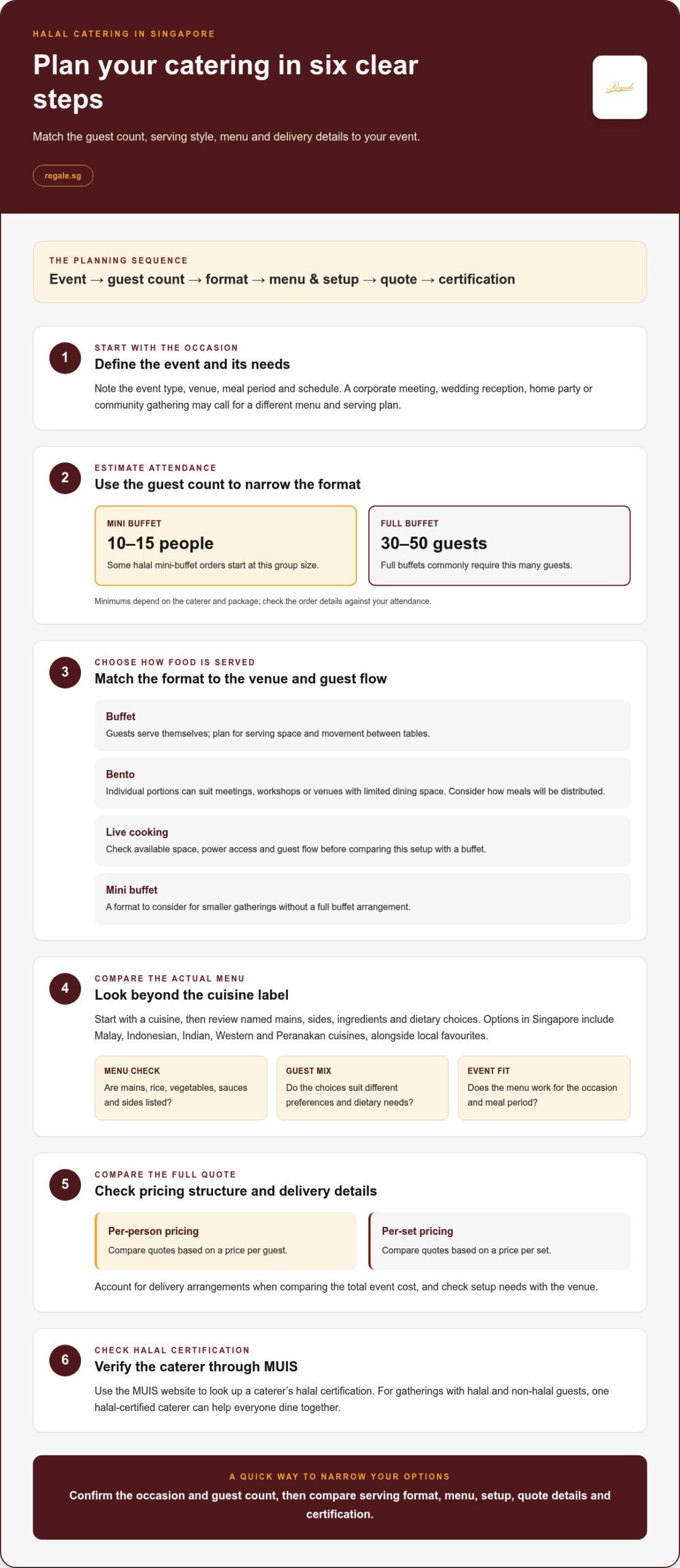
Follow a simple planning sequence: confirm the event type, estimate attendance, choose a serving format, then compare menus and setup needs. A small home party may suit a mini buffet, while a larger corporate gathering may call for a full buffet. These steps narrow the options while accounting for the occasion.
Caterer search by name or cuisine
Searching by caterer name helps when a colleague, venue or event organiser gives you a specific lead. Enter the full business name, then compare its menu, catering formats and event details. Without a recommendation, search by cuisine and occasion instead. For example, “Indonesian buffet catering for a company lunch” narrows results more effectively than “food catering Singapore.” A halal-certified caterers Singapore list can help organise your search.
Use cuisine as your first filter, then examine the actual dishes. Labels such as “Western” or “Peranakan” can cover very different menus. Look for named mains, sides and preparation styles rather than relying on broad categories. If chicken is a preferred main, compare how each menu prepares it and what comes with it. A signature dish can set a menu apart, but consider the wider selection too.
Use a consistent search sequence to compare options fairly:
- Search the caterer’s name or a cuisine linked to your event.
- Open the menu and note its mains, sides and available formats.
- Match the format to the venue, meal period and guest flow.
- Compare the details using the same criteria for each result.
A team lunch in a meeting room may call for individual portions, while a reception may suit a buffet.
Choose search terms that reflect how the food will be served. “Buffet catering service” can help you find shared-meal options, while “bento sets” focuses on individually packed portions. Add the occasion to distinguish a wedding reception from a staff meal. Then check whether the menu suits the timing and setup. A buffet needs serving space; bento sets need an orderly distribution plan.
Read menu descriptions closely before comparing caterers. Check whether the listed dishes make up a complete meal or are individual selections. Look for rice, vegetables, sauces and sides alongside the mains. For a mixed group, consider variety across the menu rather than choosing several similar dishes. This helps you compare the food itself, not just a cuisine label or signature item.
Keep a short comparison note for each search result. Record the business name, cuisine, menu examples, serving format and suitability for your event. For instance, note “Peranakan dishes, buffet, suitable for shared dining” beside one result. A Singapore list of halal-certified caterers is easier to assess when each entry follows the same criteria. If Indonesian or Western cuisine is your focus, browse Indonesian and Western menu choices as part of your comparison. Use the checklist for each option, then carry your shortlist into price and delivery comparisons.
Catering prices per person and per set
Singapore catering quotes may be calculated per person or per set, so compare like with like. A per-person rate applies to each guest, while a set price covers a defined food package. Compare the complete order cost, taking account of the serving format, menu and delivery arrangements.
For a per-person package, multiply the quoted rate by the guest count to calculate the food subtotal. A corporate lunch for a large team, for example, needs a different total calculation from a home meal for a small group. Then check what the package includes, such as mains, sides, serving equipment or setup. Compare the same components, not just headline prices.
A per-set price applies to a bundle or quantity of food, rather than charging each guest separately. Check the stated serving quantity and compare it with expected attendance. If a set is intended for sharing, the number of sets you need depends on the group and meal plan. Bento sets are assessed by portions required, while a shared mini buffet is compared by package contents.
Use this checklist when comparing written quotes:
- Record whether the quote is per person or per set.
- Match the package contents, including mains and accompanying dishes.
- Compare the same serving format, such as buffet or mini buffet.
- Include delivery arrangements and any event setup needs.
- Calculate the full order total, not just the unit rate.
Delivery affects the final budget because arrangements depend on the delivery location and order details. A central office and a home in another part of Singapore may involve different logistics. Event timing, building access and the selected service format can also shape delivery planning. Read the quote for the delivery component separately, then add it to the food subtotal.
Menu choices also affect the comparison. A package with several mains and varied sides differs from a simpler selection, even if both serve the same event type. Premium choices may change the package composition, so compare specific dishes and portions. For example, assess a chicken-based set against another set serving the same purpose and format.
For catering services in Singapore, the price depends on guest count, selected dishes, package format and delivery arrangements. The total is provided after a quote request. A restaurant meal and delivered catering are also different service options, so compare each with the occasion rather than treating them as interchangeable.
To keep your shortlist useful, record each caterer’s quoted basis, menu, delivery component and total. Then check whether the package suits the guest count and serving plan. Comparing the same details makes per-person and per-set options easier to assess and helps you account for logistics that affect the final budget.
Halal-certified caterers in Singapore
For an event booking, use the MUIS website to check a caterer’s halal certification, then match the listed business name to the entity taking your booking. Treat certification and menu comparison as separate steps: certification establishes the caterer’s status, while the menu shows whether its dishes suit your gathering.
Singapore’s halal-certified catering options vary by cuisine, serving format and occasion. A community lunch may need a generous buffet, while a workplace meeting may call for individually portioned meals. Look beyond the headline cuisine and review the actual dishes, including mains, sides and accompaniments. This helps you compare the menu with your guests’ preferences.
For a useful shortlist, record the same details for each business. Start with its business name and MUIS listing, then note the menu, event format and delivery arrangements. A caterer suited to a family gathering may not fit a formal reception if its format or menu differs. Comparing consistent details keeps the selection focused on your event.
- Business identity: Match the name on the booking details with the name shown in the MUIS search result.
- Event fit: Compare the buffet catering format with your venue, guest flow and serving arrangement.
- Menu detail: Review the listed dishes and select a spread that fits the occasion.
- Order information: Keep the menu and booking details together for your event records.
Food catering and buffet service involve different practical considerations. For a buffet, plan where the serving area will go and how guests will move through it. At a venue with limited space, the format and setup may matter as much as the cuisine. A community gathering in a shared hall, for example, needs a serving plan that keeps the entrance and main walkway clear.
Menu selection also shapes the experience. A family gathering may suit a mix of familiar dishes, while a formal function may need a more structured spread. Compare dish variety, dietary choices and how the menu works as a complete meal. A cuisine label alone does not show whether the specific mains and sides suit your guests.
After reviewing the MUIS listing and event details, keep the caterer’s name, menu and order information together. This makes it easier to coordinate with the venue and keep booking details consistent. For a corporate event, share the final serving plan with the organiser; for a wedding or community gathering, align it with the reception schedule.
How can I verify a caterer’s halal certification on the MUIS website?
Use the MUIS website to search for the caterer by business name. Compare the listing with the name on your quotation or booking details, then confirm you have the correct business before arranging event catering.
Start with the exact name shown on the caterer’s official materials. A brand, restaurant and registered business name may differ, so try the wording on the quotation. If several similar names appear, compare the business details in the results. Don’t assume a result belongs to your caterer simply because it shares a word.
- Open the MUIS website and locate its halal certification search or directory.
- Search the caterer’s full business name, using the spelling shown on its booking information.
- Review the matching result and compare the displayed identity with your catering documents.
- Save the relevant listing details with the event quotation for reference.
If a quotation uses a trading name, search that name first. If it doesn’t produce a clear match, use the formal business name shown in the booking documents. A similar name alone does not establish that you have found the right listing. The purpose of the search is to match the business identity.
Check that you’re assessing the caterer named in the order, not a venue or separate food business. At an event held at a restaurant, the caterer and venue may have different names. Keep those roles distinct in your notes. If an event organiser handles the booking, compare the caterer named in the quotation with the MUIS result.
A certification lookup and a menu review answer different questions. The MUIS search helps identify a matching certification listing; the menu helps you choose dishes for your guests. Keep both records together. For example, note the listed business name alongside the menu version and event date in your planning file.
Before finalising arrangements, use the same business name throughout your event paperwork. Check the quotation, booking confirmation and delivery instructions for consistency. If the name differs across documents, resolve the business identity using its formal details. This helps prevent confusion between similarly named businesses during event planning.
A simple record can include the MUIS search term, matching business name, date reviewed and relevant booking document. This gives the organiser a clear reference, especially when several vendors are involved. Keep it with the menu and delivery plan rather than relying on a search result you may not recall later.
Regale Singapore: Nasi Sambal Goreng
Regale Singapore serves Nasi Sambal Goreng and Nasi Ambeng for diners who enjoy Indonesian flavours. These dishes offer a distinctive choice when you want a meal rooted in Indonesian cuisine rather than a broad mixed menu.
The menu also includes Authentic Indonesian Cuisine and Western Cuisine, giving diners different directions to explore. Compare these choices with the cuisine and serving style you have in mind. Regale Singapore is a fitting option when its Indonesian or Western selection suits your plans.
To explore the menu and learn more, visit regale.sg.
Choose the menu that fits your next gathering
Let the event’s mood guide your final choice. A team meal, family celebration and formal reception each call for a different dining experience. Use your halal-certified caterers in Singapore list as a starting point, then focus on the cuisine you want guests to remember and the atmosphere you hope to create.
For an Indonesian meal, Regale Singapore serves Nasi Sambal Goreng, Nasi Ambeng and Authentic Indonesian Cuisine. These choices bring Indonesian flavours to a gathering where they’re welcome. Consider the menu alongside the occasion, rather than choosing by serving format alone.
If Regale Singapore’s Indonesian cuisine suits your plans, contact Regale Singapore to discuss your next step. A considered menu can help make the gathering feel thoughtful and distinctly your own.
Frequently Asked Questions
Can I order a halal-certified buffet for a small group of 10-15 people?
Yes, some halal mini-buffet orders in Singapore start at a minimum of 10 to 15 people. A full buffet commonly requires 30 to 50 guests, so a mini buffet may better fit a smaller gathering. For example, estimate attendance before selecting the format, then choose a package that serves the group without ordering for a full-scale event.
How much does halal catering cost in Singapore?
There’s no single total for every Singapore event. The price depends on the event and is provided after a quote request. Cost factors include guest count, menu, serving format, delivery arrangements and setup or service requirements. For a useful budget, compare complete quotes based on the same event details, not menu prices alone.
Which caterers in Singapore are currently halal-certified by MUIS?
Use the MUIS halal certification search to find businesses with current listings, since certification status can change. Regale Singapore is a halal-certified culinary establishment. For another caterer, search its business name and match the result to the entity named in its booking documents. A similar trading name alone does not confirm that the listing belongs to the business you’re considering.
Which halal-certified caterers in Singapore serve corporate events and weddings?
Look for caterers whose menus and serving formats suit the event schedule and venue. A corporate meeting may need individually portioned meals for efficient distribution, while a wedding reception may suit a shared buffet. Compare the menu with the event flow, seating arrangement and guest preferences. A halal-certified caterer can also offer a shared dining option for groups with halal and non-halal guests.
What are the minimum order quantities and guest capacities for halal caterers in Singapore?
Minimums vary by format: some halal mini-buffet orders begin at 10 to 15 people, while full halal buffets commonly require 30 to 50 guests. Treat these as typical market ranges, not a single rule for every package. When planning, use the expected attendance and serving style to decide which format fits, then compare the stated minimum with your guest estimate.
What are typical per-person prices for halal catering in Singapore?
There’s no single per-person price for every menu and event. The cost depends on the event and is provided after a quote request; menu, portions, guest count and service format all affect the total. To compare quotes, use the same headcount and meal requirements for each option, and check whether delivery or setup is listed separately.
What delivery, setup, and service fees do halal caterers charge in Singapore?
Delivery, setup and service charges depend on the order and event logistics, including venue access, serving format and the level of setup required. Review each charge separately from food costs, then compare the full amount across quotes. A drop-off order and a buffet requiring onsite arrangement, for example, involve different service needs.
