
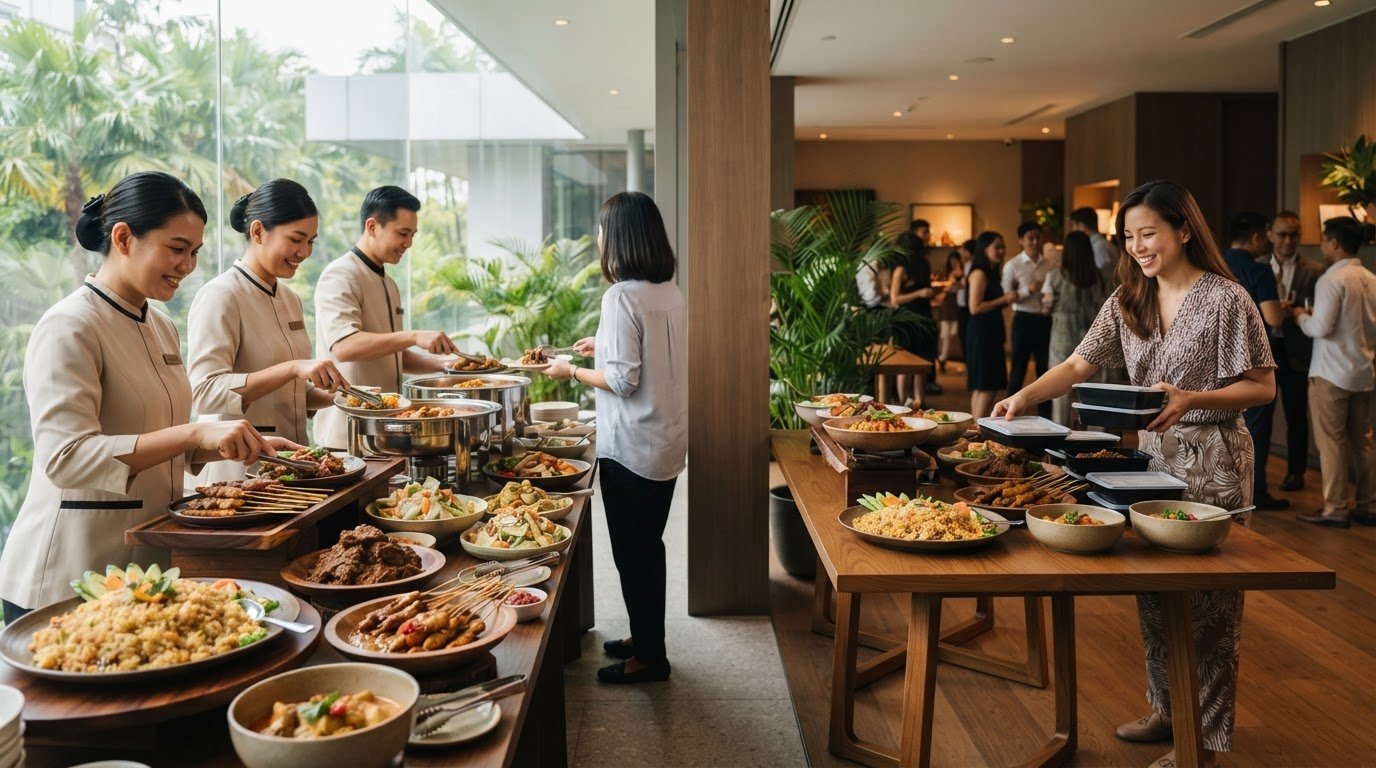

A buffet can still be drop-off catering: the serving style doesn’t determine who sets up or looks after the meal. The key difference in full-service catering vs drop-off catering is who handles the work on event day. Full-service catering can include staff for setup, serving and cleanup, while drop-off delivers prepared food for the host or their team to arrange and serve.
Both options can work for a gathering, but drop-off may suit you if you want food delivered and are prepared to manage the meal yourself. The right choice depends on the event, menu, serving setup and how much work you want to take on. This guide compares staffing, packaging, setup and cleanup, and explains how buffet service fits into the decision, so you can choose a catering format that suits your plans in Singapore.
Key Takeaways
- Choose full-service catering when you want staff to manage setup, serving, buffet replenishment and cleanup.
- Drop-off catering suits casual gatherings and meals where a host or team can arrange and oversee the food.
- Plan who will set out dishes, replenish trays and handle cleanup before choosing a delivery-only arrangement.
- Match the service style to your event format, venue setup and the level of hosting you want to take on.
- Remember that buffet describes how food is served, while full-service or drop-off describes how much support comes with it.
What Is Full-Service Catering?
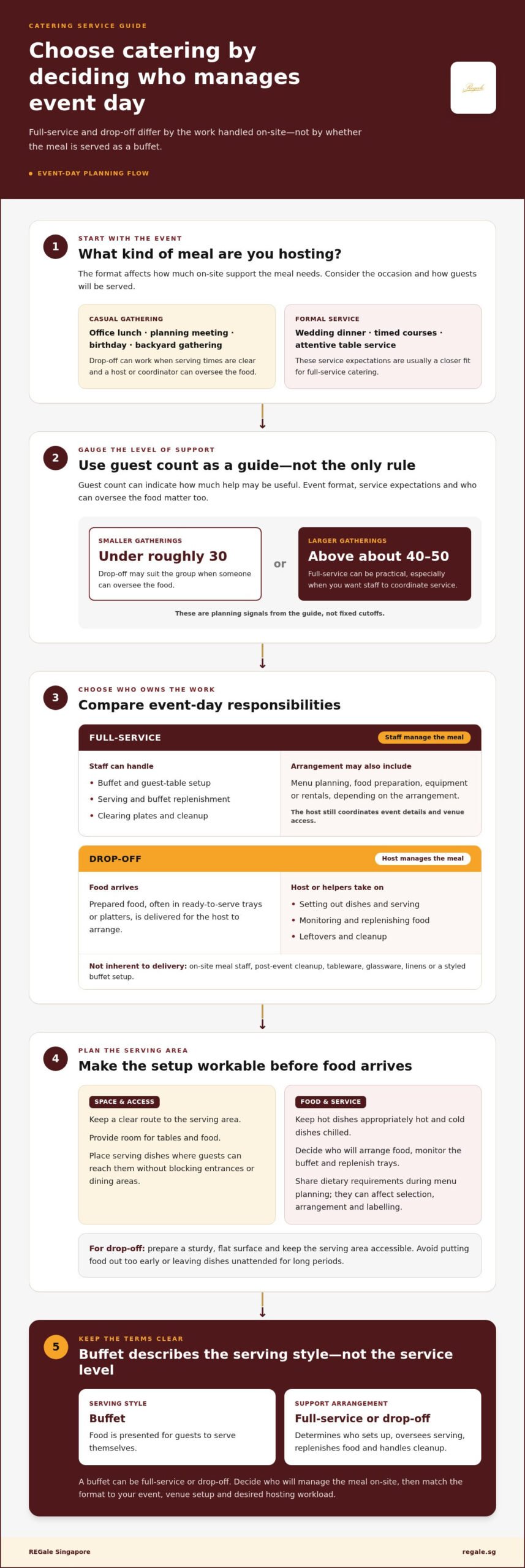
Full-service catering can cover menu planning, food preparation, setup, serving and cleanup. The key difference is who manages the meal on-site: staff handle it with full service, while the host takes charge after a drop-off. When comparing full-service catering vs. drop-off catering, start by deciding who will manage event-day tasks.
Included Staff, Equipment, and Cleanup
With full-service catering, staff can arrange buffet dishes and guest tables, serve food, replenish dishes and clear plates. Depending on the arrangement, service may also include equipment, rentals and post-event cleanup. Drop-off usually means prepared food arrives in trays or platters, and the host handles the buffet setup, serving, leftovers and cleanup.
Plan venue access before the event. The delivery team needs a clear route to the serving area, with enough room for tables and food. Hot dishes need appropriate hot-holding equipment, while cold dishes must stay chilled. Share guests’ dietary requirements during menu planning so the menu and serving arrangement can accommodate them.
Guest Expectations and Service Level
Guest count helps indicate how much support an event may need, but the format matters too. Full-service catering can be practical for gatherings above about 40 to 50 guests, especially when a host wants staff to coordinate service. Drop-off may suit groups under roughly thirty people when someone can oversee the food.
A wedding with a planned dining sequence has different service needs from an informal lunch. Staff can monitor the buffet and clear guest tables; with drop-off, the host or assigned helpers take on those tasks. Include dietary needs in the menu plan, since they can affect food selection, arrangement and labelling. The full-service catering vs. drop-off catering choice also depends on whether guests expect attentive service or a self-serve meal.
| Option | Staffing and setup | Guest-count fit | Host responsibilities |
|---|---|---|---|
| Full-service | Staff can set up, serve, replenish and clear | Useful for larger or more formal events | Coordinate event details and venue access |
| Drop-off | Prepared food is delivered for the host to arrange | Often suitable for smaller, casual gatherings | Set out food, oversee serving and manage cleanup |
Plan buffet and guest-table placement around the event’s flow. Put serving dishes where guests can reach them without blocking entrances or dining areas, and leave staff room to replenish trays. For drop-off, decide who will arrange the food and clear used dishes. For full-service catering, agree on setup, serving duties and cleanup as part of the event plan.
Base your choice on the guest count, formality, venue access and work you want to manage. If guests expect attentive service or a regularly refreshed buffet, staff support may matter more than headcount. For a casual meal with a capable host, drop-off offers more control over setup and dining pace.
What Is Drop-Off Catering and Why Is It So Popular?
In Singapore, drop-off catering means prepared food is delivered for the host to arrange and serve. The difference between full-service catering and drop-off is the support after delivery: with drop-off, the host manages setup, service and cleanup.
Events Suited to Drop-Off Service
An office lunch, planning meeting, birthday party or backyard gathering can suit drop-off service. It works best when the menu is straightforward, serving times are clear, and a host or venue coordinator can oversee the food after delivery. At a planning meeting, colleagues can serve themselves without a staffed dining sequence. Menus can also reflect dietary preferences or an event theme.
Casual occasions allow a flexible presentation. A family gathering might use shared platters, while an office lunch could have a buffet on a meeting-room table. Before delivery, assign someone to arrange the dishes, keep the serving area accessible and guide guests. With those tasks covered, servers aren’t needed to manage each part of the meal.
Event Size and Formality
Drop-off often works better for smaller, casual gatherings than for formal, large-scale events. The host’s workload increases with the number of dishes and guests, especially when trays need arranging, replenishing and clearing. A defined serving time and reliable helpers make drop-off easier to manage. A formal wedding dinner with timed courses or attentive table service is usually a closer fit for full-service catering.
Presentation matters at casual events, too. A drop-off buffet can look polished with clear labels, coordinated serving pieces and a tidy layout, but the host or venue team needs to create that display. Consider the room layout and guest flow before choosing a serving table. If the event requires seated service or a display that stays refreshed, staffing may matter more than the menu.
Drop-Off Catering Inclusions
Drop-off catering brings prepared food to the event, often in ready-to-serve trays or platters. It generally doesn’t include on-site staff to manage the meal or post-event cleanup. That’s the central difference in full-service catering vs. drop-off catering: the host is responsible for arranging food, managing service and handling leftovers.
Prepare the serving area before delivery arrives. Provide a sturdy, flat surface and a clear route for insulated containers. Keep hot food appropriately hot and cold food chilled; don’t leave dishes unattended for long periods or put them out too early. Assign someone to monitor the buffet and replenish trays during the meal.
Rentals and event styling are separate from food delivery. Drop-off doesn’t inherently provide tableware, glassware, linens or a styled buffet setup. Existing venue tables and serving equipment can make it easier to create a seamless presentation. For an occasion where Indonesian flavours suit the gathering, explore Indonesian dining options as a menu direction.
Food packaging and serving arrangements
Packaging affects how food reaches the table and who manages service afterward. Drop-off arrives prepared in trays or platters for the host to arrange; full-service staff can serve guests, monitor food temperature and replenish dishes. For a corporate dinner, that difference affects both the room layout and the host’s workload.
Packaging and Serving Formats
For drop-off, provide a sturdy, flat surface and a clear route for the delivery team carrying insulated containers. At a family celebration, the host might transfer food to serving platters, set out utensils and label dishes for guests. The delivery includes prepared food, not a complete dining setup.
Full-service catering can provide a buffet, family-style service or plated meals. Staff may need a behind-the-scenes staging area to plate and garnish dishes before service. For a buffet, arrange tables so guests can reach each dish and staff can replenish trays without blocking the dining area. A live station may also require specific equipment, depending on the menu.
Food Temperature and Timing
Hot foods need appropriate hot-holding equipment, while cold dishes must stay chilled. With drop-off, the host or their team arranges food and replenishes trays. Full-service staff can monitor food temperature and refresh dishes during the event. Either way, avoid leaving food unattended for long periods or setting it out well before service begins.
Delivery timing should match the meal schedule, not simply the venue opening time. For example, if guests arrive at 6:00 p.m. and spend an hour at cocktails, delivering hot food at 5:30 p.m. only works if it can be held safely and attractively. For an important occasion, a 30-minute arrival window is easier to plan around than an open-ended estimate.
Menu Complexity and Table Setup
A simple buffet with a defined serving period is easier to manage as drop-off. More complex menus may include dishes that need different holding arrangements, last-minute plating or frequent replenishment. At a corporate dinner with several courses, full-service staff can coordinate when each course reaches the tables. Consider the menu’s service needs as well as its presentation.
Before delivery, assign someone to prepare the serving tables, set out utensils and oversee replenishment. Keep the route from the delivery point to the buffet clear, and position dishes so guests can serve themselves without crowding. With full service, staff can manage more of these tasks and clear plates. With drop-off, name a host or helper to take responsibility.
Choose drop-off when a capable host can manage food setup, and full service when timing, temperature monitoring or table service requires staff attention.
Choosing between drop-off and full-service catering
Full-service catering suits formal weddings and corporate dinners, while drop-off can work well for office lunches and casual home parties. In Singapore, arrange catering once the date, venue, guest count and menu are set. Weddings and complex service plans need more coordination than a simple lunch delivery.
Event Size and Catering Choice
Guest count helps estimate the workload, but it isn’t the only deciding factor. Gatherings above about 40 to 50 guests can benefit from staff managing service, while drop-off may suit groups under roughly thirty when a capable host is available. A hundred-person event with a tight schedule makes host labour a real consideration, not an incidental task.
For a wedding, choose service to match the planned dining experience. A plated dinner, passed appetisers or a buffet that needs frequent replenishment points toward full-service support. A relaxed home celebration with a simple menu may work as drop-off if someone can set out dishes and oversee the meal. Corporate lunches can also suit drop-off when the serving time is clear.
Budget and Catering Choice
Drop-off generally has a lower initial quote because it requires less staffing. Full service costs more but provides broader support. Compare the full event workload, not just the food quote: with drop-off, the host may be responsible for setup, serving, replenishment and cleanup. A corporate team preparing a room may value staff support more than a household hosting a casual gathering.
List the resources already available at the venue before comparing options. Existing tables, serving utensils and reliable helpers can make drop-off easier to manage. If the event needs rentals, servers or extensive setup, include those requirements in your comparison. This helps show whether the lower initial quote suits the event’s overall needs.
Menu choice also affects the service format. Select dishes that travel and hold well, and plan how they’ll arrive. A straightforward buffet is easier to manage as drop-off than a menu that needs last-minute plating or frequent replenishment. For hot dishes, arrange appropriate hot-holding equipment, such as chafing dishes, and keep cold items chilled. Keep food covered until service begins.
For a wedding, coordinate the menu and service plan. A staffed team can manage a sequence of dishes and maintain presentation through dinner. For drop-off, choose food that can be arranged promptly and served without complicated finishing. This keeps the host’s tasks manageable while giving guests a well-presented meal.
Use this decision sequence: match the occasion’s formality, estimate the setup and serving work, then account for venue resources. If a casual office lunch has a simple buffet and assigned helpers, drop-off may be practical. If a corporate celebration needs coordinated courses, attentive service or a refreshed display, full-service catering better suits those expectations.
How drop-off catering differs from full-service and buffet catering
Drop-off describes how food reaches an event and who handles service afterward. Buffet describes how guests serve themselves, so a buffet can be either drop-off or full-service. For example, prepared trays delivered for the host to arrange are drop-off buffet catering; staff who set out dishes and replenish them provide a staffed buffet. The terms describe different parts of the dining plan.
With drop-off, the caterer prepares and delivers food, while the host or event team arranges the buffet, manages serving and handles cleanup. On-site servers generally aren’t there to greet guests, clear plates, pour beverages or manage courses. A capable host can handle these tasks at a simple gathering, but a corporate event with a tight schedule may need someone assigned to each job.
Full-service catering involves staff in more of the event. A team may handle setup, serve guests, replenish dishes and clear plates. Depending on the arrangement, service can be plated, family-style or buffet. Staff may also coordinate with event vendors and provide rentals such as tableware, glassware and linens. These elements shape the guest experience, but the word “buffet” alone doesn’t imply they’re included.
Consider a wedding buffet: guests collect food from a shared display in either service format. With drop-off, the host arranges the dishes and monitors the display. With full service, staff can maintain presentation, replenish the buffet and clear used plates. A plated dinner changes the serving method, not automatically the staffing package; servers and course management are part of the service arrangement.
Beverage service is a separate decision. Catering and bartending aren’t automatically the same service, and a catering team’s serving role doesn’t define beverage arrangements. List beverage needs separately when planning the event. Also distinguish food delivery from rentals: linens and glassware may be part of a broader full-service arrangement, while drop-off focuses on delivering prepared food.
Use this three-part check when comparing proposals: identify the food format, list who sets up and serves, then assign cleanup and beverage responsibilities. A buffet can be staffed or host-managed; a plated meal requires coordination between food timing and guest service. This distinction prevents a familiar format from creating the wrong expectations about staffing, equipment or post-event work.
For a Singapore gathering where a self-serve format suits the occasion, explore halal buffet options as part of your menu planning.
Regale Singapore: Nasi Sambal Goreng
Regale Singapore offers Nasi Sambal Goreng for diners drawn to Indonesian flavours. After choosing between staffed service and food delivery, consider the meal itself: Nasi Ambeng offers another Indonesian option, while Western Cuisine provides a different direction for the table. These choices help shape the occasion’s menu without confusing food selection with the service format. Catering style determines who manages setup and serving; the dishes define what guests share and enjoy. For a gathering centred on Indonesian dining, explore Authentic Indonesian Cuisine and consider which menu direction best suits your guests. Visit regale.sg to explore the dining options, or contact Regale Singapore.
Plan a Catering Experience That Fits Your Gathering
Choose a menu that gives your gathering its own sense of occasion. Full-service catering or drop-off determines how the event is managed, while the dishes you serve shape its character. Consider the flavours your guests will enjoy and the atmosphere you want to create around the table.
Regale Singapore serves Nasi Sambal Goreng, Nasi Ambeng and other Indonesian favourites, alongside Western and local dishes at Regale at Science Centre. This variety helps hosts bring distinctive flavours to a shared meal, whether they’re planning a family gathering or another occasion. A thoughtful menu can make the dining experience feel personal without adding complexity to the event plan.
For a catering menu that brings these flavours to your gathering, contact Regale Singapore about catering. Choose the service arrangement that suits your plans, then shape the meal around the people coming together. A clear next step can help turn your event plans into a welcoming occasion.
Frequently Asked Questions
Which Catering Option Is Right for You?
Choose full-service catering if you want staff to coordinate the meal, and drop-off if you can manage it yourself. For a family lunch with a simple menu, a host may be comfortable arranging the food. For a wedding with planned courses or a corporate dinner on a tight schedule, staffing can reduce organisers’ workload. Decide who will handle setup, guest service and cleanup before settling on the format.
Is there a minimum order?
Minimum orders depend on the catering arrangement and menu, so no single figure applies to every event in Singapore. A simple delivery order and a staffed event involve different preparation and logistics. A menu with several dishes, separate dietary meals or on-site service needs a different plan from a small office lunch. Include the event date, guest count and menu requirements when requesting a quote.
Which option costs less?
Drop-off generally has a lower initial quote because it requires less staffing; full-service catering includes more support. Compare the full event cost, not just the food amount. With drop-off, the host may need to arrange serving equipment or assign helpers, while a staffed arrangement may include setup and service. Account for rentals, labour, cleanup and what the venue already provides.
Who clears tables and handles trash?
With drop-off catering, the host or assigned event team usually clears plates and manages leftovers and waste. With full-service catering, staff may clear plates and handle cleanup as part of the agreed service. At a family gathering, assign someone to monitor the dining area and disposal points. At a corporate event, make cleanup responsibilities clear so they don’t fall between the caterer, venue and organisers.
What is the difference between full-service catering and drop-off catering?
The difference is the level of on-site support, not necessarily the menu format. With drop-off, prepared food arrives for the host to arrange and oversee. Full-service catering can add staff for setup, serving, replenishment and clearing. Either option may use buffet-style food, so the word “buffet” alone doesn’t tell you whether servers, equipment or cleanup are included. Compare the responsibilities in each arrangement.
What services are included in full-service catering in Singapore?
Full-service catering can include menu planning, food preparation, setup, serving and cleanup. Depending on the arrangement, staff may replenish buffet dishes, clear plates, provide equipment or rentals, and coordinate event flow. A plated dinner needs coordination between kitchen preparation and guest service, while a buffet needs attention to replenishment. Confirm which tasks are included in the service plan before setting the event schedule.
How much does full-service catering cost per person in Singapore?
The price depends on the menu, guest count, staffing, equipment, setup and cleanup, and is provided after a quote request. To compare per-person estimates, divide the quoted total by the confirmed number of diners, then note any separate rental or service charges. A plated dinner and a buffet may require different staffing and equipment, so compare equivalent service arrangements.
How much does drop-off catering cost per person in Singapore?
The price depends on the menu, guest count, delivery logistics and packaging, and is provided after a quote request. Divide the quoted amount by the confirmed guest count to understand the per-person figure. Also account for any serving equipment or supplies the host must arrange. Comparing the same menu and guest count helps show how drop-off fits the event budget.
