
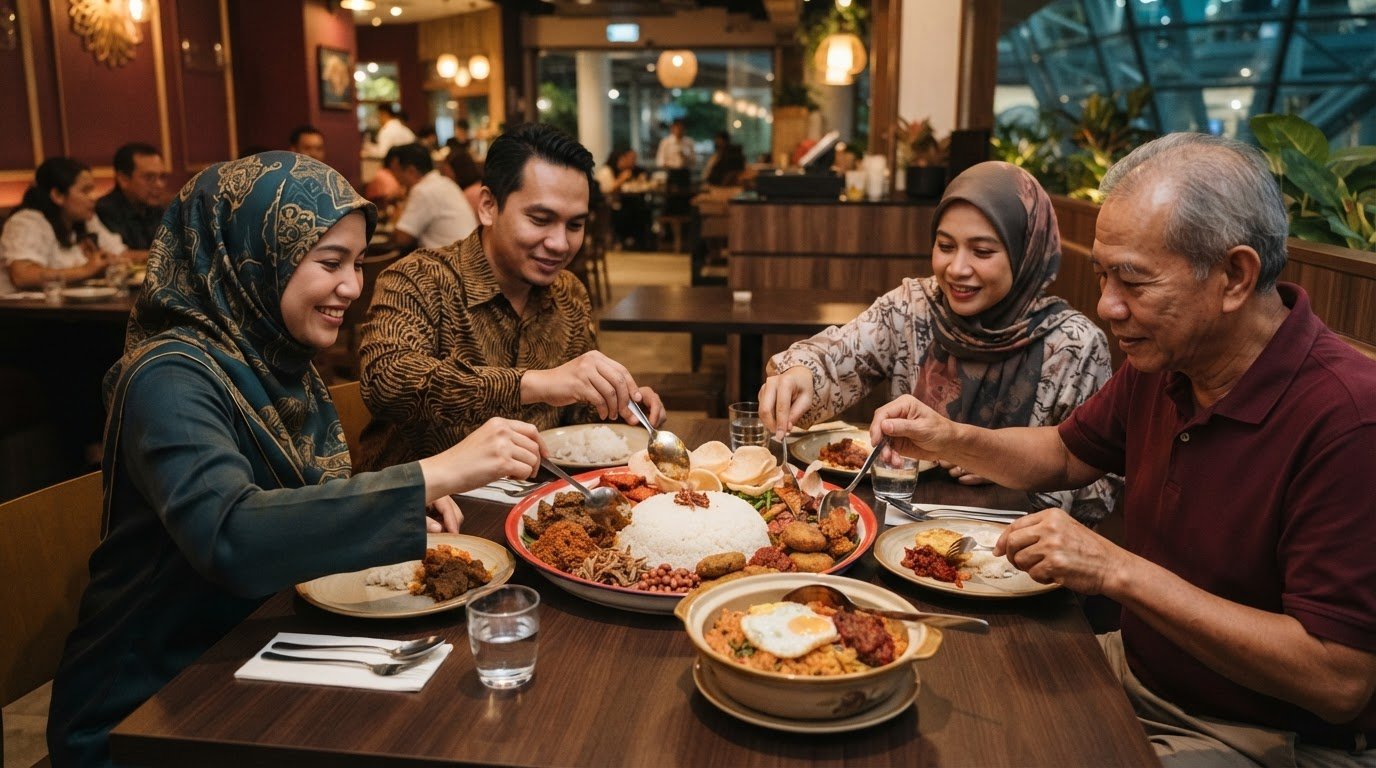

An impressive halal menu for guests balances familiar crowd-pleasers with dishes that make the gathering feel special. For a group celebration in Singapore, plan a mix of shareable starters, satisfying mains and sweets, then choose restaurant dining or halal catering to suit the occasion. According to the Majlis Ugama Islam Singapore (MUIS), halal food products must be prepared using equipment and facilities free from cross-mixing with non-halal substances.
It’s understandable to want a generous menu that suits guests with different tastes. A considered spread can offer varied flavours and filling options without making the meal difficult to organise. The right format depends on your gathering: a buffet lets guests serve themselves, while a mini buffet can suit a more compact event.
This guide covers how to choose a halal restaurant for group dining, build a crowd-friendly menu, plan desserts and catering, and understand fresh ingredients. It also introduces Regale Singapore’s Indonesian and Western cuisine, including Nasi Ambeng and Nasi Sambal Goreng, as options for hosting guests.
Key Takeaways
- Choose a group dining format that suits the occasion, then build the menu around dishes guests can share comfortably.
- Balance familiar mains with distinctive flavours and sweets to create a meal that feels generous and complete.
- Use appetisers and salads to add freshness, colour and variety alongside heartier dishes.
- Match catering style to the event’s setting and serving needs so the meal is easier to organise.
- According to MUIS, halal food products must be prepared using equipment and facilities free from cross-mixing with non-halal substances.
1. Halal restaurants suitable for celebrations and group dining
For a celebration in Singapore, start by matching the restaurant format to the gathering. A seated meal suits a programme with speeches or shared conversation, while a buffet gives guests room to choose dishes at their own pace. Consider the occasion, guest mix and serving style together. These choices shape the dining experience before the menu is finalised.
Halal-certified restaurants and Muslim-owned eateries are distinct options in Singapore. Muslim-owned eateries are owned and operated by a Muslim individual or family, and may not be MUIS-certified. Certification offers a separate basis for understanding halal preparation. MUIS says halal food products must be prepared using equipment and facilities free from cross-mixing with non-halal substances.
For a group with varied preferences, consider how the restaurant’s menu works as a complete meal. A spread with familiar choices alongside regional dishes can give guests options without making the occasion feel disjointed. Ask the venue about a group dining format, then settle on a sequence of dishes that suits the event, from shared starters to filling mains and dessert.
Private dining can give a family gathering or celebration a more focused setting, especially when guests want space to talk together. Treat it as a practical venue feature, not an assumed part of every restaurant. Consider the seating arrangement, how dishes will be served and whether the room supports the event’s flow, such as a meal followed by speeches.
Rasapura Masters is one named option for Muslim-friendly dining in Singapore’s multicultural food scene. “Muslim-friendly” describes an approach for Muslim diners, but it is not another name for MUIS certification. When choosing this kind of venue for a group, distinguish between a welcoming dining option and a restaurant’s halal-certification status.
Singapore’s dining scene brings different culinary traditions into group occasions. That variety can help hosts create a menu with a classic centrepiece and dishes that introduce another flavour profile. For example, begin with familiar appetisers, then share a regional main. A thoughtful balance lets guests enjoy different tastes while keeping the meal cohesive.
Prayer rooms are available in most malls, major attractions and public spaces in Singapore, another practical consideration when planning a celebration near those locations. For a smooth outing, choose the restaurant setting first, then consider nearby facilities and the event schedule. This keeps dining, guest comfort and timing connected.
For hosts weighing culinary styles, Singapore chef Nelson has a career in French culinary arts spanning over 28 years. That background may be a useful point of reference when considering how a celebration’s menu should feel, though the group’s preferences and the occasion remain central. Before settling on a venue, ask what dining format is available and whether the proposed meal can accommodate the gathering’s pace, from conversation over shared dishes to a more structured sequence. Confirming these details helps make the setting and menu work together for guests.
2. Signature starters, mains and sweets
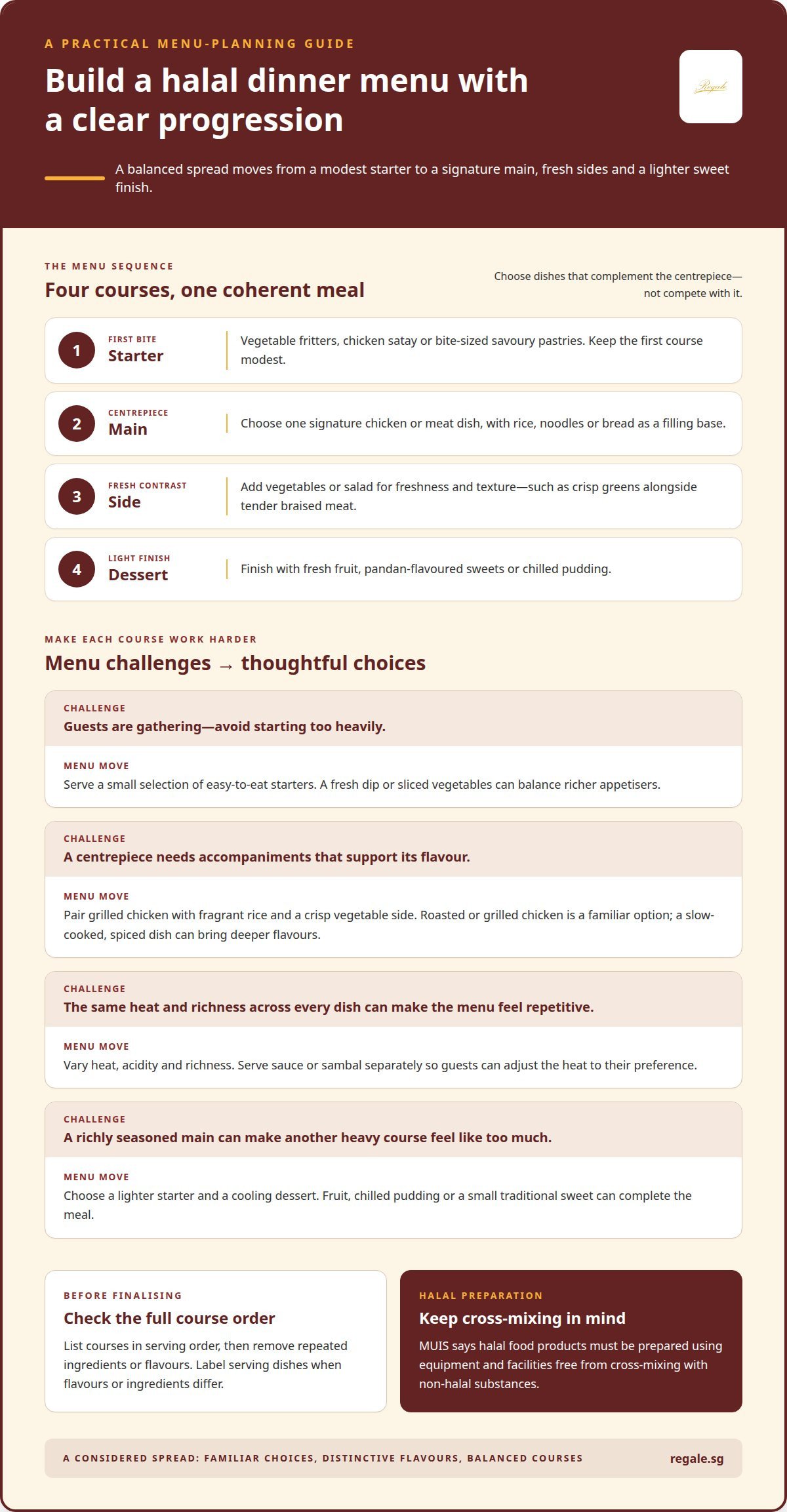
Popular halal dinner party menus in Singapore can combine satay, spiced chicken, rice, vegetables and a sweet finish. For a balanced meal, plan a starter, a main with a suitable accompaniment, a lighter vegetable dish and dessert. Choose halal ingredients and consider each course’s flavour and portion.
Build the menu around one signature main, then select dishes that complement rather than compete with it. For example, pair grilled chicken with fragrant rice and a crisp vegetable side. Serve sauce or sambal separately so guests can adjust the heat without changing the whole dish.
Starters should be easy to serve and eat while guests gather. Choose a small selection, such as vegetable fritters, chicken satay or bite-sized savoury pastries. A fresh dip or sliced vegetables can balance richer appetisers. Keep the first course modest so guests have room for the main.
For the centrepiece, choose a cooking style that suits the occasion and the meal’s concept. Roasted or grilled chicken is a familiar choice, while a slow-cooked, spiced dish can bring deeper flavours. Rice, noodles or bread provide a filling base. Add vegetables with contrasting textures, such as crisp greens beside tender braised meat.
Use this sequence to keep the menu coherent:
- Starter: serve one crisp or savoury bite, such as vegetable fritters.
- Main: choose a signature chicken or meat dish with rice or noodles.
- Side: add vegetables or salad to introduce freshness and texture.
- Dessert: finish with fruit, a chilled pudding or a small traditional sweet.
For a Malay or Indonesian influence, use familiar spice profiles and serve chilli accompaniments separately. A Malay-inspired spread might pair a savoury main with rice, vegetables and a lightly sweet dessert. Avoid giving every dish the same spice level; vary heat, acidity and richness to make each course distinct.
Dessert completes the meal without adding another heavy course. Fresh fruit, pandan-flavoured sweets or chilled pudding can follow a richly seasoned main. If guests will move between conversation and dining, choose portions that are easy to serve and eat. Label serving dishes when flavours or ingredients differ.
Before finalising the menu, list the courses in serving order and remove repeated ingredients or flavours. If the main is rich and spicy, for instance, choose a lighter starter and a cooling dessert. This simple step gives an impressive halal menu for guests a clear progression from first bite to final course.
3. Appetisers and salads
Appetisers and salads set the pace for a group meal before guests reach the main dishes. For a buffet, choose items that hold their texture and can be served neatly. Cucumber, tomato and leafy greens bring freshness beside savoury bites, while dips and dressings add flavour without taking up much space.
Easy halal options for vegetarian guests include hummus with vegetable sticks, lentil patties and tomato-cucumber salad. For guests with allergies, keep dishes with different ingredients separate and label them clearly, such as a salad containing nuts.
Build contrast into the appetiser selection. Pair a crisp item, such as vegetable fritters, with a softer option like hummus and bread. Sliced cucumber or carrot adds crunch without competing with richer snacks. Serve sauces on the side so guests can choose how much flavour to add.
- Fresh: cucumber, tomato, leafy greens and a light dressing.
- Savoury: vegetable fritters, lentil patties or savoury pastries.
- Shareable: hummus, bread and cut vegetables arranged together.
- Distinctive: a spiced salad or herb dressing that complements the main cuisine.
For Muslim guests, a clearly arranged halal buffet is easier to navigate. Keep serving utensils with their own dishes, and place labels beside items such as chilli dip or nut-topped salad. These simple layout choices also help guests move through the spread without crowding one serving point.
Salads can offer comfort as well as freshness when their ingredients suit the rest of the menu. Potato salad, for example, feels familiar beside grilled mains, while leafy salad with citrus dressing cuts through richer flavours. Prepare delicate leaves close to serving time so they stay crisp, and add dressing separately if the buffet will remain open.
A French-inspired appetiser can add a different touch to a mixed menu. Consider a composed vegetable salad with herbs or small savoury pastries served warm. Balance that style with familiar local flavours elsewhere, rather than making every course follow the same concept. This gives guests variety while keeping the meal cohesive.
Finish the appetiser course with a clear transition to the main and dessert. Remove empty snack plates, refresh the salad serving area and keep chilled dishes together. For a delicious spread, choose appetisers that are easy to portion, salads that stay appealing and flavours that prepare guests for the next course.
4. Events and catering services
For a dinner, family gathering or workplace celebration, choose catering to suit the event’s format. A seated meal supports speeches and conversation, while a buffet lets guests serve themselves between activities. Match the serving style to the venue layout, available table space and schedule. These decisions help determine which dishes travel and serve well.
Start planning with the event’s essentials: guest count, venue, serving time and meal format. Then arrange the menu in serving order, from appetisers to mains and dessert. A family gathering with a short programme may suit a buffet, while a formal dinner may work better with courses served in sequence.
A halal catering menu can bring several culinary influences together without making the spread feel scattered. Choose a central theme, such as Indonesian flavours or familiar Western dishes, then select complementary sides. A menu might pair a spiced main with rice and vegetables, followed by a lighter dessert. Include seafood only when it suits the event’s menu and guests’ preferences.
Plan the buffet layout before the event. Place plates and serving utensils at the start, group dishes by course and leave room for guests to move along the table. Put sauces beside their matching dishes, rather than at the far end. Labels can identify items such as seafood, chilli sauces or vegetarian dishes.
- For a family gathering: choose shareable mains and sides that are simple to serve.
- For a workplace event: arrange dishes in a clear sequence for a smooth serving flow.
- For a seated dinner: plan courses that fit the programme and serving pace.
- For a buffet: group similar dishes together and provide serving utensils for each.
Timing matters as much as menu selection. Set a serving time that follows the event schedule, and plan when guests will arrive, eat and move to the next activity. If speeches come first, open the buffet after they finish. This gives the host a practical sequence for coordinating the meal.
Consider the venue’s facilities when choosing dishes. A space with limited serving surfaces may suit a compact menu, while a larger dining area can accommodate separate stations for appetisers, mains and dessert. Think through where guests will queue, sit and return used plates. A clear layout makes the gathering more comfortable.
Finally, keep the menu focused. A few well-matched dishes are easier to arrange than a spread with repeated flavours and serving needs. A carefully planned halal catering menu can bring guests together around a shared meal, whether the occasion calls for a relaxed buffet or a more structured dinner.
5. Fresh ingredients and halal sourcing
Fresh ingredients give a celebration menu colour, texture and clear flavour. Crisp herbs can lift a spiced main, while ripe tomatoes bring brightness to a salad. Build the menu around ingredients that suit its culinary direction, whether it leans towards authentic Indonesian dishes or familiar Western choices.
In Singapore, MUIS halal certification is issued by the Islamic Religious Council of Singapore. Diners can check certification through the MuslimSG app, @halalSG on X, or an on-site green MUIS halal logo. A green halal certificate is displayed at halal restaurants.
A “no pork, no lard” sign alone doesn’t establish that an establishment complies with halal requirements. Halal food must use ingredients permitted under Islamic law and be prepared to prevent contact with non-halal elements. Halal meat must also be prepared according to halal requirements, and halal food cannot contain pork or lard.
For hosts, the practical concern is how ingredients are handled from preparation through serving. Separate utensils and serving dishes can help prevent contact between different foods. For example, use dedicated tongs for a halal chicken dish and keep them with its serving tray. The same approach applies to sauces and shared buffet equipment.
- Review ingredients: identify the components in sauces, marinades and desserts.
- Keep dishes distinct: use separate serving tools for each tray.
- Arrange thoughtfully: place halal dishes and their utensils together.
- Label clearly: note ingredients such as nuts or seafood for guests.
Fresh ingredients also help define a menu’s character. Choose herbs, vegetables and fruit that complement the main dishes, rather than adding ingredients just for appearance. A bright cucumber salad, for instance, can balance a richly seasoned main. Fruit makes a lighter finish after a substantial meal.
Michelin recognition and halal certification address different considerations. Polished presentation can make a meal feel special, but halal sourcing rests on permitted ingredients and careful preparation. Hosts can treat guests to distinctive flavours while keeping the menu’s sourcing and handling at its centre.
For a gathering where sourcing and preparation matter, explore halal catering options for a menu suited to the occasion. A well-planned spread brings fresh ingredients, thoughtful handling and a cohesive dining experience together.
In Singapore, a “no pork, no lard” sign does not by itself establish that an establishment complies with halal requirements. Treat that wording as a starting point for a conversation, not as assurance. When considering a menu, ask the provider to explain the basis for its halal claim and how it handles the ingredients used in its dishes. If an explanation leaves a detail unclear, request clarification before confirming the order. This can help you make a considered choice and communicate accurately with guests.
The same care can shape the menu plan: decide what information guests need, then share it plainly alongside the dishes. Avoid relying on a short sign to answer questions it cannot settle. A thoughtful host can keep the focus on food guests can enjoy while making room for informed choices. When details are clear before the gathering, guests can approach the meal with greater confidence, and the menu can feel welcoming as well as carefully considered.
Regale Singapore
Regale Singapore gives hosts a restaurant option for bringing guests together over halal cuisine. Its menu includes authentic Indonesian and Western dishes, offering distinct directions for a group celebration. For a shared meal with Indonesian flavours, Nasi Ambeng and Nasi Sambal Goreng are options; Western dishes offer another culinary style.
Choose the dining experience that fits the occasion, whether you’re planning a family gathering or a group meal after an event. These menu options can shape a meal around regional character or familiar Western flavours. Contact Regale Singapore to discuss dining for your gathering.
Shape the menu around your gathering
A celebration menu can do more than feed a group. It can set a welcoming tone and give guests a shared experience to remember. Start with the atmosphere you want, then choose dishes to support it, whether the gathering calls for familiar Western flavours or the character of Indonesian cuisine.
For hosts seeking an impressive halal menu for guests, Regale Singapore offers authentic Indonesian cuisine, including Nasi Sambal Goreng and Nasi Ambeng. These dishes can bring a distinctive culinary focus to a meal planned for family, friends or colleagues.
Let the occasion guide your next step. Share your event plans and discuss a suitable dining option with Regale Singapore. Contact Regale Singapore to plan your event, and take the next step towards a gathering centred on good food and warm company.
Frequently Asked Questions
What dishes make an impressive halal menu for guests?
Choose a distinctive main, a contrasting side and a dessert that suits the meal’s flavour profile. For example, pair a gently spiced meat dish with bright citrus slaw and a date-based sweet. Balance rich, spicy and tangy elements across courses. This gives the meal a clear identity without requiring every dish to use the same seasoning or cooking style.
What halal appetizers and finger foods are best for entertaining guests?
Choose bite-sized foods guests can pick up easily while talking, such as stuffed dates, falafel bites or mini savoury pies. Offer a mild dip alongside a more strongly seasoned option, and place napkins and small plates nearby. For a standing reception, avoid appetisers that drip or need extensive cutting. A mix of crisp and soft textures adds variety without complicating the serving setup.
What halal main courses can be prepared ahead for guests?
Slow-cooked stews, baked pasta and marinated roasts can be prepared ahead, then finished or reheated close to serving. Keep sauces separate when that helps preserve texture, and prepare fresh garnishes shortly before guests arrive. Plan the cooking sequence so each dish is served at its best. For example, prepare a stew in advance while leaving delicate herbs and salad components until the final stages.
