
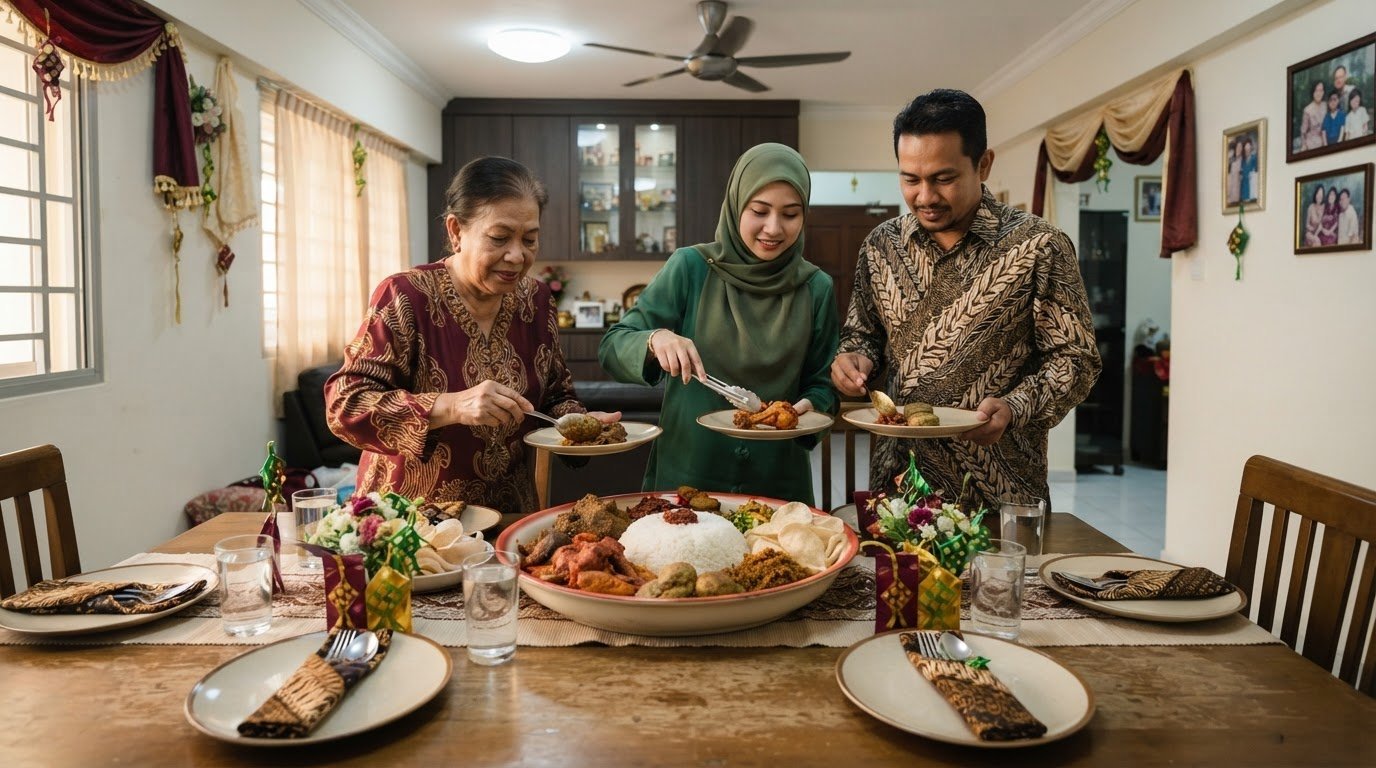

A changing guest list doesn’t have to derail your Hari Raya gathering. In Singapore, a Hari Raya mini buffet has a minimum order of 10 pax, so it can suit a home celebration while still requiring a realistic headcount. If numbers shift closer to the date, the key is to plan around your likely attendance and consider how changes may affect food quantities and your booking arrangements.
It’s understandable to want enough food for everyone without ordering far beyond what your guests can enjoy. This guide explains how to estimate guest numbers, compare a buffet with a mini buffet, review halal options and plan around festive booking slots. You’ll also learn how to think about celebratory extras, from satay to desserts, so the menu and setup feel right for your gathering. The aim is a clear, practical plan that respects the occasion and makes hosting at home easier.
Key Takeaways
- Estimate attendance early and choose a serving format that suits your home gathering and likely guest count.
- Plan your booking slot ahead of the festive rush, and understand how late guest-count changes can affect the order.
- Review halal arrangements across the full menu, especially when food comes from more than one caterer.
- Choose festive extras such as satay, interactive food stations or desserts to complement the main dishes.
- Explore a halal mini buffet with Indonesian favourites for a smaller celebration at home.
Festive add-ons including satay, DIY stations and desserts
Singapore menus for a Hari Raya mini buffet can combine festive mains, sides, satay and desserts. Available choices vary by caterer and package, so shape the menu around your guests, serving space and preferred style.
Start with the main dishes, then add extras that bring variety without crowding the table. For example, pair a substantial rice or noodle dish with vegetables, a savoury side and one dessert. Satay can add a grilled option, while bite-sized sweets offer a simple finish. Choose a few complementary items rather than several dishes that fill the same role.
A DIY station can make serving more interactive, but it needs room for guests to gather. Set aside a clear surface, place serving utensils nearby and keep the station separate from the main buffet flow. A satay station, for instance, works best when guests can approach and move away without blocking access to drinks or other dishes. For a compact home, ready-to-serve add-ons may be easier to manage.
Kampung-style menus can bring a homely, communal feel to a meal. Choose familiar flavours and dishes designed for sharing, then balance richer items with lighter sides. Consider who is attending and whether children or older relatives may prefer milder choices. Clear dish labels also help guests make their selections.
When halal food matters to your guests, consider the whole spread, including sides and desserts. In Singapore, look for a caterer with Halal certification from MUIS, the Majlis Ugama Islam Singapura. Food from multiple caterers is not automatically halal as a combined order, even if each caterer is individually certified. Keeping the menu with one certified caterer can simplify planning.
Festive menu availability depends on the selected dishes, package and delivery slot. Some Singapore Hari Raya catering orders require 1-3 days’ advance notice, subject to availability. During busy periods, decide on your preferred menu and booking slot early. When ordering, give the caterer your event date, delivery timing, estimated guest count and chosen add-ons together. This gives the order a clear basis and helps avoid separate decisions later.
- Choose satay, a DIY station or desserts to suit your space and serving flow.
- Balance the menu with a main, sides and a distinct finishing option.
- Plan halal requirements across every dish, including items from any additional caterer.
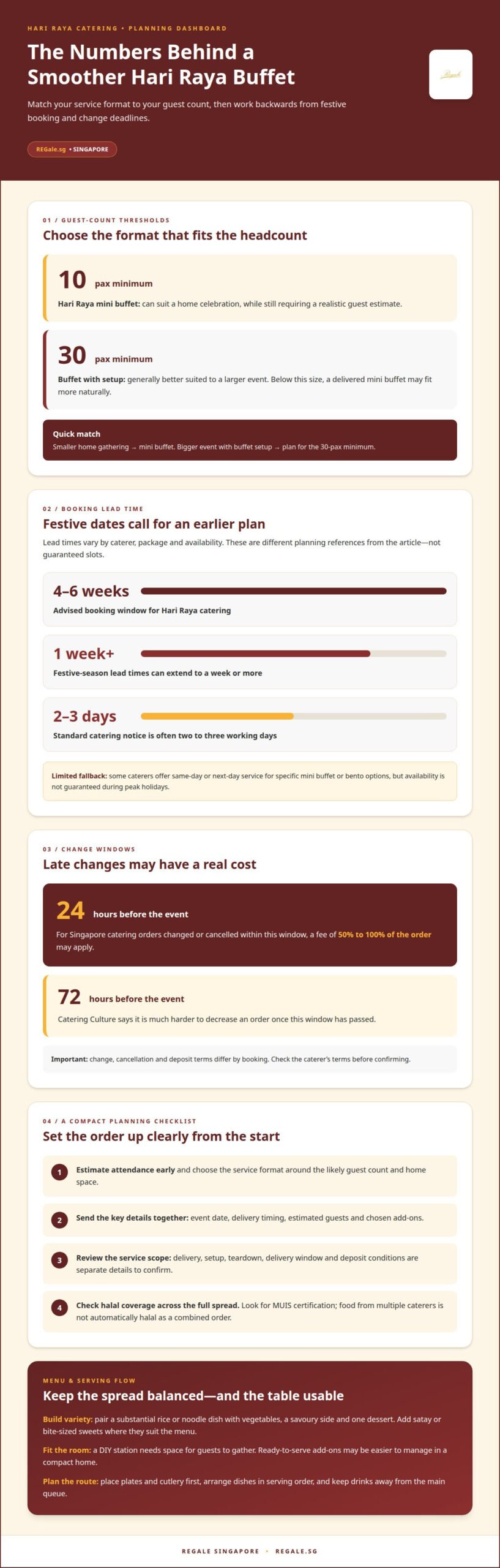
Timing can be less flexible during festive demand. Standard catering orders in Singapore often require two to three working days’ notice, while during festive seasons lead times can extend to a week or more. Hari Raya catering in Singapore is advised to be booked Four to six weeks ahead. Some Singapore caterers offer same-day or next-day service for specific mini buffet or bento options, but availability is not guaranteed during peak holidays, so treat it as a limited option rather than a dependable backup.
Check the order terms before confirming changes. For Singapore catering orders changed or cancelled within 24 hours of the event, a fee of 50% to 100% of the order may apply. Catering Culture says it is much harder to decrease an order in Singapore once the 72-hour window before the event has passed. Confirming the guest count and add-ons early can help avoid last-minute adjustments.
Hari Raya buffet options and themed setup
A Hari Raya mini buffet can suit a compact home gathering, while a larger buffet with setup may be more appropriate for a bigger event. Choose the format based on your expected guest count, available table space and how much preparation you want to manage at home.
Plan the buffet layout before the food arrives. Place plates and cutlery at the start, arrange dishes in serving order, and keep drinks away from the main queue. For example, put rice and mains together, followed by sides and desserts. Leave clear access around the table so guests can serve themselves without blocking doorways or walkways.
A few themed details can make the dining area feel festive without taking over the room. Use a coordinated tablecloth, simple serving labels and decorations in a consistent colour palette. Keep decorations away from hot food and utensils. In a smaller home, a simple arrangement preserves space while still setting a thoughtful Hari Raya scene.
Delivery and setup are different considerations. Delivery brings food to your venue, while setup may include arranging the buffet table and serving equipment. Teardown affects who clears the setup after the meal, so understand what is included in the arrangement. Set aside space for packaging and used serving items.
A full-service buffet setup is generally suited to events where the host wants less responsibility for arranging the spread. In Singapore, a buffet with setup has a minimum order of 30 pax. For gatherings below that size, a delivered mini buffet may be a more fitting format. Consider room layout, serving flow and whether someone at home can prepare the table.
Delivery and setup charges depend on the order arrangement, delivery location and selected service. Treat food, delivery and setup as separate booking elements rather than assuming one includes the others. Review the order terms for the delivery window, setup responsibilities, teardown and deposit conditions. Singapore catering orders can be changed up to 24 hours before delivery, though terms may differ by booking.
Cancellation and deposit policies are set by each booking’s terms; there is no single policy for every Singapore caterer. The terms should explain how changes, cancellations and deposits are handled. Singapore caterers offer Hari Raya mini buffet options alongside larger buffet formats. Compare the menu style and service scope with your venue needs, then choose the arrangement that fits your celebration.
Buffet guest capacity and booking slots
Start with the number of people likely to attend, then match the service format to that count. In Singapore, a Hari Raya mini buffet has a minimum order of 10 pax. A buffet with setup has a minimum order of 30 pax, so the smaller format may suit a home gathering with fewer guests. Choose based on attendance and available serving space, not the largest possible guest list.
Book as early as you can for the date and delivery slot you prefer. Catering Culture advises early booking for Hari Raya, with popular weekend slots sometimes filling 3-4 weeks in advance. Its guidance also says popular weekends are usually booked two to three weeks ahead. Treat these as signs of festive demand, and secure your preferred slot once your event date is set.
For the first headcount, separate confirmed guests from people who have not yet replied. Then estimate a realistic final number and share it with the caterer when arranging the order. For example, if relatives are still deciding, include them in your planning notes rather than treating every invitation as a confirmed place. Send an updated count as soon as it changes, and follow the order’s agreed change terms.
A Hari Raya event may include guests who confirm late, so build a modest buffer into your estimate. A suggested order may include 5-10% more guests than the estimated headcount. Use that as a planning guide, not a replacement for a reliable guest list. Consider the meal format and likely attendance before increasing quantities, especially when space and serving capacity are limited.
Before confirming the menu, bring the essential event details together. This makes planning clearer as the date approaches:
- Set the event date, delivery address and preferred delivery slot.
- Record confirmed guests separately from pending replies.
- Choose the buffet format based on the minimum order and home setup.
- Share later headcount changes promptly under the agreed order terms.
Festive dates can be busier than ordinary event periods, so settle your date early and plan the food around your guest estimate. If your schedule is flexible, consider a weekday gathering or a less popular mealtime. This can make planning simpler, but early preparation remains the best way to organise a Hari Raya meal.
Halal and halal-certified menu availability
For a halal Hari Raya spread, consider the caterer and every dish included. In Singapore, look for Halal certification from MUIS, the Majlis Ugama Islam Singapura. A festive menu name or familiar ingredients alone do not establish halal status. Review the full catering arrangement, including any separately ordered dishes.
Take particular care when combining food from multiple caterers. A combined order is not automatically halal, even if each caterer is individually certified. For example, a dessert from another supplier is a separate part of the arrangement. Keep track of who supplies each item rather than assuming one caterer’s certification covers another supplier’s food.
Dietary needs can differ within a halal menu. Vegetarian and no-beef options are separate requirements, and neither automatically describes the other. A vegetarian dish may contain ingredients some guests avoid, while a no-beef menu may include other meat. Specify whether guests need vegetarian dishes, no beef, or both, then plan the menu around those needs.
Use a short planning list before finalising the dishes:
- Record each dietary requirement separately, including vegetarian and no-beef preferences.
- Identify which dishes should meet each requirement.
- Keep the supplier and dish details together for the complete order.
- Review the final menu against the needs recorded for your guests.
For example, a gathering may need a halal menu with a vegetarian main and no beef in the remaining dishes. That is clearer than asking for general “dietary options,” because it states both the overall halal requirement and the specific menu constraints. If guests have different needs, list them separately so each requirement is clear.
Menu choices depend on the dishes available and the dietary requirements you need to accommodate. Decide which requirements are essential, then select dishes that fit them. Use straightforward labels such as “vegetarian” or “contains beef,” where applicable. Clear labels help guests understand their options without confusing one dietary category with another.
For a home celebration, plan halal requirements and dietary needs together. Consider the full spread, including mains, sides, desserts and any food from another supplier. A precise list of requirements helps you choose a menu that suits your guests and keeps the catering arrangement clear.
Buffet Sets for Smaller Home Celebrations
A compact celebration needs a menu that matches the number attending. Some Singapore caterers offer mini buffet packages for 10 or 20 people. These set sizes give hosts a starting point for planning a family meal without building a larger buffet order from scratch. For gatherings of 4-6 people, however, a mini buffet may provide more food than the group needs.
There’s no single dish count or portion size across every package. The menu and quantity depend on the caterer’s set, selected dishes and stated serving size. Before choosing, review what the package includes, such as mains, sides and dessert. Then compare those components with the guests expected and the style of meal planned. A Hari Raya mini buffet should fit the gathering, not just offer the widest selection.
Plan by dish role rather than count alone. Choose a main to anchor the meal, then add sides that bring contrast. For example, pair a rice dish with a vegetable side and dessert. This gives the table variety without repeating the same purpose. Check the stated serving size when deciding whether the selection suits your group.
Guest count is only one part of the decision. A longer visit may call for more variety than a short meal, while a gathering with children may benefit from familiar, easy-to-serve choices. Check the package’s serving basis and match it to your event. If attendance is uncertain, plan around likely arrivals rather than counting every person invited. This helps keep the order aligned with the meal.
Use these steps to assess a smaller set:
- Write down the expected guests and the meal format.
- Review the package’s listed mains, sides and desserts.
- Compare the stated serving size with your guest estimate.
- Choose dishes that add variety instead of duplicating a role.
For a group of 4-6, compare the set size with your actual needs before ordering. A larger package may suit a gathering where more visitors could join or guests will share leftovers. Otherwise, a smaller menu or another meal arrangement may fit better. The useful measure is not dish count alone, but whether the portions and mix suit the occasion.
Finally, consider table space and serving flow at home. A compact dining area may work better with fewer containers and clear access to plates and utensils. Arrange the meal so guests can serve themselves comfortably. A well-matched Hari Raya mini buffet lets you focus on welcoming relatives while keeping the spread proportionate to the gathering.
Regale Singapore: Halal Mini Buffet
Regale Singapore offers a Halal Mini Buffet for home celebrations that call for a convenient shared meal. Its Indonesian menu includes Nasi Sambal Goreng and Nasi Ambeng, bringing distinctive flavours to the Hari Raya table. These dishes offer a fitting direction for hosts seeking an Indonesian meal for family and guests.
Choose Regale when a halal mini buffet featuring Indonesian cuisine suits your gathering. Nasi Sambal Goreng and award-winning Nasi Ambeng can form the centre of a festive meal, with flavours rooted in Indonesian and Malay food traditions.
Contact Regale Singapore to discuss your Hari Raya gathering and menu needs.
Make Your Celebration Feel Like Home
A Hari Raya mini buffet can make a home gathering feel welcoming and personal. Let the occasion guide your choices, from the atmosphere you want to create to the way you bring relatives together. A thoughtful meal gives guests space to share stories and enjoy time around the table.
For a Hari Raya mini buffet with Indonesian flavours, Regale Singapore serves Nasi Sambal Goreng, award-winning Nasi Ambeng and other Indonesian favourites. These dishes bring distinctive character to the meal and give hosts a starting point for planning a festive table around shared hospitality.
When you’re ready to discuss your gathering, contact Regale Singapore about your buffet plans. Taking that next step can help you shape a celebration that feels warm, considered and truly yours.
Frequently Asked Questions
What if my headcount changes closer to the date?
Send the revised guest count to the caterer promptly, then ask for the updated order details in writing. Singapore catering orders can be changed up to 24 hours before delivery, though the order’s terms still matter. For example, if several relatives confirm late, share the new total and any dietary requirements together. This gives the caterer one clear update and helps you understand how the change affects your order.
What is the minimum order?
The minimum depends on the service format. In Singapore, a mini buffet has a minimum order of 10 pax, while a buffet with setup has a minimum order of 30 pax. These thresholds help distinguish a delivered meal from a larger arranged spread. If you’re planning for fewer guests, consider the amount of food alongside the minimum, so the selected format suits both your gathering and home setup.
What is the minimum order size for Hari Raya mini buffet catering?
The minimum order for a Hari Raya mini buffet in Singapore is 10 pax. Some caterers also offer sets for 10 or 20 people, which can make planning simpler for a home gathering. These package sizes don’t mean every group needs the larger set. Estimate who is likely to attend, then choose a set size that aligns with your expected guests and the meal you’re hosting.
Are Hari Raya mini buffet menus halal-certified in Singapore?
Halal status depends on the caterer and the food included, not simply the festive menu label. In Singapore, MUIS certification is the relevant certification to look for when halal food matters to guests. If your menu includes dishes from different suppliers, consider each part of the order separately. This is especially useful when a family member brings a dessert or side from another source.
How do Hari Raya mini buffet menus and prices compare across Singapore caterers?
Menus vary by caterer and package.
