
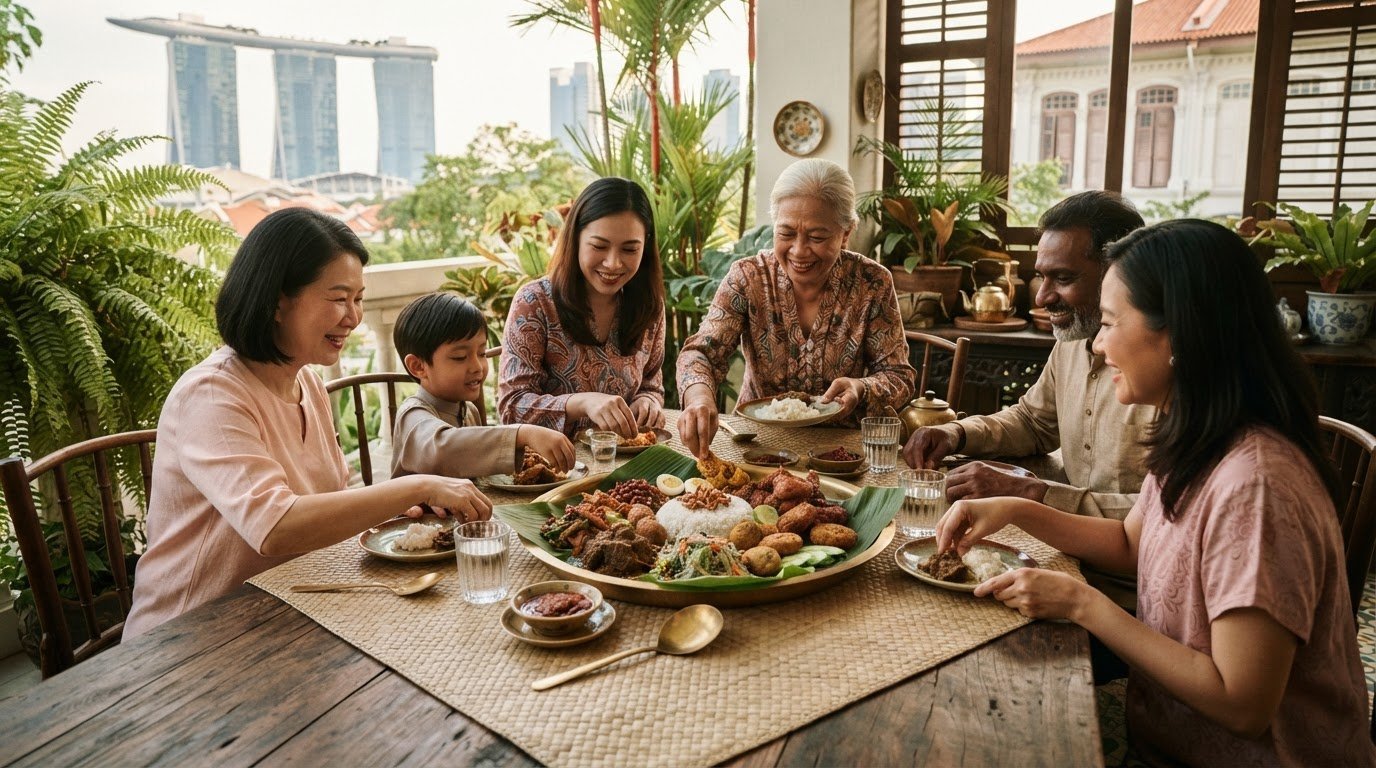

A familiar dish can open a door to Malay heritage food, but it can’t tell the whole story. Food traditions are carried through everyday meals, shared customs, family memory and the ways communities adapt what they cook and eat. To understand a dish, look beyond its name: consider who prepares it, the setting in which it is shared and what reliable sources say about its history.
It’s understandable to look for clear origins and defining features, especially when food traditions overlap across cultures and places. But a dish’s history can be layered, and broad claims may leave out the people and context behind it. A practical way to read food stories is to separate what a dish means to people today from claims about where it began. Looking beyond the menu helps connect ingredients and dining practices with identity and community, without treating one dish as a complete picture of Malay food.
This guide explores the traditions surrounding Malay meals, the influences that shape them and how food heritage continues to change. It also offers practical ways to learn through reading and dining with care, including in Singapore, where Malay and Indonesian food offerings sit within a diverse food culture.
Key Takeaways
- Understand how Malay heritage food is carried through cooking knowledge, memory and community, as well as through dishes.
- Look at ingredients and everyday preparation practices for clues to cultural meaning, while checking specific origin claims against reliable sources.
- Consider the setting and people involved when interpreting shared meals; customs can vary between families and gatherings.
- Explore respectfully by learning context, listening to community perspectives and treating dining as one part of a wider cultural picture.
- See how contemporary menus, including Regale’s Nasi Sambal Goreng and Nasi Ambeng, can offer a starting point for exploring Malay and Indonesian food traditions.
What Malay Heritage Food Means Beyond a List of Dishes
Malay heritage food is the knowledge, practices, memories and relationships through which people prepare, share and pass on food within Malay communities. It includes dishes, but also the choices and skills around them: how a cook learns a method, when a meal is shared and what a familiar flavour recalls. This definition keeps food connected to lived experience rather than treating heritage as a fixed menu.
A dish list can help readers recognise names, and a recipe collection can preserve instructions. Neither alone captures the stories, adaptations and community connections that give food cultural meaning. Nor does a dish’s place in Malay foodways automatically establish exclusive ownership. Culinary traditions have developed through contact and exchange, so claims about a dish’s precise origin or a single community’s claim deserve careful, credible sourcing. When reading an account, check whether it distinguishes documented history from present-day interpretation.
How food carries memory and identity
Cooking knowledge can travel between generations through demonstration, shared preparation and repeated family meals. Some details may be written down; others are conveyed by watching, tasting and adjusting. A remembered meal can also connect people to a household, a celebration or a particular stage of life. These experiences help make food meaningful, but they don’t make food the sole measure of anyone’s identity. Language, faith, family history and other parts of life matter too.
For a broad introduction to the range and history of Malay cuisine, readers can consult the overview and follow its references for further reading. Treat it as a starting point, not proof that every dish has one settled origin or that one description applies to every community. For a specific claim, follow the reference to the underlying source and note which people, place and period it covers.
Why Malay food heritage is not one single tradition
Practices differ across families and communities. People may prepare a familiar dish in different ways, use different names, or attach distinct memories to the same meal. Migration, local ingredients and changing household routines can also shape how food is made and shared. These variations aren’t exceptions to a single standard; they are part of how living traditions continue.
That’s why broad statements about a universal recipe, taste profile or dining custom can mislead. Before repeating an origin story, look for sources that identify the community, place and historical context they describe. Compare accounts, check what evidence they cite and note whether they describe a particular practice or make a wider claim. When accounts differ or evidence is limited, say so rather than forcing a simple answer. A more careful understanding of Malay heritage food makes room for shared influences, local distinctions and the voices of the people who sustain these traditions.
How Malay Food Traditions Take Shape Through Ingredients and Everyday Practice
Food heritage is sustained not only by recipes but by the choices and skills involved in preparing meals. Which ingredients a household uses, how a cook handles them and what gets adjusted to suit the occasion can all reflect learned knowledge. These practices may be passed on through observation and shared cooking, then adapted as tastes, household routines and available ingredients change. When you encounter a description of a dish, check whether it explains these details or simply names ingredients without context.
Ingredients, techniques and knowledge passed between generations
Cooking knowledge is often practical. A family member may show someone how to prepare an ingredient or recognise when a dish is ready, while the learner develops their own approach over time. Such knowledge can carry family meaning, but it shouldn’t be treated as a single, universal method of Malay cooking. Ingredients and techniques vary, and a familiar food may be prepared differently from one household to another.
The National Heritage Board’s account of Malay food heritage in Singapore connects key ingredients and food practices with the history and cultural context of Malay cuisine there. It’s a useful way to see how what people cook and how they prepare it can be part of a wider heritage, rather than isolated recipe details. As you read, note which practices the account describes and whether it presents them as specific examples or as broader patterns.
The role of home cooking and daily meals
Everyday meals help keep food knowledge in use. A routine family meal can involve choosing what to cook, preparing it together or passing on a familiar way of doing things. These ordinary repetitions may be less formally documented than festival or ceremonial foods, yet they can still shape how knowledge is learned and remembered. A personal account of one family’s routine can illustrate that experience, but it shouldn’t be presented as a custom shared by all Malay households.
Food traditions also change. People adapt familiar practices to new schedules, preferences and settings, while contact between communities can influence what is cooked and how it is understood. That doesn’t make heritage less meaningful. It shows how traditions remain part of contemporary life, while specific claims about a dish’s history or cultural significance still need reliable sources and clear context.
For readers in Singapore, a restaurant menu can offer one contemporary point of contact, not a complete account of a culture. Regale’s menu includes Nasi Sambal Goreng, Nasi Ambeng, Nasi Minyak and Briyani; these examples shouldn’t be taken to represent every Malay community or a single origin story. Readers can explore Regale’s food offerings as one way to encounter Malay and Indonesian food in a present-day dining setting.
Shared Meals and Signature Dishes: Reading Malay Heritage with Nuance
A shared meal can express welcome, care or togetherness, but its meaning depends on the people and occasion. Avoid treating one style of serving or dining etiquette as universal. Nasi Ambeng is a useful example to explore in this context, but specific claims about how it is served, who shares it and what it signifies should be checked against reliable sources and community perspectives.
Dish names can open a conversation about Malay heritage food, but they don’t explain a food’s full history by themselves. Separate what a dish means to people today from claims about where it began. Where traditions overlap across Malay, Indonesian and other regional food contexts, use precise language and acknowledge that origins may be complex or contested.
What a shared platter can express
For some diners, sharing food from a common serving arrangement can make a meal feel collective. That observation doesn’t establish a single rule for every family, event or community. With Nasi Ambeng, look for sources that identify the particular community and setting being discussed. When comparing descriptions, check whether they refer to the dish’s ingredients, the way it is served or the meaning people attach to sharing it. Keep those as separate questions rather than assuming one answer covers them all.
How to discuss a dish without oversimplifying its heritage
Use a simple check before repeating a dish’s story: is the statement about its current use, a particular community’s practice or a documented historical origin? These are different kinds of claims and need different evidence. The table offers a starting point, not a definitive account of any dish’s history.
| Dish example | Dining context | Claims to verify |
|---|---|---|
| Nasi Ambeng | A relevant example when discussing shared meals; practices may vary by setting. | Specific serving customs, composition, community context and origin. |
| Nasi Sambal Goreng | A contemporary menu example, not a complete representation of Malay food traditions. | Recipe details, regional associations and historical background. |
| Nasi Minyak | A dish name that can prompt further exploration of food and occasion. | How it is prepared or used in a particular community, and claims about its origin. |
For more detail, consult dedicated explainers on Nasi Ambeng and sambal goreng, especially when you want to learn about preparation or regional context. Check who wrote each account and the communities it discusses. Treat those accounts as specific perspectives, not as a definitive template for every household. That care makes dish-by-dish exploration more informative and respectful.
How to Explore Malay Heritage Food Respectfully Today
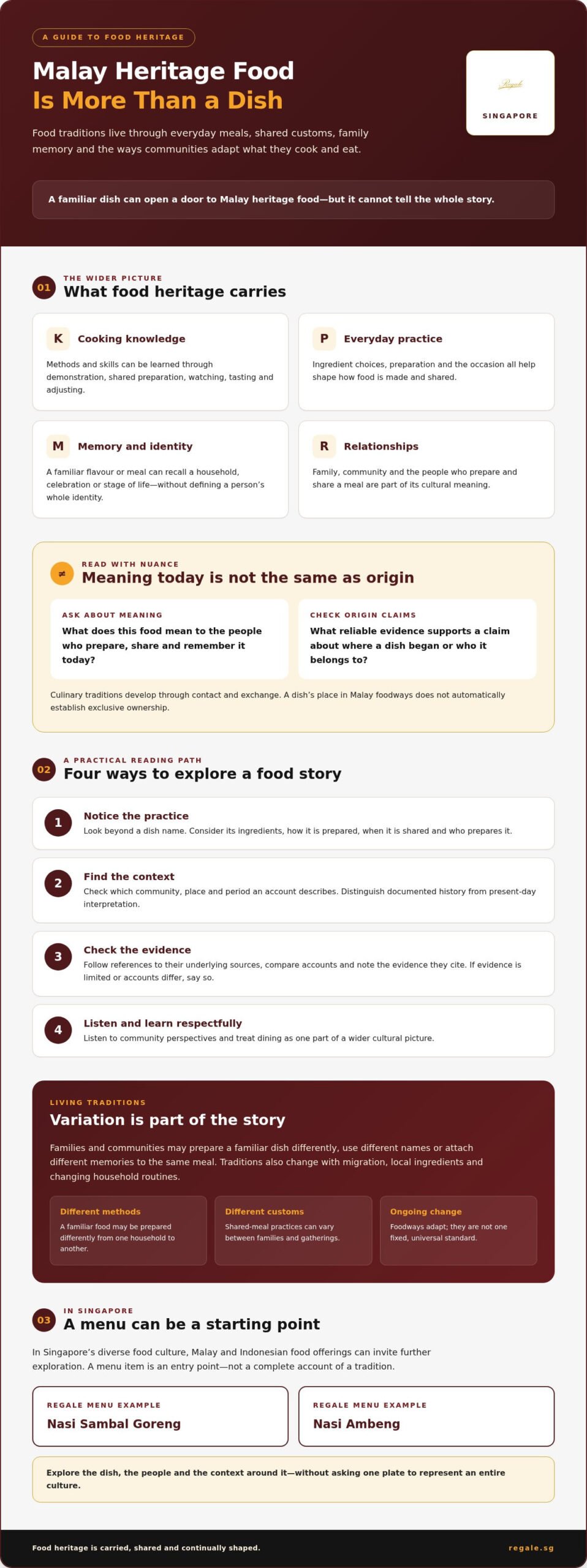
Curiosity is a good beginning, and a little care helps turn it into informed appreciation. Use this sequence when learning about a dish or planning a heritage dining experience:
- Learn the context. Start with who makes or shares the dish and what community or setting a source describes.
- Check reliable sources. Look for publications that identify their evidence and distinguish historical records from general descriptions.
- Listen to community perspectives. Personal accounts can offer valuable insight, while remaining specific to the people and experiences they represent.
- Explore the food. Visit a restaurant or share a meal with an open mind, without expecting one experience to explain an entire culture.
Family meals, everyday cooking and celebratory food may serve different roles, but compare those contexts only when credible sources support the distinction. Don’t assume that one dish is always prepared for a particular occasion or that every family follows the same custom. When researching, keep a note of the source, the community or setting it describes and whether a statement is an observation, a personal account or a historical claim. Malay heritage food is best approached as a living practice, with room for varied experiences and changing interpretations.
A simple checklist for learning about a dish
Before repeating an origin or authenticity claim, check who prepared or documented the dish, which community and place the account refers to, and whether independent reliable sources corroborate its dates or history. Look for specific support, not just repeated wording across pages that may draw on the same source. A restaurant’s menu description can tell you how a venue presents a dish today; it isn’t, by itself, evidence of the dish’s full historical background.
Before repeating a food-origin claim, identify its source and community context, check it against reliable evidence, and make clear what remains uncertain.
Questions to bring to a heritage dining experience
Notice the ingredients, preparation and setting without expecting them to yield one definitive cultural explanation. If a host or staff member is available to share context, ask what they can tell you about the dish or how it’s presented there. Accept that they may not know its full history, or may describe one particular interpretation.
Keep questions open and considerate. Avoid assumptions about a person’s dietary practices, family customs or preferred way of eating. A restaurant meal can introduce flavours and prompt further learning, but it can’t stand in for the range of voices and experiences within a culture. To explore a contemporary menu, view Regale’s food offerings as one starting point for further discovery.
Experience Malay and Indonesian Food Heritage Through Regale’s Menu
A restaurant can provide a useful point of contact with food traditions, as long as one menu isn’t treated as a complete portrait of a culture. Regale Singapore offers a contemporary dining experience with Malay and Indonesian food offerings. It isn’t a single authority on every Malay community or tradition, and the dishes on its menu shouldn’t be taken as proof that each has one exclusive origin.
What readers can find on Regale Singapore’s menu
Regale Singapore serves Nasi Sambal Goreng, Nasi Ambeng, Nasi Minyak and Briyani. These are specific examples to explore, not an exhaustive list of Malay heritage food. Malay and Indonesian culinary traditions can overlap, but that doesn’t mean every dish belongs exclusively to both. Check reliable sources for a dish’s particular history, context or regional associations. Regale Singapore is halal-certified, and its daytime menu includes Western and local favourites, while its evening dining experience focuses on Indonesian cuisine.
This changing menu offers a contemporary setting in which to encounter different food offerings without implying that it represents all Malay or Indonesian cooking. If you’re choosing a dish, start with what you want to explore, then look up its ingredients, preparation or cultural context in sources that identify the community they discuss. For current menu details, check directly with the restaurant before planning a visit.
Continue exploring through food, stories and trusted sources
Pair a meal with heritage research. Look for accounts that identify the communities and contexts they describe, and compare sources before repeating claims about a dish’s origins. A separate guide to traditional Malay cuisine can offer another route into the subject, especially when it adds context beyond a restaurant’s menu. No single meal or article can capture every household’s knowledge, adaptation and experience.
At the table, notice what the menu tells you and what it doesn’t. A dish name may invite further questions, but ingredients, preparation and cultural meaning should come from sources that establish those details. If you ask about a dish, welcome a specific answer as one perspective rather than a universal account.
For a contemporary introduction to these offerings, explore Regale Singapore’s menu and dining experience, then continue learning through trusted heritage sources.
Keep Exploring Malay Food Traditions
Malay heritage food is more than a collection of familiar dishes. Its meaning also lives in cooking knowledge, family memories, everyday routines and the ways communities share and adapt food. Those traditions are diverse, so no single meal or menu can represent every Malay experience.
Approach food stories with curiosity and care. Check the context behind claims about a dish’s history, listen to the people who share their experiences, and treat dining as one way to learn rather than a complete cultural education. These habits make each new meal an invitation to understand more.
Regale is halal-certified and serves Nasi Sambal Goreng, Nasi Ambeng, Nasi Minyak and Briyani. These dishes offer a contemporary starting point, not a complete account of Malay and Indonesian food heritage. Pair what you taste with trusted heritage sources for a fuller perspective.
Explore Regale’s current menu and dining experience, and keep discovering the stories and communities behind the food. Every thoughtful meal can be a meaningful beginning.
Frequently Asked Questions
What is Malay heritage food?
Malay heritage food is the food-related knowledge, practices, memories and community relationships passed on and adapted over time. It includes dishes and recipes, as well as ingredient choices, preparation skills, occasions and ways meals are shared. There isn’t one fixed menu that represents every Malay family or community. To understand a food’s heritage, consider who prepares it, where and when it’s eaten, and what reliable sources say about its context.
What are some examples of Malay heritage food?
Examples to explore include Nasi Ambeng, Nasi Sambal Goreng and Nasi Minyak. These dishes appear on Regale Singapore’s menu as contemporary dining examples, but a menu listing alone doesn’t establish a dish’s exclusive origin or represent every Malay community. For useful context, look beyond the name: check how a source describes the dish, which community it refers to and whether its historical claims are supported.
Is Malay food the same as Indonesian food?
No. Malay and Indonesian food traditions are distinct, though regional connections and cultural exchange can create similarities and overlap. Neither label describes one uniform cuisine: practices and dishes vary within communities and across places. A dish’s presence in a Malay or Indonesian dining context doesn’t, by itself, prove exclusive ownership or a single origin. Look for sources that specify the community and place they’re discussing, especially when accounts differ.
What is the cultural significance of sharing food in Malay traditions?
Sharing food can express hospitality, care or togetherness, depending on the people and occasion. Nasi Ambeng is one example often discussed in relation to shared dining, but serving practices and meanings shouldn’t be assumed to apply to every Malay gathering. Family routines, community events and individual preferences may differ. For a particular custom, consult a source that identifies the community and setting, or ask a host respectfully about their own practice.
How can I learn whether a dish has Malay heritage?
Start by checking who documented or prepared the dish and which community and place their account describes. Compare reliable sources before repeating claims about origins, dates or authenticity, since food histories can overlap or remain disputed. Separate a dish’s current cultural meaning from evidence about its historical beginnings. A restaurant menu can show how a venue presents a dish today, but it isn’t, on its own, proof of its full history.
Can I explore Malay heritage food at a halal restaurant?
Yes. A halal restaurant can be one way to encounter dishes and learn about the dining context, but halal status and cultural heritage are different things. Regale Singapore is halal-certified and serves Nasi Sambal Goreng, Nasi Ambeng, Nasi Minyak and Briyani. Treat any meal as a starting point, then use trusted sources to explore broader cultural context.
