
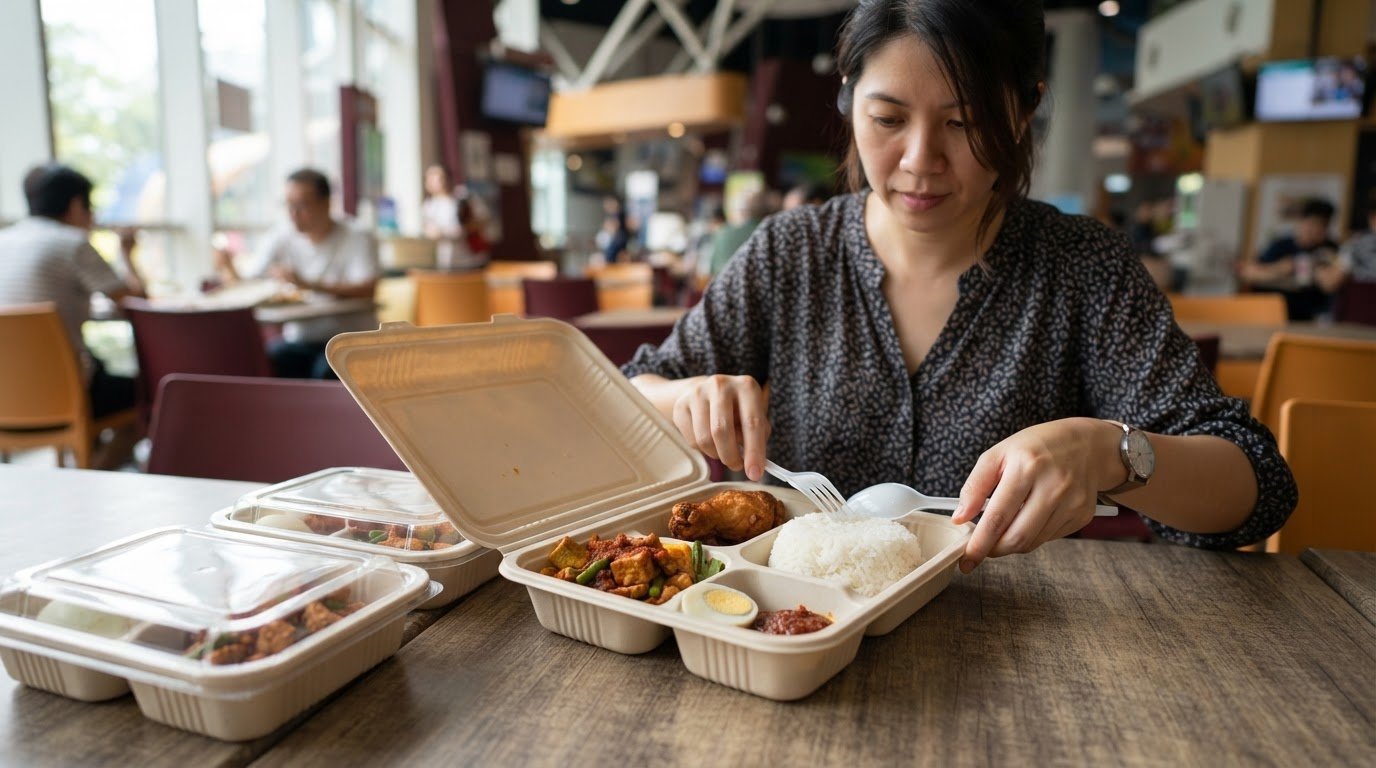

Individual packaging doesn’t make a meal halal. Halal individual packed meals must use ingredients that meet Shariah requirements and be prepared, processed, stored and transported without cross-mixing with non-halal substances. In Singapore, the Islamic Religious Council of Singapore (MUIS) administers halal certification for food businesses and manufacturers.
When you’re ordering meals for a group, it’s sensible to look beyond the menu name: a vegetarian dish isn’t automatically halal, and a Muslim meal isn’t automatically free from allergens or other dietary ingredients. This guide explains what halal certification covers and what to ask about ingredients, substitutions, packing, storage and delivery. You’ll also learn how order size affects planning, so you can choose meals with clearer information and fewer surprises on the day.
Key Takeaways
- Ask how ingredients such as lecithin are sourced and how substitutions are handled, especially when dietary or allergen needs are involved.
- Look beyond a halal label: certification should be valid and cover the food being ordered, while preparation and packing practices help prevent cross-mixing.
- Plan for Singapore’s catering minimum of 10 people, with orders placed in increments of five people.
- Discuss menu preferences and practical details such as storage and transport before placing an order, so meals suit the event and serving arrangements.
- Explore Regale Singapore’s halal catering when Indonesian or Western cuisine fits your gathering, including options such as Nasi Ambeng and Nasi Sambal Goreng.
1. Questions to ask vendors about ingredients and substitutions
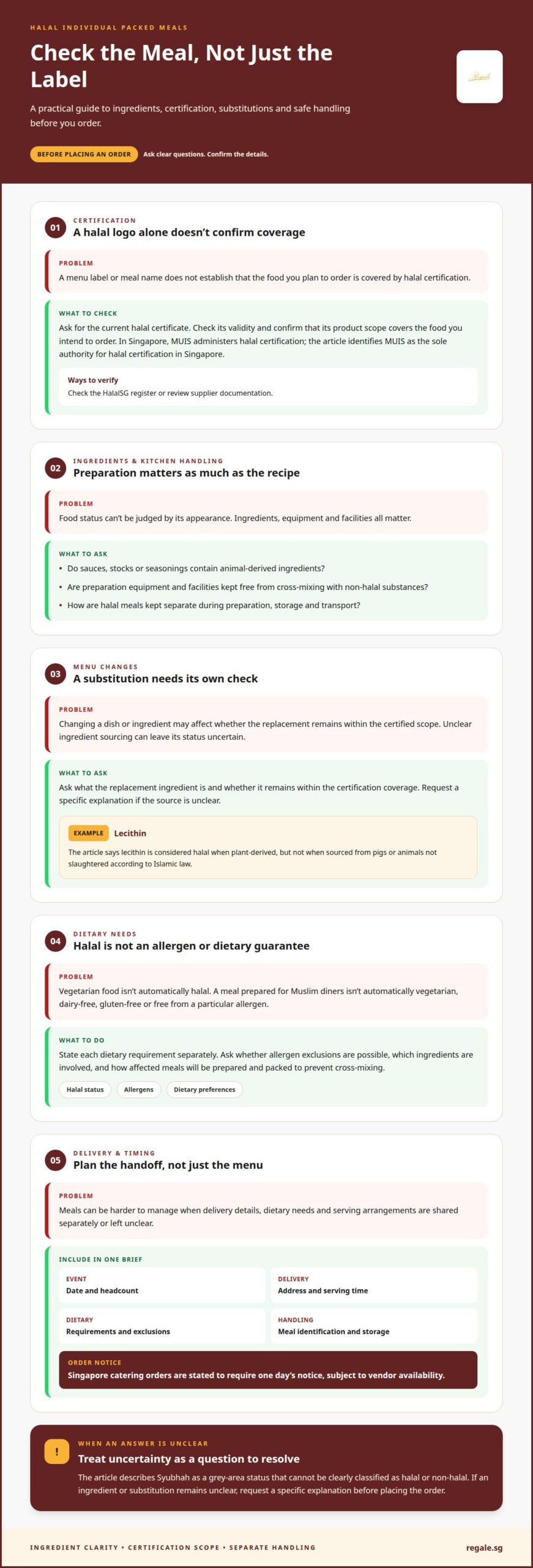
For halal individual packed meals, start with the ingredients and how the kitchen handles them. Under Shariah requirements, processed food must exclude non-halal animal products and products from animals not slaughtered according to Shariah law. It must also be prepared, processed or manufactured using equipment and facilities kept free from cross-mixing with non-halal substances. A meal’s name or appearance alone doesn’t establish its status.
Ask for the current halal certificate and confirm that it covers the food you intend to order. The Islamic Religious Council of Singapore (MUIS) administers halal certification for food businesses and manufacturers in Singapore. MUIS is Singapore’s sole authority for halal certification, according to MUIS. Certification can be verified through the HalalSG register or by reviewing supplier documentation. Check the certificate’s validity and product scope, not just whether a halal logo appears on a menu.
Substitutions deserve the same attention as the original menu. If a dish or ingredient changes, ask what replaces it and whether the replacement remains within the certified scope. Lecithin is one example: it is considered halal when plant-derived, but not when sourced from pigs or animals not slaughtered according to Islamic law. A clear ingredient description helps distinguish these sources.
Vegetarian food isn’t automatically halal. Its ingredients, preparation and storage practices still matter, including whether equipment or facilities are shared with non-halal substances. Likewise, a meal prepared for Muslim diners isn’t automatically vegetarian, dairy-free, gluten-free or free from a particular allergen. State each dietary requirement separately, then ask how the kitchen handles the relevant ingredients and prevents cross-mixing.
- Ask whether sauces, stocks and seasonings contain animal-derived ingredients.
- Ask how the vendor handles a requested substitution and whether it changes certification coverage.
- Clarify whether allergen exclusions are possible, and how affected meals are prepared and packed.
- Ask how halal meals remain separated during preparation, storage and transport.
These questions help identify Syubhah, a grey-area status that cannot be clearly classified as halal or non-halal. In Islam, Muslims are advised to avoid food or drink whose status is Syubhah until it becomes clear. If an ingredient or substitution remains unclear, request a specific explanation before placing the order.
For timing, Singapore catering orders are stated to require one day’s notice, subject to vendor availability. Share the event date, headcount, dietary requirements and delivery details together, so the vendor can plan the menu and preparation accurately.
3. Where can I order halal individual packed meals in Singapore?
In Singapore, halal ready-to-eat meals are available through partnering vendors on request. For an event, start with a caterer offering individually packed portions. For planned meals at home or work, consider ready-to-eat meal suppliers and meal-kit vendors. The right option depends on the occasion, whether meals need to arrive together, and how long they must be stored.
For a group order, a caterer can coordinate one menu and delivery for the event. Send the event date, headcount, delivery address and serving time in one request. Include dietary needs and ask how each meal will be identified. These details help the vendor plan packing and delivery around the occasion.
Meal kits suit a different routine. They provide ingredients to prepare rather than a finished meal, so consider whether the recipient can cook and store the contents. In Singapore, a meal-kit assembly facility should have a valid Singapore Food Agency central kitchen licence. This check relates to the facility assembling the kit, not simply the brand selling it.
Storage needs also affect where to order. Chilled ready-to-eat meals are generally intended for consumption during the same week. Frozen meals are recommended for meal preparation lasting a week. Match the format to your schedule, available freezer space and the time between delivery and serving. Meals intended for immediate distribution need different handling from those being stored for later.
- For a gathering, provide the caterer with one complete delivery brief, including meal count and timing.
- For meal kits, consider cooking facilities and storage space before choosing the format.
- For a week-long plan, choose frozen meals rather than relying on chilled meals for the full period.
- For delivered chilled kits, plan to place perishable items such as meat and dairy in the fridge within 1 hour.
Transport and storage matter after checkout, too. Halal food must remain separate from food that does not meet halal requirements during preparation, storage and transportation. For an order delivered to a workplace or event venue, decide who will receive it and where it will be held. Keep meal packaging identifiable so recipients can find their portions without mixing them with other food.
Choose a supplier based on the meal format and the delivery plan, not just the menu. If a catered event suits your needs, explore halal catering options as one way to arrange food for a gathering.
4. Which Singapore caterers offer halal-certified individually packed meals?
In Singapore, look for caterers whose MUIS halal certification covers catering operations and the meals you plan to order. MUIS administers halal certification for food businesses and manufacturers in Singapore. Certification applies across caterers, central kitchens and food manufacturers, so the relevant certified operation may be the kitchen preparing your meals.
Use the HalalSG register to find current certification, then match the listing to the catering business or central kitchen named for the order. The certificate’s validity and scope matter: certification should cover the products being supplied, not merely a business name or a separate outlet. If a caterer uses a central kitchen, establish which site prepares the meals before ordering.
Next, confirm that the caterer provides individual packing for your event. A catering menu may offer shared buffet dishes, boxed portions, or both. Ask which format applies to the selected menu, whether each meal arrives separately packed, and how special dietary meals are identified. These details help organisers distribute portions efficiently at a workplace, seminar or community gathering.
Compare the caterer’s service with the event’s practical needs. Delivery timing, receiving arrangements and the number of distinct meal types affect how orders are prepared and handed out. For example, a meeting with one standard menu is simpler to distribute than an event with separate vegetarian and allergy-conscious portions. State the headcount and meal categories together so packing instructions are clear.
- Find the caterer or preparation kitchen in the HalalSG register.
- Check that certification is current and relevant to the food being ordered.
- Confirm that the selected menu is available as individually packed portions.
- Share the event date, headcount, delivery timing and dietary categories in one order brief.
- Agree how separate meal types will be labelled and handed to recipients.
Certification is only one part of a workable order. The caterer also needs a clear plan for keeping halal food separate during preparation, packing, storage and transport. For delivery to a venue, identify who will receive the meals and where they will be placed before distribution. Clear handling arrangements help keep packed portions organised from arrival to service.
In short, Singapore caterers with relevant MUIS certification can be identified through the HalalSG register. Confirm the certified operation, the menu’s coverage and the individual packing arrangement, then provide complete event details. This helps you determine whether a caterer’s format and preparation setup suit your gathering.
5. What menu options are available for halal individual packed meals?
Singapore’s individually packed meals can take several forms, from rice-based bento sets to Western-style portions. The suitable menu depends on the occasion, serving arrangements and guests’ dietary needs. Start by choosing a main dish, then consider accompaniments, sauce and any separate requirements. A meal travelling to an office meeting may need different packaging from food served immediately at a family gathering.
Bento meals are individually boxed and supplied with cutlery. This format gives each guest a portion and makes distribution straightforward at meetings, training sessions or community events. A rice-based set can be planned around a protein and vegetable side, while a Western-style set might pair a main with suitable sides. The meal must still meet halal requirements in its ingredients and preparation.
Choose a menu with the group in mind, not just the organiser’s preference. One familiar main can simplify distribution, while a varied selection may suit an event with different tastes. Keep the number of menu variations manageable, and record each choice against the recipient or meal label. This reduces confusion when packed portions arrive together.
Dietary needs must be considered separately from halal status. A Muslim meal isn’t automatically vegetarian, dairy-free, gluten-free or free from a specific allergen. If guests need vegetarian meals, allergen exclusions or another dietary adjustment, specify each requirement clearly. A vegetarian dish isn’t automatically halal either, so the ingredients and preparation process remain relevant.
- Rice-based sets: Choose a main and sides that can be served together in one box.
- Western-style portions: Consider how the main, sides and sauces will be packed for individual distribution.
- Vegetarian portions: Treat vegetarian needs separately from halal requirements, and identify the meals clearly.
- Special dietary portions: State the specific exclusion, such as an allergen, rather than using a broad label.
Substitutions can affect more than taste. Replacing a sauce, stock or ingredient may change a meal’s suitability, so each alteration needs clear ingredient information. Lecithin, for instance, is considered halal when plant-derived, but not when sourced from pigs or animals not slaughtered according to Islamic law. A named ingredient source is more useful than a general description such as “vegetable-based.”
Finally, match the menu to the time between delivery and eating. Chilled ready-to-eat meals are generally intended for consumption during the same week, while frozen meals suit meal preparation lasting a week. For an event, plan portions for immediate service; for a longer meal plan, choose a format suited to storage. Clear menu labels help recipients identify their meals and dietary choices.
5. What is the minimum order quantity for halal packed meals in Singapore
Catering order requirements can vary by vendor. Orders are placed in increments of five people, starting at 10. That means a catering order can be for 10, 15 or 20 people, rather than any number between those steps. Use the minimum and increments when estimating portions for a workplace gathering, seminar or family event.
Start with the number of guests who need a catered meal, then round the order to the next permitted five-person increment. For example, if 12 attendees need meals, the order step after 10 is 15. If 17 attendees need meals, the next step is 20. This helps align the order quantity with the catering structure before you finalise your event plan.
Keep the headcount separate from the number of menu choices. An order for 15 people means 15 meals, even if some guests need different meal types. Make a clear count for each menu selection and dietary requirement, then ensure those counts add up to the total order. For example, an event with standard and vegetarian meals should show both quantities while retaining the overall order minimum and increments.
Build your estimate from confirmed attendees rather than counting every invitee as a meal recipient. Include organisers, speakers and staff who will also eat. Then account for late changes before submitting the final count. A named list or simple meal tally can help prevent duplicate portions and make distribution easier at the venue.
- 10 people: the minimum catering order.
- 15 people: the next available increment after the minimum.
- 20 people: the following increment, useful when the headcount exceeds 15.
The minimum applies to catering orders, so distinguish that format from ready-to-eat meals bought through other channels. Don’t assume every supplier or meal format uses the same order structure. For an event, calculate the catered headcount first, then organise meal categories within that total. This keeps quantity planning straightforward without confusing a dietary split with a separate order.
Submit the event date, delivery address, serving time, total headcount and meal breakdown together. These details give the catering team one consistent order to work from. If attendance changes, update the meal count before the order is finalised, and keep the latest breakdown for the person receiving delivery.
Planning a gathering for at least 10 people? Explore halal catering and organise the meal around your event’s headcount and menu needs.
These are the stated price points for those order ranges, so confirm the applicable total when finalising the meal quantity.
Delivery charges depend on the format and order size. Singapore catering orders can be changed up to 24 hours before delivery, giving you a point to review attendance and the final meal breakdown.
Regale Singapore: Halal Catering
Regale Singapore offers halal catering for gatherings where a considered meal helps bring people together. The menu includes Nasi Sambal Goreng, Nasi Ambeng, authentic Indonesian cuisine and Western cuisine. These choices suit organisers planning a meal with distinct culinary styles, from familiar Western fare to Indonesian dishes rooted in tradition.
For an event, consider the occasion, guest preferences and serving format when choosing between halal catering, a halal buffet or a halal mini buffet. A shared meal may suit a gathering built around conversation, while the menu can help shape the occasion. Share your event details and preferred cuisine when discussing arrangements.
If Regale Singapore’s food and catering service suit your gathering, contact Regale Singapore to discuss your event.
Make the meal part of the occasion
Choosing a meal for an event is also a way to shape how guests experience the gathering. Let the occasion guide the atmosphere you want, then select a menu and serving approach that feel appropriate. With halal individual packed meals, thoughtful planning can make the food feel like a natural part of the event rather than a separate logistical detail. Keep the guest experience at the centre of your decisions, from the first meal choice to serving.
A family gathering, work event and community occasion each have their own character. Choose an approach that reflects the people coming together and the welcome you want to extend. Regale Singapore can help you explore catering for your gathering. Contact Regale Singapore to discuss your event and take the next step towards a meal that feels considered and welcoming.
Frequently Asked Questions
What Qualifies as Halal Ready to Eat Meals in Singapore?
Halal ready-to-eat meals are food permitted for consumption under Islamic requirements, with halal status maintained through preparation and delivery. In Singapore, the Islamic Religious Council of Singapore (MUIS) administers halal certification for food businesses and manufacturers. For a packed meal, consider both the finished food and how it reaches the recipient, not only the menu description. Its status should remain clear from preparation to serving.
What about hygiene and sanitation?
Hygiene covers more than the cooking area. Islamic food hygiene includes personal hygiene, clothing, equipment and the premises used to process or manufacture food. For a packed lunch, consider the whole handling process, including the staff who pack it and the surfaces and utensils used. Clean handling matters after delivery, too: keep meal packaging intact and place portions in an appropriate storage area until serving.
What dietary and allergen options are available for halal packed meals?
Options depend on the menu and the specific dietary requirement. Halal status alone doesn’t tell you whether a meal is vegetarian, dairy-free, gluten-free or suitable for someone with an allergy. Give the organiser a clear list of needs and meal counts, such as two vegetarian portions and one meal excluding a named allergen. Ask for meals to be clearly identified at distribution so recipients can distinguish their portions.
What food safety rules apply to individually packed meals in Singapore?
In Singapore, food should be prepared, processed, packaged, transported and stored in line with the hygiene and sanitary requirements of relevant authorities. These stages matter for individually packed meals because packaging doesn’t replace careful handling. For chilled meal-kit deliveries, items such as meat and dairy should go into the fridge within 1 hour. At an event, arrange a clear receiving point and keep meals protected until they’re served.
