
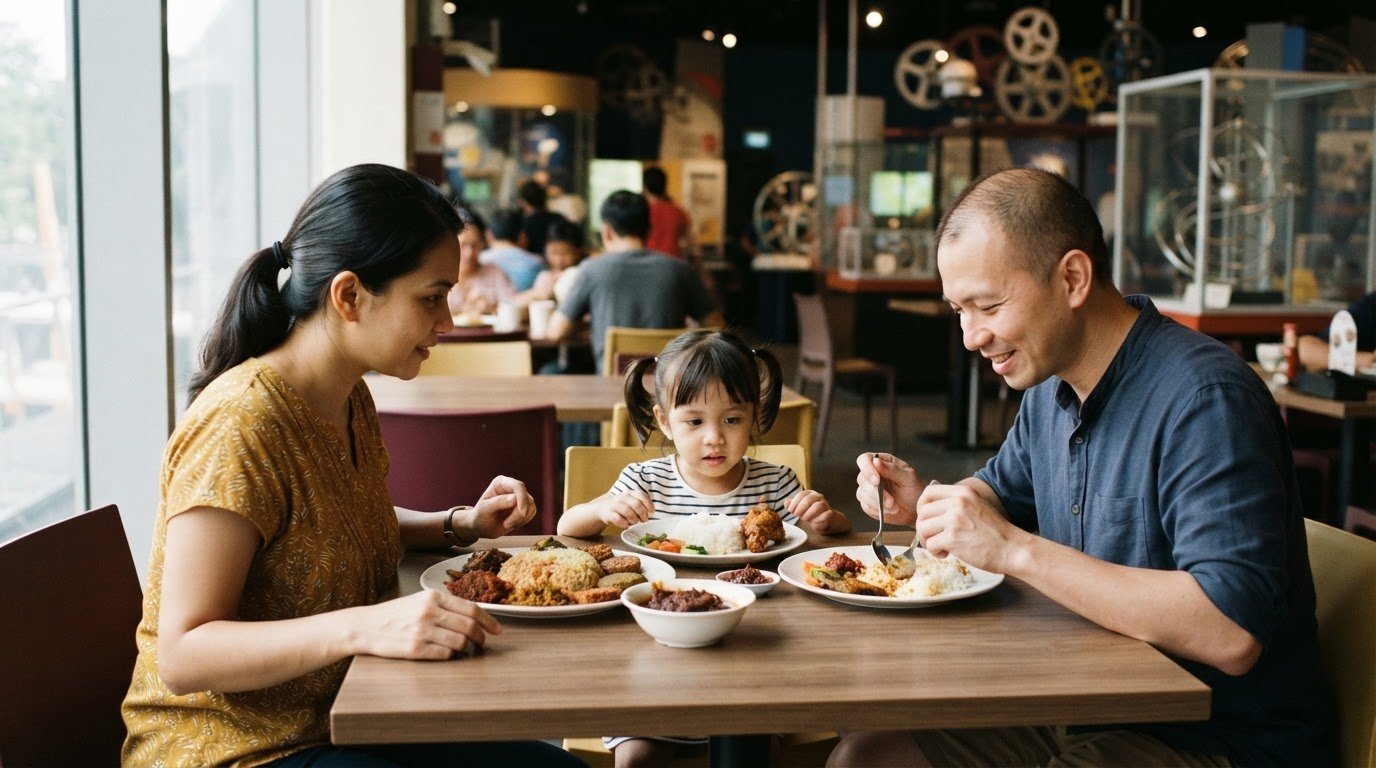

A picky child doesn’t need a completely different meal from everyone else. Halal food for picky eaters is easier to manage when you start with a familiar main, serve sauces and toppings separately, and add one simple side. Choosing a halal restaurant with both local and Western dishes also gives families more familiar options.
Dining out can still feel challenging when a child avoids mixed textures, unfamiliar flavours or large portions. Keep the meal straightforward: choose one food they already enjoy, offer a new taste alongside it, and let them decide whether to try it.
This guide shares family dining ideas in Singapore, including halal restaurant and cafe options, child-friendly ways to approach familiar dishes, and practical strategies for making meals feel more manageable. You’ll also find simple ways to introduce new foods gradually, without turning every meal into a negotiation.
Key Takeaways
- Look for halal family dining with both familiar and local choices so children can find a comfortable starting point.
- Keep meals simple by serving sauces and toppings separately and offering a familiar side alongside a new taste.
- Use easy combinations at home, such as chicken with rice or soft bread, and adapt the portions and textures to your child.
- Introduce unfamiliar foods gradually by pairing them with a favourite and giving children small, manageable choices.
- For allergies or dietary restrictions, focus on ingredients and preparation details when choosing suitable meal options.
1. Halal family restaurants and cafes in Singapore
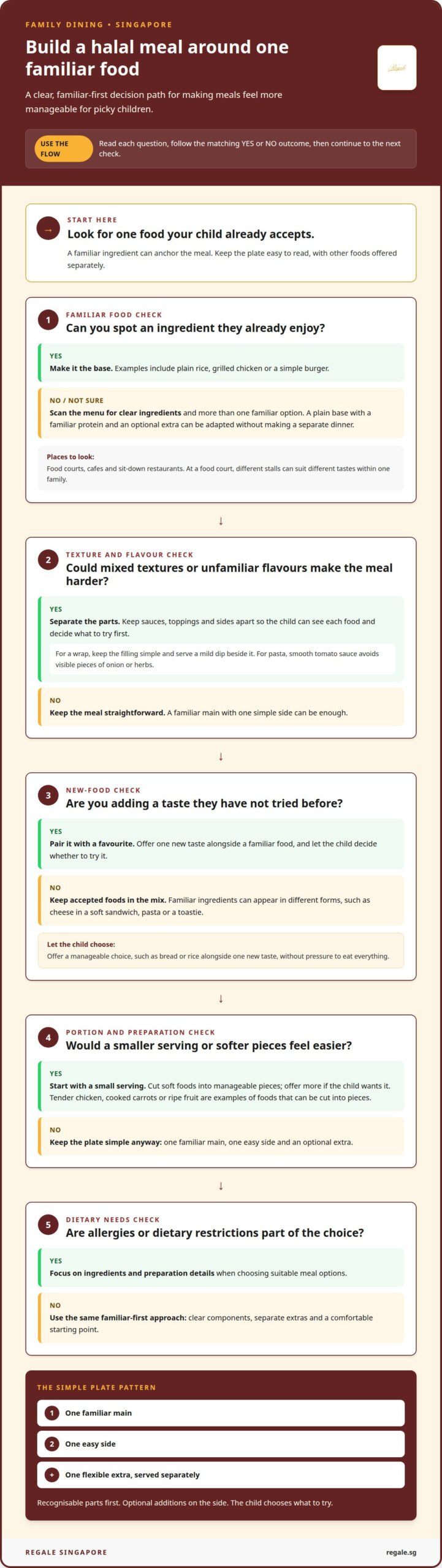
Singapore families can choose between mall food courts, cafes and sit-down restaurants. For a child who prefers familiar flavours, start with plain rice, grilled chicken or a simple burger. Add vegetables or sauce separately instead of mixing everything together. This gives children a clear view of each food and lets them decide what to try first.
At a food court, different stalls can suit different tastes within one family. One child might choose chicken with rice, while another prefers noodles or a plain side. Choose a table, then let everyone select a meal nearby. This keeps the group together while allowing children to avoid unfamiliar combinations.
At a restaurant, consider how the food is served. Grilled chicken, rice and vegetables are easier to assess separately than a dish with several mixed textures. Ask for sauces on the side if the menu allows. A familiar accompaniment, such as bread or plain rice, can make a new main less daunting.
Across Singapore, families can look for halal-friendly food courts in shopping centres. Delivery apps serving Singapore also let families browse halal-labelled outlets and menu descriptions. Choose meals with clear components, such as chicken, rice and vegetables, so children can recognise what arrives packed in each container.
A child-friendly version of a family dish can use the same basic ingredients in a gentler form. For example, serve soft rice with tender chicken, then mash or cut ingredients to suit the child’s eating ability. Keep strong sauces and whole garnishes separate. Softer textures and manageable pieces make the plate easier to explore.
For younger children, a small serving can be more practical than a full restaurant portion. Cut a familiar main into bite-sized pieces and offer one soft side, such as cooked vegetables. Avoid crowding the plate with several new foods at once. The meal can stay simple for the child while other family members enjoy fuller portions.
Convenience matters during a day out or a busy shopping trip. Choose a venue with straightforward dishes and more than one familiar option. For delivery, select food that travels well, such as rice with grilled chicken, and keep wet sauces separate where possible. This helps preserve the food’s texture on the way.
Before ordering, scan the menu for ingredients your child already accepts. A plain base, familiar protein and one optional extra create an adaptable meal without requiring separate dinners. For example, pair rice and chicken with cucumber or cooked carrots. This offers a mix of foods while keeping familiar flavours at the centre.
2. Making meals familiar and manageable for picky children
Choosing halal food for picky eaters starts with an ingredient the child already accepts. If plain rice feels familiar, serve it alongside tender chicken or soft vegetables. Keep unfamiliar ingredients separate so children can see each item clearly. This also helps parents notice which textures or flavours their child prefers.
For toddlers and preschoolers, begin with a small portion. A crowded plate can feel difficult to approach, especially when several dishes are unfamiliar. Cut soft foods into manageable pieces, such as tender chicken, cooked carrots or ripe fruit. Offer more if the child wants it, rather than starting with a full serving.
Mixed textures can make dinner less appealing. Keep a wrap filling simple, and serve a mild dip beside it instead of spreading it inside. A child can try the bread, filling and dip separately. For pasta, smooth tomato sauce avoids visible pieces of onion or herbs.
A burger bowl can suit children who dislike buns. Serve chopped beef patty pieces with rice or chips, then arrange cucumber, cheese and sauce separately. The child can choose which ingredients to combine. For children who accept bread, a small burger with minimal toppings offers a familiar alternative.
Make halal food for picky eaters more approachable by keeping one accepted base and introducing one new ingredient alongside it. For example, serve rice with a familiar chicken filling and a little cucumber. This adds variety without changing the whole meal or mixing ingredients the child prefers to keep separate.
Involving children in preparation can make ingredients feel less unfamiliar. Ask them to place cucumber slices in a lunchbox compartment, stir a safe mixture or choose between two toppings. A toddler can help mash chickpeas with adult supervision. These small tasks give children a role without requiring them to eat everything they prepare.
Use familiar ingredients in different forms across the week. Cheese in a soft sandwich might also work with pasta or a toastie. Keep the serving arrangement consistent when introducing a new dish. A divided plate or separate containers can help children recognise each ingredient and decide what to try first.
Absolutely keep the goal practical: offer a manageable choice, not pressure. Put two accepted options on the table, such as bread or rice, alongside one new taste. For more ideas, explore halal family dining options that suit different preferences and help families share a meal at their own pace.
Customisable chicken rice bowls can make family dinner easier to adapt: children can choose different toppings or keep the bowl plain, without needing a separate meal. A simple meal for a picky child can pair one familiar main with one easy side and one flexible extra. For young children, soft textures are easy to chew and can be cut into bite-sized pieces.
A small bowl of halal beef meatball pasta may feel more inviting than a large portion. Small lunch servings can suit toddlers and preschoolers, who may fill up quickly. If children are wary of mixed textures, keep halal chicken wrap fillings simple and serve dip on the side, so the components remain easier to manage.
3. What easy halal meals can picky eaters make at home?
Start with a familiar base, such as rice, soft bread or pasta. Add a simple halal protein and serve sauces separately. This lets children taste each ingredient on its own. A small plate of chicken, rice and cucumber can feel easier to approach than a mixed dish.
For a mild chicken dinner, prepare halal chicken with a gentle marinade. Let it marinate for at least 2 hours or overnight, then bake it for 20-25 minutes. Serve it with plain rice and cucumber or cooked vegetables. Keep any stronger sauce on the side, so children can choose whether to try it.
Bulgur pilaf offers another gentle way to introduce a different grain. Simmer the bulgur, covered, for 15 minutes, then serve it beside a familiar protein. Keep the grains separate from other foods on the plate. A child can sample a small spoonful without needing to accept a fully mixed meal.
Turkish kofte can be served as individual meatballs rather than combined with a sauce. Fry the meatballs on all sides for about 10 minutes. Pair them with plain rice, bread or a mild dip. Children who prefer familiar foods can begin with the side, then decide whether to taste the kofte.
For a simple weeknight meal, offer halal chicken nuggets with torn flatbread, carrot or cucumber sticks, and hummus or yoghurt for dipping. Crispy chicken strips can also go with rice or mash, plus peas or sweetcorn. Keep each item in its own section, especially if mixed textures put a child off.
A soft toastie with halal turkey or chicken slices and cheese works for lunch, a light dinner or an after-school snack. Cut it into manageable pieces and serve fruit or vegetables alongside. Fish fingers with soft peas and mash offer another familiar combination for children who prefer mild flavours.
Use familiar ingredients across several meals instead of creating a separate menu each day. Halal mince can become kofte, while chicken, rice, wraps, buns and pasta can be combined in different ways. Leftover grilled chicken or mild curry can go into a wrap or rice box for lunch. A different shape or arrangement can make leftovers feel less repetitive.
Preparing food at the weekend can simplify busy evenings. Batch-cook patties, fritters or rice balls, then freeze them for quick reheating. For packaged halal snacks, check the certification and ingredients before packing them. Keep familiar components ready, such as rice, simple vegetables and halal chicken, so children can put together a meal they recognise.
5. How can parents introduce new halal foods to picky children?
Place one unfamiliar food beside a favourite rather than replacing the whole meal. For example, serve a small portion of mild halal chicken curry with plain rice. Keep the familiar rice unchanged and let the child decide whether to taste the curry. The new flavour becomes one part of dinner, not the entire meal.
Keep sauces and dips separate. A child who likes plain chicken can try a little sauce on the side, then stop if the flavour feels unfamiliar. Try yoghurt dip with flatbread, or hummus beside cucumber sticks. Separate servings give children control over flavour and texture without taking the new food off the table.
Offer a choice between two lunch options, such as a chicken wrap or cheese toastie. Both can include halal ingredients, while the child gets a say in the meal. Keep the options clear and specific. Choosing between two familiar formats may feel easier than facing several unfamiliar dishes at once.
Theme days can give children a predictable way to explore variety. Make one lunch “wrap day” with chicken, cucumber and a separate dip. On another day, offer fruit and dip in divided lunchbox compartments. The theme stays familiar while the fillings or fruit can change. Let the child choose one ingredient to include.
Finger foods can make trying a new ingredient more hands-on. Offer cucumber sticks, soft fruit pieces or small pieces of chicken that children can pick up themselves. Keep portions manageable and place them beside a familiar favourite. A child can touch or smell a new food before tasting it, without pressure to finish.
Change the shape of leftovers when repeated meals lose their appeal. Turn leftover chicken and rice into a wrap filling, or serve the same ingredients separately in a lunchbox. A different arrangement can make the meal feel fresh to a child who notices familiar ingredients appearing again, while keeping accepted flavours.
A divided lunchbox helps keep foods apart for children who dislike mixed textures. Pack rice in one compartment, chicken in another, and a familiar vegetable or fruit separately. Put dressing or dip in its own small container. This also lets children choose the order in which they eat each item.
Introduce new foods gradually and predictably. At dinner, add one new taste beside a food the child already accepts, then offer that ingredient another way later. For instance, serve a mild dip with flatbread first, then offer it beside cucumber sticks. Repeated, low-pressure opportunities let children become familiar with ingredients at their own pace.
5. Are there halal options for picky eaters with food allergies or dietary restrictions?
Yes. Families can look for halal meals that also suit a child’s dietary needs. Halal status and allergen suitability are separate considerations: a halal dish isn’t automatically free from a particular allergen. Start with the child’s known restrictions, then choose meals with familiar, identifiable ingredients.
For a home meal, build the plate from separate components. For example, serve plain rice with chicken and a vegetable the child already tolerates. Keep sauces, marinades and toppings apart until you know their ingredients. This can also help children who avoid mixed textures or unfamiliar flavours.
Packaged halal snacks need the same careful review. Read the ingredient list and halal certification information before packing them. Check the full label, including flavourings and sauces, rather than relying on the product name. A snack that seems simple, such as crackers, may contain ingredients a family needs to avoid.
For restaurant meals, favour dishes with clear components, such as grilled chicken, rice and plain vegetables. Don’t assume a visible ingredient tells the whole story: marinades, dressings and cooking sauces can add ingredients that aren’t obvious on the plate. Keep the child’s established allergy information accessible when planning a meal away from home.
Dietary restrictions can reflect preferences as well as allergies. A child avoiding dairy may prefer a meal without cheese or creamy sauce. Someone who dislikes spicy flavours may find plain rice and mild chicken more approachable. Separate sides make it easier to adapt the plate without changing every dish.
When ordering for a family, write down the child’s restrictions and accepted foods before choosing dishes. Compare that list with menu descriptions, especially for mixed meals, sauces and toppings. For a packed meal, put suitable foods in separate containers. Clear portions help the child recognise each item and avoid unwanted combinations.
For a child with a diagnosed allergy, don’t treat halal status as proof that a meal is allergen-free. Keep the family’s known ingredient restrictions central when choosing food. If a dish’s components aren’t clear from its description, choose a simpler option with ingredients the child already eats. This keeps the decision focused on the child’s specific needs.
For family dining built around halal cuisine, explore halal restaurant dining as one meal option. Choose dishes according to the child’s known restrictions and preferences, rather than assuming every halal choice suits every dietary need.
For packed meals, include savoury and naturally sweet options to keep the lunchbox interesting. Letting a picky eater choose between two lunch options can encourage them to eat what’s packed. A small halal Angus beef slider with oven chips and cucumber sticks is another meal option for children.
Regale Singapore: Nasi Sambal Goreng
Regale Singapore offers Western cuisine for families seeking familiar dining choices, alongside authentic Indonesian cuisine for a change of flavour. Its menu includes Nasi Sambal Goreng and Nasi Ambeng, giving families options to explore at their own pace. During daytime visits, Western and local favourites provide a familiar starting point; in the evening, Indonesian dishes bring a distinct culinary experience.
If a child prefers simpler meals, begin with menu choices they recognise, then introduce a new dish as a shared taste. Regale Singapore brings familiar options and Indonesian cooking together for families looking for halal food for picky eaters.
Contact Regale Singapore to discuss your family dining plans.
Make the next family meal a confident step forward
Finding halal food for picky eaters is less about changing a child’s preferences overnight and more about creating a comfortable starting point. Let accepted foods guide the next choice, then offer a new taste alongside them. A calm, familiar setting can help family meals feel like shared time rather than a test of what children will eat.
For your next outing, choose a dining experience where your family can enjoy different flavours at its own pace. At Regale at Science Centre, Western and local favourites sit alongside Indonesian cuisine. Let each meal be an opportunity to share time together while children grow more comfortable exploring food in their own time.
Plan your next family meal with Regale Singapore, and make the table a place for connection, discovery and enjoyable moments together.
Frequently Asked Questions
What halal foods are popular with picky eaters in Singapore?
Familiar formats such as chicken nuggets, burgers, toasties and fish fingers can be approachable choices. At home or in a food court, pair one with rice, bread or another accepted staple. If a child prefers less seasoning, keep dips separate and choose a plain side. A good starting point is usually a meal built around ingredients your child recognises.
Which Singapore restaurants serve halal-certified familiar foods like burgers, pizza, pasta, and fried chicken?
Regale Singapore is a halal-certified restaurant serving Western, local and Indonesian dishes, including an Angus Burger, Nasi Sambal Goreng and Nasi Ambeng. These options give families different flavours to consider when dining together. Choose based on the child’s known preferences, and use the menu to find a suitable dish for the family meal.
What halal meals are suitable for children who dislike spicy food, vegetables, or mixed textures?
Try a mild meal with separate components, such as plain rice beside chicken and a familiar side. If a child avoids vegetables, offer a small amount apart from the main rather than mixing it in. If mixed textures are difficult, serve bread, protein and dip separately. This lets the child decide what to combine while keeping the meal halal and straightforward.
