
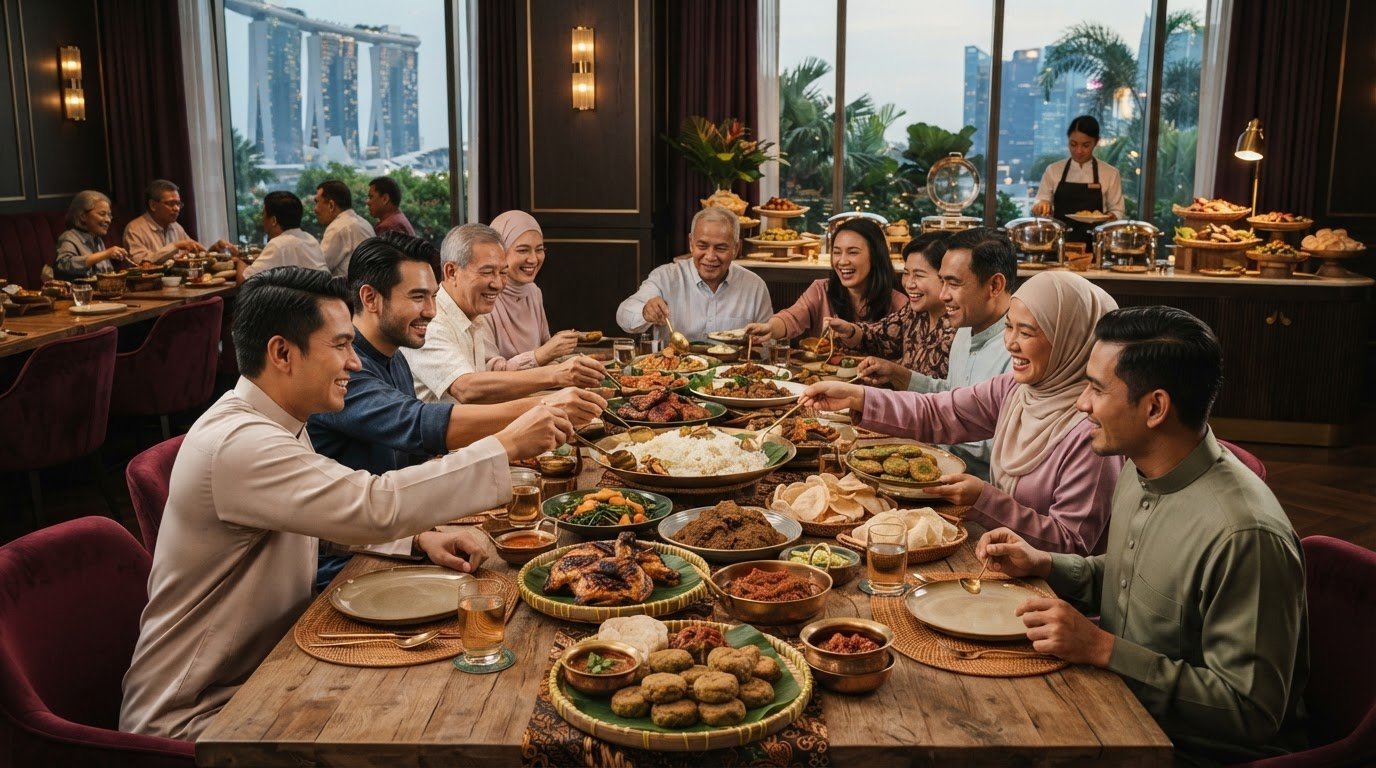

A shared meal feels easier to organise when the food and serving style suit the group. Choosing between communal platters, a buffet and individual servings comes down to practical details: how guests want to choose their food, the atmosphere you want and how the meal will be served. This guide to communal dining halal options explains how to make a welcoming choice without overcomplicating the plan.
Halal group dining can bring people together over Malay and Indonesian dishes, with Nasi Ambeng offering a traditional shared-meal option. The right arrangement depends on the occasion, guests’ preferences and the kind of meal flow you have in mind. Regale Singapore offers halal buffet, mini buffet and catering options for group occasions, along with distinct daytime and evening dining concepts.
Compare shared platters, buffet service and individual meals, then use the planning steps below to match the menu and setup to your group. With a clear format and thoughtful choices, a halal meal can feel organised, inclusive and centred on enjoying time together.
Key Takeaways
- Choose a meal format based on the occasion, group preferences and the flow you want at the table.
- Halal communal dining can bring guests together while leaving room for individual tastes.
- Plan the menu, service style and mealtime setup in a few clear steps.
- Traditional Malay and Indonesian dishes can give a shared meal a distinctive sense of heritage.
- Regale offers halal buffet, mini buffet and catering options, as well as daytime and evening dining concepts.
What Does Halal Communal Dining Mean for a Group Meal?
Halal communal dining brings together food choices that align with halal requirements, a shared or group-friendly serving arrangement, and the experience of eating together. Halal means permissible under Islamic law. For organisers, choosing a halal dining experience is a practical part of planning a meal that suits guests who observe these requirements.
The format can work for family gatherings, celebrations and informal meals with friends or colleagues. Dishes might be placed at the centre of the table, arranged at a buffet, or served as individual portions. Each approach creates a different flow. Communal dining is about sharing the occasion, not requiring every guest to eat the same food or pass every dish around.
How shared dining creates a more connected meal
When dishes are within reach, guests have natural opportunities to offer food, pass a serving utensil or talk about what they have chosen. The meal becomes a shared occasion rather than a sequence of separate plates, while each person remains free to choose what suits their tastes.
Halal communal dining is a group meal centred on halal food choices and the option to share dishes and conversation.
Sharing is a format, not an obligation. Guests can take part without sampling every dish, and different preferences do not have to prevent the group from enjoying the same meal. Clear serving arrangements also help everyone feel comfortable, whether food is placed on the table or presented buffet-style.
What halal assurance means when dining together
For diners who observe halal dietary requirements, halal assurance can be an important factor when choosing a group dining experience. It gives organisers a clearer basis for selecting a meal that suits those guests, rather than leaving them uncertain about the overall choice. This is especially useful when one person is organising a meal for people with different needs.
Regale is a halal-certified culinary establishment in Singapore. Its halal-certified status gives organisers a clear point of reference when considering a group meal. Avoid assuming ingredients or preparation details from a dish name alone. Focus instead on selecting a dining experience and format that allow guests to gather with confidence.
In practice, communal dining halal choices work best when the meal welcomes participation without prescribing what anyone must eat. A shared table can make room for conversation, personal preferences and the occasion itself.
Shared Platters, Buffet, or Individual Meals: Which Format Fits?
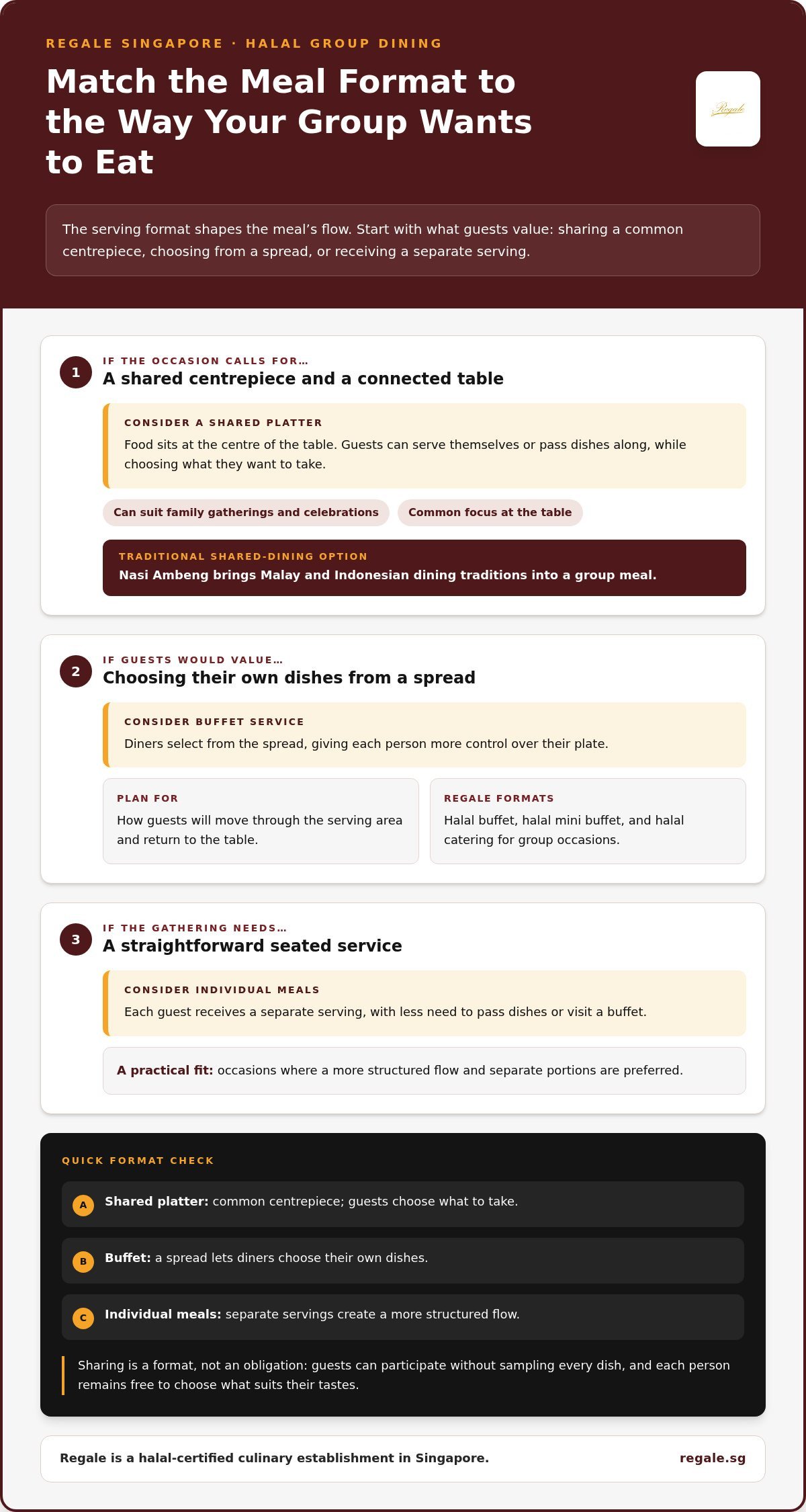
The serving format shapes how a group meal unfolds. Shared platters invite guests to serve one another, buffet service lets diners choose from a spread, and individual meals give each person a separate plate. When choosing communal dining halal options, consider the occasion, how much choice guests value and which arrangement will make serving straightforward.
| Format | Suitable situation | Practical consideration |
|---|---|---|
| Shared platter | A gathering where passing dishes and a common centrepiece suit the atmosphere | Guests share access to dishes, while each person chooses what to take |
| Buffet | A group meal where diners may appreciate choosing from a spread | Consider how guests will move through the serving area and return to the table |
| Individual meals | A gathering that calls for a separate serving for each diner | Portions arrive individually, with less passing of food between guests |
When a shared platter suits the occasion
A shared platter makes the communal character of a meal visible: food sits at the centre, and guests take part by serving themselves or passing it along. This can suit family gatherings and celebrations where a relaxed, connected atmosphere matters. Sharing does not mean everyone has to eat the same things. It gives the group a common focus at the table.
Regale offers Nasi Ambeng as a traditional shared-dining option. It can be a good fit for organisers who want to bring Malay and Indonesian dining traditions into a group meal. Choose the serving style with the occasion and guests in mind, rather than assuming a particular platter composition or portion size.
When buffet or individually served meals work well
A buffet can suit groups whose guests would appreciate choosing their own dishes. Diners select from the spread, giving each person more control over their plate. Regale offers halal buffet and halal mini buffet formats, as well as halal catering for group occasions.
Individual meals create a more structured flow: each guest receives a separate serving, with less need to pass dishes or visit a buffet. This can suit occasions where a straightforward seated service is preferred. Neither format is automatically better. Consider the atmosphere you want, how guests prefer to choose their food and how the meal will be served. Explore Regale’s halal group dining options and choose an arrangement that supports your occasion.
How to Choose a Halal Communal Dining Experience for Your Group
Start with the occasion, then consider the group’s preferences and the atmosphere you want to create. A relaxed family meal may call for an easy flow and dishes guests can explore together. A milestone gathering might benefit from a shared centrepiece, while an organised group occasion may be easier to manage with buffet service or individual meals.
Communal dining is not just for large celebrations. A small family gathering or informal meal can feel just as connected when the food and serving arrangement invite people to settle in and enjoy one another’s company. For communal dining halal options, focus on what will make the meal comfortable and enjoyable for the people attending.
Match the meal style to the occasion and group
Shared dishes create a participatory rhythm: guests pass food, serve themselves and continue their conversation around the table. A buffet gives diners more freedom to choose and can suit a group with varied tastes. Individual meals create a more structured experience, with each guest served separately. None of these formats requires everyone to like the same dishes. Choose the flow that fits the occasion and lets people participate comfortably.
Balance halal assurance, cuisine, and choice
For guests who observe halal dietary requirements, halal assurance is a key consideration when choosing a dining experience. Regale is a halal-certified culinary establishment. Then consider the group’s cuisine preferences and how they fit the occasion. Malay and Indonesian dishes have traditions of shared dining, making them a natural option for a meal centred on gathering and participation.
Make the decision in a practical order:
- Define the occasion: Decide whether the meal should feel relaxed, celebratory or more structured.
- Consider the group: Think about guests’ food preferences and dietary needs without assuming they are all alike.
- Choose the meal rhythm: Select shared dishes for a common table focus, a buffet for individual choice, or individual meals for a more organised service.
- Set the atmosphere: Consider whether guests will enjoy serving and passing dishes or prefer a simpler, more direct arrangement.
A suitable group meal brings halal assurance, preferred cuisine and a serving style together around the occasion. With those factors clear, you can choose a welcoming experience without treating communal dining as something reserved for large events.
How to Plan a Halal Shared Meal from Menu to Mealtime
A clear plan helps a group meal feel welcoming rather than complicated. For communal dining halal arrangements, work through the occasion, guest preferences, serving format and practical setup in that order. This gives you a useful basis for choosing the menu and deciding how the meal will flow.
Set the occasion, preferences, and dining format
Begin with the purpose of the gathering. A family meal may call for a relaxed shared table, while a milestone celebration could suit a more formal arrangement. For an organised group occasion, consider whether guests will gather around one table or need a serving setup that lets them choose food more independently.
Next, get a broad sense of cuisine preferences and dietary considerations. Do not assume everyone has the same tastes or needs. A simple check with guests can help you plan considerately without making the menu unnecessarily complicated. Then choose a format that suits both the setting and the group:
- Shared dishes: Choose this style when passing food and gathering around a common table fit the occasion.
- Buffet service: Consider it when diners would value selecting their own dishes as part of the meal.
- Individual portions: Use this approach when a more structured, separately served meal better suits the setting.
Coordinate the meal and serving arrangement
Once you have settled on a format, map out how guests will be served. For a shared table, consider how dishes can be placed within reach and how diners will serve themselves. For buffet service, decide where food will be set out and how guests can move through the arrangement. Individual servings create a different flow, with each person receiving a separate meal.
The setting can guide your service choice. Regale’s halal catering can suit group meals arranged around an occasion, while its halal buffet and halal mini buffet provide buffet-style options. A simple plan that accounts for the gathering space, chosen format and guest needs helps keep the meal organised. Consider dietary requirements alongside cuisine preferences so guests feel thought of from the outset.
With the occasion and service style in view, explore Regale’s halal dining options as part of planning a shared meal.
Discover Regale’s Halal Communal Dining and Indonesian-Inspired Menu
Regale is a halal-certified culinary establishment in Singapore, with distinct concepts for daytime and evening dining. Its menu and service formats give organisers different ways to bring people together, whether they are planning a shared meal around Malay and Indonesian dishes or arranging a buffet for a group occasion.
Malay and Indonesian dishes for shared dining
Traditional dishes can give a communal meal a strong sense of heritage. Regale offers Nasi Ambeng as a traditional shared-meal choice, making it an option for guests who want the table to centre on eating together. Consider it alongside the wider menu and your guests’ preferences.
Nasi Sambal Goreng is another dish on Regale’s menu. The menu also includes Nasi Minyak and Briyani, adding further Malay and Indonesian choices to consider when planning a group meal. These dishes can bring cultural character to communal dining halal occasions without assuming guests must all choose or enjoy the same food.
A dining experience for daytime and evening
Regale’s daytime menu features Western and local favourites, while its evening concept focuses on Indonesian dining. These distinct dining experiences give guests a choice of culinary direction according to the occasion and the atmosphere they want. A group meal can centre on traditional dishes or use a format suited to a larger occasion.
For group settings, Regale offers halal buffet, halal mini buffet and halal catering. Buffet formats let diners choose from the spread, while catering provides a meal service for an event setting. The right fit depends on where the gathering takes place and how you want guests to be served. Matching the meal format to the occasion keeps planning clear while allowing for different preferences.
Whether you’re arranging a family gathering or a larger group occasion, Regale’s Indonesian-inspired menu and halal dining options offer a starting point for planning. Explore halal dining at Regale and find an inviting way to share a meal.
Bring Your Group Together Around a Shared Meal
A welcoming halal group meal starts with a format that suits the occasion and the people attending. Shared dishes encourage participation, while buffet service gives diners room to choose. Planning around guests’ preferences and dietary needs helps the gathering feel comfortable without expecting everyone to enjoy the same things.
For communal dining halal options in Singapore, Regale is a halal-certified culinary establishment with distinct daytime and evening dining concepts. Its menu includes Nasi Sambal Goreng, Nasi Ambeng, Nasi Minyak and Briyani. Halal buffet, halal mini buffet and catering offerings provide different ways to arrange a group meal, whether you’re planning around a shared table or an event setting.
Choose the meal style that fits your group, then let good food and conversation shape the occasion. Explore halal dining at Regale and plan a meal to enjoy together.
Frequently Asked Questions
What is communal dining in a halal restaurant?
Communal dining in a halal restaurant means sharing a meal or dining experience while choosing halal food. It can involve dishes placed for the group to share or buffet service, where diners select from the dishes offered. The shared setting brings people together, but it does not mean every guest has to eat the same items. Each person can choose what suits their preferences within the meal arrangement.
Is communal dining suitable for a small family meal?
Yes. Communal dining can suit a small family meal as well as a larger gathering. It does not need to be formal or reserved for celebrations. Shared dishes can create a relaxed meal centred on the table, while a buffet lets family members make their own choices. Choose the arrangement that feels comfortable for your family and the setting.
Can halal communal dining include a buffet?
Yes, a buffet can be one format for a halal communal meal. Guests choose from the dishes offered, while the shared setting allows the group to dine together. This can work well when diners have different tastes and value having choices. Regale offers halal buffet and halal mini buffet options for group meals, without requiring everyone to select the same dishes.
What dishes are suitable for a halal communal meal?
Suitable dishes depend on the group’s preferences and how the meal will be served. Nasi Ambeng is a traditional shared-dining option offered by Regale. Its menu also includes Nasi Sambal Goreng, Nasi Minyak and Briyani. Consider the occasion and guests when selecting dishes. Do not assume every dish is designed for sharing or that its name tells you its ingredients.
How do I plan a halal group meal?
Start with the occasion, then consider the group’s cuisine preferences and dietary needs. Choose whether shared dishes, buffet service or individual meals best suit the setting and the way guests want to dine. A simple plan helps organise the menu and serving arrangement without assuming everyone has identical preferences. Regale offers halal buffet, halal mini buffet and halal catering for different group meal settings.
Is a shared platter the same as a buffet?
No. A shared platter places food for the group to share at the table, while buffet service presents dishes for diners to choose from. Both can bring people together, but they create different meal flows: a platter encourages passing and serving at the table, while a buffet gives guests the opportunity to select their own choices. The best fit depends on the occasion, group preferences and serving arrangement.
What is the difference between daytime and evening dining at Regale?
Regale’s daytime menu features Western and local favourites, while its evening concept offers an authentic Indonesian dining experience. This is a difference in dining focus, not a promise about specific hours. The menu includes dishes such as Nasi Sambal Goreng, Nasi Ambeng, Nasi Minyak and Briyani. Explore Regale’s dining options to find an experience that suits your plans.
