
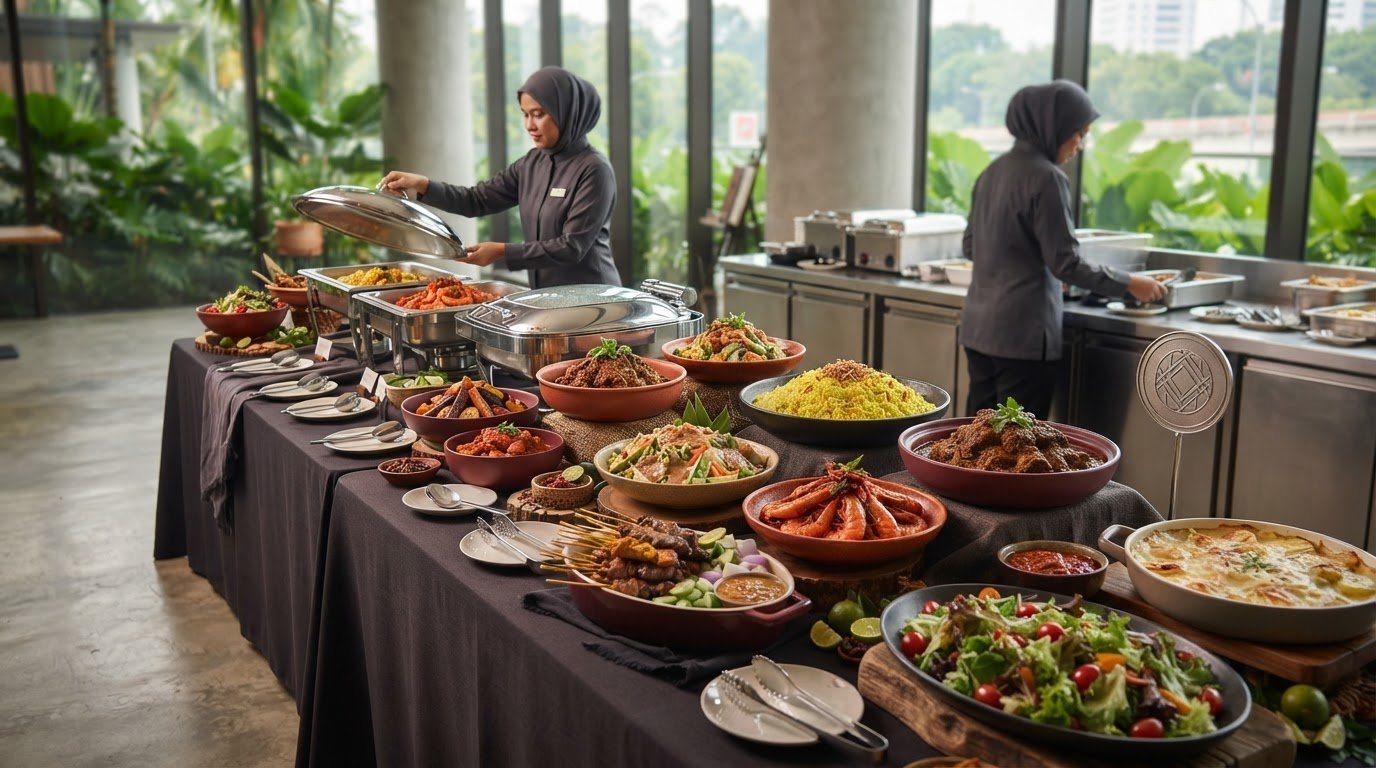

The true success of an event hinges far less on an elaborate menu and much more on disciplined logistical precision. For corporate planners and family hosts alike, finding reliable halal caterers across Singapore requires looking beyond glossy promotional photos to examine actual kitchen reliability and strict delivery schedules. You already understand the quiet anxiety of double-checking whether a caterer holds legitimate MUIS halal certification, or worrying that late arrivals and miscalculated portions might leave your guests hungry.
Coordinating an important gathering should bring confidence rather than operational headaches. This 2026 buyer’s guide provides the exact criteria you need to evaluate vendor authenticity, assess central kitchen capacity, and choose balanced menus that comfortably accommodate both traditional heritage flavours and Western favourites. From determining when to order complete buffet setups versus flexible mini buffets to inspecting regulatory standards, this resource outlines practical steps to ensure punctual delivery, impeccable food safety, and genuine guest compliments.
Key Takeaways
- Understand why informal labels like “halal-friendly” lack regulatory standing, and learn how to verify legitimate MUIS certification alongside SFA licensing.
- Apply a structured five-step evaluation framework for finding reliable halal caterers to assess central kitchen standards, staffing compliance, and delivery punctuality before signing contracts.
- Determine whether your event space and schedule call for a full-service Halal Buffet setup or a self-contained Halal Mini Buffet drop-off.
- Learn effective portioning strategies and menu planning techniques to balance traditional heritage dishes like Nasi Sambal Goreng and Nasi Ambeng with popular Western options.
- Identify essential logistical safeguards, including hot-holding equipment and arrival buffers, that prevent food shortages and protect service quality.
What Defines a Truly Reliable Halal Caterer?
True reliability in catering is an operational discipline that unites verified certification, stringent kitchen hygiene, and disciplined punctuality. When planning an event in Singapore, finding reliable halal caterers means looking past marketing buzzwords and confirming legal accountability. Without rigorous operational benchmarks, hosts risk timing delays, embarrassing food shortages, and compromised dietary integrity that can disrupt an entire gathering. Dependable caterers build their operations on Singapore Food Agency (SFA) hygiene standards alongside formal religious council guidelines, giving hosts complete peace of mind.
Official Certification Versus Self-Declared Halal Claims
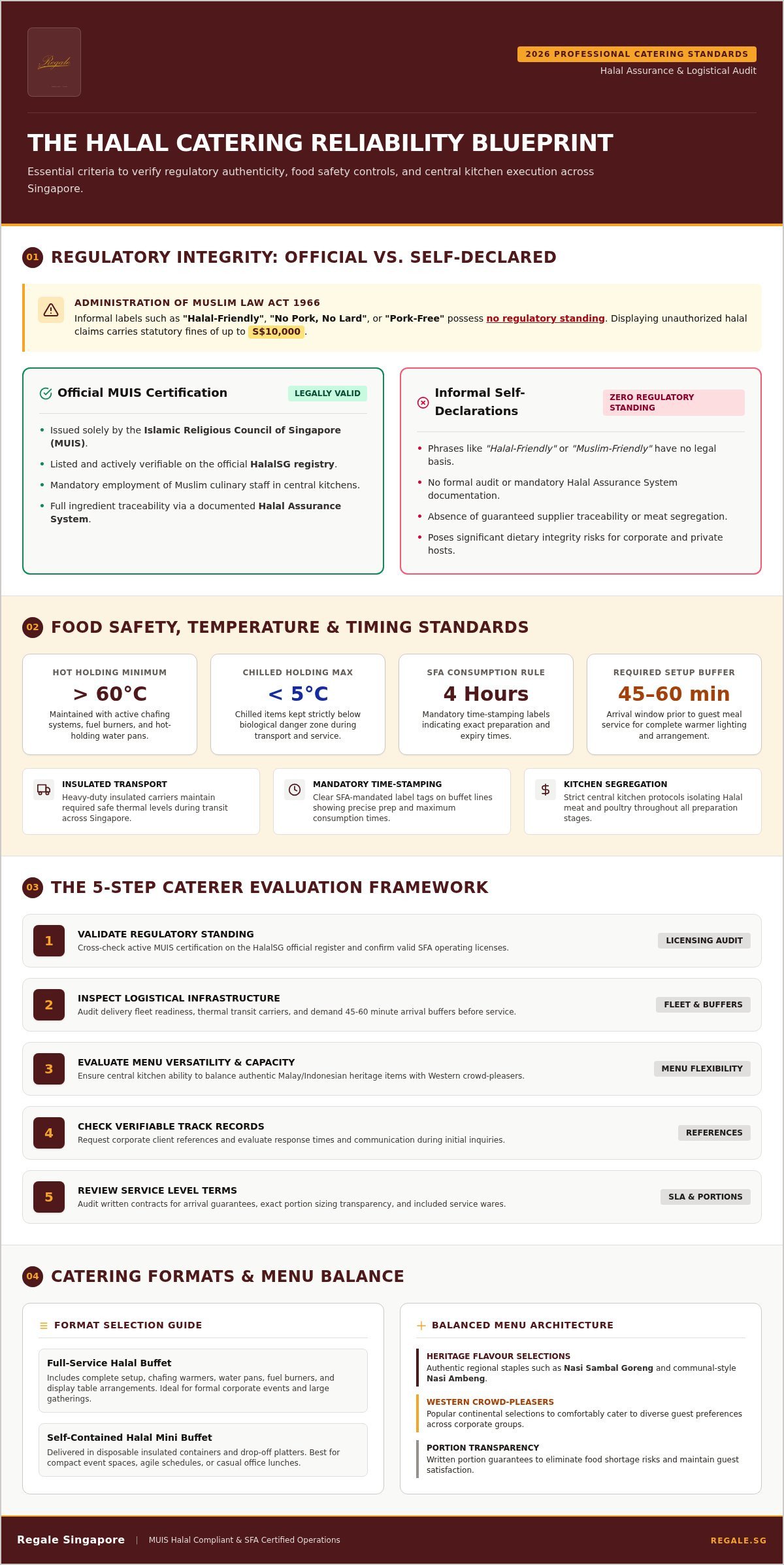
In Singapore, an establishment is either officially certified or it isn’t. Terms like “halal-friendly,” “no pork, no lard,” or “pork-free” lack regulatory standing. Under the Administration of Muslim Law Act 1966, the Islamic Religious Council of Singapore (MUIS) serves as the sole certifying body, and displaying unauthorized halal claims carries statutory fines of up to S$10,000. Genuine certification requires strict adherence to Islamic dietary laws, mandatory employment of Muslim culinary staff, and end-to-end ingredient traceability from approved suppliers through a documented Halal Assurance System. Event organizers should verify an active certificate on the official HalalSG register before committing to an order.
Food Hygiene Standards and Temperature Controls
Punctual arrival means little if cooked dishes arrive lukewarm or improperly handled. A professional halal catering team manages strict temperature thresholds to keep food outside the biological danger zone where bacteria multiply. Hot dishes must remain above 60°C, while chilled items must stay below 5°C throughout service.
- Insulated Transport: Cooked dishes travel in heavy-duty insulated carriers that retain safe holding temperatures during transit across the island.
- Mandatory Time-Stamping: Caterers adhere to the SFA four-hour consumption rule, clearly labelling every buffet setup with preparation and expiry times.
- Active Chafing Systems: Buffet stations utilize functional fuel burners and water pans to maintain safe, steady serving temperatures throughout your meal window.
Mastering these operational controls separates established commercial caterers from casual home kitchens, making the process of finding reliable halal caterers clear and predictable.
The 5-Step Framework for Finding Reliable Halal Caterers
Securing a dependable food partner requires an objective evaluation system rather than relying on promotional brochures. Corporate planners and private hosts need a repeatable method to filter out unproven vendors before signing contracts. When finding reliable halal caterers across Singapore, applying this structured five-step audit ensures your event runs smoothly:
- Step 1: Validate Regulatory Standing. Confirm active MUIS certification and valid SFA operating licenses directly on official registries.
- Step 2: Inspect Logistical Infrastructure. Review fleet readiness, dedicated delivery buffers, and thermal transport capabilities.
- Step 3: Evaluate Menu Versatility. Verify the kitchen’s capacity to balance traditional Malay or Indonesian dishes alongside Western selections.
- Step 4: Check Verifiable Track Records. Request corporate references and evaluate how promptly the sales team handles complex inquiries.
- Step 5: Review Service Level Terms. Audit written guarantees regarding arrival windows, portion sizes, and included service wares.
Auditing Kitchen Capabilities and Logistical Readiness
A caterer’s performance during off-peak periods doesn’t guarantee smooth execution during major festive dates or corporate conference seasons. Ask specific operational questions about central kitchen output and staffing ratios. Reputable central kitchens enforce stringent production protocols where Halal meat / poultry should be segregated throughout preparation to prevent cross-contact. Additionally, insist on an arrival buffer of 45 to 60 minutes before guest service starts. This window gives setup crews adequate time to light chafing warmers and arrange display tables without causing last-minute panic.
Reviewing Portion Transparency and Service Agreements
Food shortages are a host’s worst nightmare, making portion transparency essential. Inquire whether menu portions calculate by exact weight or standard adult consumption averages, particularly for protein-heavy mains. A comprehensive service agreement must outline clear cancellation terms, contingency plans for heavy rain, and clear lists of provided accessories such as serving tongs, chaffing stands, biodegradable cutlery, and trash bags. For hosts who value operational transparency and consistent portioning, working with an experienced partner like Regale Singapore’s catering team ensures every service detail is documented and honored on event day.
Choosing the Right Catering Format: Buffets, Mini Buffets, and Platters
Selecting the appropriate service style is just as critical as evaluating the menu. When finding reliable halal caterers, organizers often struggle to align guest count, venue dimensions, and event schedules with the correct setup. Matching your event’s physical environment to the proper catering format ensures smooth guest flow and prevents logistical bottlenecks.
Full Halal Buffet Setups for Formal and Large Events
A complete Halal Buffet setup delivers an elevated visual presence for formal milestones, corporate town halls, and community assemblies. This format requires dedicated venue planning:
- Floor Space and Access: Planners must allocate at least five to six linear metres of unobstructed table space to accommodate table skirting, food warmers, and display risers.
- Service Flow: Dual-sided lines prevent long queues for groups exceeding fifty attendees, maintaining an orderly dining pace throughout the meal window.
- Logistical Teardown: Full setups require scheduled retrieval crews who return promptly after dining concludes to clear equipment and packaging.
Halal Mini Buffets and Sharing Platters for Flexible Dining
When venue space is limited or structured service crews would interrupt proceedings, alternative formats offer practical advantages. A Halal Mini Buffet delivers hot, ready-to-eat dishes packed in self-contained containers. These drop-off setups eliminate the need for equipment collection and post-event clearing waits, making them ideal for boardroom lunches and relaxed family gatherings.
For events rooted in communal tradition, sharing platters like authentic Nasi Ambeng create meaningful shared dining experiences. Arranging fragrant rice alongside slow-simmered side dishes on a communal platter encourages connection among guests. Commercial kitchens adhere to handling standards reflected in USDA guidelines for halal food integrity, ensuring that packed platters remain securely sealed, separate from cross-contaminants, and thermally stable during transport.
Assessing your venue size and service duration early on clarifies whether your function needs the polished presentation of a full buffet or the operational simplicity of drop-off dining.
Designing a Balanced Menu: Honoring Heritage While Pleasing the Crowd
Menu curation for corporate gatherings and large family celebrations often feels like a delicate balancing act. Senior guests frequently crave deep, traditional spices, while colleagues and younger attendees might prefer familiar continental staples. When finding reliable halal caterers, your chosen culinary partner must demonstrate the versatility to curate harmonious spreads without sacrificing authenticity. Structuring meals with balanced proportions of aromatic carbohydrates, seasoned proteins, and crisp vegetables keeps guest energy high and prevents mid-afternoon fatigue.
Incorporating Authentic Indonesian and Malay Classics
Heritage rice dishes serve as the proud centerpiece of any communal table. Offering fragrant basmati Briyani or festive Nasi Minyak immediately elevates the occasion, signaling warm hospitality. These grains pair naturally with rich, layered sides such as Sambal Goreng, where tender beancurd, fermented tempeh, and long beans absorb slow-simmered chili paste. To prevent rich coconut gravies and slow-braised meats from overwhelming the palate, seasoned caterers include crisp accompaniments like pickled acar. This tart contrast cuts through rich sauces, keeping every plate fresh and enjoyable.
Integrating Western Dishes for Diverse Guest Palates
Introducing Western cuisine alongside traditional staples satisfies diverse preferences across multigenerational groups. A versatile central kitchen coordinates continental proteins, such as roasted rosemary chicken or seasoned fish fillets, beside heritage dishes to ensure every attendee finds a satisfying option. Professional culinary teams maintain strict ingredient segregation across distinct preparation lines, ensuring that sauces, oils, and equipment remain uncontaminated and fully compliant with halal processing guidelines.
Striking this balance ensures that regional comfort food and continental favorites sit side by side without awkward flavor clashes. To coordinate a customized spread that honors heritage while delighting every guest, consult with Regale Singapore’s catering team to plan your upcoming event menu.
How Regale Singapore Delivers Dependable Halal Catering
The search for dependable catering ends when authentic culinary skill meets rigorous operational discipline. When finding reliable halal caterers across Singapore, event planners need an established partner that pairs verified religious compliance with unyielding logistical punctuality. Regale Singapore fulfills this role by providing certified Halal Catering services nationwide. Backed by strict central kitchen standards and an experienced service crew, the establishment removes the friction from event planning, allowing organizers to focus entirely on their guests.
Authentic Culinary Craftsmanship and Dual-Concept Versatility
Regale Singapore brings genuine versatility to the table through a dual-concept kitchen that excels in both Authentic Indonesian Cuisine and classic Western Cuisine. Event organizers don’t need to juggle multiple suppliers to satisfy varied age groups or cultural backgrounds. The kitchen crafts revered heritage staples, including communal Nasi Ambeng platters, rich Nasi Sambal Goreng, festive Nasi Minyak, and spiced Briyani, using time-honored recipes. Alongside these regional classics, the culinary team prepares contemporary Western dishes such as savory Angus Burger selections and seasoned grilled mains. Every ingredient undergoes strict verification through approved supply chains, ensuring uncompromised halal integrity from prep to final service.
Seamless Event Coordination and Reliable Delivery
Delivering hot, vibrant food across the island on time requires disciplined transit management and attentive client support. Regale Singapore assists event organizers with structured coordination protocols tailored to individual venue specifications:
- Flexible Service Formats: Organizers can select complete Halal Buffet setups featuring professional food warmers and skirted tables, or streamlined Halal Mini Buffet drops for informal boardroom settings.
- Punctual Logistics: Transit runs incorporate dedicated arrival buffers, ensuring food arrives within safe temperature thresholds and tables are staged well before guests arrive.
- Dedicated Menu Advisory: Catering specialists review headcounts and dietary profiles directly with hosts, eliminating guesswork to prevent portion shortfalls or unnecessary food waste.
By uniting certified kitchen practices, rich culinary heritage, and prompt nationwide delivery, Regale Singapore stands as a dependable partner for corporate seminars, family celebrations, and large community functions.
Host Your Next Gathering with Complete Confidence
Delivering a memorable dining experience starts with disciplined planning. Ultimately, finding reliable halal caterers comes down to verifying official MUIS certification, evaluating temperature control safeguards, and choosing a catering format that fits your venue layout. When these operational foundations are secure, you eliminate timing anxieties and ensure every guest feels genuinely welcomed.
Whether your upcoming function calls for a convenient Halal Mini Buffet or an expansive full Halal Buffet setup, working with a seasoned team makes all the difference. Regale Singapore combines official Halal-certified kitchen operations with dual culinary mastery, preparing beloved heritage centerpieces like authentic Nasi Ambeng and Nasi Sambal Goreng alongside popular Western fare. Ready to design an impressive spread tailored to your guests? Plan your event menu with Regale Singapore’s Halal Catering Services and enjoy seamless, stress-free hospitality nationwide.
Frequently Asked Questions
How do I check if a halal caterer has valid certification in Singapore?
You can verify a caterer’s certification status directly by searching their registered business name on the official MUIS HalalSG online directory. In Singapore, MUIS is the sole legal authority issuing halal certificates. Legitimate caterers operate under the Food Preparation Area Scheme. Avoid relying solely on marketing logos or social media claims, as unauthorized claims violate statutory regulations. You can also ask the caterer for their certificate registration number and validity dates before finalizing your booking.
What is the difference between a full halal buffet and a halal mini buffet?
A full halal buffet includes complete on-site presentation with skirted tables, chafing warmers, and collection service, whereas a mini buffet is a drop-and-go meal packed in disposable containers. Full setups suit formal gatherings or large guest counts requiring hot line maintenance over a structured service window. Mini buffets eliminate setup crews and collection appointments, offering an agile, cost-effective option for compact corporate lunches or intimate family celebrations.
How many days in advance should I book a halal caterer for my event?
You should book at least two to four weeks in advance for standard events, and up to two months ahead during peak festive seasons. Central kitchens require adequate lead time to source certified ingredients through approved halal supply chains and schedule vehicle dispatch routes. When finding reliable halal caterers for large corporate functions or weekend celebrations, booking early secures your preferred delivery slot and allows ample time to finalize guest counts and dietary customizations.
Can halal caterers accommodate non-spicy dietary preferences or Western menus?
Yes, established caterers frequently offer dual-concept menus featuring mild heritage options alongside fully certified Western cuisine. Professional kitchens prepare popular Western mains like grilled chicken or Angus burgers alongside traditional specialties like Nasi Ambeng. If your guests include children or attendees sensitive to heat, request mild alternatives or segregated non-spicy gravy sides. A versatile kitchen maintains strict halal integrity across all dish categories without compromising on flavor balance.
What happens to leftover food from a catered buffet after the four-hour mark?
Leftover food exposed on a buffet line past the four-hour time stamp must be disposed of to comply with Singapore Food Agency safety regulations. Bacteria multiply rapidly in the biological danger zone between 5°C and 60°C. SFA mandates clear time-stamping labels on all catered setups. Professional catering teams advise hosts not to pack warm line food into takeaway containers after this statutory window, as doing so poses severe foodborne illness risks.
Are disposable utensils and warmers provided with halal mini buffet deliveries?
Yes, standard halal mini buffet orders include biodegradable cutlery, napkins, serving tongs, and self-contained heating packs or thermal packaging. Because mini buffets do not involve metal chafing dishes or returning setup crews, caterers provide self-heating packs or insulated boxes to keep dishes piping hot upon delivery. Event hosts receive complete disposable sets, allowing guests to serve themselves immediately without needing extra tableware or venue preparation.
How do caterers calculate food portions to ensure guests do not run short?
Caterers calculate quantities using standard adult weight portions, generally providing a 10% to 15% buffer volume on carbohydrate and protein mains. For multi-item spreads, kitchens prepare portions based on average guest consumption rather than single-dish sizing. When finding reliable halal caterers, discuss your crowd demographics frankly. If you’re hosting athletic groups or planning extended seminars where attendees return for second helpings, caterers can adjust the primary rice and meat ratios accordingly.
