
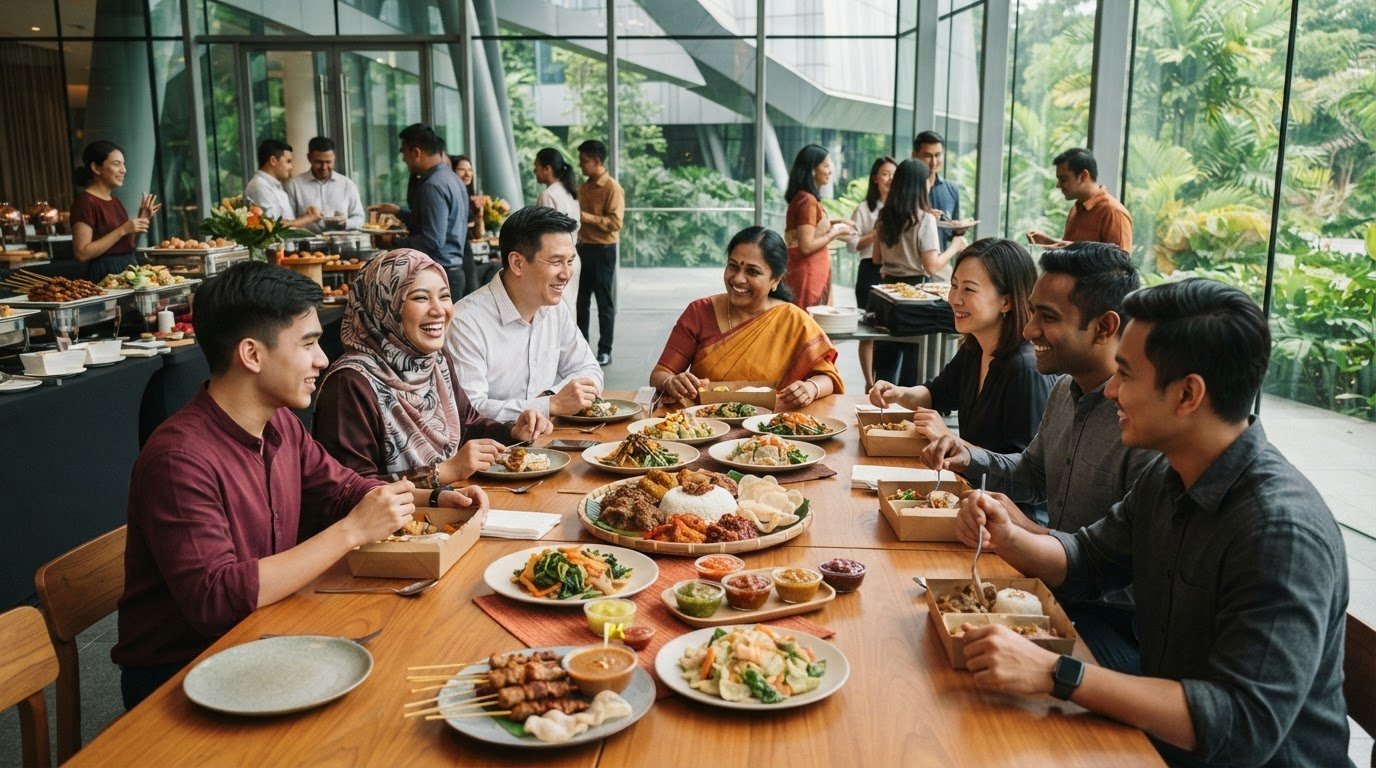

The best department lunch ideas don’t start with a menu. They start with how your team will eat, how much time you have, and what will help everyone feel included.
Choosing a meal for a varied department takes more than picking a crowd-pleaser. Individual meals can simplify distribution, while shared platters and buffets offer more choice and encourage conversation. Consider dietary needs alongside timing and budget, so colleagues can make informed choices without feeling singled out.
This guide compares lunch formats and shows how to match one to your group, occasion, and schedule. It also covers practical ways to plan for different dietary requirements and preferences, including collecting information privately and sharing clear dish descriptions. For teams seeking a halal option in Singapore, Regale is halal-certified and offers halal catering, buffets, and mini buffets. Its Indonesian specialties, including Nasi Ambeng and Nasi Sambal Goreng, can bring a distinctive feel to a shared meal. With a few thoughtful decisions, a department lunch can feel welcoming, well organised, and different from the usual workday meal.
Key Takeaways
- Use group size, occasion, schedule, dietary needs, and desired atmosphere to shape your department lunch ideas.
- Compare individual meals, shared platters, buffets, and mini buffets by serving flow, flexibility, and organiser effort.
- Gather attendance and dietary information before choosing a menu or meal format.
- Consider familiar Western and local favourites alongside Indonesian dishes when choosing a menu direction.
- Regale’s halal-certified dining and halal catering, buffet, and mini buffet options offer practical formats for a team meal.
Department lunch ideas start with the team, not the menu
A successful department lunch balances convenience, inclusion, and time together. Start by deciding what the gathering needs to accomplish, then choose food and a format that fit the people attending and the shape of their workday. This keeps the plan practical without reducing the occasion to a routine meal.
Use this quick checklist before settling on a menu:
- Group size: How many people are likely to attend?
- Occasion: Is this a regular team lunch, a welcome, or a celebration?
- Schedule: Can everyone pause at the same time, or will arrivals vary?
- Dietary needs: What requirements and preferences should the plan account for?
- Atmosphere: Should the meal feel relaxed, celebratory, or suited to a working lunch?
These choices are connected. A small group with a fixed lunch break may prefer a format that brings everyone to the table together. A larger department with staggered schedules may need food that can be served flexibly. The wider idea of Catering includes arrangements for events as well as workplace meals, so consider the service style alongside the menu.
Group size, occasion, schedule, dietary needs, and atmosphere are the five decisions that shape a successful workplace lunch.
Match the lunch to the occasion and workday
A brief midday break calls for a straightforward plan that leaves colleagues time to eat and return to work. A project celebration or welcome lunch can allow for a longer shared meal and a more considered setting. Decide whether everyone will sit down together or arrive within a flexible window. Let the purpose guide the menu’s style and the event’s level of formality.
Routine lunches can be simple and familiar, while milestones benefit from a meal that gives the team a reason to pause. Choose a format that supports the occasion without adding friction to the schedule.
Plan for dietary needs respectfully
Gather dietary requirements and preferences before choosing a shared menu. Ask attendees directly and provide a private way to respond, so people can share what they need without drawing attention to themselves. Clear labels and advance communication help colleagues understand what dishes contain and make informed choices. Halal-certified dining may suit teams seeking halal food, but one dietary label doesn’t represent every person’s needs or preferences.
Be specific when collecting information. A colleague may have an allergy, avoid an ingredient, or follow a religious or personal preference. Don’t assume one label covers every need. Regale is halal-certified and offers halal catering, a practical option for teams planning a halal department lunch.
Compare department lunch formats, from individual meals to buffet
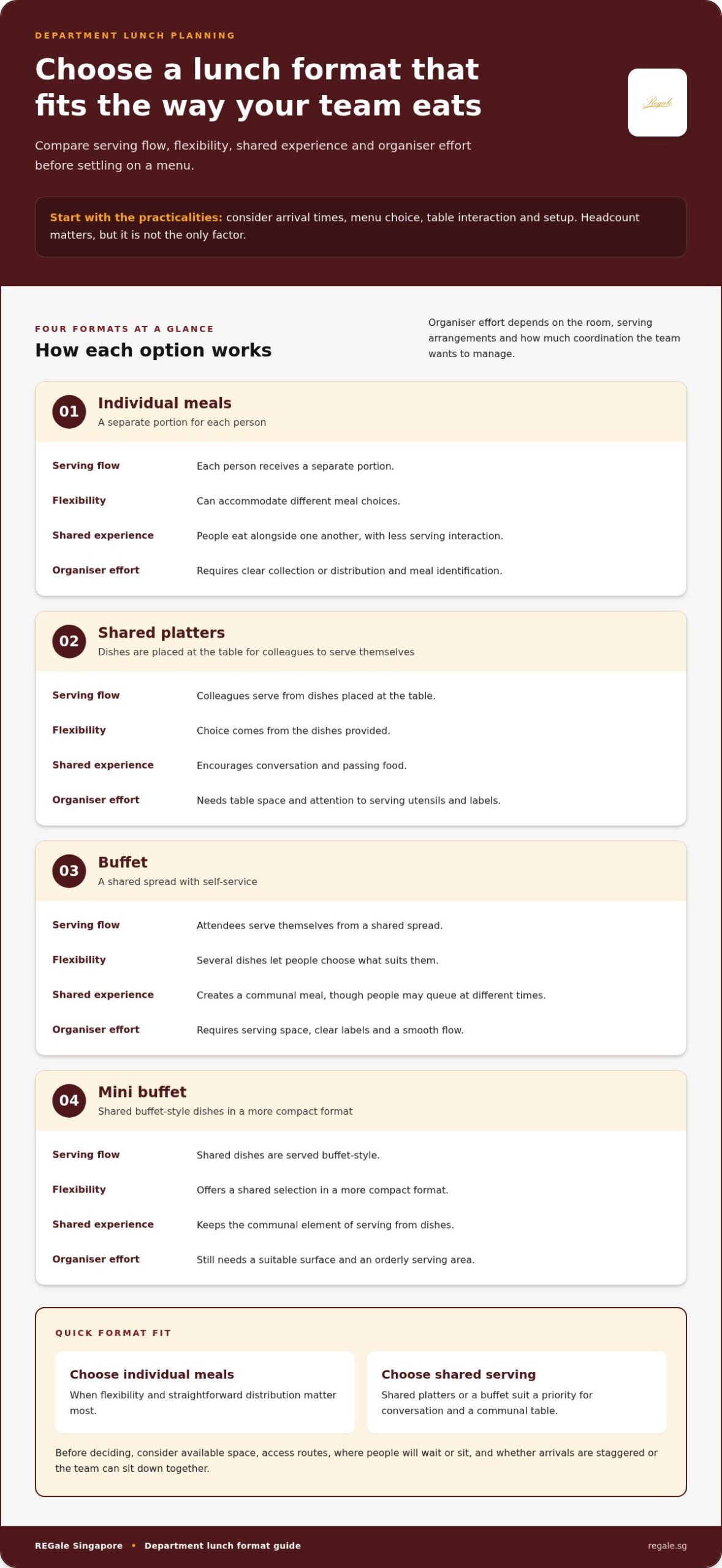
The right format makes lunch easier to serve and more enjoyable to share. Compare how each option handles arrival times, menu choice, table interaction, and setup before deciding. Headcount matters, but it isn’t the only factor: a small team with staggered breaks may need more flexibility than a larger group that can sit down together.
Use this comparison as a starting point. Organiser effort will depend on the room, serving arrangements, and how much coordination the team wants to manage.
| Format | Serving flow | Flexibility | Shared experience | Organiser effort |
|---|---|---|---|---|
| Individual meals | Each person receives a separate portion | Can accommodate different meal choices | People eat alongside one another, with less serving interaction | Requires clear collection or distribution and meal identification |
| Shared platters | Colleagues serve from dishes placed at the table | Choice comes from the dishes provided | Encourages conversation and passing food | Needs table space and attention to serving utensils and labels |
| Buffet | Attendees serve themselves from a shared spread | Several dishes let people choose what suits them | Creates a communal meal, though people may queue at different times | Requires serving space, clear labels, and a smooth flow |
| Mini buffet | Shared dishes are served buffet-style | Offers a shared selection in a more compact format | Keeps the communal element of serving from dishes | Still needs a suitable surface and an orderly serving area |
When individual meals make the lunch easier
Individual portions can be useful when colleagues have distinct preferences or can’t leave work at the same time. They reduce the need for everyone to gather around a serving point, but the organiser still needs a clear way to match each meal to its recipient. Collect meal choices and dietary details in advance, then label each meal so colleagues can identify their selection easily.
When shared platters or buffet suit a team gathering
Shared serving gives colleagues a natural reason to gather and talk. Platters work around a table, while a buffet lets people choose from a spread. A mini buffet keeps the shared serving style in a more compact format. Consider the available space, access routes, and where people will wait or sit. Regale offers halal buffet and halal mini buffet options for teams considering these shared formats.
Choose individual meals when flexibility and straightforward distribution matter most; choose shared platters or buffet when conversation and a communal table are the priority. Match the format to the lunch’s main purpose, then arrange the serving area to support it.
Choose department lunch food that feels varied and welcoming
Once the format is clear, choose a menu direction that suits the occasion and gives colleagues useful choices. Familiar food can make a routine lunch easy to approach, while a traditional meal can give a milestone or team gathering a more distinctive character.
For a varied department, think about choice across the meal rather than relying on one headline dish. A considered selection can include different main-dish directions and accompanying options, with clear descriptions so attendees can decide what suits them. Don’t infer ingredients or dietary suitability from a dish name alone. Share accurate dish information and reflect the dietary needs gathered from the team in the final plan.
- Familiar Western and local favourites: A straightforward direction for a regular workday lunch or a group with varied food preferences.
- Indonesian meal inspiration: A culturally rooted direction that can make a shared occasion feel more memorable.
- A considered mix: A way to offer choice, provided the dishes and their descriptions are clear and appropriate to the occasion.
Use familiar favourites for a straightforward team lunch
Recognisable Western or local food can be a comfortable starting point for a broad workplace gathering, especially when the priority is a familiar, uncomplicated meal. Regale offers Western and local favourites during the day. Keep the menu distinct from the serving format: what you serve and how you serve it are separate planning decisions.
Bring Indonesian culinary traditions to a shared occasion
For a lunch marking a team milestone or project completion, traditional Indonesian dishes can lend the meal a distinctive shared-table character. Regale’s specialties include Nasi Sambal Goreng, Nasi Ambeng, Nasi Minyak, and Briyani. These dishes offer inspiration for a meal with cultural character. Regale’s Indonesian dining experience is offered in the evening, distinct from its daytime Western and local favourites.
Before settling on a direction, compare the options against the event’s purpose and the team’s stated preferences. A familiar selection may be the practical fit for a brief working lunch; a traditional Indonesian meal may better express a celebratory occasion. Neither approach is automatically more inclusive. Clear dish descriptions and accurate ingredient information matter whichever direction you choose.
Turn preferences into a concise menu brief: describe the occasion, note the team’s needs, and identify whether the meal should feel familiar or distinctive. Keep the language factual. Don’t label individual dishes as suitable for a dietary requirement unless that information is known, and don’t assume a cuisine or dish name tells attendees everything they need to know.
Plan an inclusive department lunch with a clear checklist
Turn your department lunch ideas into a workable plan by gathering the details before choosing the meal format. A short sequence helps you account for attendance, dietary needs, timing, and the space available, then communicate a clear plan to colleagues. Sharing these details with the dining or catering team helps them understand the arrangements.
- Define the occasion. Decide whether the lunch is a routine team break, a welcome event, or a celebration. The purpose will shape the tone, menu direction, and amount of time to set aside.
- Estimate attendance. Invite responses before settling on the serving format. Note who is likely to attend and whether some colleagues may join late or need to leave early.
- Gather dietary needs and preferences. Use a simple, respectful way for colleagues to share requirements privately. Ask for the information that affects meal choices, rather than making assumptions based on a broad label.
- Choose the format and check the setup. Once you understand attendance and needs, decide how the food will be served. Consider the available table or serving space, access for attendees, and whether the lunch break allows time for a shared meal.
- Communicate the final plan. Tell attendees the schedule, serving format, and available menu information. Pass relevant dietary requirements to the catering or dining team as part of the arrangements.
Set the brief and collect attendee requirements
Make the brief specific enough to guide decisions: state the lunch’s purpose, expected attendance, timing, and preferred atmosphere. Then invite colleagues to share dietary requirements and preferences through a channel that feels comfortable and discreet. Sharing dietary needs early gives organisers time to plan a meal that is clearer and more considerate for the whole group. Keep the information accurate and share what is useful for arranging the meal.
Early responses also help reveal practical differences within the group. Some attendees may have a dietary requirement, while others may simply prefer certain foods. Keep these distinct in your notes so the plan reflects individual needs without treating one person’s preference as a rule for everyone.
Confirm the serving setup and communicate clearly
Before the day, decide where colleagues will gather and how food will be presented. For a shared setup, allow room for people to approach and serve themselves; for individual portions, make the collection plan easy to understand. Give attendees the timing, format, and available dish information in advance, so they know what to expect and can raise relevant concerns before lunch.
Regale offers halal catering, halal buffets, and halal mini buffets for department gatherings. Explore Regale’s halal catering and buffet options as you shape a meal plan around your team’s requirements.
Make Regale part of your department lunch plan
A good department lunch plan brings the practical choices together: the occasion, attendance, dietary requirements, menu direction, and serving style. For teams seeking halal dining or catering, Regale is halal-certified and offers daytime and evening dining experiences, as well as halal catering, halal buffet, and halal mini buffet formats.
Select a Regale option that fits the gathering
Start with the way you want colleagues to share the meal. Halal catering suits an arranged department gathering, while a halal buffet or halal mini buffet can work for organisers considering shared serving. Choose according to the lunch setup and atmosphere you have in mind.
Menu inspiration can help set the gathering’s character. Regale’s Indonesian specialties include Nasi Sambal Goreng, Nasi Ambeng, Nasi Minyak, and Briyani. These dishes can inspire a distinctive shared meal, especially for a team occasion that calls for something beyond a routine lunch.
Timing also matters. Regale offers Western and local favourites during the day, while its Indonesian dining experience is in the evening. Keep these contexts in mind as you decide whether the team is planning a midday meal or a later gathering. This helps align the menu direction with the occasion.
Take the next step with a focused lunch plan
Before making arrangements, bring the decisions into one concise brief. Include:
- Occasion: State whether the lunch is routine, celebratory, or intended to welcome colleagues.
- Attendance: Share the expected turnout and any timing considerations.
- Dietary requirements: Communicate the needs gathered from attendees, without relying on assumptions.
- Serving style: Note whether halal catering, buffet, or mini buffet best fits the gathering.
- Menu direction: Indicate whether daytime Western and local favourites or an evening Indonesian dining experience suits the occasion.
A focused brief makes it easier to keep the group’s needs and the event purpose in view. It also gives colleagues a clear picture of what the lunch is meant to be, whether it’s a shared celebration or a convenient break in the workday.
For your team’s next gathering, explore Regale’s halal catering and dining options as you shape a department lunch that suits the occasion.
Give your next team lunch a thoughtful starting point
Use your next planning conversation to agree on what colleagues should take away from the meal: a smooth break in the workday, a chance to connect, or a moment to mark a shared achievement. That purpose gives your department lunch ideas a clear direction and helps turn the plan into a gathering people can look forward to.
For a halal dining option, Regale is halal-certified and offers halal catering, halal buffets, and halal mini buffets. Its Indonesian specialties include Nasi Sambal Goreng and Nasi Ambeng, bringing another direction to consider for a shared meal.
Once your team has a preferred occasion and format in mind, explore Regale’s halal catering and dining options to plan your next department lunch.
Frequently Asked Questions
How do I choose a department lunch idea for a team with different preferences?
Choose department lunch ideas by matching the meal to the team’s schedule and the choices people enjoy. If colleagues have varied tastes, a menu with several clearly described dishes can offer options without requiring a separate plan for everyone. Collect preferences before deciding, and distinguish dietary requirements from general likes and dislikes. The aim is a meal that feels considered, not a menu designed around one person.
Is a buffet a good idea for a department lunch?
A buffet can suit a department lunch when people can serve themselves comfortably and have enough time to eat. It may be less suitable if the break is very short, the serving area is cramped, or attendees arrive at different times. Think through the route from the room entrance to the food and seating. A clear serving area and visible dish information help keep the meal orderly and make choices easier.
Can a department lunch be halal and still offer variety?
Yes. A halal lunch can offer variety through different cuisines, dish styles, and levels of familiarity while remaining aligned with the group’s needs. Variety doesn’t mean assuming every dish suits every dietary requirement. Share accurate menu details with attendees, and account separately for allergies, ingredient restrictions, and personal preferences. Regale Singapore is halal-certified and serves Western and local favourites during the day, with Indonesian dining in the evening.
What should I ask the team before arranging a department lunch?
Ask colleagues whether they plan to attend, what dietary requirements or preferences they have, and whether they can join at the proposed time. You can also ask what kind of gathering they’d welcome, such as a quick meal or a more social occasion. Keep questions brief and provide a discreet way to respond. A simple RSVP form can collect attendance and meal-related information in one place.
How much food should I plan for a department lunch?
Base your order on confirmed attendance and the serving style, rather than the full department headcount alone. Ask colleagues to respond by a stated deadline, then share the expected number of diners and relevant dietary needs when arranging the meal. Avoid guessing at portions or adding unverified quantities. If attendance may change, note that in your planning so the final arrangement reflects the most reliable count.
What is the difference between a halal buffet and a halal mini buffet?
Both describe shared halal meal formats, but a mini buffet generally refers to a more compact buffet arrangement than a standard buffet. The best fit depends on the gathering, available serving space, and how attendees will share the food. The terms alone don’t specify exact dishes, portions, or setup. Regale offers halal buffet and halal mini buffet options, giving organisers two formats to consider for a team meal.
