

The most generous lunch spread isn’t always the best choice for a meeting. The most practical lunch ideas for corporate meetings match the food to the room, schedule and guests’ dietary preferences, with satisfying meat and vegetarian options that are easy to serve.
Accommodating different diets takes more than adding a vegetarian dish at the last minute. Gather meal preferences ahead of time and choose a format that suits the group. This helps make lunch feel considered while keeping the meeting on track.
This guide explains how to choose between shared platters, individual lunches, and buffet-style meals, and how to balance meat and vegetarian options. It also covers serving space and available time, so lunch can suit both a short working session and a longer team gathering. The aim is a thoughtful meal that fits the occasion without unnecessary setup or interruptions.
Key Takeaways
- Match the serving format to the room: shareable platters can suit a compact boardroom, while buffets need space for food and guest movement.
- Plan delivery, setup and serving timing together so the meal fits the meeting schedule and food can be served as intended.
- Gather dietary preferences and meal selections ahead of time, then choose a format and headcount that can accommodate them.
- Offer a balanced mix of meat and vegetarian dishes, with clear choices that make it easier for everyone to find a suitable meal.
- Choose between individual lunches, shared platters and buffet service based on the meeting’s pace, available space and group size.
1. What are the best food ideas for a boardroom meeting with limited space?
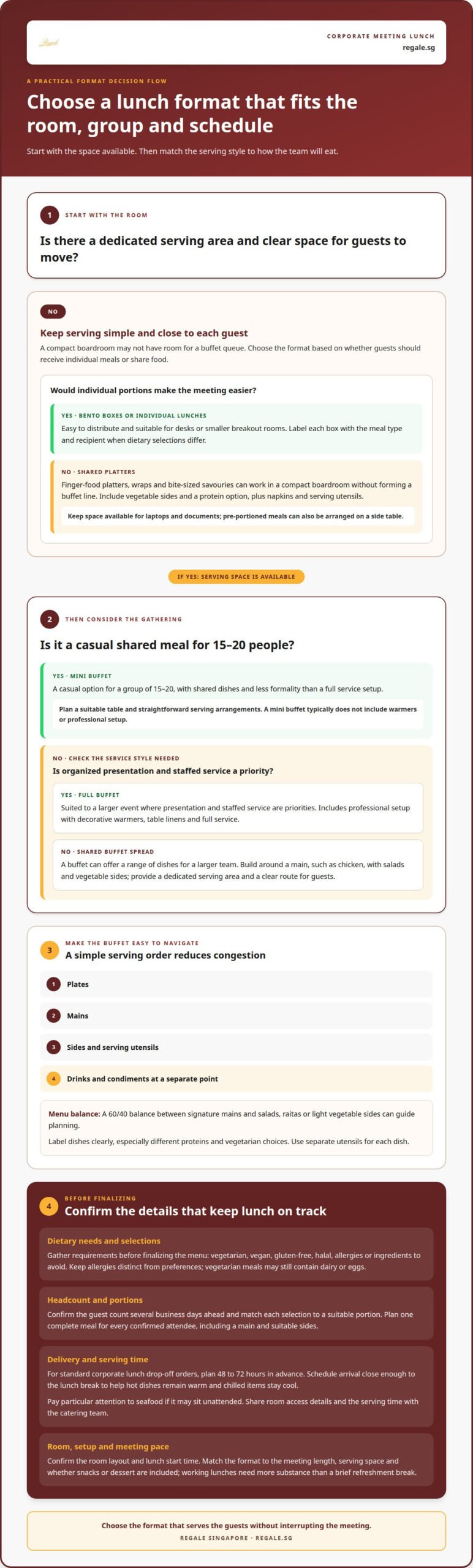
For a compact boardroom, choose food colleagues can serve and eat without forming a buffet queue. Finger-food platters, wraps, and individual lunches keep serving equipment off the main meeting table. For example, a platter of bite-sized savouries, vegetable sides, and a protein option can work well for a working lunch. Include napkins and serving utensils, and leave room for laptops and documents.
Plan the setup around the room before choosing dishes. A buffet needs a dedicated serving area and clear guest movement, which a narrow office break room may lack. Instead, arrange pre-portioned meals on a side table or distribute packed lunches to seats. Decide who will receive the food, where it will go, and when colleagues can eat without interrupting the meeting.
Delivery timing affects both service and food quality. Schedule the arrival close enough to the lunch break that hot dishes remain warm and chilled items stay cool. Seafood needs particular attention if it may sit unattended, so plan serving time and temperature control rather than leaving it out through a long discussion. For standard corporate lunch drop-off orders, plan 48 to 72 hours in advance. Share the room access details and serving time with the catering team.
How much food should you order per person for a corporate lunch? Plan one complete meal for every confirmed attendee, including a main and suitable sides. Adjust the menu to the meeting length, serving format, and whether snacks or dessert are included. A working lunch needs more substance than a brief refreshment break.
Minimum order sizes vary by catering format and preparation. Individual lunches require separate portions, while shared platters are planned for group serving. Catering prices depend on the menu, format, portion requirements, setup, and delivery, and are provided after a quote request. Set your budget by deciding these details first, then match the menu to the confirmed headcount and available serving space.
Comfort food can suit a team celebration, such as a project milestone or a colleague’s farewell. Choose familiar, easy-to-serve dishes that fit the room, and balance richer options with fresh sides. A modest dessert portion can round out an office lunch without making the break too long.
Before ordering, confirm the attendee count, dietary preferences, room layout, and lunch start time. These details help determine whether platters, boxed meals, or a compact buffet will work best. With limited boardroom space, prioritize easy handling and a tidy setup over a display that needs extra tables or serving lines.
2. What are some business lunch ideas for a meeting?
For a larger team, a buffet can offer a satisfying range of dishes and let colleagues choose their portions. Build the menu around a main, such as chicken, and add salads and vegetable sides for balance. A shared spread suits a session where attendees can take a short break from discussion and serve themselves. It works best with a dedicated serving area and enough room to queue without blocking entrances or workstations.
Bento boxes offer a different approach. Individual portions are easy to distribute and can be eaten at desks or in smaller breakout rooms, making them suitable when there is no shared dining area. A buffet gives colleagues more choice, but needs space and a clear serving route. Match the format to the room, headcount, and whether guests will eat together or return to their seats.
For a casual gathering of 15 to 20 people, a mini buffet can offer shared dishes without the formality of a full service setup. It typically does not include warmers or professional setup, so plan a suitable table and straightforward serving arrangements. A full buffet includes professional setup with decorative warmers, table linens, and full service. That format can suit a larger event where an organized presentation and staffed service are priorities.
Keep the buffet line simple. Place plates first, followed by mains, sides, and serving utensils; put drinks and condiments at a separate point to reduce congestion. For a company lunch spread, a 60/40 balance between signature mains and salads, raitas, or light vegetable sides can guide menu planning. Label dishes clearly, especially when the spread includes different proteins or vegetarian choices. Separate utensils for each dish also help keep serving orderly.
Dim sum can be another meeting lunch idea for groups who prefer smaller, shareable portions. Arrange bite-sized items on trays with clear labels and provide serving tongs, so attendees can choose without handling shared food. Add fresh salads or vegetables for variety. Unlike a bento, shared dim sum needs a central table and enough space around it.
Choose a Halal Buffet for a larger gathering that benefits from a shared spread, or a Halal Mini Buffet for a more casual group meal. A Halal Mini Buffet for meetings can suit teams looking for shared dining without a full buffet setup.
3. How can I accommodate different dietary preferences?
Collect each attendee’s dietary requirements and meal selection before finalising the menu. Ask for practical details, such as vegetarian, vegan, gluten-free, halal, allergies, or ingredients to avoid. Keep these categories distinct: an allergy is not the same as a preference, and a vegetarian meal may still contain dairy or eggs. Confirm the guest count several business days ahead, then match each selection to a suitable portion.
For a working lunch with several individual requirements, boxed meals make distribution easier. Label each box with its meal type and recipient, and keep special meals separate from general options. One guest might prefer a sandwich box, while another chooses a salad with substantial protein. Individual portions also help organisers count accurately and reduce unused food when selections are collected in advance.
Mediterranean-inspired bowls can add variety without relying on heavy fried dishes or rich pasta before presentations. Build a bowl around grains, vegetables, and protein, with sauces served separately. A vegetarian bowl can include beans or chickpeas; a vegan option can omit dairy-based dressings. For gluten-free meals, avoid wheat-based bread or pasta, and identify sauces or toppings that may contain gluten.
Singapore’s food safety and allergen considerations include keeping food at suitable temperatures, serving it promptly, and clearly identifying ingredients. Use separate utensils for dishes with different ingredients, and keep allergy-sensitive meals apart from shared serving areas. Clear labels help guests make informed choices, while timely delivery reduces the period food waits before serving. Avoid presenting an ingredient list as a guarantee against cross-contact.
Where can you order halal corporate lunch catering in Singapore? Choose a halal caterer and a format that fits the meeting, such as individual meals for separate dietary selections or shared dishes for a team table. For vegetarian, vegan, and gluten-free lunches, consider vegetable-and-grain bowls, salads with plant-based protein, and sandwiches made with suitable bread. Label each option clearly so colleagues can identify what suits their needs.
Headcount and notice shape the final arrangement. A confirmed attendee list helps match meal quantities to selections, while a late change may mean simplifying the menu around dishes that suit several preferences. For a mixed group, combine a shared base, such as rice, grains, or salad, with clearly identified toppings and proteins. Keep sauces on the side to give guests more choice without preparing a separate meal for every preference.
Before lunch, organise a simple serving plan: designate a place for labelled meals, separate shared dishes, and make serving utensils easy to identify. For example, place vegetarian and allergy-sensitive boxes on a separate table rather than beside buffet trays. This makes the meal easier to navigate and helps keep the meeting schedule orderly.
4. Meat and vegetarian options
A balanced meeting menu gives meat-eaters and vegetarians equally considered choices. For a sandwich-and-salad lunch, offer two sandwich selections, including a vegetarian option. Grilled chicken or roasted turkey provides a familiar meat choice, while roasted eggplant makes a substantial alternative. Add a salad so guests can round out their meal. This simple structure keeps the spread varied and easy to serve.
For a composed lunch, pair a seasonal salad with a choice of protein. A sample bar might offer grilled chicken and roasted salmon, with vegetables and dressings served separately. Include a distinct vegetarian protein, such as beans or lentils. Separate utensils make it easier for guests to serve themselves without mixing dishes. This format suits a friendly team meal where colleagues value choice but need to return promptly to the afternoon session.
Vegetarian bento boxes are a neat alternative to shared platters. A satisfying box might combine rice, roasted vegetables, tofu, and a side salad. For a vegan selection, use plant-based ingredients throughout, including sauces and dressings. Label each meal clearly and keep vegetarian portions separate from meat dishes during serving. Individual boxes also make it easy to distribute the right meal without asking guests to identify ingredients at a crowded table.
Low-GI choices can be considered for lunch before presentations. Low-GI foods release energy more gradually than high-GI foods, which are often described as causing an energy spike. A menu might include whole grains, vegetables, and protein rather than relying only on refined bread or fried dishes. Keep portions balanced and serve sauces separately. These choices add variety while keeping the meal focused on satisfying ingredients rather than heavy combinations.
For a shared spread, combine meat dishes with substantial vegetarian sides instead of treating vegetables as decoration. For example, serve grilled chicken alongside roasted eggplant, grain salad, and leafy greens. Guests can build a plate to suit their preferences, while a clearly identified vegetarian main ensures non-meat eaters have a complete meal. Group vegetarian dishes together, provide dedicated utensils, and label the main ingredients.
For a varied group, plan the menu by component: one meat selection, one vegetarian main, and sides that work with both. Match the dishes to the meeting’s pace. A boxed bento suits a short break, while a shared salad and protein spread offers more choice during a longer lunch. Confirm selections against the final headcount, then organise labels and serving utensils before the food arrives.
5. Choosing a lunch format to suit the meeting schedule
A 45-minute working lunch calls for a different format than a two-hour client appreciation luncheon. Match the food service to the time guests can spend eating, not simply the meeting’s headcount. Individual meals or easy-to-serve dishes suit a short break between agenda items. A longer gathering can allow more time for shared serving, conversation, and a broader spread of signature dishes.
For a short session, choose a format that keeps serving brief. Distribute boxed meals before the break, or arrange sandwiches, salads, or grilled dishes for quick access. Some corporate lunch menus are consumed within twenty minutes, so allow time for eating as well as the scheduled break. Keep sauces and condiments beside the food, and place drinks away from the main serving point.
A two-hour luncheon can accommodate a more relaxed meal with several courses or a buffet. Guests have more time to browse dishes, choose ingredients, and talk between servings. A buffet still needs a dedicated area and a clear route from plates to mains and sides. If the agenda includes a presentation, schedule lunch before or after it to avoid serving traffic interrupting the speaker.
Plated service suits a formal occasion but requires adequate venue access, firm timing, and staffing suited to the event. The room needs space for service staff to reach guests, and the programme needs a dependable meal start. For a client appreciation luncheon, a plated main with a vegetarian alternative can feel considered. For a working session, individual portions may be simpler to manage.
Menu style should reflect the meeting’s purpose. A classic sandwich selection with grilled chicken, cheese, and a vegetarian filling suits an informal team discussion. For a presentation-heavy afternoon, lighter dishes and fresh salads can make lunch less cumbersome. A longer celebration may call for a more substantial spread, with a signature main and sides guests can serve at their own pace.
Plan backwards from the first agenda item after lunch. Set the serving time, allow guests to finish, and then schedule the next presentation or discussion. Share the start time and room layout with the catering team so delivery and setup fit the programme. This sequence helps prevent food service from competing with key moments, such as a client introduction or decision-making session.
Choose the format first, then shape the menu around its service rhythm. A short working lunch often benefits from pre-portioned meals; an extended gathering can make space for shared dishes. Plan a meeting lunch around your schedule with a format and menu suited to the occasion.
Regale Singapore
Regale Singapore can help bring a considered meal to a corporate gathering, whether the occasion calls for a working lunch or a more relaxed team meal. Its menu includes Authentic Indonesian Cuisine and Western Cuisine, offering distinct directions for a meeting spread. Nasi Sambal Goreng and Nasi Ambeng are among the Indonesian dishes available, while Western choices provide another menu style for colleagues to enjoy.
Use the meeting’s schedule, room setup, and guests’ preferences to guide your selection. That keeps the meal connected to the occasion, rather than letting catering interrupt the agenda. Contact Regale Singapore to discuss a suitable lunch for your gathering.
Make the next meeting lunch part of the plan
The best lunch ideas for corporate meetings begin with the experience you want colleagues to have. For a focused planning session, make the meal a purposeful pause between agenda items. For a celebration, let lunch create room for conversation beyond the usual meeting topics. A clear intention helps the food feel connected to the gathering rather than added at the last minute.
As you prepare, bring the meeting purpose and practical details together in one brief: the schedule, attendee count, and dietary selections. This gives the meal a defined place in the event and keeps the day’s arrangements clear. A thoughtful lunch can make a routine meeting feel more welcoming or give a milestone the recognition it deserves.
Contact Regale Singapore to plan your lunch and take the next step toward a meeting meal shaped around your gathering.
Frequently Asked Questions
How can I accommodate different dietary preferences?
Offer distinct meal choices rather than expecting one dish to suit every guest. For example, a meeting menu might include a chicken main, a vegetarian rice bowl, and a plant-based salad. Ask attendees to identify allergies separately from preferences, since they call for different planning. Label each meal clearly and share menu details before the meeting so guests can choose confidently.
How do I ensure a company lunch menu is inclusive for everyone?
Build inclusivity into the menu: provide a substantial vegetarian choice, identify key ingredients, and avoid making every dish depend on one sauce or topping. For a shared lunch, keep condiments separate and provide serving utensils for each dish. Clearly labelled halal options help guests make an informed choice. Treat dietary needs as part of the meal plan, not as last-minute substitutions.
How far in advance should I book catering for a company lunch?
Place a standard corporate lunch drop-off order 48 to 72 hours ahead. Large or staffed catering events are best booked 3 to 6 weeks in advance. The longer lead time gives the event team room to plan a more involved menu, service setup, and guest requirements. For a lunch with individual meal selections, allow time to collect responses and send the final headcount with the order.
What are some business lunch ideas for a meeting?
Choose a meal that fits how colleagues will use the break. A team discussion can suit sandwich selections with a fresh salad, while an informal gathering may work better with shared mains and sides. For a compact meeting, individual rice or grain bowls make it easy for guests to return to their seats. Add fruit or a modest sweet if the schedule allows time for dessert.
What are some lunch-and-learn menu ideas?
Choose food that’s easy to eat while listening and doesn’t require constant serving. Individual bowls, wraps, or boxed sandwiches can be distributed before the speaker begins. Keep sauces and crunchy toppings separate to limit mess, and provide water alongside the meal. If the session includes audience questions, schedule the main meal before the presentation or serve quieter, easy-to-handle portions during it.
What are the best food ideas for a boardroom meeting with limited space?
For a small boardroom, use individual meals or compact platters that don’t need buffet equipment. Wraps, mini sandwiches, and bite-sized savouries can go on a side table, leaving the main table clear for papers and devices. Choose dishes that need little cutlery, and set out napkins before guests arrive. A delivery point near the room also keeps setup straightforward.
What are the best office catering ideas for lunch?
Match the format to the office setup: boxed meals work well for desk dining, while a buffet suits a team with space to gather and serve. A practical menu can combine a familiar main, a vegetarian alternative, and fresh sides. For a less formal occasion, shared Indonesian or Western dishes can add variety to the table. Let the meeting’s purpose guide the menu style.
What are popular lunch ideas for corporate meetings in Singapore?
Meeting organisers in Singapore can choose from familiar meal styles, including rice-based dishes, sandwiches, salads, and Western mains. For a team seeking halal food, Regale Singapore serves halal-certified Indonesian and Western dishes. Consider how lunch will be served, attendees’ dietary needs, and the time available. A well-matched menu makes the meal feel connected to the meeting.
