
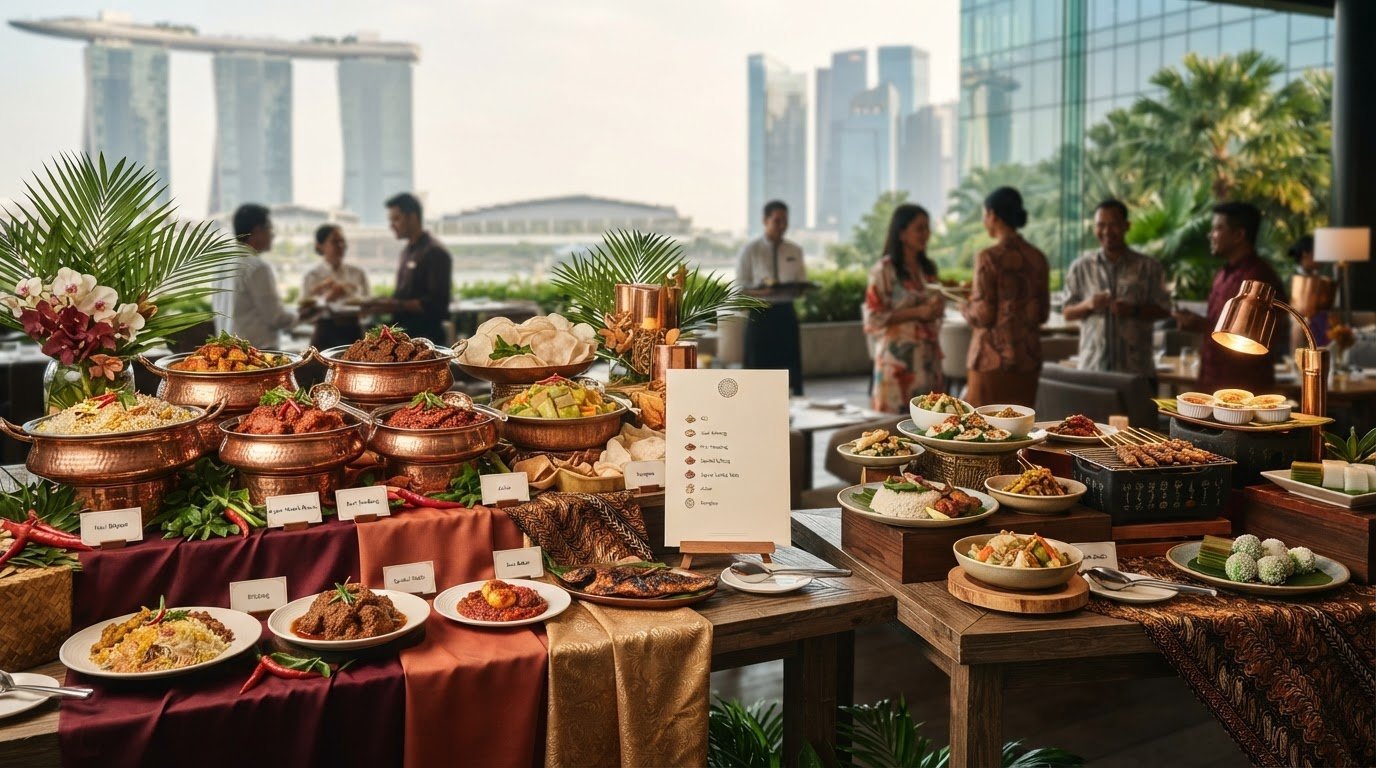

The biggest spread isn’t always the best fit for an event. Halal catering works best when its assurance, menu and serving format suit your guests and the way the gathering is organised. It’s reasonable to want clarity on what a halal certificate confirms, whether a buffet or mini buffet is more practical, and how to choose dishes for the people attending.
This guide compares halal buffet and mini buffet arrangements, explains how to assess menu options and lists practical details to confirm before booking. In Singapore, MUIS is the authority for halal certification, so check the caterer’s current certification rather than relying on a claim about halal ingredients alone.
You’ll also find a checklist of information to prepare before contacting a caterer, including your event setup, guest preferences and dietary questions. Familiar Malay and Indonesian specialities such as Nasi Ambeng, Nasi Sambal Goreng, Nasi Minyak and Briyani can help start a menu discussion. Regale Singapore offers halal buffet and halal mini buffet catering. Confirm current menu details and service terms when planning.
Key Takeaways
- Halal catering decisions involve more than menu descriptions. Know what assurance to verify before confirming an order.
- Match buffet or mini buffet arrangements to the venue, guest flow and responsibilities your team can manage.
- Use the occasion, meal timing and guest preferences to guide menu choices, including discussions of Malay and Indonesian dishes.
- Prepare your event date, venue requirements, estimated attendance and preferred menu before contacting a caterer.
- Compare the details that matter for your event, then confirm current menu options and service terms with the caterer.
Halal catering in Singapore: what it means for your event
Halal catering provides food prepared and presented in keeping with halal requirements, helping organisers plan a meal Muslim guests can eat with confidence. For an event, assurance matters because a menu title or familiar dish doesn’t confirm a caterer’s halal status. Checking the details also helps you give guests accurate information instead of making assumptions about what a provider’s claim covers.
What does halal catering mean for an event organiser?
Halal catering is food service from a caterer whose halal status and selected menu arrangements have been confirmed as suitable for the event’s needs. The term halal refers to what is permissible under Islamic dietary laws, but a dish name, cuisine style or description such as “halal ingredients” is not proof of certification.
Certification status and menu details are connected, but they aren’t interchangeable. Before confirming an order, ask the caterer to clarify its current halal certification and whether the menu and catering arrangement you’ve selected are covered. This gives you a more dependable basis for planning than assuming particular ingredients or dishes are sufficient.
How can you check halal assurance before ordering?
In Singapore, the Islamic Religious Council of Singapore (MUIS) is the relevant authority for halal certification. Check the caterer’s current certification information through MUIS’s official channels, and ask the caterer how to verify the details if anything is unclear. Certification can change, so don’t rely only on an old document, a past booking or a general claim on a menu.
- Confirm the caterer’s current halal certification and how to verify it through MUIS.
- Ask whether the specific menu and catering arrangement you’re considering are covered.
- Request clarification if the certificate details and the provider’s current information don’t appear to match.
Assurance is one part of guest care. Guests may have preferences or needs beyond halal requirements, such as avoiding certain ingredients or choosing milder dishes. Ask about these respectfully when gathering responses, then share relevant details with the caterer before finalising the menu. This helps distinguish confirmed requirements from preferences without making assumptions about individual guests.
Malay or Indonesian dishes may be a useful starting point for a menu discussion, but cuisine alone doesn’t establish halal status or guarantee that every guest will prefer the same dishes. Confirm both the assurance details and the menu choices directly. That distinction keeps event planning clear and grounded in information you can verify.
How to match halal catering menus to guests and occasion
Start with the event, not a list of dishes. Consider whether the gathering is a family celebration, a work event or a formal occasion. Then factor in when the meal will be served, how guests will eat and the preferences they’ve shared. These details help you discuss the menu and serving arrangements together, instead of choosing food without considering the guest experience.
Halal assurance and menu suitability are separate checks. For a general explanation of certification, the Halal certification resource from the American Halal Foundation offers useful background. For an event in Singapore, confirm the caterer’s current local certification and ask directly about the dishes and format you’re considering.
Which menu details should you confirm with a halal caterer?
Ask for the current menu and clarify whether choices differ between buffet and mini buffet catering. Don’t infer ingredients or allergen information from a dish’s name or cuisine. Share guest dietary needs with the caterer and request specific ingredient and allergen details before making selections. Keep these questions separate from certification checks: a menu that suits your guests still needs its own details confirmed.
- Which dishes are currently available in your preferred catering format?
- What ingredient and allergen information can the caterer confirm?
- Which guest preferences or dietary needs should be considered separately?
How can traditional dishes suit different gatherings?
Traditional Malay and Indonesian dishes can give a menu conversation a meaningful starting point. Regale’s confirmed specialities include Nasi Ambeng, Nasi Sambal Goreng, Nasi Minyak and Briyani. These are examples to discuss, not a promise that every dish is available for every order or format. Ask which options are currently offered and which may suit your occasion and guest mix.
For a gathering with varied preferences, consider the balance of dishes and how the meal will be served. A formal programme may call for a different pace and setup from a relaxed family event. Meal timing matters too, so tell the caterer when guests are expected to eat and whether the food will be a main meal or part of a wider programme.
Before settling on a selection, gather guest preferences respectfully and share only the details needed to guide the menu. Then confirm available dishes, relevant ingredients and format directly. If you’re considering Regale, review Regale’s catering information as a starting point for those discussions.
Buffet or mini buffet: compare halal catering formats
The right format depends on how your event will run, not on a universal guest-count rule. Consider the venue layout, how guests will access food and what organisers are expected to manage. A buffet may suit an event where guests can serve themselves. A mini buffet is a distinct format, so confirm its specific setup with the caterer.
When might a halal buffet suit an event?
A buffet can support flexible guest flow when the venue allows a serving area and guests can approach it comfortably. Before choosing this format, check whether there’s enough space and whether the venue permits the setup. Ask the caterer what serving equipment is included, who handles setup and what responsibilities remain with the organiser. Don’t assume staffing or equipment is part of the order.
When might a halal mini buffet be worth considering?
A mini buffet offers an alternative format, but the name alone doesn’t confirm how food is presented or served. Ask the caterer to explain the arrangement for your event, including what the venue needs to provide and what the organising team must handle. Regale offers both halal buffet and halal mini buffet catering. Confirm current format details and service terms directly before deciding.
| Planning factor | Buffet | Mini buffet |
|---|---|---|
| Serving setup | May allow guests to serve themselves, subject to the venue’s layout and rules. | Confirm how food is set out and served for the specific arrangement. |
| Guest flow | Consider where guests will queue or move through the serving area. | Ask how guests will access food and whether the setup suits the event programme. |
| Venue requirements | Check available space and permission for the serving setup. | Confirm the space and facilities needed for the chosen arrangement. |
| Organiser responsibilities | Clarify who provides equipment and manages setup. | Confirm what the caterer handles and what the organiser must arrange. |
Use the comparison as a checklist, not as a rule that one format is always better. For a reception with guests moving through a shared space, the serving area and guest flow may be decisive. For a gathering with a different venue setup, the mini buffet arrangement may be worth discussing. In either case, ask for the current format details and match them to the room, schedule and responsibilities your team can manage.
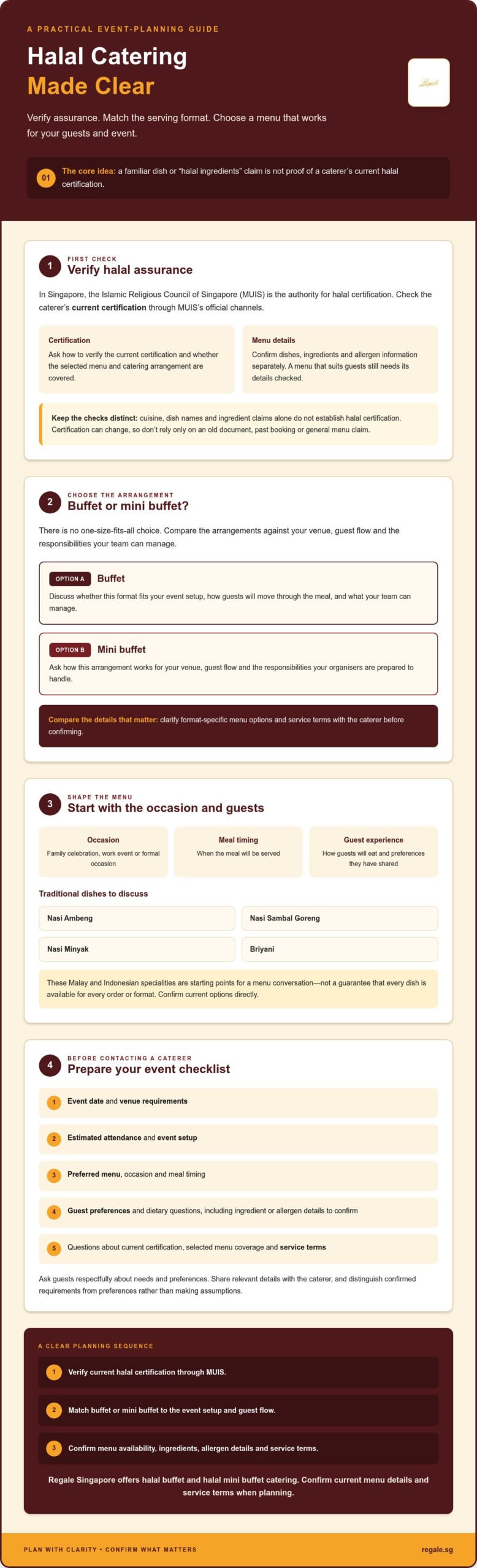
Plan halal catering with a practical event checklist
A clear brief helps a caterer assess whether the menu and arrangement suit your event. Before enquiring about halal catering, gather the essential details, then confirm the scope and terms directly. This makes it easier to compare providers on the same basis instead of relying on package descriptions alone.
What information should you prepare before enquiring?
Start with the event basics. You don’t need every detail finalised, but a useful initial brief should include:
- Event date and meal timing: Share when the gathering is taking place and when guests are expected to eat.
- Venue setup: Note the venue’s requirements, available serving space and any relevant access or setup arrangements you already know.
- Estimated attendance: Give your current guest estimate and say if it may change.
- Preferred format: Indicate whether you’re considering a buffet or mini buffet, while remaining open to the caterer’s guidance on suitability.
- Menu preferences: Name the dishes or cuisine styles you’d like to discuss, and list any guest dietary or allergen questions that need direct confirmation.
Ask the caterer what additional information it needs to assess availability and suitability. This is especially useful if venue requirements or attendance are still being finalised.
What should you confirm before placing an order?
Once you’ve received options, check the details in sequence. Confirm what is currently available, whether the proposed menu suits the selected format and how the caterer’s current halal certification can be checked. Then establish the service scope: what the caterer will handle, what the venue provides and what remains your responsibility. Request written confirmation of the agreed arrangements and applicable terms before committing.
- Confirm event fit: Check that the proposed format and service arrangements work with your schedule and venue requirements.
- Review the menu: Verify current dish availability and clarify ingredient or allergen questions directly.
- Check assurance: Confirm current certification details through an appropriate official source, and ask whether the selected menu and arrangement are covered.
- Clarify responsibilities: Record who handles setup and any other agreed tasks. Don’t assume these are included.
- Compare and document: Ask each provider the same questions, then keep written confirmation of the final selections and terms.
For a fair comparison, ask each provider about the same practical points: availability, certification details, menu, format, service scope and terms. If you’re considering Regale, enquire about Regale’s halal catering with your event details and preferred menu ready.
Explore Regale’s halal catering and choose your next step
A sound choice brings three decisions together: verify halal assurance, select a format that works with the venue and event flow, and confirm the current menu and service terms. Considering these together helps you assess a caterer on practical fit as well as food preferences, without assuming a dish or format suits your event before checking the details.
What halal catering options does Regale offer?
Regale Singapore is a halal-certified culinary establishment offering halal catering, halal buffet and halal mini buffet. Its confirmed menu specialities include Nasi Sambal Goreng, Nasi Ambeng, Nasi Minyak and Briyani. These dishes can start a menu conversation, but confirm their current availability and suitability for your chosen format or order directly.
Before deciding, check Regale’s current halal certification information through an appropriate official source, then ask whether the menu and catering arrangement you’re considering are covered. Confirm which dishes are currently available, how the chosen format will work for your venue and what terms apply. These are useful final checks for any provider, not details to infer from a general description.
How can you take the next step with Regale?
Review the available catering information against your event requirements. Consider whether a buffet or mini buffet better fits the setting, then note the dishes you’d like to discuss. Sharing the event date, venue requirements, estimated attendance and meal timing can give the caterer a clearer picture of your needs. Ask directly about current availability, menu details, certification and service scope before making a decision.
Regale’s Indonesian specialities offer a starting point for discussing a menu, while the choice between buffet and mini buffet lets you consider different serving arrangements. Neither the dish list nor the format name alone establishes what is available for a specific event. Confirm the details that matter to your guests and keep the agreed terms clear before proceeding.
If the options suit your plans, Explore Regale’s halal catering options and follow up directly to confirm current details. A considered choice starts with verified assurance and ends with a menu and arrangement that fit the occasion.
Choose a catering plan with confidence
Good event planning brings assurance, format and guest preferences together. Before confirming halal catering, verify the caterer’s current certification, choose a buffet arrangement that suits your venue and guest flow, and confirm the selected menu and service terms directly.
Regale Singapore is halal-certified and offers halal catering, halal buffet and halal mini buffet. Its confirmed menu specialities include Nasi Sambal Goreng, Nasi Ambeng, Nasi Minyak and Briyani. Treat these as starting points for a menu discussion, then check current availability and which options fit your preferred format.
Have your event date, venue requirements, estimated attendance and menu preferences ready when reviewing the details. Explore Regale’s halal catering options and confirm the arrangements that matter for your gathering. Clear questions and a considered format can help you plan a welcoming meal with confidence.
Frequently Asked Questions
What is halal catering?
Halal catering is food service planned around food Muslim guests can eat in keeping with halal requirements. It can help organisers provide a shared meal that respects those guests’ needs. Dish names or descriptions such as “halal ingredients” don’t prove a caterer is certified. Check the provider’s current status through an appropriate official source, and confirm directly that the selected menu and catering arrangement are covered.
How can I check whether a caterer is halal-certified in Singapore?
In Singapore, check a caterer’s current halal certification information through MUIS, the relevant official authority. Use its current official checking channels and compare the listing or certificate details with the caterer’s identity. Then ask the provider whether the menu and catering arrangement you plan to order are covered. Don’t rely solely on a past booking, menu label or claim about ingredients. Certification status and available offerings can change.
What is the difference between buffet and mini buffet catering?
A buffet generally involves a serving area where guests may serve themselves, while mini buffet refers to a separate catering format whose exact setup depends on the provider. Compare how guests will access the food, how the arrangement fits the venue and what organisers must manage. Inclusions vary by provider and order, so confirm equipment, setup responsibilities and service details rather than assuming they come as standard.
Can halal catering include traditional Malay and Indonesian dishes?
Yes, menu availability depends on the caterer and the arrangement selected. Regale’s confirmed specialities include Nasi Sambal Goreng, Nasi Ambeng, Nasi Minyak and Briyani. These dishes can guide a menu conversation, but don’t assume every item is available for every format or order. Ask which dishes are currently offered and whether they suit your event setup and guest preferences.
How far in advance should I book halal catering?
There’s no single booking lead time that applies to every event. Timing can depend on your date, demand, event size and the caterer’s terms. Contact providers early with your event details so they can advise on availability. Before proceeding, ask about confirmation deadlines, changes to arrangements and applicable booking conditions. Don’t assume a date is secured until the caterer has clearly confirmed the arrangements.
What information should I provide when requesting halal catering?
Share your event date, venue setup, estimated attendance, meal timing and preferred format, such as buffet or mini buffet. Include menu preferences and raise any dietary or allergen questions for direct confirmation. These details help the caterer assess whether the options suit your event. Ask what else is needed to confirm availability, menu suitability and the responsibilities involved in the proposed arrangement.
Does halal catering automatically accommodate every dietary requirement?
No. Halal assurance and other dietary needs are separate considerations, so don’t assume halal catering automatically addresses allergies, ingredient sensitivities or individual preferences. Raise these questions directly with the caterer and request clear information about relevant ingredients. A dish name alone may not answer them. Confirm what the provider can accommodate before selecting the menu, and don’t assume allergen-free preparation or customisation is available.
