
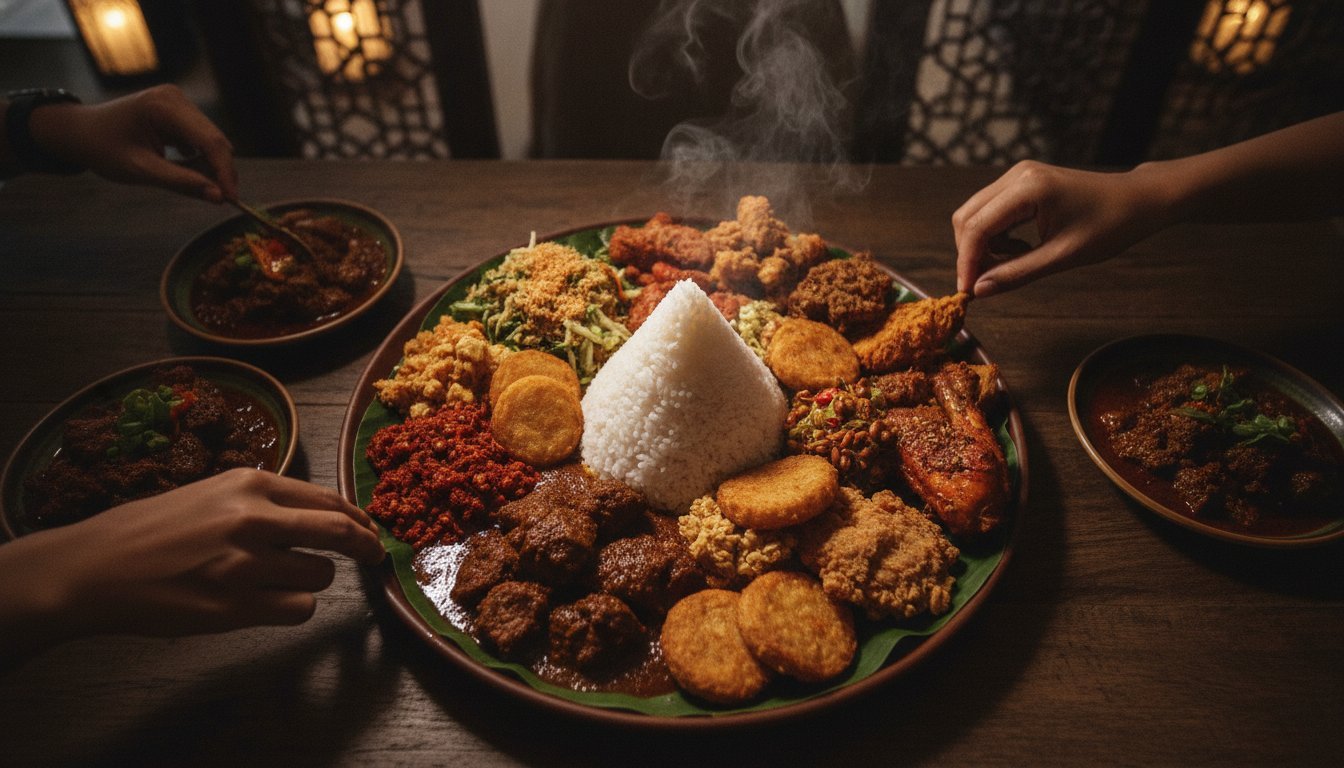

Authenticity in a kitchen can’t be faked with modern plating or fusion shortcuts. Many diners feel frustrated when they search for a genuine Indonesian restaurant singapore only to find dishes that have been stripped of their traditional heat and complexity. It’s common to feel uncertain about whether an eatery truly respects halal standards or if the menu simply confuses regional Malay flavors with specific Indonesian heritage. You deserve a dining experience that honors the original recipes of the archipelago without compromise.
This guide will help you discover the essential criteria for authentic Indonesian dining. You’ll explore the rich traditions behind halal-certified specialties like Nasi Sambal Goreng and Nasi Ambeng. We’ll provide the clarity you need to distinguish between regional variations and the confidence to choose the right setting for your next meal. By understanding the cultural significance of communal sharing platters, you’ll see how these historic dishes continue to foster community and connection today.
Key Takeaways
- Learn how to identify an authentic Indonesian restaurant singapore by looking for scratch-made spice pastes and regional menu diversity.
- Understand the cultural heritage and complex preparation behind signature staples like Nasi Sambal Goreng and Nasi Ambeng.
- Recognize the importance of Halal certification as a core standard for quality and inclusivity in the local dining scene.
- Master the etiquette of traditional communal dining to confidently plan and host large-group Indonesian feasts.
- Discover how specialized eateries use evening transformations to provide a dedicated and culturally rooted dining experience.
Defining the Authentic Indonesian Dining Experience in Singapore
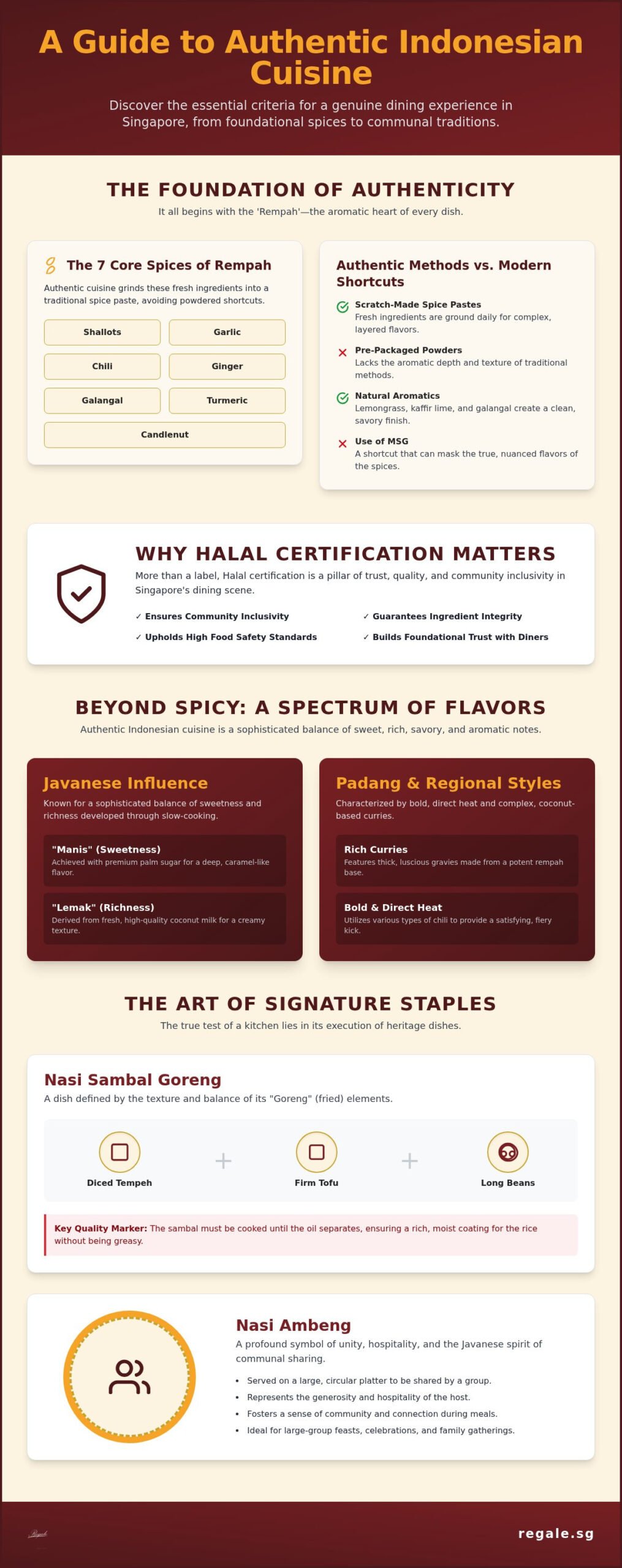
Authenticity in an Indonesian restaurant singapore begins with the foundation of every dish: the rempah. This complex spice paste serves as the aromatic heartbeat of the archipelago’s cooking. Unlike modern interpretations that might rely on pre-packaged powders, true heritage dining requires fresh ingredients ground to a specific consistency. Indonesian cuisine is incredibly diverse, reflecting the unique geography of thousands of islands and their distinct culinary identities. Diners often encounter Javanese influences, known for a sophisticated balance of sweetness and savory notes, or Padang styles that emphasize rich, coconut-based curries and bold, direct heat. Indonesian-Chinese variations offer another perspective, focusing on stir-fry techniques and noodle dishes that have integrated into the local palate over centuries. Authentic Indonesian Cuisine is defined by a precise balance of seven core spices, including shallots, garlic, chili, ginger, galangal, turmeric, and candlenut, which are ground into a traditional rempah.
The Role of Halal Certification in Heritage Dining
Halal-certified Indonesian food is a pillar of inclusive dining in Singapore. It ensures that traditional recipes are accessible to the entire community, making it a preferred choice for national celebrations and corporate events. Choosing a halal-certified Indonesian restaurant singapore guarantees that the preparation respects dietary laws while maintaining the integrity of heritage flavors. Maintaining these rigorous standards requires careful ingredient sourcing, yet it doesn’t mean compromising on the depth of flavor. By adhering to halal requirements, an establishment builds a foundation of trust with its guests. This certification signifies a commitment to both religious observance and high levels of food safety, which is essential for family gatherings where diverse dietary needs must be met with respect and care.
Key Flavor Profiles: Beyond Just Spicy
While many associate the cuisine solely with fiery heat, the reality is far more nuanced and layered. Javanese-influenced dishes often highlight “manis” (sweetness) through the use of premium palm sugar and “lemak” (richness) from fresh, high-quality coconut milk. These profiles are developed through patient, slow-cooking techniques that allow flavors to mature over several hours, resulting in a tender texture and deep aromatic infusion. An authentic kitchen avoids the use of MSG, relying instead on natural aromatics like lemongrass, kaffir lime leaves, and galangal to provide a clean, savory finish. This methodical approach ensures that every bite offers a complex profile that is as fragrant as it is flavorful, moving beyond simple spiciness to a complete sensory experience.
Signature Staples: The Art of Nasi Sambal Goreng and Nasi Ambeng
Mastering the foundational rempah is only the first step toward a genuine meal. The true test of any Indonesian restaurant singapore lies in its execution of heritage staples like Nasi Sambal Goreng and Nasi Ambeng. These dishes are more than mere combinations of rice and protein; they represent a complex culinary architecture that has been refined over generations. While Nasi Sambal Goreng focuses on the intricate balance of stir-fried fermented soy and aromatics, Nasi Ambeng serves as a profound symbol of unity. Both dishes rely on the slow development of flavors to ensure that every component, from the rice to the side dishes, carries its own distinct identity while contributing to a harmonious whole.
The cultural weight of these meals is deeply rooted in the history and cultural significance of Nasi Ambeng, which emphasizes the Javanese spirit of communal sharing. In a traditional setting, the presentation of a large, circular platter reflects the hospitality and generosity of the host. For those seeking these traditional flavors, the evening menu at Regale Singapore offers a curated selection of these heritage staples, prepared with the patience required for authentic results.
Anatomy of a Perfect Nasi Sambal Goreng
A high-quality Nasi Sambal Goreng is defined by the “Goreng” or fried elements that provide essential texture. The centerpiece is often a stir-fry of diced tempeh, firm tofu, and long beans, all coated in a rich, spicy sambal that has been cooked until the oil separates. This specific texture determines the quality of the entire dish. It shouldn’t be overly oily or dry, but rather moist enough to coat the rice. A balanced set includes a thoughtful mix of proteins and vegetables, ensuring a complete nutritional profile that satisfies the palate without feeling excessively heavy.
Nasi Ambeng: The Ultimate Sharing Platter
Nasi Ambeng is the pinnacle of communal dining, designed to be enjoyed by groups. When you order this at a reputable Indonesian restaurant singapore, you should expect a mountain of fragrant rice surrounded by a variety of traditional sides. Key components include:
- Beef Rendang: Beef slow-cooked in coconut milk and spices until caramelized.
- Sambal Goreng: The classic stir-fry of soy bean cakes and vegetables.
- Paru: Crispy, spiced fried beef lung that adds a unique savory crunch.
- Serunding: Sautéed grated coconut that provides a sweet and spicy finish.
- Bergedel: Savory fried potato patties that offer a soft, comforting texture.
Choosing the right platter size is essential for a successful group meal. Most authentic establishments offer tiers designed for two, four, or six diners. This ensures that the proportions of each side dish are adequate for everyone at the table to enjoy a full sampling of the menu’s diversity.
Evaluating Quality: What to Look for in an Indonesian Restaurant
Identifying a high-quality Indonesian restaurant singapore requires looking past the menu names to the technical execution in the kitchen. While many eateries claim authenticity, true heritage cooking is defined by a commitment to traditional methods that are often labor-intensive. The first indicator of quality is the “scratch-made” test. Authentic kitchens reject pre-mixed commercial pastes in favor of hand-ground rempah. When a restaurant grinds its own spices, the resulting flavors are brighter and more distinct, offering a complexity that mass-produced alternatives cannot replicate. You should look for a menu that demonstrates versatility, offering both individual portions of Nasi Sambal Goreng for daily dining and larger sharing sets like Nasi Ambeng for communal gatherings.
Atmosphere and service are equally vital components of the experience. The hospitality should reflect the Indonesian concept of “Gotong Royong,” which emphasizes mutual help and community spirit. This translates to a service style that is attentive, inclusive, and professional. To help narrow your search, you can consult the MICHELIN Guide’s list of Indonesian restaurants to see which establishments consistently meet these high standards of flavor and service. Consistency is the final hallmark of excellence; the depth of the Rendang and the heat of the sambal should remain stable across different days of the week.
The Importance of Fresh Ingredients
Freshness is non-negotiable for authentic results. Identifying the use of fresh coconut milk, known as santan, is a primary indicator of a dedicated kitchen. Canned alternatives often lack the natural oils necessary for a rich mouthfeel and can leave a subtle metallic aftertaste. A well-prepared Rendang offers clear visual cues of its quality. It should have a deep, dark brown color and show visible oil separation, a technical state known as “pecah minyak.” This indicates the dish has been slow-cooked long enough for the moisture to evaporate and the flavors to concentrate. The scent of fresh aromatics like kaffir lime leaves and turmeric should be evident the moment you enter the room, signaling a kitchen that prioritizes quality sourcing.
Operational Excellence and Service Reliability
Beyond the food, a reliable Indonesian restaurant singapore must demonstrate operational excellence, especially when handling large group bookings. For corporate events or family celebrations, service reliability is just as important as the culinary output. This includes the ability to manage diverse dietary requests within a strict halal framework without compromising on the authentic profile of the dishes. A structured and dependable dining experience builds trust. Whether you are ordering a mini-buffet or a seated communal feast, the restaurant should provide a seamless transition from the initial booking to the final service, ensuring that the cultural significance of the meal is respected through professional execution.
The Communal Dining Culture: Etiquette and Group Planning
Traditional Indonesian dining is an inherently social experience that prioritizes the collective over the individual. When you visit an Indonesian restaurant singapore for a celebratory meal, the service often revolves around the concept of communal sharing. Planning for a large group requires a strategic approach to ensure every guest is accommodated. You’ll need to consider the balance of flavors and textures across the entire table to create a satisfying progression. Evening is typically the preferred time for these traditional feasts. The pace is more relaxed, allowing guests to appreciate the complexity of slow-cooked dishes without the rush of a midday lunch service.
Sharing from a central platter, such as Nasi Ambeng, follows specific cultural etiquette. Guests should use serving spoons to move portions from the outer edges of the platter toward their own plates. This practice ensures that the central mountain of rice remains intact, maintaining the visual integrity of the presentation. It’s a respectful way to acknowledge the effort put into the arrangement and ensures everyone receives an equal variety of side dishes.
A successful group order balances high-heat items with cooling, coconut-rich dishes. If you select a fiery Beef Rendang, it’s best to pair it with a milder vegetable dish or a “lemak” based curry. This variety prevents palate fatigue and ensures those with lower spice tolerances can still enjoy the full breadth of the menu. Providing a range of intensity levels reflects the inclusive nature of Indonesian hospitality.
Ordering for the Table: A Practical Guide
Understanding the “Golden Rice” classics is essential for a well-rounded feast. While Nasi Ambeng is a primary choice, you might also encounter Nasi Minyak or Briyani. Nasi Minyak is flavored with clarified butter and aromatics, offering a subtle richness. Briyani is more robust, featuring a distinct blend of spices and often cooked with meat. For large groups, a combination of sharing platters and individual a la carte items provides the best versatility. Generally, one large Nasi Ambeng platter serves four adults comfortably when supplemented with a few additional side dishes.
Creating the Right Atmosphere for Celebration
The right setting is crucial for corporate hospitality or significant family milestones. A grounded, respectful atmosphere enhances the perception of flavor, as it mirrors the cultural origins of the food. Many establishments undergo a specific transition from a brisk, functional lunch service to a more immersive, authentic evening dinner. This shift in mood allows for a more focused appreciation of the heritage recipes. For your next communal feast, book your evening table at Regale Singapore to experience this dedicated transformation firsthand.
Regale Singapore: A Dedicated Evening Indonesian Experience
Regale Singapore operates as a dual-concept establishment that addresses the specific needs of the local dining community. During the day, the focus remains on operational efficiency and variety, catering to those seeking Western Cuisine or local favorites. However, as the day concludes, the restaurant undergoes a purposeful “Evening Transformation.” This shift allows the kitchen to focus entirely on its role as a cultural custodian, presenting an authentic Indonesian experience that prioritizes traditional preparation over speed. This methodical transition ensures that every dish served during the evening hours meets the high standards expected of a specialist Indonesian restaurant singapore. The transformation isn’t merely a menu change; it’s a shift in the entire dining atmosphere to reflect the grounded, respectful heritage of the archipelago.
From Daytime Favorites to Evening Specialties
The shift from day to night is a core part of the brand’s identity as a versatile professional partner for all dining needs. Daytime visitors can enjoy established favorites, such as the Angus Burger, which highlights the kitchen’s proficiency in Western Cuisine. Once the evening service begins, the menu pivots to focus on deep Indonesian traditions. This structure allows the culinary team to dedicate the necessary time and resources to slow-cooking heritage recipes that define the evening menu. It provides a structured environment where the logistical readiness of the afternoon service gives way to the patient, aromatic complexity of the night. This versatility ensures that the establishment remains a reliable choice for both a quick professional lunch and a significant life event feast.
Our Signature Platter Selection
The evening menu is anchored by its signature platter selection, specifically designed for communal dining and cultural appreciation. The Regale Nasi Ambeng and Nasi Sambal Goreng sets are prepared with a commitment to halal-certified standards, ensuring inclusivity for a national audience. These sets aren’t simply meals but are carefully curated presentations of multiple side dishes that require precise timing and coordination. The Nasi Ambeng platter serves as a centerpiece for unity, while the Nasi Sambal Goreng offers a focused look at the art of stir-fried aromatics and fermented soy. While these Indonesian specialties are the evening’s primary focus, the continued availability of Western options like the Angus Burger ensures that diverse group preferences are met with the same level of professional hospitality. This balanced approach supports both daily family dining and large-scale corporate events with quiet competence. Experience the best of Indonesian evening dining at Regale Singapore to see how tradition and professional service come together in a dedicated culinary setting.
Secure Your Seat for an Authentic Feast
Authentic Indonesian dining is defined by a commitment to traditional preparation and the communal spirit of sharing. You now understand that a true Indonesian restaurant singapore must prioritize scratch-made spice pastes and respect the cultural nuances of dishes like Nasi Ambeng. By recognizing the visual cues of a well-prepared Rendang and the significance of halal certification, you can choose a dining destination that offers both quality and inclusivity. These elements ensure that your next group gathering’s a meaningful celebration of heritage rather than just a meal.
Regale Singapore stands ready to host your next family or corporate event with halal-certified culinary excellence. Our kitchen specializes in traditional Nasi Ambeng and Nasi Sambal Goreng sharing platters, prepared with the patience and expertise required for genuine results. Whether you’re planning a quiet dinner or a large-scale celebration, our evening transformation provides the dedicated atmosphere your occasion requires. We look forward to welcoming you to a table that honors tradition and community.
View our Authentic Indonesian Evening Menu at Regale Singapore
Frequently Asked Questions
Is Regale Singapore halal-certified?
Yes, Regale Singapore is a fully halal-certified establishment. This certification covers all our culinary services, including our on-site dining and professional catering. Maintaining these standards is a core part of our commitment to being an inclusive Indonesian restaurant singapore. Guests can dine with complete confidence, knowing that every ingredient and preparation method adheres to strict dietary laws while preserving the authentic, complex flavors of our heritage recipes.
What are the must-try dishes on an Indonesian dinner menu?
The essential dishes for an authentic dinner experience are Nasi Sambal Goreng and Nasi Ambeng. Nasi Sambal Goreng is a multi-component meal featuring stir-fried fermented soy, while Nasi Ambeng is a large communal platter designed for group sharing. Other signature items include slow-cooked Beef Rendang and crispy Paru. These dishes represent the depth of Indonesian culinary traditions and are prepared using fresh, hand-ground rempah to ensure a genuine, aromatic flavor profile.
How many people can share a Nasi Ambeng platter?
A standard Nasi Ambeng platter is designed to be shared by groups of two to six people. Most authentic establishments offer tiered sizes to accommodate different party numbers. For example, a platter for four provides a generous mountain of rice surrounded by side dishes. This ensures everyone at the table receives a full sampling of the menu. Larger groups can order multiple platters or supplement with individual items.
Does the restaurant serve Western food alongside Indonesian dishes?
Yes, we provide a selection of Western Cuisine during our daytime service. Our menu includes popular items like the Angus Burger, which is a favorite for those seeking a professional lunch option. While our evening service focuses on Authentic Indonesian Cuisine, our dual-concept approach ensures that we’re a versatile partner for different dining preferences throughout the day. This flexibility makes our space suitable for diverse groups with varied tastes.
Is Nasi Sambal Goreng suitable for people who do not like spicy food?
Nasi Sambal Goreng traditionally carries a moderate level of heat from the chili-based sambal used in the stir-fry. This spiciness is integral to the dish’s identity, but it’s often balanced by the savory notes of fermented soy. If you prefer milder food, you can pair it with coconut-rich side dishes to cool the palate. Those who strictly avoid all heat might find the traditional preparation quite intense.
Can I book the restaurant for a halal buffet or mini-buffet event?
You can definitely book our services for a Halal Buffet or Halal Mini Buffet event. We provide comprehensive catering solutions for national celebrations, family gatherings, and corporate hospitality. Our team manages the logistics to ensure a seamless experience, whether you require a full-service setup or a compact delivery. These options allow you to bring the flavors of a top Indonesian restaurant singapore to your location with professional reliability.
What is the difference between Nasi Ambeng and Nasi Tumpeng?
The primary difference lies in the presentation and the specific cultural context of the meal. Nasi Ambeng is served on a large, flat circular platter and is a staple of communal Javanese-Malay dining. Nasi Tumpeng features rice shaped into a tall cone to symbolize a mountain. It’s usually reserved for formal ceremonies or significant milestones. While both emphasize community, Nasi Ambeng is more common as a hearty evening meal.
Do I need to make a reservation for the evening Indonesian menu?
We highly recommend making a reservation for our evening Indonesian menu, particularly for group dining. Because dishes like Nasi Ambeng require extensive preparation and specific platter arrangements, booking ahead ensures our kitchen team is fully prepared for your arrival. This logistical readiness is essential for maintaining our high service standards. You can secure your table through our website to ensure a smooth transition into your heritage dining experience.
