
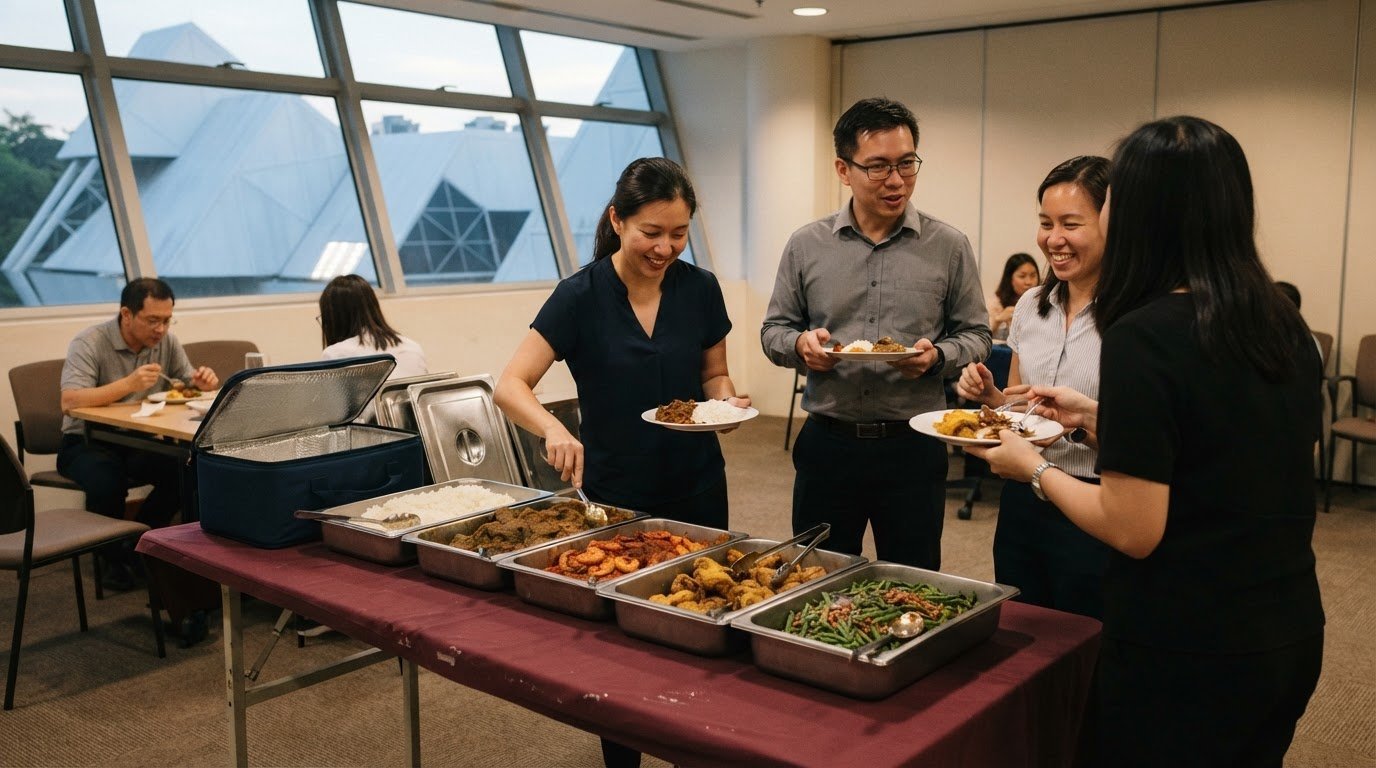

A last-minute event still deserves a meal that feels considered. Last minute mini buffet catering can suit corporate events, social occasions, small gatherings and celebrations when the menu and serving format fit the occasion. The key is to make clear decisions about guest needs, food preferences and event timing.
Arranging food at short notice can feel like one more demand on an already busy schedule. A mini buffet offers guests a shared meal with a choice of dishes, without the scale of a full banquet.
This article explains what to consider when arranging a mini buffet for an urgent event in Singapore, including how to match the menu to the occasion and what can affect the ordering process. It also explores customer experiences with mini buffet orders, so you can better understand how portions and menu choices may shape the meal. You’ll come away with a clearer sense of when this catering style fits and how to plan the next step.
Key Takeaways
- Match the menu and serving format to the occasion, guest preferences and time available for setup.
- For corporate events, a mix of individual meals and shared buffet dishes can offer flexibility when plans are made at short notice.
- Customer experiences can help you assess how dish counts and portion formats work in practice, including when small pieces are grouped as a menu item.
- For small gatherings and celebrations, choose a spread that feels generous without making service or space difficult to manage.
- Minimum order requirements vary with the catering menu and format, so understand how the order is structured before settling on your selection.
Corporate and social event catering
For a workplace meeting or family gathering, a mini buffet makes shared dining practical without a formal banquet setup. The best fit depends on the event schedule, guest preferences, delivery access and available serving space.
Checking Availability and Placing Urgent Orders
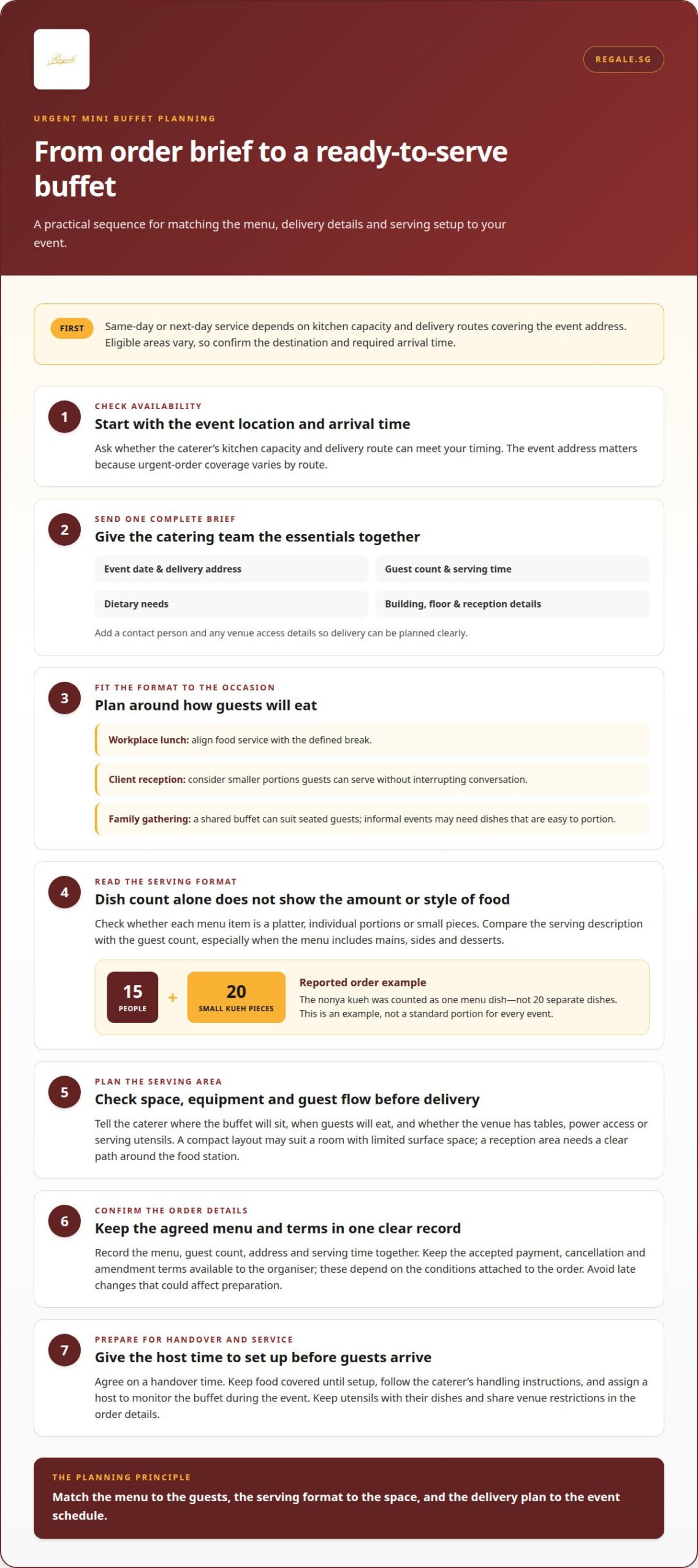
Same-day or next-day orders are handled by caterers with kitchen capacity and delivery routes covering the event address. Eligible areas vary by route, so the destination and required arrival time shape which service can fulfil an urgent order. To place one, send the date, delivery address, guest count, serving time and dietary needs together. A complete brief helps the catering team assess the order efficiently.
For a corporate gathering, start with the meal schedule rather than the menu. A working lunch needs food ready for a defined break, while a client reception may suit smaller portions that guests can serve without interrupting conversation. Include the building name, floor, reception procedure and a contact person in the delivery details. This helps plan access to offices, conference venues and shared workspaces.
For a social occasion, consider the event’s pace and how guests will eat. A family celebration with seated guests can use a shared buffet, while an informal gathering may call for dishes that are easy to portion. Check the available table space and serving flow. If guests will arrive in stages, plan when the food will be handed over and when people will begin eating.
Keep an urgent order straightforward. Choose a menu that suits the group, confirm the serving arrangement and avoid late changes that could affect preparation. Some organisers combine individual meals with a small buffet or add a dessert table when the schedule is tight. This can give guests a choice while keeping the main meal manageable.
Food Safety, Serving Times, and Equipment
Plan serving time and equipment as part of the order, not after delivery. State when guests will eat, where the buffet will sit and whether the venue has tables, power access or serving utensils. A meeting room with limited surface space, for example, needs a compact layout, while a reception area needs a clear path around the food station. Set a handover time that gives the host time to arrange the dishes before guests arrive.
For safe, orderly service, keep food covered until setup and follow the caterer’s handling instructions. Don’t leave the buffet unattended during a busy event; assign a host to monitor the serving area and keep utensils with their dishes. Share any venue restrictions in the order details. Clear timing, accessible equipment and a named event contact help prevent confusion between delivery and service.
- Provide the event address, access details and serving time in one message.
- Choose dishes and a format that suit the space and guest flow.
- Plan equipment, setup and food handover before guests arrive.
Customer experiences with mini buffet orders
A reported Singapore mini buffet order for 15 people included 20 small pieces of nonya kueh, counted as one dish. This example shows why a dish count alone may not describe the amount or format of food. Small pieces can serve several guests, while a main dish may be portioned differently. Read menu descriptions for both the item and its serving format.
For a group of 15, the kueh offered a shared sweet option without being listed as 20 separate dishes. That distinction can help event hosts understand how a menu is organised. A dish may represent a platter, a shared item or individual pieces. Review the serving description alongside the guest count, especially when the menu combines mains, sides and desserts.
Cancellation and amendment terms depend on the conditions attached to the accepted order. Keep the payment arrangements and change terms with the order details, as timing can affect preparation and dispatch. Record the menu, guest count, delivery address and serving time together, so the organiser has a clear reference if event plans change.
For last minute mini buffet catering, menu choice is shaped by the kitchen’s available dishes, preparation needs and the guests’ dietary preferences. A halal buffet can suit a gathering where halal food is required; other menu choices depend on the caterer’s cuisine and current selection. Share dietary requirements clearly when ordering, and select dishes that guests can identify easily.
Customer accounts are most useful when they describe the order, not just a general impression. Note the group size, the format of each dish, how the food was served and whether the selection suited the occasion. For example, the order for 15 people offers a specific reference for understanding how 20 small kueh pieces appeared as one menu item. It doesn’t establish a standard portion for every event.
Use a simple review process before confirming an order:
- Match the guest count to the menu’s stated serving format.
- Read whether a listed dish means a platter, individual portions or small pieces.
- Record dietary preferences and the agreed menu in the same order details.
- Keep the accepted cancellation, amendment and payment terms available to the organiser.
Use customer examples as a guide, not as a promise that another menu will follow the same format. Assess a mini buffet by its actual dishes and serving descriptions, not dish count alone. This makes it easier to decide whether the spread suits a corporate lunch, family gathering or celebration, and to set clear expectations for guests.
Timing can also shape the format. Organisers may combine bento catering with a small buffet or add a dessert table for an urgent event. Review these options alongside the menu’s serving descriptions and confirm the chosen combination in the order. This keeps the plan focused on the event schedule without treating one arrangement as right for every gathering.
Mini buffet catering for small gatherings and celebrations
For a home celebration or community gathering, a mini buffet can make shared dining easier to organise. Plan around the room, serving space and time guests will eat.
Caterers Offering Last-Minute Mini Buffets
In Singapore, urgent mini buffet orders depend on each caterer’s kitchen schedule, delivery route and menu readiness. Rather than assuming every caterer serves every address, match the delivery location and required arrival time to the order details. A small buffet combined with individual meals or a dessert table can also suit a tight event schedule.
For a birthday at home, first decide whether guests will sit down together or help themselves throughout the event. A shared buffet suits a set mealtime, while individual portions may work better when people arrive at different times. Then choose dishes that fit the table space and can be served without moving furniture or blocking the room’s main path.
Celebrations also benefit from a balanced menu. Pair substantial dishes with sides and a sweet finish, rather than choosing several items that serve the same purpose. If children and older relatives are attending, consider ease of serving and familiar flavours alongside more distinctive choices. Record dietary preferences with the order so the host can explain the selection clearly to guests.
Minimum Order Size
Minimum order size varies by caterer and menu format, so there isn’t one figure that applies to every Singapore order. The threshold may depend on how dishes are prepared, the selected buffet configuration and delivery arrangements. For a small celebration, compare the required guest count with the format of each dish, not simply the number of menu items.
A listed dish might be a shared platter, several portions or small individual pieces. Check how the portions are intended to serve the gathering, then plan the spread around guests’ appetites and the event’s duration. A short afternoon celebration, for example, may need a different balance from a gathering that spans a full mealtime.
Before placing an urgent order, organise these details in one message:
- Event date, address and preferred delivery time.
- Guest count and whether guests will eat together or arrive gradually.
- Menu choices, dietary preferences and portion questions.
- Available serving space and any venue access instructions.
These steps help clarify whether a mini buffet suits the gathering and how to arrange its menu. For a small family celebration, choose a format that fits the guest count, serving space and occasion rather than relying on dish count alone. A concise order brief also makes it easier to discuss the practical details of an urgent booking.
Which Singapore caterers offer last-minute mini buffet catering?
In Singapore, urgent mini buffet orders depend on a caterer’s kitchen schedule, delivery route and selected menu. Look for a caterer that accepts the required event timing and serves the delivery address. Availability can change with order volume, preparation needs and the distance between the kitchen and venue.
Start with the event details, then consider which catering format fits. For an office lunch, individual bento meals alongside a small buffet can offer different serving options. A dessert table can complement the meal when the schedule allows. These formats help organisers adapt the spread to limited preparation time without treating every gathering like a full banquet.
Use a clear order enquiry to identify suitable caterers. Include the date, delivery address, arrival time, guest count and preferred menu format. State whether guests will eat together or arrive at different times. With those details, the caterer can consider preparation capacity and delivery logistics together, rather than assessing an incomplete request.
Before selecting a menu, compare its structure with the event’s needs. A shared buffet suits guests eating at the same time, while individual portions may suit a meeting with a short lunch break. If you’re planning a dessert table, decide where each serving area will go. A practical layout keeps guests moving comfortably between food stations.
Use these steps to narrow the options:
- Match the required delivery time and address to the caterer’s ordering conditions.
- Choose a buffet, individual meal or combined format for the event schedule.
- Share dietary requirements and preferred dishes in the initial enquiry.
- Review the stated menu portions and serving format before confirming.
Compare responses by how directly they address your event details. A useful reply clarifies the proposed menu, delivery arrangement and order conditions. For a corporate meeting, consider whether the food format works for a short serving window. For a family celebration, think about whether shared dishes and desserts suit the gathering’s pace.
There isn’t one caterer or menu format that fits every urgent event. The right match depends on location, timing, menu preparation and the number of guests. A compact event may need a different arrangement from a workplace gathering with individual lunches. Use the same details in each enquiry, so you can assess replies consistently and make a decision based on the event’s practical needs.
What is the minimum order size for mini buffet catering?
There isn’t one minimum order size for every mini buffet in Singapore. Each caterer sets its own threshold according to menu format, preparation requirements and delivery arrangements. A buffet priced or portioned for a group may not suit a very small gathering. The important distinction is whether the minimum refers to guests, dishes or an overall order.
Start by identifying how the menu defines its minimum. It may be based on guest count, a selection of dishes or a particular buffet configuration. These conditions affect what a small group can order. For example, a group below a stated guest threshold may need a different format rather than simply removing dishes.
Dish count needs context, too. A listed item could be a shared platter, a tray of sides or several individually portioned pieces. The menu description explains how the item contributes to the spread, while the guest count indicates its intended scale. Don’t assume a fixed number of dishes equals a fixed number of servings.
For an urgent booking, minimum order requirements can interact with preparation time and delivery arrangements. A menu with several prepared components may have different constraints from a simpler selection. Include the delivery address and required arrival time early, so the proposed format reflects the actual event.
Use this sequence to assess whether the minimum suits your gathering:
- Find whether the minimum is based on guests, dishes or order configuration.
- Read the serving description for each selected dish.
- Match the portions and menu balance to the gathering’s meal schedule.
- Include the event address and serving time in the order details.
Consider a small family lunch. If the minimum guest count exceeds the number attending, compare the available formats before choosing. Individual portions may create less surplus than a larger shared spread, while shared dishes can suit guests with varied appetites. The menu’s serving format helps distinguish between these options.
For a workplace gathering, the decision may depend on whether colleagues eat together or in shifts. A shared buffet needs a suitable serving arrangement, while individual meals can support staggered breaks. Assess the minimum against expected attendance and menu structure. This avoids treating the minimum as a simple headcount when it may also reflect how the food is prepared.
Before confirming, keep the menu description, guest count, delivery details and order terms together. That record makes the selected minimum easier to understand if the event plan changes. For last minute mini buffet catering, the practical fit comes from matching the order structure to the occasion, not relying on a universal group size.
Regale Singapore: Halal Catering
Regale Singapore offers halal catering, including a Halal Mini Buffet for gatherings where a shared meal suits the occasion. The menu features Nasi Sambal Goreng and Nasi Ambeng, bringing Indonesian dishes to the spread. These options can suit family celebrations, workplace meals and other events where guests are looking for halal food.
Choose Regale’s Halal Mini Buffet when a halal buffet and Indonesian dishes fit your gathering. Share the event details and preferred menu when arranging your order, so the selection can suit the occasion.
Contact Regale Singapore to discuss halal catering for your gathering.
Make the next catering decision with confidence
Turn your event plan into a clear brief before choosing a menu. For last-minute mini buffet catering, think about the experience you want guests to have, from a relaxed shared meal to a more structured gathering. A concise brief helps connect the occasion with a suitable menu.
Include the event type, delivery address, preferred serving time and guests’ needs in your enquiry. These details give the conversation a practical starting point. Regale Singapore offers Indonesian cuisine, including Nasi Sambal Goreng and Nasi Ambeng, for gatherings where those flavours suit the occasion.
Contact Regale Singapore about catering to discuss your event plans. With the key details in hand, you can take the next step towards a meal that feels considered and welcoming.
Frequently Asked Questions
How late can I place a mini buffet catering order in Singapore?
There’s no single ordering cutoff for every mini buffet. The latest ordering time depends on menu preparation, kitchen capacity, delivery arrangements and the event address. A menu with several prepared dishes, for example, may need more lead time than a simpler selection. Send the event date, serving time, address and preferred dishes as soon as plans are set, so the order can be assessed against these practical requirements.
Which caterers offer same-day or next-day delivery, and to which areas?
Same-day or next-day delivery is handled by caterers with kitchen capacity and delivery routes covering the event address. Eligible areas vary by route, so confirm the address and required arrival time with the caterer.
