
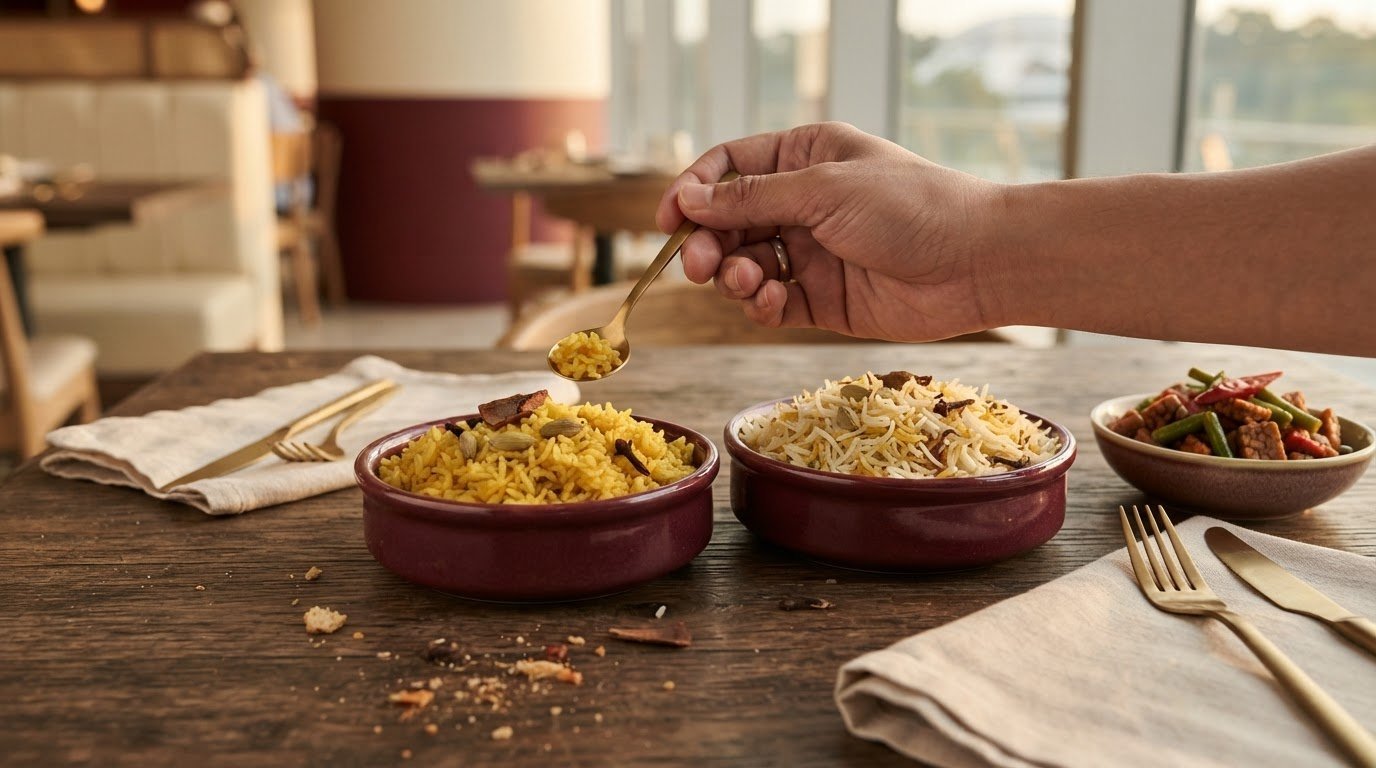

Two fragrant rice dishes can look equally celebratory and still have different culinary identities. The answer to whether nasi minyak is the same as briyani is no: they’re distinct rice dishes, with different culinary traditions and ways of seasoning and cooking the rice. Nasi minyak is associated with Indonesia, Malaysia, Singapore and Thailand, while biryani has roots in a blend of Hindustani and Persian cooking.
The names are easy to mix up, especially because both dishes may be served at gatherings with richly flavoured accompaniments. But is nasi minyak the same as biryani? No. This comparison explains how they differ, along with how nasi kebuli fits into the picture.
You’ll learn how rice, spices and cooking methods shape their flavours, and how biryani features in Singapore’s food culture. Use these differences to choose a rice dish that suits the occasion and the flavours you enjoy.
Key Takeaways
- Trace nasi minyak’s regional roots across Indonesia, Malaysia, Singapore and Thailand, then compare them with biryani’s blended culinary heritage.
- Use rice type and cooking method as practical clues: biryani styles can range from layered dum cooking to versions made with short-grain rice.
- Explore how spices and additions such as saffron, cashews and fried onions vary between regional biryani traditions.
- Recognise biryani’s place in Singapore, from everyday hawker meals to special dum biryani at celebrations and religious festivals.
- Compare nasi minyak, biryani and nasi kebuli by looking at their distinct traditions rather than treating fragrant rice dishes as interchangeable.
Nasi minyak’s place of origin
Nasi minyak is associated with Indonesia, Malaysia, Singapore and Thailand, rather than one country alone. Yes, it’s commonly served at Malay weddings in Singapore, often as part of a larger celebratory meal. The answer to “is nasi minyak the same as briyani?” is no. Their regional histories and culinary identities differ.
Nasi minyak has regional associations rather than a single, clearly established birthplace. Indonesia, Malaysia, Singapore and Thailand are connected through Southeast Asian cultural and trading networks, where dishes have travelled with families, communities and cooks and adapted to local tastes. Its regional presence is more useful context than assigning it to one country.
That distinction matters when describing nasi minyak’s origins. Claiming it belongs exclusively to Singapore, for example, would overlook its links with Malaysia, Indonesia and Thailand. Its presence across several countries also doesn’t mean every local version is identical. Household customs, celebration menus and preparation traditions can all influence how the rice is served.
In Singapore, nasi minyak also has a place in Malay wedding meals. Its appearance at these gatherings connects the dish with hospitality and shared celebration. A wedding spread may bring family and guests together around a substantial meal, with nasi minyak serving as one of its rice-centred choices. The setting helps explain why the dish is associated with occasions, not just everyday dining.
Regional origins also help separate nasi minyak from biryani. Biryani is associated with a different culinary history, shaped by Hindustani and Persian influences. It may have developed during the Mughal Empire, which lasted from the 16th to the 19th century. That background differs from nasi minyak’s links across Southeast Asia. Similar aromas or festive settings don’t make the dishes one and the same.
Singapore’s food culture brings different rice traditions into close contact. Biryani is also an everyday food at hawker centres, while special dum biryani is served at celebrations, religious festivals and other Muslim community events. Nasi minyak’s regional associations and place in wedding meals add another thread to this varied food culture.
The most accurate answer about nasi minyak’s origins is regional, not national: it is linked to Indonesia, Malaysia, Singapore and Thailand. Its place in Singapore wedding meals shows how a dish can become part of local celebrations while retaining wider regional connections. This context helps compare nasi minyak with biryani and nasi kebuli without assuming that their shared role as fragrant rice dishes means they share an origin.
Related rice dishes, including biryani and nasi kebuli
Nasi minyak, biryani and nasi kebuli are all fragrant rice dishes, but each has its own identity. In Singapore, the occasion and accompaniments can offer clues to the differences.
Differences in Cooking Methods
Cooking method describes how the rice and other ingredients come together, and it can help identify a biryani style. Biryani is made with slow-cooked, long-grain basmati rice infused with spices and served with chicken or mutton. Some versions layer rice and meat and cook them together in a sealed pot. Nasi minyak and nasi kebuli are separate dishes, so similar fragrance alone doesn’t make them biryani.
Spices and Ingredients
Spices and additions shape a dish’s aroma, appearance and taste. Biryani can include saffron, onions and dried fruits, while regional styles use other combinations. Thalassery biryani, for instance, uses short-grain rice, local spices, cashews and fried onions. Nasi minyak and nasi kebuli have their own ingredient traditions, so compare the full preparation rather than assuming they follow a biryani recipe.
Nasi kebuli is another Indonesian rice dish, commonly prepared with spiced broth and meat. It’s useful to compare with nasi minyak, but it isn’t another name for it. The names refer to different dishes and culinary traditions. A menu’s description of the rice, meat and seasoning can help clarify which dish is being served.
Are nasi minyak and biryani served with different sides? Often, yes. In Singapore, biryani is commonly accompanied by achar and papadam, while nasi minyak may be part of a Malay wedding spread with other dishes. The sides vary by meal, but they can offer useful clues to how each rice dish is served.
Where can you find nasi minyak and biryani in Singapore? Biryani is an everyday option at hawker centres, and special dum biryani also features at celebrations and religious festivals in the Muslim community. Nasi minyak is commonly served at Malay weddings as part of a celebratory meal.
For a meal centred on Indonesian flavours, an Indonesian dining experience in Singapore offers another way to explore the region’s food traditions. Comparing the rice, preparation and accompaniments helps keep nasi minyak, biryani and nasi kebuli distinct, even when they share a place at festive tables.
Regional biryani traditions show why the name covers more than one preparation. Lucknowi biryani from Northern India is infused with spices such as star anise, cinnamon and saffron. It is typically cooked dum style, with rice and meat layered in an earthen pot over a fire. This example illustrates variation within biryani, rather than making it interchangeable with nasi minyak or nasi kebuli.
Singapore’s homegrown biryani likely developed as southern Indian immigrants brought their cuisine and adapted it with local flavours and ingredients. This history helps explain the dish’s local character: Singapore biryani can reflect both its roots and its adaptation, while nasi minyak and nasi kebuli remain distinct dishes. When comparing menu items, consider the preparation and ingredients described. Shared spices or festive settings alone don’t make two dishes the same.
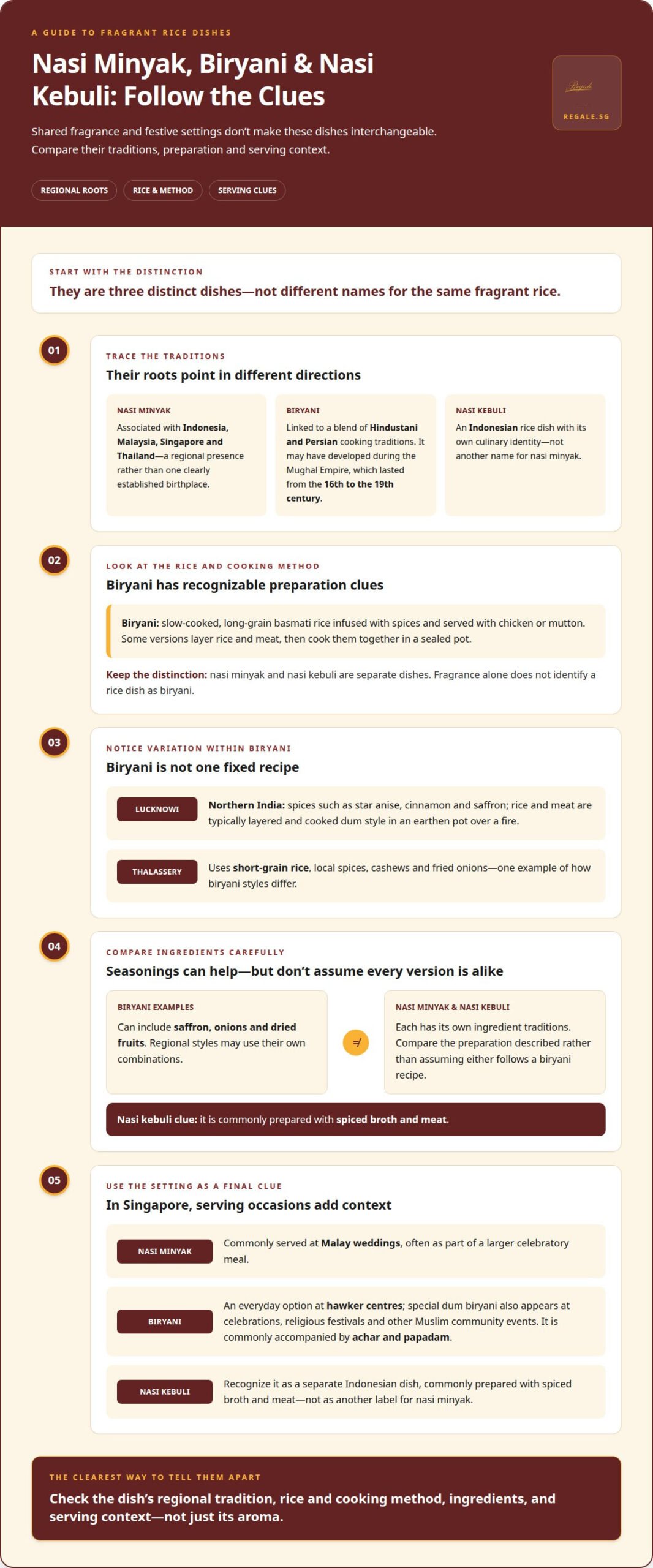
What is nasi minyak?
Nasi minyak is a fragrant rice dish whose name refers to rice prepared with oil or fat. “Nasi” means rice, while “minyak” means oil in Malay and Indonesian. The name points to an important part of the dish’s character, but isn’t a complete recipe. Ingredients and presentation can vary with the cook and regional tradition.
The rice is central to the dish. Rather than serving as a plain base, it has an aromatic quality and richer character. That makes nasi minyak different from simply serving steamed rice alongside a main dish. Its flavour and texture contribute to the meal, even before other dishes are added.
There’s no single appearance that identifies every version. A cook may adapt the preparation to a household tradition or celebratory spread. At a Malay wedding, for example, nasi minyak can be presented as part of a larger meal rather than as a bowl of rice on its own. The occasion influences how it’s served, not its basic identity as a rice dish.
It helps to distinguish nasi minyak from a meal built around rice and meat cooked together. Biryani, for example, is made with long-grain basmati rice infused with spices and served with chicken or mutton. Nasi minyak is a separate dish, even if both appear at festive gatherings or share an aromatic quality. Similar associations don’t make their recipes or origins interchangeable.
For someone seeing nasi minyak on a Singapore menu, the name offers a useful first clue. It identifies a rice dish with an oil-based preparation, rather than a particular meat or fixed set of accompaniments. The menu description can explain the rest of the meal. The rice may be served with other dishes, especially at a celebration.
This distinction is useful because rice dishes are often grouped by colour, aroma or occasion. Those features can overlap without making the dishes the same. Nasi minyak and nasi kebuli, for example, are both seasoned rice dishes, but each name refers to its own preparation. A familiar side or shared setting isn’t enough to identify the rice itself.
In short, nasi minyak is a fragrant rice preparation associated with oil or fat, not another name for biryani. Its defining idea is clearer than any single fixed recipe. To recognise it, start with the rice and how it is presented. Then use the dish’s name and menu description to understand its place in the meal.
How are nasi minyak and biryani rice cooked differently?
The main difference lies in how each dish is defined: nasi minyak by its oil-associated rice, and biryani by a more specific cooking tradition. Fragrant rice alone can’t identify a dish. Biryani has several regional methods, while the name nasi minyak doesn’t prescribe one universal sequence for cooking rice and other ingredients.
For nasi minyak, the name points to rice prepared with oil or fat. That’s a useful clue to its character, but not a complete recipe. It doesn’t tell you whether meat is cooked with the rice, layered into it or served separately. The meal’s description and presentation provide further context.
Biryani offers clearer examples of combined cooking. In Hyderabadi biryani, meat and rice are slow-cooked dum style, with saffron, onions and dried fruits infusing the dish. The method brings the ingredients together during cooking. That’s different from identifying nasi minyak by its oil-associated preparation.
Lucknowi biryani offers another example of dum cooking. Rice and meat are layered in an earthen pot, then cooked over a fire with spices such as star anise, cinnamon and saffron. The layers and enclosed cooking are defining details of this regional biryani. Don’t assume nasi minyak uses the same method just because both dishes are aromatic.
The choice of rice also influences biryani preparation. A familiar description uses long-grain basmati, slow-cooked with spices and served with chicken or mutton. Thalassery biryani from Kerala’s Malabar region offers a contrast: it uses short-grain rice, local spices, cashews and fried onions. These examples show how technique and rice type vary within biryani itself.
For diners in Singapore, the practical distinction isn’t simply whether the rice looks colourful or smells strongly of spices. Look for clues such as meat layered with rice, dum cooking or a named regional style. A Hyderabadi or Lucknowi description signals a particular biryani approach. Nasi minyak, by contrast, names a distinct rice dish without implying those biryani methods.
Cooking method shapes how rice, meat and seasonings come together in a finished dish. Dum biryani combines them through slow cooking, while nasi minyak’s name centres on the rice’s oil-associated quality. These are useful distinctions, not a claim that every cook follows a fixed method. Regional styles such as Hyderabadi, Lucknowi and Thalassery make the differences easier to recognise.
What spices and ingredients are used in nasi minyak versus biryani?
The clearest ingredient contrast is that nasi minyak is identified by its oil-associated rice preparation, while biryani has recognisable regional ingredient combinations. That matters because “fragrant rice” describes a general impression, not a full recipe. In Singapore, a biryani style’s name can offer specific clues about its rice, spices and additions.
In nasi minyak, “minyak” means oil, making oil the clearest ingredient clue in the name. It doesn’t identify a fixed list of spices. Don’t assume every preparation uses saffron, dried fruit or the same seasoning as biryani. A dish description and its regional tradition offer more useful detail than aroma alone.
Hyderabadi biryani has a recognisable combination: rice and meat slow-cooked dum style with saffron, onions and dried fruits. These ingredients contribute different qualities. Saffron adds a distinctive aroma and colour, while onions and dried fruits bring contrast to the rice and meat. Together, they show how ingredients work within a named regional biryani preparation.
Lucknowi biryani offers another example. Its spice profile can include star anise, cinnamon and saffron, with rice and meat layered in an earthen pot over a fire. This combination isn’t interchangeable with the Hyderabadi example: the spices and layered-pot method signal a distinct regional style. Both examples show why “biryani spices” can refer to more than one blend.
Thalassery biryani from Kerala’s Malabar region adds another point of comparison. It uses short-grain rice, local spices, cashews and fried onions, rather than the long-grain basmati associated with biryani more generally. Cashews add a contrasting texture, while fried onions bring a savoury note. The regional name connects these ingredients to a particular biryani tradition.
When comparing dishes on a Singapore menu, consider the rice, seasoning and additions separately. Check the dish name, whether it identifies a regional biryani style, and which ingredients are described. Saffron and dried fruits, for instance, feature in the Hyderabadi example, while Thalassery biryani includes cashews and fried onions. These clues are more useful than colour alone.
Nasi minyak and biryani may both be aromatic, but their ingredient descriptions shouldn’t be collapsed into one recipe. Nasi minyak’s name highlights oil-associated rice; Hyderabadi, Lucknowi and Thalassery biryanis each offer a more specific set of ingredient clues. Explore Indonesian culinary traditions as another way to appreciate the region’s varied rice dishes.
Regale Singapore
Regale Singapore offers a place to continue exploring Indonesian food after learning how nasi minyak differs from biryani and nasi kebuli. Its Authentic Indonesian Cuisine, including Nasi Ambeng and Nasi Sambal Goreng, provides further context for the region’s varied food traditions. Western Cuisine is also available for diners seeking a different style of meal.
Rather than treating fragrant rice dishes as interchangeable, compare their origins, ingredients and preparation. Then explore Indonesian dishes in their own right as part of Singapore’s diverse dining scene.
Explore Indonesian dishes at Regale Singapore, including Nasi Sambal Goreng and Nasi Ambeng.
Let your next meal broaden the comparison
Knowing that nasi minyak is not the same as biryani gives you a starting point for exploring the region’s food traditions. You can then enjoy Indonesian dishes in their own right, rather than expecting every rice-centred meal to follow one recipe. Different preparations bring distinct flavours and ways to share a meal.
At Regale Singapore, Nasi Sambal Goreng and Nasi Ambeng offer ways to explore Indonesian cuisine. Each brings a different perspective to Singapore’s diverse dining culture, whether you’re seeking familiar regional flavours or trying something new.
Let your curiosity guide your next choice, and take time to appreciate each dish on its own terms. Contact Regale Singapore to plan your next dining experience.
Frequently Asked Questions
What is biryani?
Biryani is a seasoned rice dish commonly prepared with meat such as chicken or mutton. Its regional styles vary in rice, spices and cooking technique. Thalassery biryani, for example, uses short-grain rice, while other styles use long-grain basmati. In Singapore, achar and papadam are familiar accompaniments. The style named on a menu can help explain which ingredients and preparation shape the dish.
What are the main differences between nasi minyak and biryani?
Nasi minyak and biryani are distinct dishes, not interchangeable names. Nasi minyak is identified by rice prepared with oil or fat, while biryani has recognised regional styles with their own combinations of rice, meat and seasoning. A menu naming Hyderabadi, Lucknowi or Thalassery biryani signals a particular tradition. For a practical distinction, consider the dish’s name and preparation rather than relying only on fragrance or colour.
What is the origin of nasi minyak and biryani?
Nasi minyak is associated with Indonesia, Malaysia, Singapore and Thailand. Biryani has a different culinary history and may have developed through Hindustani and Persian influences during the Mughal Empire, which lasted from the 16th to the 19th century. These origins place nasi minyak within Southeast Asian food traditions and biryani within a broader South Asian and Persian-influenced history. Neither dish should be treated as a regional version of the other.
Are nasi minyak and biryani similar in taste or appearance?
They can seem similar because both are fragrant rice dishes and may appear at celebrations. Their flavours and appearance can still differ, depending on ingredients and cooking traditions. Saffron, dried fruits or fried onions feature in some biryani styles, while nasi minyak’s name highlights its oil-associated rice preparation. A shared aroma or festive setting doesn’t mean the dishes taste the same.
