
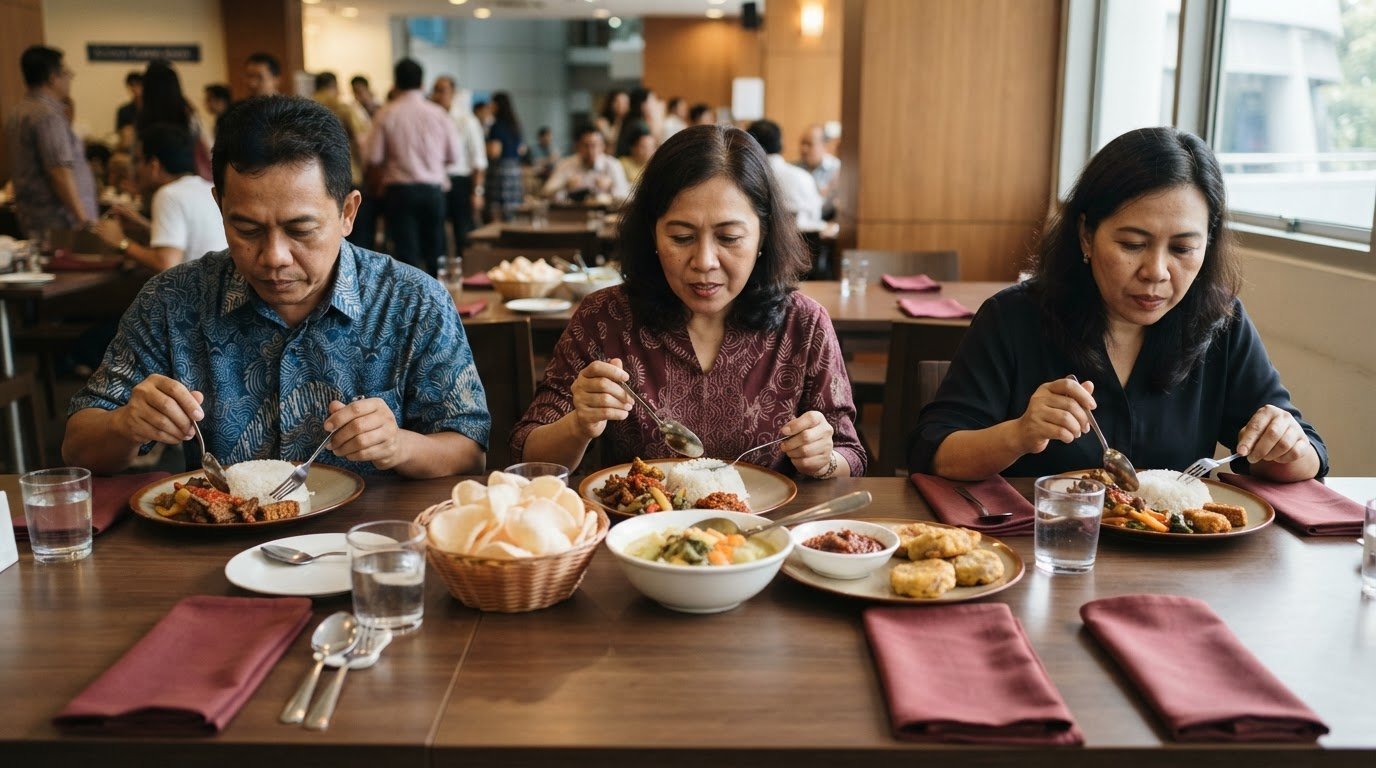

A mini buffet can be a practical centrepiece for an Indonesian event menu, alongside a set-menu meal. The right Indonesian catering menu balances familiar Indonesian and Balinese dishes with the event format and guests’ dietary needs.
Choosing the food is only part of planning a welcoming meal. The serving style shapes how guests move through the event, while the dishes set its character, from a shared spread to a sequence of courses.
This guide explains how Indonesian and Balinese dishes can shape a menu, what set-menu courses and mini buffets offer, and how to plan around dietary requests. Use it to compare options for a Singapore event, whether you’re organising a formal gathering or a relaxed celebration.
Key Takeaways
- Match the serving style to the event: set-menu courses suit a structured meal, while a mini buffet offers a shared spread.
- Plan dietary requests alongside dish selection so menu choices and guest needs are considered together.
- Build the meal around Indonesian or Balinese flavours, then choose main courses and accompanying dishes to create a balanced spread.
- Explore how Nasi Ambeng, Nasi Sambal Goreng and halal catering can inform menu choices for Singapore events.
Dietary requests and menu labels
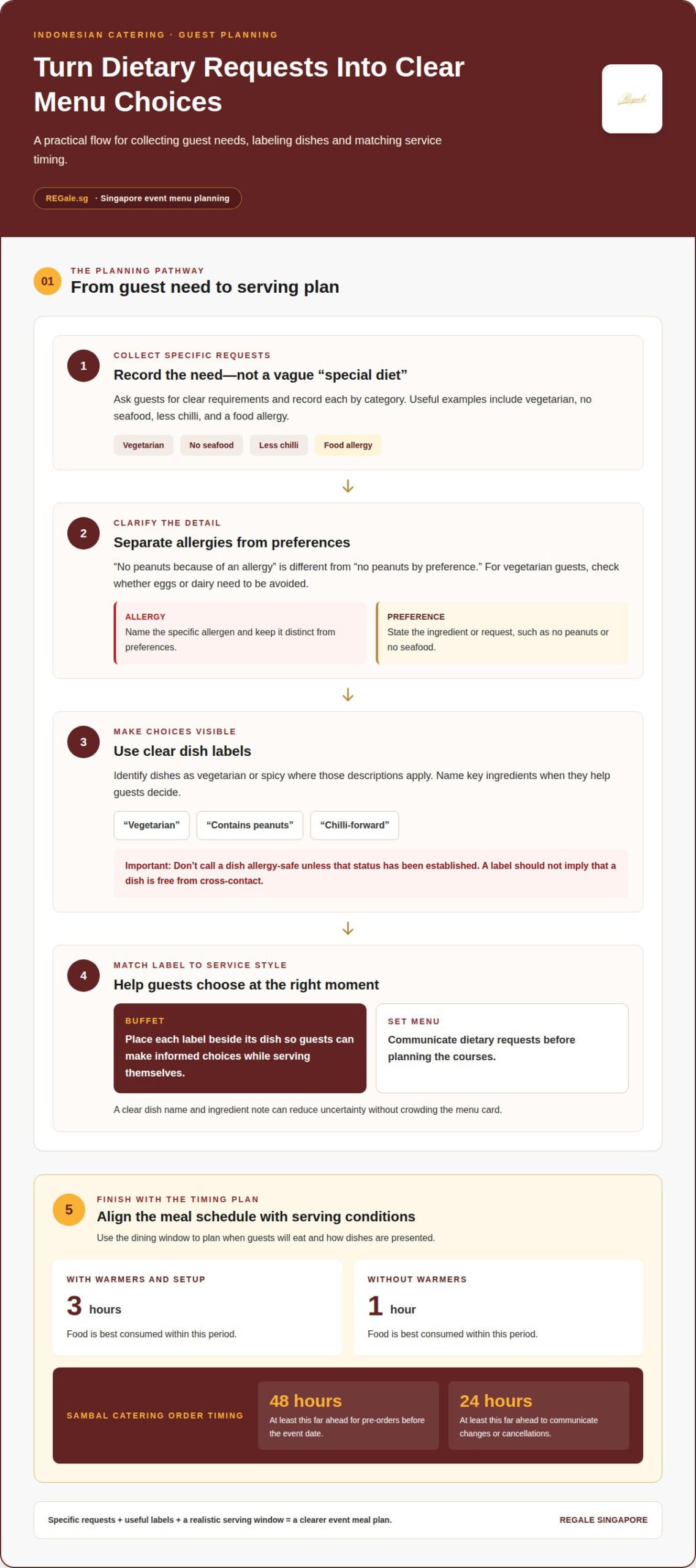
Dietary requests affect which dishes guests can choose and how an event meal is served. For a Singapore gathering, record each request by category, such as vegetarian, no seafood, less chilli, or a food allergy. A precise note helps the catering team understand the need and consider suitable dishes, rather than treating every request as a general preference.
Separate allergies from preferences. “No peanuts because of an allergy” signals a different concern from “no peanuts by preference.” Likewise, “vegetarian” may need more detail if a guest avoids eggs or dairy. Ask guests for specific requirements, then share those details clearly. Avoid reducing an allergy request to a broad label such as “special diet,” which can leave the ingredient or concern unclear.
Menu labels should make useful distinctions visible when guests are choosing. Identify dishes as vegetarian or spicy where those descriptions apply, and name key ingredients when they help guests decide. For example, a label might state “contains peanuts” or “chilli-forward.” Don’t describe a dish as allergy-safe unless that status has been established. A label can inform guests, but it shouldn’t imply that a dish is free from cross-contact.
- Vegetarian: Identify dishes intended for vegetarian guests and note relevant ingredients, such as egg or dairy.
- Allergy: Record the specific allergen and keep the request distinct from preferences.
- Spice: Mark dishes with noticeable chilli so guests can choose according to their tolerance.
- Ingredient preference: Name requests such as no seafood or no peanuts rather than relying on a vague “special request” label.
Serving style matters, too. For a buffet, place each label beside its dish so guests can make informed choices while serving themselves. For a set menu, communicate dietary requests before planning the courses. A clear dish name and ingredient note can reduce uncertainty without crowding the menu card.
Singapore service timing belongs in the same planning conversation. Food with warmers and setup is best consumed within 3 hours; food without warmers is best consumed within 1 hour. These periods can guide decisions about when guests will eat and how dishes are presented. Keep the meal schedule and serving arrangement aligned with the expected dining window.
For Sambal catering orders, allow at least 48 hours before the event date for pre-orders. Changes or cancellations need to be communicated at least 24 hours in advance. Treat those steps separately from dietary notes: a request describes a guest’s needs, while an order change alters the catering arrangement. Clear labels, specific requests, and timely updates give the menu a more practical structure.
Indonesian set-menu course options
A set menu gives an Indonesian meal a planned sequence, from an opening dish to dessert. For Singapore events, choose courses that suit the gathering, guest preferences, and time available for dining. An Indonesian catering menu can be designed around a particular flavour profile, with each course playing a clear role.
For catering pre-orders, allow at least 48 hours before the event. Payment must be received at least 24 hours before delivery for an order to be confirmed. Changes or cancellations need to be communicated at least 24 hours in advance. For same-day orders, cancellations made at least 3 hours before the event receive a 50% refund.
Common Menu Dishes
A set menu can begin with a small savoury dish, then move to rice and a main course. Nasi goreng offers a one-dish option, while satay can introduce grilled flavours before a fuller main. Choose dishes with varied textures and seasonings instead of repeating similar sauces throughout the meal. Set a pace that gives guests time to enjoy each course.
For a shared meal, Nasi Ambeng brings several components together around rice. A plated menu, by contrast, gives each guest a defined portion. Choose dishes to match the serving format. This helps shape the meal without requiring every course to be elaborate.
Appetizers, Sides, and Desserts
Indonesian catering can include starters, accompaniments, and sweets, depending on the menu. Examples include perkedel as a savoury opening, vegetables or crackers alongside a main, and klepon as a sweet finish. For a set menu, choose an appetizer that doesn’t compete with the main course, then pair the main with sides that add contrast.
Guests may prefer a lighter dessert after a rich or spicy main. A small sweet course can finish the meal without adding another heavy dish. Name each course clearly, especially when ingredients or spice levels affect guest choices. This makes the menu easier to follow from the first serving to the last.
Popular selections in Singapore include Nasi Ambeng, Nasi Sambal Goreng, satay, rendang, and nasi goreng. There is no verified ranking of these dishes, so choose according to the occasion and the meal style. A second Indonesian catering menu option might centre on shared dishes, while another could use plated courses for a more structured dinner.
To plan the sequence, decide whether guests will share dishes or receive individual servings. Then choose an opening, a main with suitable sides, and an optional dessert. Balance rich and lighter flavours, and consider how long guests will have to dine. A clear sequence gives the set menu a natural rhythm and keeps its dishes connected.
Indonesian main courses
A main course gives the meal its central flavour and structure. Indonesian options can feature chicken, beef, seafood, or vegetables, served with rice and complementary sides. For example, ayam bakar brings grilled chicken, while ikan balado pairs fish with a chilli-based sauce. These are planning examples, not a fixed catering selection.
Start with the event format and guest preferences. A plated meal can centre on one protein, with rice and vegetables as accompaniments. A buffet gives guests more choice, so balance richer dishes with lighter options. Consider spice, too: sambal served separately lets guests control the heat, while a chilli-based main has a more pronounced flavour throughout.
Choosing a protein and flavour profile
Chicken suits menus where a familiar protein is useful, while beef brings a deeper, slow-cooked character. Balinese ayam betutu, a seasoned chicken preparation, offers a different flavour from grilled ayam bakar. Seafood such as ikan bakar adds variety but may not suit every guest. Pair distinct proteins with vegetables and rice rather than filling the menu with similarly rich dishes.
- Chicken: Consider ayam bakar for a grilled profile or ayam betutu for a more aromatic preparation.
- Beef: Choose a slow-cooked dish when the menu needs a richer centrepiece.
- Seafood: Ikan bakar adds variety, while fish-based sauces can shape the dish’s flavour.
- Vegetables: Sayur lodeh, a vegetable dish in coconut-based gravy, can complement a meat-led spread.
Rice is more than a side in many Indonesian meals. Plain steamed rice gives a strongly seasoned main room to stand out, while yellow rice provides an aromatic base. Choose a rice style that works with the main dishes. Several competing sauces or heavily seasoned components can make the plate feel crowded.
For a cohesive spread, compare each dish by protein, cooking method, spice, and sauce. Grilled chicken, yellow rice, and sayur lodeh offer different textures and flavours. Fish with plain rice may suit guests who prefer a simpler combination. Clear dish names also help guests recognise ingredients and choose food that fits their preferences.
These examples can guide menu planning without assuming every dish suits every event. Consider the occasion, serving format, and balance of meat, seafood, and vegetables. A focused selection with contrasting flavours often gives guests clearer choices than a table crowded with similar mains.
Indonesian mini buffet menu
An Indonesian mini buffet suits events that need a shared meal without the breadth of a full buffet. A buffet gives guests a self-service selection, a mini buffet offers a more compact shared spread, and a bento provides individual portions.
The format shapes how guests access the food, not just how it looks. A mini buffet brings several dishes together for a shared meal, while a bento keeps each portion separate. Choose a format based on the event space, serving flow, and whether guests should select their own combinations.
Start with a main dish, then add rice and sides that complement it. For example, ayam goreng can pair with steamed rice and vegetables, while a vegetable curry can provide a meat-free option. A focused menu is easier to serve and understand than a crowded selection of dishes with similar flavours.
- Main: Select a central dish, such as a chicken, beef, seafood, or vegetable preparation.
- Staple: Pair it with steamed rice or another suitable rice dish.
- Accompaniments: Add vegetables, crackers, or a condiment that complements the main.
- Choice: Include a contrasting option when guests have different preferences.
Think about how guests will serve themselves. Keep rice and main dishes easy to reach, and place sauces where they won’t obstruct the serving area. Label dishes by name and note noticeable ingredients or spice. This helps guests make informed choices and keeps traffic around the table orderly.
A mini buffet works well when guests are sharing a meal but don’t need the breadth of a larger buffet. An individual bento, by contrast, suits settings where each guest needs a separate meal, such as a meeting with limited serving time. A full buffet can suit an event where guests benefit from a broader self-service spread. These formats differ in portioning and service, not in any single required dish list.
For an Indonesian menu, balance savoury, spicy, and fresh elements. A richly seasoned main can sit alongside plain rice and vegetables. Serve sambal separately so guests can add it to taste. A small, deliberate selection also makes each dish easier to identify and keeps the meal centred on its main flavours.
Before settling on a menu, map the guest experience from arrival to serving. Decide whether guests will queue, collect individual meals, or share dishes at a table, then arrange the menu around that choice. A mini buffet offers a practical middle ground for shared service, while a bento or full buffet may fit better when portioning or variety matters most.
What dishes are commonly included in an Indonesian catering menu?
A typical Indonesian menu combines rice, a main dish, vegetables, and condiments. Nasi goreng, beef rendang, satay, and gado-gado are familiar examples, each with a different texture or flavour. The selection depends on the event’s serving style and the balance of dishes. These examples can guide planning, but they don’t make up a fixed menu for every gathering.
Rice anchors a meal and complements strongly seasoned dishes. Nasi putih offers a simple base, while nasi uduk adds fragrance and richness. For an Indonesian catering menu, consider how the rice will work with the main course. Beef rendang has a rich, slow-cooked flavour; ayam penyet pairs chicken with sambal. Contrasting seasonings help each dish stand out.
- Rice: Nasi putih provides a plain base, while nasi uduk brings a more aromatic profile.
- Meat: Beef rendang and ayam penyet offer different preparations and flavour intensity.
- Shared bites: Satay adds skewered meat and a sauce for dipping.
- Vegetables: Gado-gado combines vegetables with peanut sauce for a distinct accompaniment.
Vegetable dishes add variety beyond the main proteins. Urap pairs vegetables with seasoned grated coconut, while tempeh provides a soy-based option. Sambal goreng kentang adds potatoes with a savoury, spicy profile. When planning an Indonesian catering menu, consider how each side’s texture and seasoning will complement the rice and main dishes.
Condiments give guests more control over flavour. Sambal adds chilli heat, while peanut sauce brings savoury depth to dishes such as satay or gado-gado. Place sauces beside the dishes they accompany and label them clearly. Guests can choose combinations to suit their preferences without changing the character of every main dish.
A balanced spread brings together varied textures and levels of richness. Beef rendang with plain rice and urap, for example, pairs a tender main with vegetables. Satay adds a grilled element, while a separate sauce lets guests adjust each bite. For shared dining, Nasi Ambeng brings several components together around rice for a communal meal.
Let the event format narrow the choices. A buffet offers several dishes for guests to combine, while a set menu follows a planned sequence. For a compact selection, consider a main, rice, a vegetable side, and one condiment. Contrasting textures, such as tender rendang and fresh vegetables, help create variety without crowding the table.
For an event centred on Indonesian flavours, explore halal Indonesian catering options and consider which dishes best suit the gathering.
Regale Singapore: Halal Catering
Regale Singapore offers Halal Catering for events centred on Indonesian food. Its Nasi Ambeng provides a shared-meal option, while Nasi Sambal Goreng brings a distinctive dish to the table. These choices suit planners who want a clear Indonesian focus rather than a broad menu spanning unrelated cuisines.
For a gathering, consider whether guests would enjoy sharing Nasi Ambeng or having Nasi Sambal Goreng as a central dish. Regale Singapore also serves Authentic Indonesian Cuisine, making it a natural option when you want Indonesian flavours to shape the meal. Choose dishes and a serving style that fit the occasion.
Contact Regale Singapore to discuss Halal Catering for your event.
Shape a menu around the occasion
Let the event’s rhythm guide your final menu choices. A meal for colleagues may call for straightforward service, while a family gathering can invite a more communal experience. As you refine the Indonesian catering menu, consider how the dishes, serving format, and dietary needs work together. A clear direction makes the food feel connected to the occasion, not simply assembled from separate choices.
Regale Singapore serves Authentic Indonesian Cuisine, including Nasi Sambal Goreng and Nasi Ambeng. These dishes can anchor an event menu in Indonesian flavours, whether you’re planning a shared meal or choosing a central dish. Select the approach that best suits how you want guests to gather and dine.
For a next step, contact Regale Singapore about catering and share the kind of event meal you have in mind. A thoughtful menu can give your Singapore gathering a distinctive and welcoming centre.
Frequently Asked Questions
What are popular Indonesian rice, noodle, and main dish options for catering?
Popular choices include Nasi Minyak, Briyani, and noodle dishes such as mie goreng, alongside mains like Nasi Sambal Goreng and Nasi Ambeng. For an Indonesian catering menu, choose a staple that complements the main rather than competing with its seasoning. A rice-based meal suits shared dining, while noodles add a different texture. Regale Singapore serves Nasi Sambal Goreng and Nasi Ambeng.
Which halal Indonesian catering options are available in Singapore?
Regale Singapore offers Halal Catering, Halal Buffet, and Halal Mini Buffet in Singapore. The buffet formats give event planners different serving arrangements to consider. For an Indonesian catering menu, select the format based on whether guests will serve themselves from a shared spread or receive a more compact arrangement. Nasi Ambeng can also suit a communal meal, while Nasi Sambal Goreng offers a distinct central dish.
Can catering menus accommodate vegetarian, vegan, and other dietary restrictions?
Menu planning can account for dietary needs when requests are described precisely. State whether a guest is vegetarian or vegan, and identify specific exclusions such as eggs, dairy, or a particular allergen. These categories aren’t interchangeable: a vegetarian dish may contain dairy, while a vegan request excludes animal-derived ingredients. Clear ingredient information helps guests make informed choices; note preferences such as mild spice separately.
