
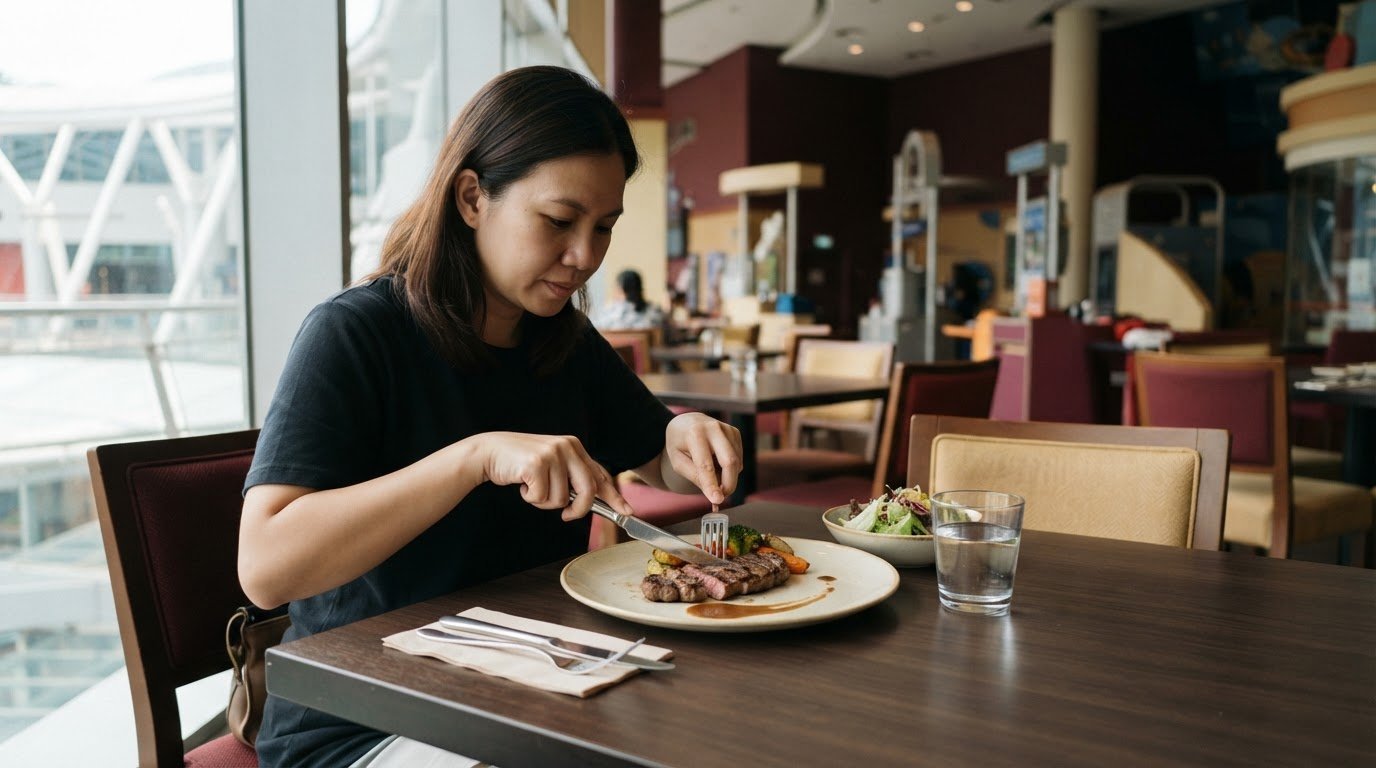

For halal Western food in Singapore, begin with a halal-certified restaurant that serves Western dishes, then check its opening hours before you go. A halal certificate typically displays the MUIS logo and the establishment’s name and address. A “no pork, no lard” sign alone does not mean a place is halal-certified, so look for the certificate when assessing halal Western food in Singapore.
Choosing a place involves more than finding a Western dish on the menu. Halal requirements also cover ingredients, meat preparation and avoiding contact with non-halal elements. This guide explains what to look for, how to assess an establishment’s halal status, and how to check its location and opening hours. It also introduces Singapore dining options where Western dishes sit alongside other cuisines.
Key Takeaways
- Look for a halal certificate displaying the MUIS logo and the establishment’s name and address; a “no pork, no lard” sign alone isn’t proof of certification.
- Understand the key dietary considerations, including permitted ingredients, halal meat preparation and avoiding contact with non-halal elements.
- Before travelling, check the restaurant’s location, public transport details and current opening hours so your visit fits your plans.
- Compare menus and listed prices to find an option that suits your meal preferences and budget.
1. MUIS halal-certified and Muslim-owned options
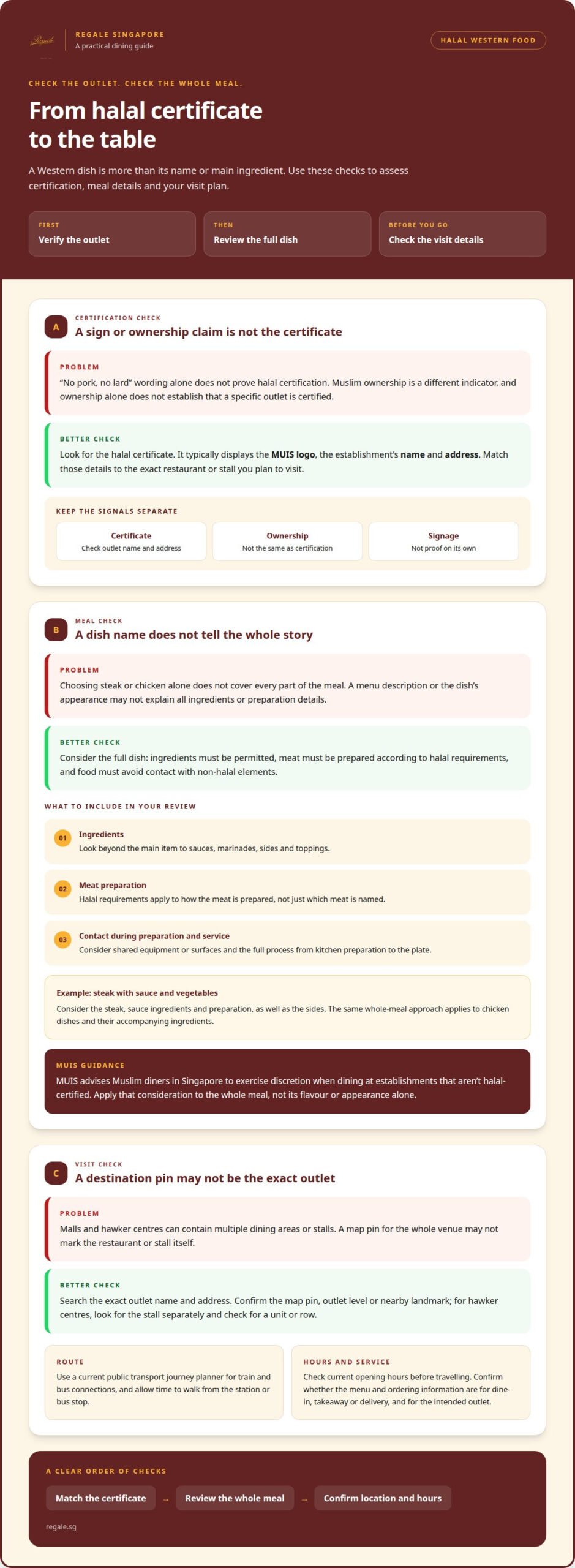
For halal Western food in Singapore, use the establishment’s halal certificate as a practical starting point. A certificate typically displays the MUIS logo and the restaurant or stall’s name and address. Match those details to the specific place you plan to visit, particularly if the business has more than one location.
Muslim ownership and halal certification are different indicators. A restaurant may be Muslim-owned, but ownership alone doesn’t establish that the specific outlet is certified. Likewise, a “no pork, no lard” sign doesn’t by itself guarantee halal certification. Check the certificate rather than relying on a menu description, sign or ownership claim alone.
For a family meal or group outing, look for a MUIS-certified restaurant with a menu and setting that suit everyone at the table. Compare the Western dishes available, such as chicken, steak or meals with cheese, and consider whether there is a suitable choice for each diner. The best fit depends on your group’s preferences and practical needs, not a universal ranking.
For families and groups, shortlist certified restaurants with choices for the whole table, then compare their locations and seating arrangements. One diner may prefer a golden-crusted dish, while another might choose chicken or a cheese-topped option. Review the menu before deciding.
Delivery and takeaway options can vary by restaurant and outlet. Check the current menu or ordering information, and make sure it refers to the location you intend to order from. A dine-in menu may not show the full takeaway selection.
- Match the details: Compare the MUIS certificate’s name and address with the restaurant listing.
- Separate the signals: Treat Muslim ownership and “no pork, no lard” wording as distinct from certification.
- Check the meal format: Review whether the menu is for dining in, takeaway or delivery.
These steps help narrow your options without treating every Western menu as the same. Match a listing’s outlet name to the certificate before travelling or ordering, then review that outlet’s dishes and service format. This helps you choose for your plans, whether you’re organising a family lunch, meeting friends for steak or ordering a meal at home.
If an outlet displays a “no pork, no lard” sign, distinguish that claim from halal certification. Check the certificate before treating the outlet as halal-certified.
2. Halal dietary requirements
Halal requirements apply to more than the main item on the plate. Ingredients must be permitted under Islamic law, meat must be prepared according to halal requirements, and food must avoid contact with non-halal elements. These principles apply across restaurant formats, including Western meals with several components.
Consider steak served with sauce, vegetables and a side. The steak, sauce ingredients and preparation all matter, so choosing halal meat alone does not address the entire meal. The same applies to chicken dishes and their accompanying ingredients. A menu description can identify components, but may not explain every preparation detail.
Contact matters as much as ingredients. Even a dish made with suitable ingredients can raise concerns if it comes into contact with non-halal elements during preparation or service. Consider the full process, from kitchen preparation to the plate, including shared equipment or surfaces. The requirement is to avoid contact, not simply to choose a suitable main ingredient.
MUIS advises Muslim diners in Singapore to exercise discretion when dining at establishments that aren’t halal-certified. Apply that guidance to the whole meal rather than focusing only on its flavour or appearance. Browning, melted cheese and a clear menu description show how a dish is presented, but do not establish its ingredients or preparation method.
- Review the full dish: Include sauces, marinades, sides and toppings in your consideration.
- Consider preparation: Halal requirements include avoiding contact with non-halal elements.
- Assess the meat: Meat must be prepared according to halal requirements.
- Use discretion: MUIS advises this at establishments that aren’t halal-certified.
These checks are useful when comparing a Western menu with a selection of different dishes. Steak with sauce and chicken with a marinade each involve more than the named meat. Reviewing the complete meal helps diners understand what is served and how halal requirements apply, rather than judging by a dish’s name or appearance alone.
For a shared meal, a halal buffet option can bring varied dishes together for the table. Consider this format when diners want a broader selection, while keeping the same attention to ingredients, preparation and contact.
3. Location and public transport
Halal Western options can be found in Singapore malls and hawker centres. The selection varies by venue, so search the specific mall or centre before travelling. A mall directory can help locate restaurants, while a hawker centre listing can narrow the search to individual stalls.
Start with the exact outlet name, then enter its address into a map app. Check that the pin marks the restaurant or stall, not just the building. A mall, for example, may have several entrances and dining areas. Confirming the outlet’s level or a nearby landmark can make the final walk easier.
Compare the route from your starting point with the destination address. Use a current public transport journey planner to find suitable train and bus connections, and allow time to walk from the station or bus stop. A route that ends at a large mall entrance may still involve a walk indoors.
For a hawker centre visit, search for the centre and the stall separately. This helps distinguish the stall’s location from the centre’s general map pin. Check whether the listing gives a unit or row, then follow the centre’s signs. If several stalls serve Western dishes, compare their menus before choosing.
Location shapes the dining experience. A mall restaurant may suit a planned sit-down meal, while a hawker centre makes it easy to compare stalls in one venue. If you’re meeting a group, share the exact outlet pin and a nearby entrance or landmark. This gives everyone the same destination instead of a general building address.
- Search precisely: Use the outlet name and venue name together.
- Check the pin: Match the map result to the restaurant, stall or unit.
- Plan the last stretch: Include the walk from public transport to the venue.
- Review the menu: Compare dishes such as a burger and its ingredients before setting out.
Before leaving, check the map listing and venue directory for your chosen outlet. Mall tenants and hawker stalls can have distinct addresses within the same complex, so a venue name alone may not direct you to the right entrance. This final check helps align your route, meeting point and dining plans.
4. Opening hours
Opening hours can vary by outlet, day and service format, so check the specific restaurant before travelling. A listing for one mall location may not reflect a separate branch. Start with the outlet name and address, then compare the hours on the restaurant’s own channels with the venue directory. This helps you plan for the location you intend to visit.
Use a simple sequence. Search the restaurant’s name together with its specific address, then look for the schedule on its official website or social media page. If it is inside a mall or building, compare those details with the venue directory. The shopping centre’s hours and the restaurant’s service hours may differ.
Check which day each time applies to. Weekday hours may not apply on weekends or public holidays. If you’re planning around a particular event, check the date rather than relying on a general weekly schedule. Note any listed last-order time separately from closing time, as they refer to different points in service.
Your meal format can also affect the plan. A restaurant may list different times for dine-in, takeaway or delivery. Check the relevant option before setting out, especially if you’re collecting food after work or meeting friends. A delivery platform’s ordering window may differ from the venue’s dine-in schedule.
For a group, share the outlet’s location and opening information. This keeps everyone aligned on the same destination and arrival window. Whether someone is travelling by train or driving, a clear restaurant address helps with planning. Include your intended dining time in the group message, then revisit the listing on the day.
- Match the outlet: Use its full name and address, not just the restaurant brand.
- Check the date: Compare the schedule for your planned day, including public holidays.
- Separate service times: Look for dine-in, takeaway, delivery and last-order details.
- Recheck before leaving: Review the listing on the day to keep your plans current.
These steps make it easier to plan a Western meal, whether you’re looking for steak, burgers or other dishes. Keep the outlet address and its listed hours together, and use them to coordinate your route and arrival. This helps avoid building plans around an outdated listing.
5. Where can I find affordable halal Western food in Singapore, and what are typical prices?
Affordable choices depend on the dish, portion, venue and extras, so compare complete meals rather than headline items. A burger with sides, for example, may cost more than the burger alone. Check each menu’s prices in Singapore dollars and compare what the meal includes. This gives you a clearer picture of value than a general price range that may not match your order.
Start with the menu for the specific restaurant or outlet you plan to visit. Compare like with like, such as chicken meals with chicken meals or steak options with steak options. Check whether the price includes sides, sauces or toppings, and account for any add-ons you want. A fair comparison uses the same meal components at each place.
The venue can shape your choices. A hawker stall, food court and full-service restaurant may offer different menus and dining formats. Browse the options at your chosen location, then compare portions and included sides. For takeaway or delivery, include any displayed delivery or service charges in your total. This helps you assess the final spend, not just the menu price of one item.
For a group, estimate each person’s order before choosing a venue. One diner may want a main dish, while another adds a side or drink. For a shared meal, compare individual orders with a buffet, using the available menu and service details. The best-value option depends on the group’s preferences, appetite and chosen format.
For catering or group orders, the price depends on the menu, portions and service format, and is provided after a quote request. These factors matter because a buffet and individually selected Western dishes involve different menu and serving requirements.
- Compare like with like: Match dish type, portion and included sides across menus.
- Calculate the full order: Add selected extras and any displayed delivery charges.
- Choose the format: Compare individual meals with shared dining options for your group.
Keep a short comparison note with the outlet name, dish, included sides and any extra charges. That makes it easier to review options without confusing a takeaway listing with dine-in details. For a halal restaurant offering both Western and Indonesian cuisine, explore halal dining options and consider which menu format suits your plans.
Regale Singapore: Nasi Sambal Goreng
Regale Singapore brings Western cuisine and Indonesian favourites together for diners seeking halal Western food in Singapore. Its menu includes Nasi Sambal Goreng and Nasi Ambeng alongside Western options, making it a practical choice when people at your table want different cuisines.
Located at Science Centre Singapore, the halal-certified establishment serves Western and local favourites for daytime visitors. In the evening, the venue shifts to an Indonesian dining experience. This gives you a distinct option when planning a meal around the time of your visit or seeking familiar Western dishes alongside Indonesian cooking.
For a closer look at the menu and venue, visit Regale Singapore’s website.
Make your next meal a considered choice
Finding halal Western food in Singapore can be the start of a broader dining plan. For your next gathering, consider whether your guests would enjoy a Western meal or a change of pace with Indonesian cuisine. Regale Singapore offers Authentic Indonesian Cuisine, including Nasi Sambal Goreng and Nasi Ambeng, for diners seeking those flavours.
If you’re arranging an event, the menu can help shape the occasion and bring guests together over a shared meal. Regale Singapore offers Western and Indonesian dishes to consider as you plan. Choose the style that best suits your gathering, then get in touch to discuss your meal.
Contact Regale Singapore to plan your event, and explore a welcoming meal for your guests.
Frequently Asked Questions
Which area has the most halal Western food?
There isn’t enough comparable information here to rank one Singapore area as having the most halal Western restaurants. For a practical search, choose the mall, hawker centre or neighbourhood you plan to visit, then check its directory for Western menus. Compare the specific outlets and their locations within each venue. This approach helps you find nearby options without treating a popular dining district as a guaranteed match.
Which halal Western restaurants in Singapore are MUIS-certified?
Regale Singapore serves halal Western cuisine alongside Indonesian and local favourites at Regale at Science Centre. When comparing other restaurants, assess the specific outlet rather than relying on a brand name or menu category alone. Certification details should match the restaurant or stall you plan to visit. If a business has multiple locations, check the details for the branch you intend to visit.
What are the best halal Western restaurants in Singapore?
The best choice depends on the dishes and setting your group prefers. Regale Singapore serves Western cuisine, including an Angus Burger, alongside Indonesian dishes. If steak, pasta or fish and chips is your priority, compare menus for those specific dishes before deciding. For a family meal, look for a menu with options for different diners, rather than choosing based on one person’s favourite.
Which halal-certified Western restaurants are near me in Singapore?
Use a map app to find halal-certified Western restaurants near your current location, then open each outlet’s listing. Regale at Science Centre offers Western, local and Indonesian cuisine and may suit plans around the venue. Check the route and exact restaurant address before setting out. A nearby result can still involve a walk through a mall or complex, so use the outlet’s location details rather than the general venue pin.
What Western food places in Singapore are MUIS halal-certified?
Regale Singapore serves halal-certified Western cuisine. When looking for other places, check that certification details name the specific restaurant or stall, rather than relying only on cuisine labels. A Western menu describes a food style, not an establishment’s certification status. Note the outlet name and address as you compare options, especially when search results show branches with similar names.
What halal Western restaurants in Singapore are open late?
Regale at Science Centre operates from 10 AM to 10 PM, making it an option for an evening meal before closing. For a later dining plan, compare the closing time and last-order information for the exact outlet you’re considering. Restaurant schedules can vary by location and date, so don’t assume that a general brand listing applies to every branch or day of the week.
Which halal Western restaurants in Singapore serve steaks, burgers, pasta, or fish and chips?
Regale Singapore serves Western cuisine, including an Angus Burger. For steak, pasta or fish and chips, check the current menu of each restaurant you’re considering and search by the exact dish name. Menus may vary between outlets and service formats. If you’re dining with others, compare the full selection so the group can choose a place that suits different preferences.
How can I check whether a Western restaurant in Singapore is currently halal-certified?
Check the certification details for the specific outlet and match the restaurant name and address to the place you plan to visit. A certificate typically displays the MUIS logo, the establishment’s name and its address. A “no pork, no lard” sign is not proof of certification. If a restaurant has several branches, check the details for the branch you intend to visit, not only its overall brand listing.
