
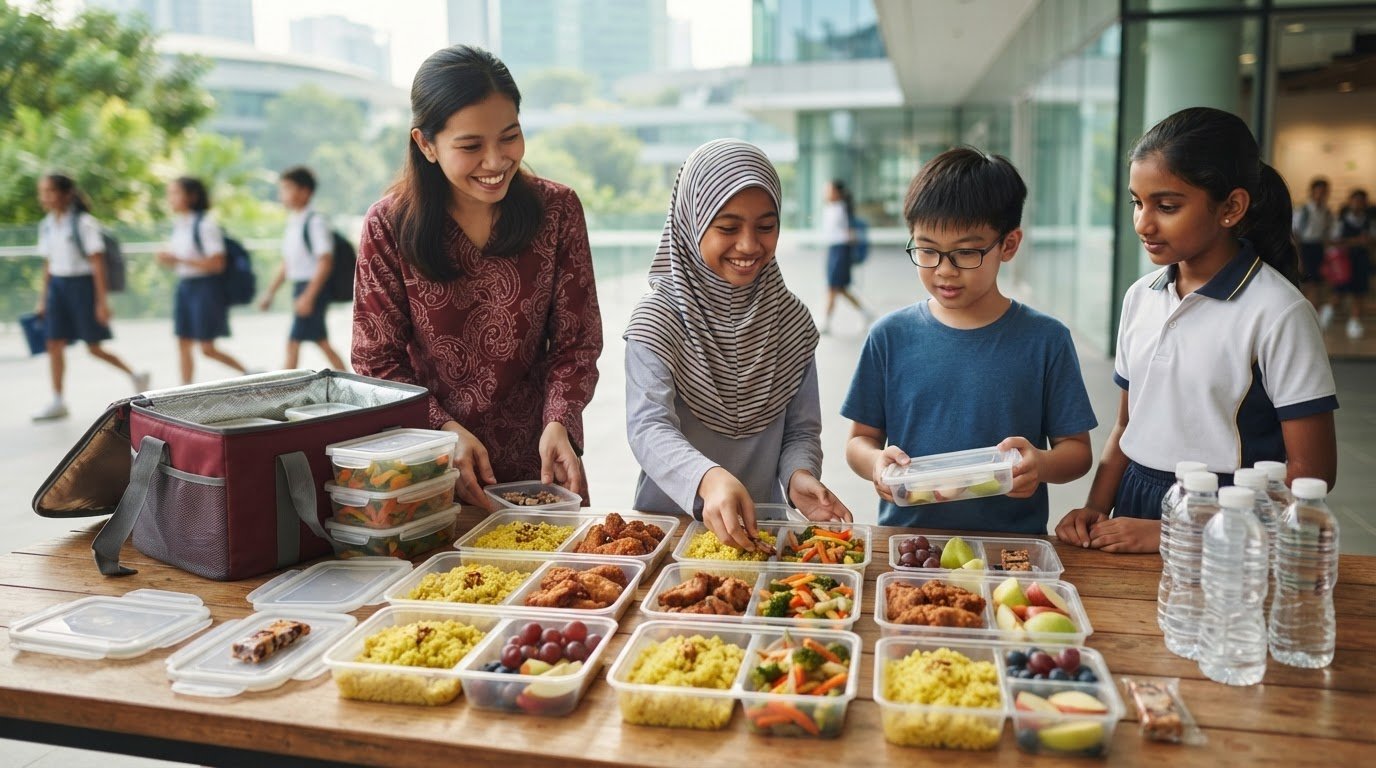

A school outing can be inclusive without making lunch planning complicated. For a packed halal lunch for a school trip, plan individually packed meals around clear halal choices, safe handling and the group’s schedule. Book packed meals at least 3 days in advance, and set a delivery time that gives teachers room to organise distribution before the meal break.
It’s understandable to want a packed halal lunch for a school trip that is suitable for Muslim students and simple to manage on the day. Prepare ingredients and containers ahead of time, and take children’s preferences into account to make lunch easier to organise and more appealing.
This guide covers practical ways to prepare and handle packed meals, coordinate orders and handovers, and choose filling foods for an outing. Thoughtful halal lunch planning can help every student feel included at the shared lunch table.
Key Takeaways
- Prepare ingredients and containers ahead of time, and warm a thermal flask before adding hot food to help it stay warm until lunch.
- Book packed meals at least 3 days in advance, then plan delivery around the outing schedule and the time needed to distribute meals.
- Make the meal inclusive by choosing halal-suitable food and involving children in lunch choices they’ll be happy to eat.
- Build a filling lunch with fruit and vegetables, halal protein and wholegrains, and vary the fillings to keep meals interesting.
- Choose snacks and drinks that are easy to carry and eat during the trip, with food labels considered when selecting packaged options.
1. Hygiene and food safety for individually packed meals
Prepare each lunch with clean hands, a clean work surface and washed utensils. Set out ingredients and containers before assembling meals, then cover ready-to-eat food until packing. For example, portion rice, cooked chicken and cut vegetables into separate clean containers rather than leaving them exposed together. Preparing everything ahead also makes it easier to organise individual meals without rushing.
Choose packaging that closes securely and contains sauces or moist foods without leaking onto other items. Label each lunch with the child’s name and include utensils or napkins as needed. Keep food out of direct sunlight and follow the school’s instructions for storing bags during the outing. To pack hot food in a thermal flask, first warm the flask with boiling water, empty it, then add the hot food and close it securely.
In Singapore, follow the school’s trip instructions on permitted foods, food sharing, allergies and rubbish disposal. Use the teacher’s guidance for that outing, and tell children not to swap food unless the school has arranged a safe, inclusive way to share.
Common ingredients to flag include peanuts and tree nuts, egg, milk, soy, wheat, fish and shellfish. Read packaged-food labels, avoid ingredients identified by a child’s family, and label each meal clearly. Don’t rely on removing a visible ingredient after packing.
There is no single lunch quantity that suits every child on a full-day trip. Pack a familiar meal and enough snacks to match the child’s appetite, activity level and planned meal breaks. Consider whether the outing includes a long walk or a late return. Pack drinking water for the journey and activities, adjusting the amount to the schedule, weather and access to refills.
To keep halal food separate from non-halal food, use a dedicated, sealed container and a separate bag. Keep it apart during packing and transport, and provide its own serving utensil. Mark the container clearly so teachers can hand it to the right student without opening or mixing meals. For example, place the labelled lunch in a separate section of the class food crate, not beside shared dishes.
Before departure, check that every child has the correct labelled meal, sealed packaging and any required utensils. These simple steps make a packed halal lunch for a school trip easier to identify, carry and serve while respecting dietary needs.
When buying lunchbox food, read the labels and look for trusted halal certification. Check the package information before packing, and clearly identify the meal for the child who will eat it. These steps help families make informed choices while keeping dietary requirements in view.
Singapore has over 1,200 MUIS-certified food establishments, including hawker centres, shopping-mall food courts, standalone restaurants, and hotel dining. This range of certified options can be useful when choosing where to buy food for a packed lunch. Whichever option is chosen, checking labels remains important for ingredients and dietary requirements, and trusted halal certification can help guide the purchase. Keep the selected food securely packed and labelled for the outing.
2. Ordering lead time and delivery planning
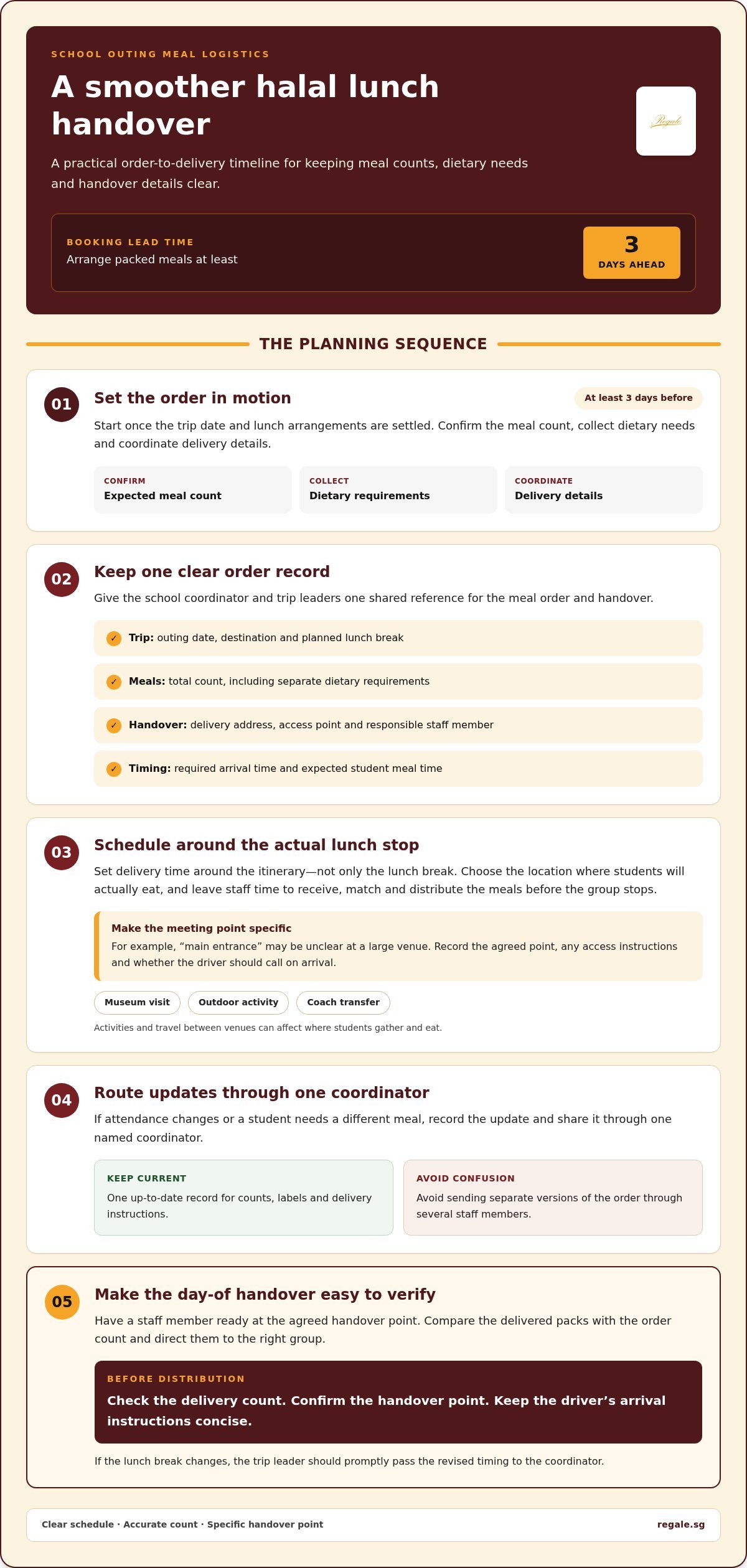
For school outings in Singapore, arrange packed meals at least 3 days ahead. That lead time gives organisers space to confirm the meal count, collect dietary needs and coordinate delivery details. Start once the trip date and lunch arrangements are settled. If attendance changes, update the count promptly so the order reflects the group expected to travel.
Before ordering, write down the details that affect preparation and handover. Include the school’s name, outing location, delivery point, lunch time and a teacher’s contact details for the day. For example, “main entrance” may be unclear at a large venue, so specify the agreed meeting point. Note any access instructions and whether the driver should call on arrival.
Keep one shared order record for the school coordinator and trip leaders. It can include:
- The outing date, destination and planned lunch break.
- The total meal count, including any separate dietary requirements.
- The delivery address, access point and responsible staff member.
- The time meals should arrive and the time students are expected to eat.
Set the arrival time around the itinerary, not just the lunch break. A museum visit, outdoor activity or coach transfer may change where students can gather and eat. Allow staff time to receive the delivery, match meals to students and organise distribution before the group stops. If the schedule includes travel between venues, use the location where lunch will actually be eaten.
Share changes through one named coordinator. If a student joins, withdraws or needs a different meal, record the change and communicate the updated total. Avoid sending separate versions of the order through several staff members. One current record reduces confusion about counts, labels and delivery instructions.
On the day, have a staff member ready at the agreed handover point. They can compare the delivered packs with the order count and direct them to the right group. Keep the driver’s arrival instructions concise, especially if the venue has several entrances or a restricted drop-off area. If the lunch break changes, the trip leader should promptly pass the revised timing to the coordinator.
For schools planning group meals, coordinated halal meal planning can help bring food choices and event arrangements together. A clear schedule, accurate count and specific handover point remain the foundation of a smooth delivery.
Menu planning can support delivery planning too. A 2-week rotating menu can make school lunch planning easier and reduce children’s boredom, while giving coordinators a familiar cycle for checking meal choices and dietary needs. For groups of 100+ people, larger orders may benefit from economies of scale, so confirm attendance and meal requirements together before finalising quantities. Keep menu choices and delivery details in the same current record, so staff can see whether a change affects the count or the packs needed.
For groups travelling into Singapore, account for arrival and transfers when setting the handover plan. The listed flight time from Mumbai to Singapore is approximately 5.5 hours. The listed flight time from Delhi to Singapore is approximately 6 hours. Organisers should still confirm when the group will reach its lunch location and who can receive the food, then share that schedule with the meal coordinator.
3. Halal packed lunches for inclusive school outings
Inclusion begins before the class leaves school. Ask families about dietary needs, then record each student’s requirements privately and accurately. A student may need halal food, avoid a particular ingredient, or have both needs. Give the trip coordinator one clear meal record so food choices are planned alongside attendance and lunch arrangements.
To check packaged food in Singapore, read its ingredient list and look for a halal certification mark from a trusted certifier. Review the full label instead of relying on a product name or one ingredient, and compare the packaging with the dietary information provided by the family.
Make the shared meal welcoming without asking children to explain personal choices. For example, offer the group the same style of individually packed lunch, with clear labels for each child’s meal. Children can sit together and eat at the same time, even when their foods differ. This avoids making one student’s lunch seem like an exception.
Children can help shape the menu. Invite them to choose between familiar options, such as a chicken wrap or a rice-based meal, and include fruit they already enjoy. Making a choice before the trip can reduce uneaten food and give students a sense of participation. Keep options consistent with each child’s dietary needs.
Use neutral, practical labels rather than labels that single out a student. A name and meal description help teachers distribute food discreetly. For instance, “Aisha, chicken and rice” tells the right person which pack to take without drawing attention to why it differs. Keep sensitive dietary details with the responsible staff member instead of displaying them for everyone to see.
Before departure, brief trip staff on the meal plan and distribution arrangements. Explain which packs go to which students, where meals will be handed out, and how to prevent accidental swaps. Children should know to eat their own meals and follow the teacher’s instructions about sharing. This is especially useful during a busy picnic stop, when several lunch bags may be opened at once.
Inclusive planning also considers the outing itself. A meal should be practical to carry, easy for the child to eat at the planned break and suitable for the activity. For example, a class eating outdoors may need individually packed portions instead of a shared serving setup. Coordinators can make the day smoother by matching food presentation to the venue and group routine.
These choices make halal meals a normal part of class planning. A well-organised packed halal lunch for a school trip lets children share the outing while respecting each student’s dietary needs.
4. What foods make a filling halal packed lunch for a school trip?
Build lunch around fruit and vegetables, halal protein and wholegrains. A practical guide is to fill half the lunchbox with fruit and vegetables, one quarter with lean halal protein and one quarter with wholegrains. For example, pair chicken slices with wholegrain bread, cucumber sticks and an apple. The portions need not be exact; use this balance to check that lunch includes more than one filling.
Choose foods that are easy to manage in a lunchbox and suit the child’s appetite. Put chicken slices in chapattis, pittas or rolls, or use turkey in a familiar wrap. For a different texture, pack rice with a suitable protein and vegetables. Keep wet fillings or dips in a separate sealed container so the bread stays firm and the meal is easier to handle during the trip.
Colour can make fruit and vegetables more inviting. Cherry tomatoes, cucumber sticks and berries offer varied shapes and textures alongside a main meal. Add hummus or a yoghurt-based dip if it suits the child’s dietary needs. Keep the dip separate until lunchtime, and pack a portion the child can manage without making the meal difficult to eat outdoors.
Rotate fillings instead of repeating the same sandwich on every outing. Changing chicken in a roll to turkey in a chapatti can make a familiar lunch feel different. Before packing, ask children to choose between suitable options, such as cucumber or cherry tomatoes. Their preferences can add variety while keeping the meal practical for the day’s schedule.
For an early departure, breakfast-style foods can work as lunch too. Options include a premade protein smoothie, an egg sandwich, oatmeal with fruit and nuts, or pancakes with halal sausages. Choose something the child already enjoys and can eat comfortably at the planned break. Keep ingredients and portions suitable for the child, and consider whether the food needs a spoon or can be eaten by hand.
A balanced meal need not include several elaborate dishes. A wholegrain wrap, halal protein, colourful vegetables and a piece of fruit make a straightforward combination. For a child who prefers rice, use it as the grain portion and add vegetables and protein separately. This keeps the food easy to recognise and adds variety without making packing complicated.
Use the child’s usual lunch habits as a guide, then adjust for the outing. For example, a student who rarely eats raw vegetables may prefer fruit with a familiar chicken roll. A filling packed halal lunch for a school trip should combine foods the child likes with a balanced mix of food groups, rather than relying on unfamiliar choices.
5. What halal snacks and drinks are suitable for children on a school trip?
Choose snacks that are easy to carry and open, and suit the child’s dietary needs. An apple, banana or small box of raisins can go alongside lunch without needing utensils. Plain crackers or a simple portion of fruit can also work for a short break between activities. Keep the snack familiar, especially if there is little time to eat.
Pack snacks in separate portions so children can reach them without opening the main meal. For example, put sliced fruit in a small sealed container and crackers in a dry pouch. Avoid foods that crumble easily during a coach ride or take several steps to eat outdoors. A napkin and a small rubbish bag can help keep the picnic area tidy.
Halal suitability depends on ingredients, not just a snack’s name. For packaged sweets, biscuits or savoury snacks, read the ingredient information and choose products appropriate to the child’s needs. Gelatine, flavourings and other additives can make suitability less obvious. If a family has shared specific dietary instructions, use them when selecting snacks.
Water is a practical drink to pack for walks, outdoor visits and coach journeys. Choose a bottle the child can open and close independently, and label it with their name. If the trip has several stops, remind children to bring their bottles along instead of leaving them at the first activity. Match any refill plan to the itinerary and available facilities.
Other drinks can suit a planned meal break, but consider the container and the child’s routine. A sealed carton of milk, for example, may be convenient if it fits the child’s dietary requirements and can be stored appropriately. Avoid packing a drink that spills easily in a backpack or needs refrigeration the group cannot provide. Let the trip schedule guide what is practical.
For a balanced snack selection, combine a familiar food with a fresh option. A banana with plain crackers, or sliced cucumber with a suitable dip, gives children a choice without filling their bags with several items. Keep dips separate to prevent soggy crackers, and choose portions the child can finish. Match the snack to the outing’s length and activity level.
- Choose easy-to-carry fruit, such as an apple or banana.
- Use separate containers for moist foods and dry snacks.
- Pack a named water bottle that the child can manage.
- Read packaged-food ingredients against each child’s dietary needs.
For organised outing meals, plan halal food for your school group around the schedule, children’s preferences and practical packing needs.
Regale Singapore: Nasi Sambal Goreng
Regale Singapore offers Nasi Sambal Goreng and authentic Indonesian cuisine for those considering halal food beyond individual lunchboxes. Nasi Ambeng and Western cuisine provide other choices when planning a shared meal around a school outing. Match the meal format to the group’s schedule and students’ dietary needs, keeping packed lunches separate where required. Organisers considering halal catering alongside their lunch plan can explore Regale Singapore’s offerings. Visit regale.sg to learn more or get in touch.
Make the next school outing easier to plan
A well-planned meal can help students feel welcome and let teachers focus on the outing. To plan a packed halal lunch for a school trip, use the group’s dietary needs, schedule and preferred meal style to guide your choices. If catering suits the occasion, Regale Singapore offers halal catering, including food offerings such as Nasi Sambal Goreng, Nasi Ambeng and authentic Indonesian cuisine.
Share the outing context and meal requirements when discussing arrangements, so the food choice fits the gathering. A clear plan can support an inclusive experience while leaving room for students to enjoy the day together. Contact Regale Singapore to plan meals for your school outing.
Frequently Asked Questions
What are easy halal lunch ideas that stay safe without refrigeration?
Choose whole fruit and unopened, shelf-stable halal-suitable foods for a lunch that does not need chilling. For example, pack a banana with sealed crackers or another dry snack whose label suits the child’s dietary needs. For a more substantial meal, choose a ready-to-eat product labelled for room-temperature storage and follow its packaging instructions. Keep the food sealed until lunchtime and avoid adding perishable fillings.
How long can packed lunch foods stay at room temperature safely?
There is no single safe room-temperature duration for every packed lunch. It depends on the food, its storage instructions, the surrounding heat and how it was handled. A sealed shelf-stable snack differs from a meal with perishable ingredients. For an outing in Singapore’s warm conditions, follow the product’s storage directions when packing and choose foods suited to the time between preparation and eating.
