
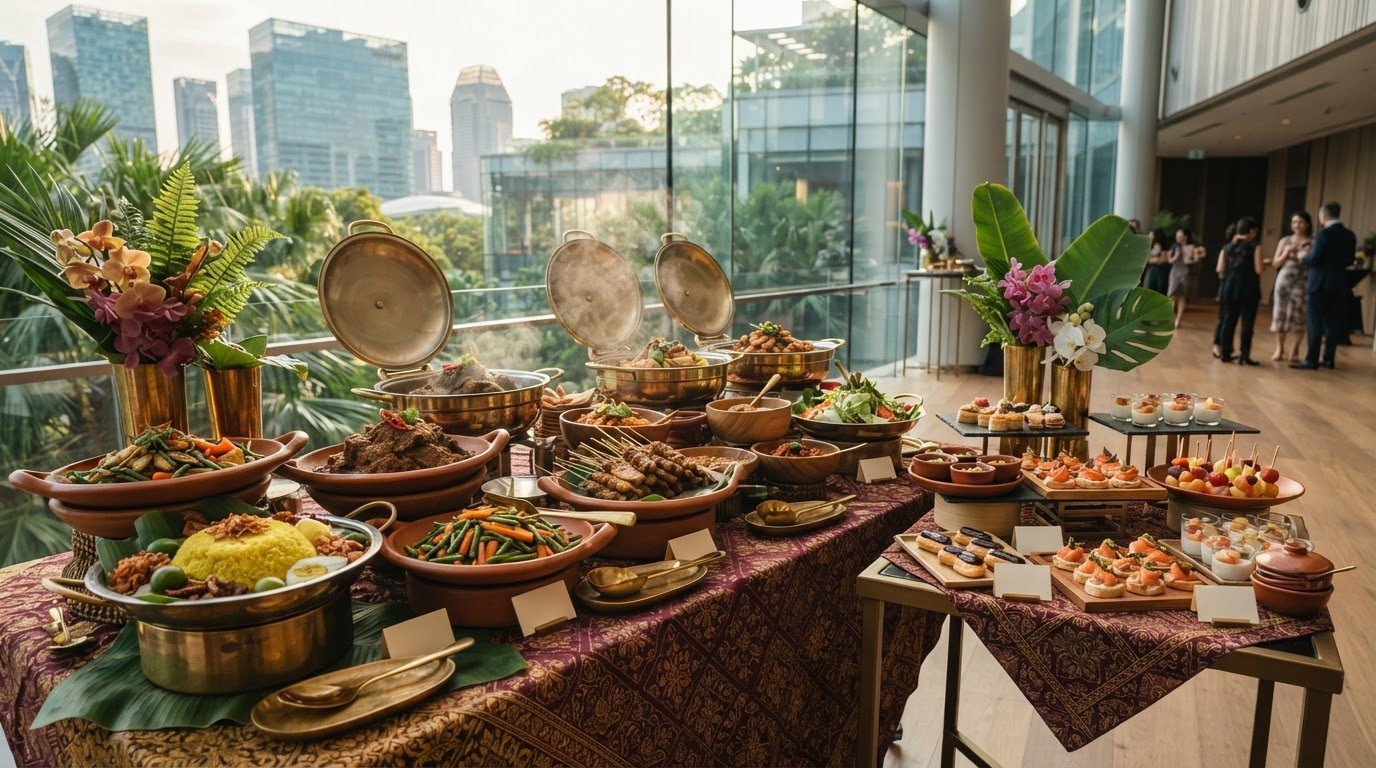

The best event menu isn’t simply the one with the most dishes. It’s the one guests can enjoy with confidence, while bringing people together around the table. Choosing delicious halal food for events means balancing halal requirements, guest preferences and a serving style that suits the occasion.
Start by picturing how the meal fits into the gathering. A buffet can work well when guests will move between the serving area and their seats, while a mini buffet may suit a more contained setup. The menu should also feel welcoming to guests with varied tastes. Regale Singapore is a halal-certified culinary establishment, with a dining menu that brings together Western favourites, Indonesian classics and local delights.
This guide covers practical ways to plan around halal assurance, guest preferences and the differences between buffet and mini buffet formats. Use it to clarify the meal you want, organise the details that affect the event, and explore Regale Singapore’s halal catering options.
Key Takeaways
- Start with the occasion and guest mix to shape an inviting menu that feels right for the gathering.
- Build delicious halal food for events by considering guest preferences before settling on flavours and serving style.
- Compare buffet and mini buffet formats by how guests will gather, serve themselves and experience the meal.
- Use a practical checklist to organise meal timing, venue setup and the decisions that depend on your catering arrangement.
- Explore Regale’s halal catering, buffet and mini buffet options, alongside its mix of Western, Indonesian and local dining traditions.
What makes delicious halal food right for an event?
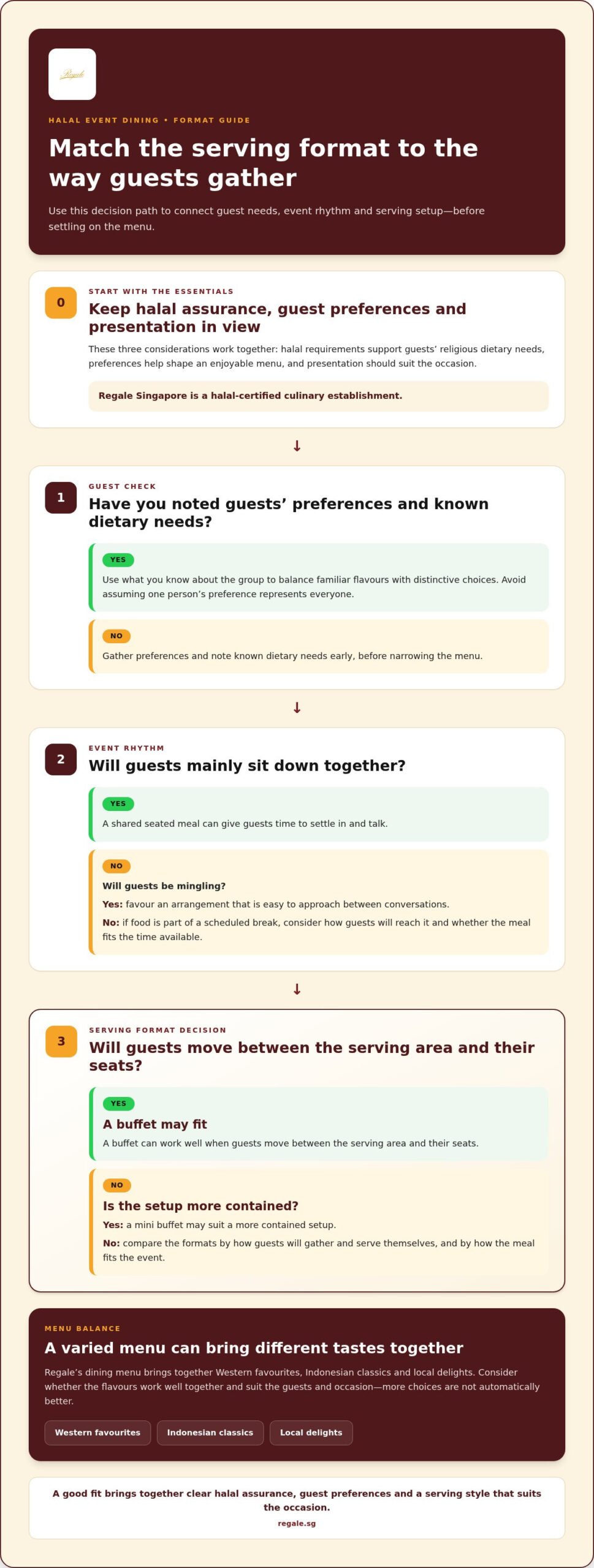
Delicious halal food for events brings together three essentials: halal assurance, flavours guests will enjoy and a presentation suited to the occasion. A menu can meet halal requirements yet still be a poor fit if it is awkward to serve, interrupts the programme or offers little appeal to the people attending. Plan the food and the serving setup together, from the first guest arriving to the end of the meal.
A well-planned halal event menu combines clear halal assurance, appealing flavours and presentation that suits the occasion. These considerations serve different purposes. Halal requirements address guests’ religious dietary needs. Preferences, such as familiar flavours or a taste for more distinctive dishes, help shape an enjoyable menu. Neither replaces the other: assurance matters, and so does choosing food that feels right for the gathering.
For a general overview of the term and its broader meaning, see What is Halal? For event planning, focus on giving guests confidence in the food while considering how the menu will be served and shared.
Start with the occasion and the people attending
Begin with the atmosphere you want to create. A family gathering may centre on relaxed conversation and shared dishes. A workplace event with a defined meal break needs a serving arrangement that fits the programme. A formal celebration may call for a composed presentation and a meal that allows the occasion to unfold at a comfortable pace. These are planning cues, not fixed rules. Let the host’s priorities and guests’ needs guide the final choices.
Think about how people will eat. Seated guests can settle into a shared meal, while a mingling reception may call for an arrangement that is easy to approach between conversations. For a scheduled break, consider how guests will reach the food and whether the meal fits the time available. Before narrowing the menu, note known dietary needs and preferences. This gives you a clearer picture of who the food needs to serve, without assuming that everyone has the same tastes.
Make halal assurance clear without reducing menu appeal
For guests who follow halal requirements, assurance is part of feeling comfortable at the table. Consider it early, alongside the occasion and serving format, rather than leaving it until the menu is nearly final. Regale is a halal-certified culinary establishment and offers halal dining.
Then focus on making the menu inviting. Consider the range of flavours and styles, and whether they suit the event and its guests. Regale’s dining menu brings together Western favourites, Indonesian classics and local delights, showing how different culinary traditions can contribute to a varied dining experience. Pair clear halal assurance with thoughtful choices and presentation to make the meal feel welcoming to the whole gathering.
How to build a halal event menu guests will enjoy
A good menu takes shape through a few deliberate decisions, rather than by starting with a long list of dishes. Define the gathering, learn about the guests, choose a serving format, then refine the menu around those choices. This sequence keeps the event’s purpose in view and helps prevent a menu that looks appealing on paper but feels awkward in practice.
- Define the gathering. Note the occasion, its tone and how food fits into the programme. A meal that anchors a celebration may call for a different experience from food served during a short workplace break.
- Understand the guests. Consider the group’s tastes, familiarity with different cuisines and known dietary needs. Gather this information early, without assuming that one person’s preference represents the whole group.
- Choose a format. Decide whether guests will sit down together, serve themselves or eat while mingling. The serving arrangement affects how people move through the event and interact around the meal.
- Refine the menu. Balance familiar flavours with distinctive choices, then consider whether the overall selection and presentation suit the occasion.
Guest preferences, event format and menu balance work best when planned together. Variety can give a mixed group more ways to find something appealing, but adding more choices isn’t automatically better. Think about whether the flavours work well together and whether the overall selection feels cohesive. Regale’s dining menu brings Western favourites, Indonesian classics and local delights together, reflecting how different culinary traditions can contribute to an inviting meal.
Match variety to the guest mix
Guests may have different comfort levels with local, Indonesian and Western flavours. Familiar choices can make a menu approachable, while distinctive flavours can give the meal more character. Consider the group as a whole and avoid basing the selection on assumptions about age, background or appetite. If guests have specific dietary needs, note them clearly as you plan the menu.
Choose food that fits the event’s rhythm
Food shapes the pace of an event. A shared seated meal can encourage guests to settle in and talk. A scheduled break calls for a format that fits the programme, while a mingling gathering benefits from an arrangement that supports movement and conversation. Decide which experience matters most, then choose a format that supports it. Base serving quantities and portions on the needs of the event rather than guesswork.
Regale offers halal catering, halal buffet and halal mini buffet as distinct options for event dining. Once you’ve considered the gathering and guest mix, explore Regale’s halal catering options as a practical next step.
Buffet or mini buffet: compare halal event food formats
Choosing between a buffet and a mini buffet is a planning decision, not a contest with one universal winner. The right fit depends on how guests will gather, how food will be served and the atmosphere you want to create. Use the comparison below to think through the formats and the way each could work with your venue and programme.
| Planning consideration | Buffet | Mini buffet |
|---|---|---|
| Gathering style | Can suit a shared meal where guests move between the table and dining area. | Can suit a more contained meal arrangement, depending on the event setup. |
| Serving arrangement | Guests typically select from dishes presented together for self-service. | The arrangement is generally more compact; how guests access and serve the food depends on the setup. |
| Formality | Can feel relaxed and sociable, or be presented more formally through the event layout. | May suit hosts seeking a simpler or more contained presentation, while still serving as a shared meal. |
When a buffet-style meal may suit the gathering
A buffet can work well when guests are expected to serve themselves and choose among dishes. This lets people make their own selections and can create a natural point for conversation during a shared meal. Before choosing this format, consider the venue layout: where the food will be placed, how guests will approach it and whether movement around the serving area fits the event. A clear route helps the meal sit comfortably within the gathering.
When a mini-buffet format may be worth considering
A mini buffet is another format to consider, particularly if a full buffet arrangement doesn’t suit the scale or setup of your event. Think about where guests will eat, how the food will be presented and whether the gathering calls for a more contained arrangement. Choose based on the room and the meal experience you want, rather than assuming the format sets a fixed guest limit or serving method.
Picture the room and the event in motion. A buffet may make sense when guests can gather around a shared serving area. A mini buffet may be worth considering when a more compact arrangement better fits the space or occasion. Neither format automatically makes an event more or less formal. Presentation, seating and the flow of the programme all contribute to the overall feel.
Regale offers halal buffet and halal mini buffet options, alongside halal catering. Use the comparison to identify the kind of meal arrangement you’re considering, then choose the option that best matches your gathering. For delicious halal food for events, the strongest choice is one that supports guest comfort and the practical needs of the occasion.
Plan delicious halal food for events with a practical checklist
A clear event brief turns menu planning into a series of manageable decisions. Start with details you know, such as the occasion and programme, then organise the logistics around the catering format and venue. This keeps expectations grounded and makes it easier to communicate halal requirements clearly as the plan takes shape.
Set the event brief before selecting food
Record the event type, who is attending, when the meal will take place and the atmosphere you want to create. Note known dietary requirements accurately, including which guests they apply to, and make halal requirements clear during menu planning. Avoid estimating quantities or lead times from general rules. Those decisions depend on the event’s needs and the selected arrangement.
Coordinate the meal with the venue and schedule
Consider the venue and programme together. Decide where food could be placed, how guests will reach it and whether the meal should happen before, during or after key moments such as speeches or activities. Available space and the serving arrangement may affect the practical details, so keep those logistics distinct from decisions you can make about the event itself.
Use this quick checklist to organise the brief. The first group covers host-led decisions. The second helps you coordinate venue and meal logistics.
Host decisions
- Occasion: Record the event type and the atmosphere you want the meal to support.
- Guest needs: Note known dietary requirements and communicate halal requirements clearly.
- Meal timing: Identify the planned meal period and any programme moments it must fit around.
- Format: Decide whether a buffet, mini buffet or another suitable arrangement best fits the gathering.
Arrangement and venue details
- Food placement: Identify a suitable area and consider how guests will access it.
- Guest flow: Consider movement through the room and how the meal fits the event layout.
- Serving details: Plan the serving arrangement and quantities around the selected catering option.
- Schedule fit: Align the meal with the venue plan and programme so it doesn’t compete with key activities.
Keep the checklist as a working brief, not a fixed menu. If the event schedule changes, revisit meal timing and how guests will access the food. If you learn about an additional dietary need, record it accurately and include it in your planning. This helps you make informed choices about quantities, setup and service details without relying on guesswork.
With the occasion, guest needs and venue plan in view, explore Regale’s halal catering options as you shape the menu and serving format for your event.
Explore Regale’s halal food options for event dining
For hosts planning a shared meal, Regale offers halal catering, halal buffet and halal mini buffet as event dining options. Each gives you a starting point for matching the meal arrangement to your occasion and venue. The format shapes how guests gather and enjoy the food, while the menu brings its own character to the table.
A menu identity shaped by more than one cuisine
Regale’s dining menu brings Western favourites, Indonesian classics and local delights together. This range reflects a welcoming approach to varied tastes, with familiar styles and distinctive culinary traditions within the same dining identity. It gives hosts a sense of Regale’s food story as they consider the event dining options.
Nasi Sambal Goreng is one of Regale’s signature dishes. Pit Stop’s Nasi Ambeng is described as award-winning. These dishes express the Indonesian roots and heritage within Regale’s food story. They are part of the wider dining identity, while the event dining options are halal catering, halal buffet and halal mini buffet.
Two concepts, with event dining options from Regale
Regale has two concepts: a full-service restaurant with an all-day menu of Western, local and Indonesian cuisine, and a café serving Malay classics such as Nasi Sambal Goreng and Nasi Ambeng. Together, they offer context for the brand’s wider dining identity. Regale’s event dining choices are halal catering, halal buffet and halal mini buffet, giving hosts different starting points for planning a meal.
As you narrow your options, use your event brief to guide the next step. Consider the occasion, guest preferences, meal timing and venue setup, then explore the Regale option that aligns with the gathering. Plan serving quantities and setup around the needs of the event, rather than relying on the format name alone. A clear understanding of your event helps you choose a practical direction.
For delicious halal food for events, start with the format that suits your gathering and discover the range of flavours behind Regale’s dining identity. Explore Regale’s halal food options for your event.
Make your next event meal a shared moment
Once the event brief is clear, choose food that makes guests feel welcome and gives the gathering a natural point of connection. Delicious halal food for events can do more than fill a place in the programme. A thoughtfully planned meal can help people relax, share conversation and enjoy the occasion together.
Regale is a halal-certified culinary establishment, with a dining identity that brings Western favourites, Indonesian classics and local delights together. Its signature food story includes Nasi Sambal Goreng and Pit Stop’s award-winning Nasi Ambeng. Regale also offers halal catering, buffet and mini buffet options for event dining.
Let your occasion, guests and venue guide the choice. Explore Regale’s halal food options and begin shaping a welcoming meal for your event.
Frequently Asked Questions
What food is good for a halal event?
Good halal event food pairs clear halal assurance with flavours suited to the occasion and guests. For a relaxed family gathering, familiar shared dishes may help create an easygoing meal. For a business function, choose food that fits the schedule and setting. Think about taste, presentation and how guests will eat, rather than selecting dishes by name alone. A menu should feel welcoming while respecting halal requirements.
How do I plan a halal menu for guests with different tastes?
Plan around the group’s known preferences, then aim for a balanced selection rather than trying to satisfy every individual with a separate dish. For example, a gathering with guests who enjoy different culinary traditions could combine familiar flavours with more distinctive choices. Note known dietary needs clearly, and avoid assuming a particular cuisine or dish will suit everyone. Delicious halal food for events is as much about thoughtful choices as variety.
Is a buffet or mini buffet better for an event?
Neither format is automatically better. The suitable choice depends on the space, schedule and way guests will dine. A buffet can suit a gathering where people can approach a shared serving area, while a mini buffet may fit a more contained setup. Picture how guests will move through the room and whether they’ll sit, mingle or eat during a break. These details help you compare formats based on the event rather than fixed guest-size assumptions.
Can halal event food include both local and Western dishes?
Yes, local and Western food can both be part of a halal dining experience when the food aligns with the halal requirements being observed. A mix of styles can make a menu more familiar to guests with different tastes. Regale’s dining menu brings Western favourites, Indonesian classics and local delights together, offering a varied dining identity.
What should I tell a caterer when planning a halal event?
Share the event type, expected guest profile, meal time, venue setup and how the food will fit into the programme. State halal requirements plainly, then communicate known dietary needs accurately. Explain whether guests will be seated, moving around or eating during a short break. These details provide useful planning context and keep decisions focused on the event’s actual needs.
How can I make a halal buffet feel welcoming to every guest?
Make the meal easy to understand and comfortable to approach. Arrange the serving area so guests can move through it naturally, and present the dishes clearly so people can make considered choices. Consider the atmosphere too: a family celebration may feel relaxed, while a formal event may call for a more orderly presentation. Communicate halal requirements clearly and plan for guests’ stated dietary needs.
What is the difference between halal catering and a halal buffet?
Halal catering is the broader event-food service category, while a halal buffet describes a particular meal format in which guests generally serve themselves from a shared selection. A buffet can therefore be one way to arrange event dining, rather than a synonym for all catering. Regale offers halal catering, halal buffet and halal mini buffet as distinct options, giving hosts different starting points for planning a meal.
