
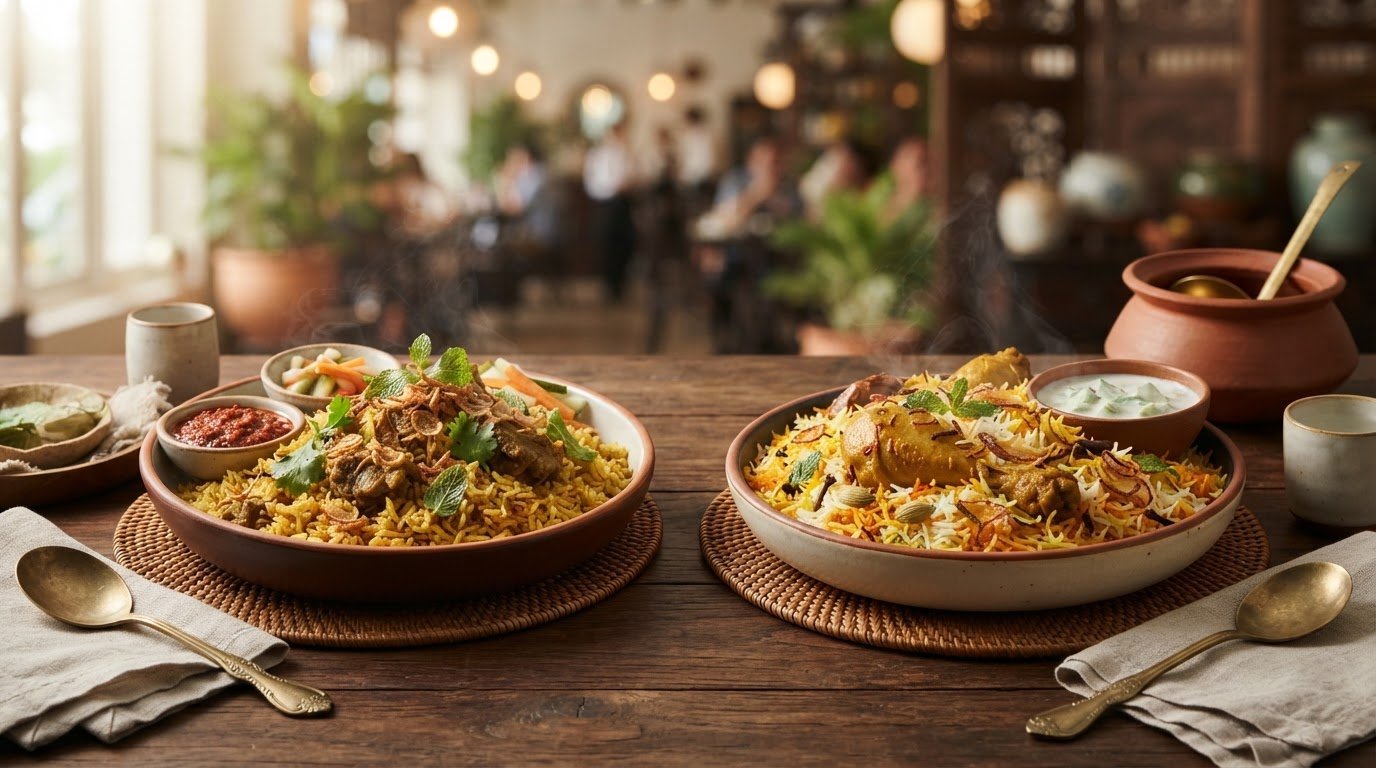

The clearest answer to Indonesian briyani vs indian briyani isn’t a fixed list of ingredients. The difference depends on how each recipe seasons the rice, combines it with other ingredients, and cooks it. Both traditions include regional and family variations, and different spellings can make online comparisons seem more definite than they are.
Indonesian briyani may taste and feel different from Indian briyani, but neither cuisine has just one recipe. Some Indonesian preparations are discussed alongside nasi kebuli, while Indian biryani includes varied regional styles. These names offer useful clues, not a guarantee of a particular flavour or texture.
This guide compares seasoning, rice preparation, cooking methods, and serving styles, while noting where the traditions overlap. You’ll find practical clues for interpreting descriptions such as “mild,” “spiced,” or “layered,” so you can choose according to your preferences. Regale Singapore is halal-certified and serves Briyani as part of its Indonesian dining experience.
Key Takeaways
- Compare rice, seasoning, aromatics, and cooking sequence rather than relying on a national label alone.
- In Indonesian briyani vs indian briyani, common examples may differ in flavour and preparation, but neither represents every version of its cuisine.
- Use descriptions of spice balance, aroma, rice texture, and sides to decide which style better suits your preferences.
- Look for details about the specific dish, since spelling and broad cuisine labels may not tell you exactly what to expect.
- Regale Singapore offers a halal-certified dining setting for exploring Indonesian cuisine, including Briyani.
Indonesian Briyani vs Indian Briyani: What Does the Comparison Mean?
Briyani is a family of seasoned rice dishes, often made by combining rice with meat, vegetables, spices, or other flavourings. The name describes a broad culinary tradition, not one standard formula. Cooks adapt the dish to local ingredients, family preferences, and different methods of preparation.
The spellings biryani and briyani are both used for related dishes. A menu might choose one form because of language, transliteration, or local convention. Spelling alone doesn’t establish that two dishes have different recipes, just as sharing a name doesn’t mean every plate will taste alike. For an overview of the dish’s history and range, see Biryani: Origins and Global Varieties, which also mentions Indonesian Nasi Biryani.
Are biryani and briyani different dishes?
Usually, the spelling is a naming difference, not evidence of a separate dish. One menu may say “briyani” while another uses “biryani,” with both referring to a seasoned rice preparation in the same broad family. Names can reflect local usage, so don’t assume the spelling identifies a specific cooking technique or flavour. To compare dishes, look for the named style, ingredients, and details about how the rice and other components are cooked.
Why Indonesian and Indian briyani are not single fixed recipes
National labels point to culinary traditions, not a single recipe followed by every household or restaurant. A cook’s approach may vary with regional practice, family preference, available ingredients, and the way the dish is served. Indian biryani includes distinct regional interpretations. Indonesian rice dishes associated with briyani also reflect their own histories and local adaptations. The names may overlap, but that doesn’t make every preparation identical.
A dish name identifies a culinary family; the recipe tells you what this particular plate may be like. That distinction keeps a comparison useful. Instead of treating “Indonesian” and “Indian” as guarantees of a particular spice level or texture, use them as context. Then look for practical details: which seasonings are named, how the rice is prepared, and what accompaniments are included.
For readers comparing Indonesian briyani vs indian briyani, the goal is to notice common tendencies without turning them into national rules. A preparation description can show how ingredients come together, while details about seasoning and rice can help set expectations. The sections that follow compare these features as examples, while allowing for variation across cooks and menus.
How Indonesian and Indian Briyani Can Differ in Preparation
Preparation offers a more useful comparison than a country label alone. Rice variety, seasoning, aromatics, cooking sequence, and the amount of liquid or fat all affect the finished dish. Treat these as details to look for in a recipe or menu description, not rules that every Indonesian or Indian cook follows.
For example, some Indonesian preparations associated with nasi kebuli cook rice with broth and may include milk or coconut milk. One well-known Indian approach layers partially cooked rice with marinated meat, then finishes the ingredients together in a sealed pot. These examples illustrate different methods; neither represents every briyani made in its country.
Rice, spices, and aromatics to compare
Start with the rice. Basmati is used in many Indian biryani recipes, but the variety depends on the specific preparation. Grain type and cooking both affect whether the rice feels light and distinct or softer and more cohesive.
Then consider the seasoning. Cardamom, cinnamon, and cloves appear in examples from both traditions, while other aromatics vary by recipe. Proportion matters: a dish may taste warm, fragrant, savoury, or rich without being defined simply as “hot.”
Layering, cooking, and texture
Layering is a useful clue in some Indian biryanis, particularly preparations that finish rice and other ingredients together, but it isn’t universal. Nasi kebuli offers a different commonly described approach, in which rice cooks with broth. Recipes in both cuisines can use other methods, so preparation details are a better guide than a national label.
Cooking method shapes texture by controlling how rice, liquid, and other ingredients come together. Partially cooked rice finished in layers may retain distinct grains, while rice cooked with broth absorbs flavour throughout. The final result also depends on ingredient proportions and timing, so the dish name alone can’t guarantee a particular texture.
Use these four clues to compare dishes:
- Rice: Look for the named variety, if provided, and whether the grains are described as separate or tender.
- Seasoning: Note the spices and whether the description emphasizes fragrance, warmth, or richness.
- Cooking sequence: Check whether rice is layered with other ingredients or cooked together with liquid.
- Added richness: Broth, dairy, or coconut milk can influence flavour and mouthfeel when used.
Origin stories can be appealing, but popular accounts aren’t always well supported. Distinguish documented cooking practices from claims about exactly when or how a dish first travelled. For an example of Indonesian cuisine in a halal dining setting, Regale’s Briyani offers a menu reference without suggesting that one preparation defines the whole tradition.
Indonesian Briyani vs Indian Briyani: A Side-by-Side Taste Comparison
A useful taste comparison looks at the actual dish, not a country label in isolation. The table below describes common examples, including Indonesian preparations associated with nasi kebuli and Indian biryani styles. These are reference points, not guarantees. Individual recipes, restaurant choices, and serving customs vary.
| What to compare | Indonesian example | Indian example |
|---|---|---|
| Flavour and aroma | Common example: A nasi kebuli profile may combine warm spices such as cardamom, cinnamon, and cloves with local aromatics. Some preparations use ingredients such as lemongrass or kaffir lime leaves for a fragrant impression. | Common example: A biryani may have a layered aroma from spices such as cardamom, cinnamon, cloves, mint, or other recipe-specific seasonings. The balance differs by style and cook. |
| Spice balance | Common example: Some nasi kebuli descriptions suggest a gentler spice impression, though the exact balance depends on the recipe. | Common example: Some Indian biryanis are described as bold or complex, but that doesn’t mean every version is hotter. Look for specific references to chilli or spice intensity. |
| Rice texture | Common example: Rice cooked with broth may absorb seasoning throughout and feel cohesive, depending on the liquid and cooking method. | Common example: In a layered preparation, partially cooked rice may finish with other ingredients, which can help preserve distinct grains. The final texture still depends on technique. |
| Preparation clues | Common example: A description mentioning rice cooked with broth, milk, or coconut milk points to details of that particular dish. | Common example: References to marinated meat, layering, or sealed-pot cooking describe a specific approach, not a requirement for all Indian biryani. |
| Serving context | Common example: Menus may present the rice with meat or list accompaniments separately. The dish description is the best guide to what is served. | Common example: Serving arrangements and sides vary across recipes and restaurants. Check whether the menu names accompaniments or describes the biryani as a complete plate. |
Flavour and texture: what diners may notice
Aroma can be the first clue. Depending on its ingredients, a dish may smell warmly spiced, herbal, or rich. Rice may feel fluffy and separate or more tender and cohesive. Menu words such as “layered,” “broth-cooked,” “mint,” or “coconut milk” offer practical hints, but describe ingredients and techniques rather than guaranteeing the final taste.
Accompaniments and the way briyani is served
Sides and condiments can change the overall balance, adding freshness, tang, or extra seasoning alongside the rice. There’s no single serving arrangement across either tradition. Read the menu for named sides, sauces, and the included protein, then consider how those elements fit your preferences. Ultimately, Indonesian briyani vs indian briyani comes down to the particular recipe and your taste, not a universal national profile.

How to Choose Between Indonesian and Indian Briyani
Choose according to the eating experience you want, then use the cuisine label as context. “Indonesian” or “Indian” may point to a culinary tradition, but won’t tell you every detail of a restaurant’s recipe. The dish description, listed accompaniments, and notes about spice or texture are more useful for setting expectations.
Match a briyani description to your preferences
Think about the qualities you enjoy most. You may prefer a pronounced spice aroma, balanced seasoning, distinct rice grains, or a tender, cohesive texture. Descriptions of ingredients and cooking methods can help you anticipate these qualities, while named sides and condiments show how the whole meal may taste together. Treat menu wording as a guide to that particular dish, not a promise about an entire cuisine.
Dietary requirements are a separate consideration. Cuisine describes a food tradition; halal assurance concerns whether the food and its handling meet halal requirements. A dish’s Indonesian or Indian identity doesn’t establish its halal status by itself. For diners seeking halal dining, a restaurant’s stated certification is a relevant point of reference, alongside menu details that help them choose a flavour profile.
Use a simple decision checklist
Follow these steps to compare the dishes you’re considering:
- Decide what matters most. Consider whether you want fragrant or more balanced seasoning, a particular rice texture, or a specific level of richness. If spice intensity matters, look for an explicit description rather than inferring it from the cuisine label.
- Compare the menu descriptions. Read the ingredient and preparation notes, then check which sides or condiments are included. An accompaniment can add freshness, tang, or extra seasoning, changing the balance of the meal.
- Use the cuisine name as context. Let it introduce the tradition, but don’t treat it as a precise recipe guarantee. Two dishes with the same broad label may still differ in ingredients, technique, and serving style.
This approach keeps the comparison grounded. There isn’t one style that suits every diner; the better choice depends on the specific recipe and the qualities you enjoy. If a description is brief, focus on the details it does provide, such as named ingredients, texture words, or accompanying sides. That gives you a practical expectation without assuming every preparation follows the same pattern.
For a halal-certified dining reference centred on Indonesian cuisine, explore Regale’s Briyani. It provides a real menu context for considering Briyani as part of an Indonesian dining experience, without treating a national label as a complete description.
Explore Indonesian Briyani in a Halal Dining Context
A restaurant menu brings the comparison down to a specific dish. Broad labels such as “Indonesian” and “Indian” offer cultural context, but the menu’s own wording can tell you more about what is being served. A dish name, description, and listed accompaniments help set expectations without suggesting that one recipe represents an entire culinary tradition.
What a restaurant menu can tell you
Read the dish name alongside its description. Named ingredients, cooking details, or sides are clues to that particular offering. If the menu gives only a name, avoid filling in the gaps with assumptions about spice, texture, or serving style. Menu language differs, so compare the details each menu actually provides.
Halal certification is another distinct piece of information. It can guide diners looking for a halal dining setting, but it doesn’t specify the ingredients or cooking method of a particular briyani. Cuisine style and halal assurance answer different questions: one relates to culinary tradition, while the other concerns the dining context. Keeping those ideas separate makes for a clearer choice.
A measured next step for curious diners
Tasting a restaurant’s briyani offers a way to experience one interpretation, not a definitive version of every Indonesian recipe. The dish reflects the choices behind that menu offering, while broader comparisons help explain the traditions around it. A meal can complement what you learn about preparation and flavour, but it doesn’t prove that every dish with the same label will taste alike.
Regale Singapore is halal-certified and serves Indonesian cuisine, with Briyani among its offerings. Its Indonesian dining experience has an evening focus. This provides a real-world reference point for the comparison without suggesting that one dish represents every Indonesian style.
For anyone exploring Indonesian briyani vs indian briyani, a menu is a practical way to connect broad culinary context with a particular dish. Notice what the restaurant names, consider the dining setting, and let the experience stand on its own. Explore Regale’s Indonesian dining experience to discover its Briyani offering.
Let Your Next Briyani Be a Discovery
Use this comparison as a starting point, not a final verdict. Tasting a particular preparation is a chance to notice which aromas, textures, and flavour balances you enjoy most. Over time, your preferences become a more useful guide than a broad cuisine label.
The question of Indonesian briyani vs indian briyani doesn’t need a single winner. Each plate reflects a distinct interpretation, and the details that make one memorable may differ from what you value in another. Read the menu carefully and let your own experience shape the comparison.
Explore Regale’s Indonesian dining experience and discover its Briyani offering within a wider culinary setting.
Frequently Asked Questions
Is Indonesian briyani the same as nasi kebuli?
No, Indonesian briyani and nasi kebuli are distinct dish names, so don’t assume they mean the same recipe. Both may appear in Indonesian dining contexts, but ingredients, cooking methods, and serving styles can differ between cooks and restaurants. When comparing two menu items, check how each is described and what it includes. Treat historical or technical explanations cautiously unless they’re supported by reliable culinary sources.
Is Indian briyani always spicy?
No, Indian briyani isn’t always spicy. Heat varies with the recipe, ingredients, and the cook’s seasoning choices. A menu description that names chilli may offer a clue, while “aromatic” doesn’t necessarily mean the dish is hot. Accompaniments can also affect the overall impression. If spice level matters, use the specific dish description rather than relying on “Indian” as a prediction.
Can briyani be made vegetarian?
Yes, briyani can be made without meat, with vegetables or other ingredients selected for the recipe. A vegetarian version can still vary in seasoning, cooking technique, and sides, so the label alone won’t tell you exactly what’s on the plate. If you avoid particular ingredients, check the dish’s ingredient information. For a shared meal, comparing menu descriptions can help diners choose options that suit their different dietary preferences.
What is the difference between briyani and pulao?
Both are seasoned rice dishes, but a common distinction is that briyani may involve layering rice with other ingredients, while pulao often cooks rice and its flavourings together. Methods and names can overlap across culinary traditions, so this contrast isn’t a universal rule. When choosing between two dishes, look at how the menu describes the cooking method and ingredients instead of assuming the names guarantee a particular texture.
Does briyani always use basmati rice?
No, briyani doesn’t always use basmati. Many preparations use it, but the rice variety can change with the recipe and culinary context. Different grains can contribute distinct aromas and textures, though rice choice alone doesn’t establish whether a dish is Indonesian or Indian. If the grain matters to your preference, look for it in the recipe or menu description. Otherwise, consider the dish’s other details too.
Is briyani a main dish or a side dish?
Briyani is commonly served as a substantial rice-based dish, though its role depends on the meal and menu. It may be presented on its own with accompaniments or served as part of a larger spread where diners share several dishes. Serving arrangements vary across restaurants and traditions. Check whether the menu lists a protein, sides, or condiments separately to understand how the briyani fits into the meal.
How can I tell which briyani style I will prefer?
Start with what you enjoy: a pronounced aroma, balanced seasoning, tender or distinct rice, or particular accompaniments. Then compare the specific dish descriptions and ingredients. For Indonesian briyani vs indian briyani, the cuisine names provide context, but a restaurant’s recipe is a better guide to the plate you’ll receive. If descriptions are brief, use the details available and let your own tasting experience shape future choices.
