
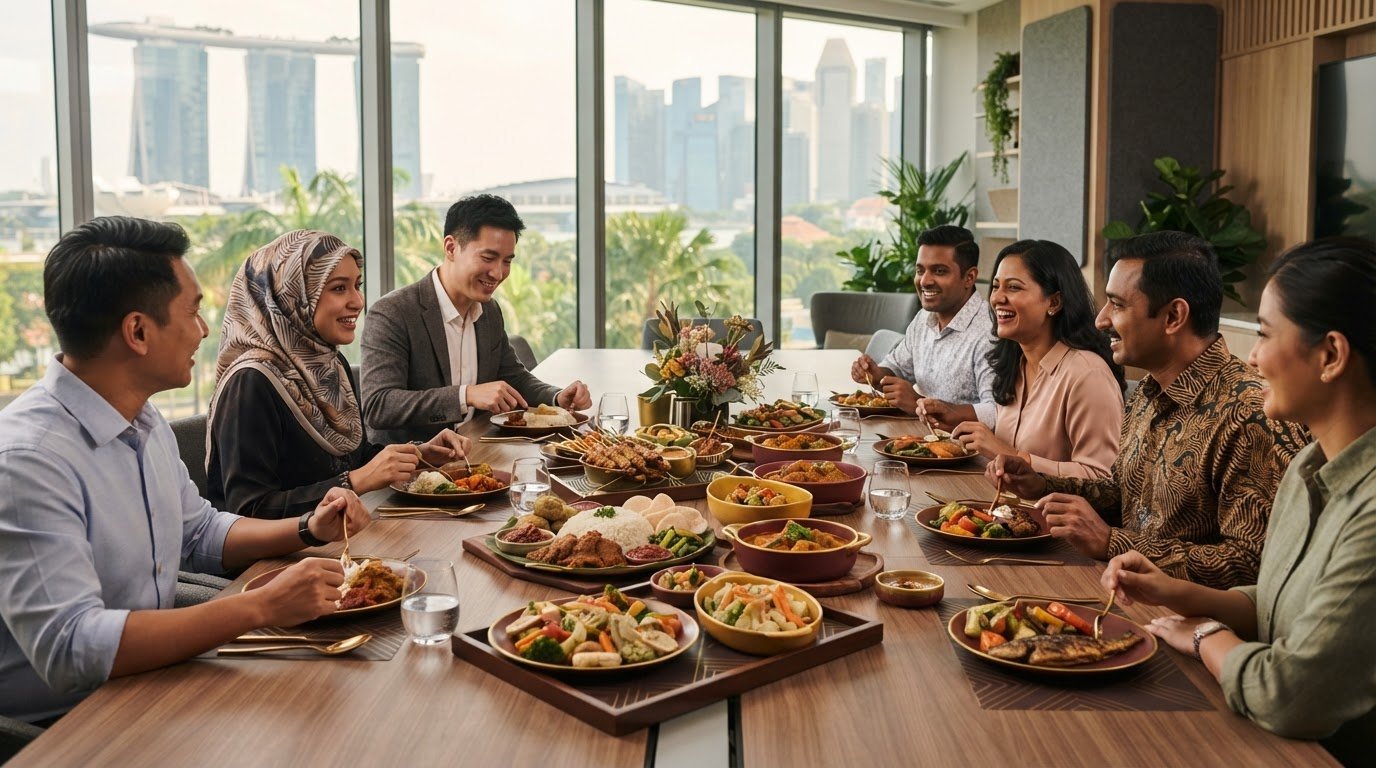

An office meeting can have a clear agenda and still lose its rhythm when lunch doesn’t suit the occasion. Planning halal food delivery for office teams means matching the meal format to the meeting, the group size and colleagues’ preferences, while factoring in serving space and the time available to eat.
A working lunch and a team gathering call for different arrangements. Before choosing dishes, decide whether colleagues will eat at their desks, serve themselves or sit down together. A clear plan makes it easier to choose a menu that fits the workday and gives the group options to enjoy.
Regale Singapore is a halal-certified culinary establishment offering halal catering, buffet and mini buffet options. Its menu includes Nasi Sambal Goreng, Nasi Ambeng, Nasi Minyak and Briyani, alongside Western cuisine and local favourites. Use this guide to compare meal formats, plan around your team’s preferences and choose a menu direction for your office occasion.
Key Takeaways
- Match the meal format to the occasion, from a focused meeting lunch to a relaxed shared gathering.
- Plan halal food delivery for office teams by setting the headcount, meal window and serving arrangement before choosing the menu.
- Balance familiar choices with distinctive flavours to offer colleagues a considered range of options.
- Compare catering, buffet and mini buffet formats by how the meal will be served and how colleagues will dine.
- Use a straightforward planning sequence to make decisions early and reduce last-minute changes.
Halal Food Delivery for the Office: Start with the Occasion
Halal food delivery for office teams means organising halal meals for colleagues at work. The occasion shapes the menu and serving plan: a regular team lunch, food during a scheduled meeting and a shared office celebration each have different needs. Start by deciding how the meal should fit into the workday, then choose the dishes and format.
Halal refers to what is permissible under Islamic principles. For a general overview of its meaning and dietary principles, see Understanding Halal. For an office organiser, the practical priority is to choose halal food that suits the occasion and the colleagues sharing it.
A sound office meal plan begins with three inputs: the occasion, the group and the serving style. Deciding on these first narrows the choices and gives the menu discussion a clear direction.
- Occasion: Decide whether the meal is for a working session, a regular team lunch or a longer gathering.
- Group: Estimate the headcount and consider the preferences colleagues have in common.
- Serving style: Decide whether colleagues need to eat quickly, serve themselves or sit down together.
Match the meal to the office occasion
A working lunch between agenda items has a different rhythm from a team gathering with time set aside to eat. If the meeting continues through lunch, choose a serving arrangement that is straightforward and allows colleagues to eat without taking attention away from the discussion. For a longer gathering, shared dishes can make the meal more social, provided there is enough room and time for colleagues to serve themselves.
Use the meeting schedule to guide the format. A short lunch window leaves less time to arrange food, queue or clear the table. A longer break can accommodate a more relaxed shared meal. Map out the schedule first, then choose an arrangement that fits the time available and the workplace setup.
Plan around the people sharing the meal
Before settling on dishes, establish how many colleagues will eat and how they will use the space. Will everyone sit together, eat at their desks or move between a meeting and lunch? The answers affect how easy the meal will be to serve and enjoy, even when the menu itself appeals to the group.
Keep the planning manageable by setting the headcount, meal window and serving arrangement before inviting menu feedback. Those details give colleagues a practical framework for choosing together without asking everyone to decide every detail. Once the occasion and group are clear, consider a menu that balances familiar choices with a range of flavours.
Choosing a Halal Office Menu: Indonesian Classics, Local Favourites, and Western Options
A considered office menu gives colleagues options without trying to make every dish suit every person. Regale’s halal-certified menu brings together Malay and Indonesian specialties, local favourites and Western cuisine. Choose a combination that fits the occasion and gives the team a thoughtful range of flavours.
Menu variety can make a working lunch feel familiar or give a team gathering a more distinctive character. The right balance depends on who is eating and how the meal will be served.
When Malay and Indonesian specialties suit the occasion
Nasi Sambal Goreng and Nasi Ambeng are distinctive choices for an office gathering where colleagues will share a meal. Their Malay and Indonesian character can give a team lunch a different feel from an everyday meal. Nasi Minyak and Briyani offer further traditional rice-dish choices for organisers considering different menu directions.
Keep the selection focused rather than trying to include every specialty. Choose dishes that suit the occasion and the team’s preferences. Organisers considering these options can also explore dedicated guides to Nasi Sambal Goreng and Nasi Ambeng for more context on each dish.
Balancing traditional dishes with familiar favourites
Traditional specialties can sit alongside familiar choices to give an office menu broader appeal. Regale’s Western cuisine and local favourites offer other directions to consider, including the Angus Burger. This balance can help avoid building the entire meal around one cuisine or assuming colleagues all have the same tastes.
Think about the role each choice plays. A traditional dish can bring distinctive character, while a familiar favourite can offer an alternative for colleagues with different preferences. Keep the selection practical for the occasion and serving arrangement instead of adding dishes just to increase variety.
Before settling on the menu, consider these points:
- Occasion: A routine lunch may call for familiar choices, while a team gathering can be a natural setting for Malay or Indonesian specialties.
- Range: Choose a manageable mix of traditional dishes, local favourites or Western options that reflects the team’s preferences.
- Serving plan: Select dishes with the way colleagues will eat in mind, whether the meal is part of a meeting or a relaxed shared gathering.
This framework helps organisers compare menu directions without treating every dish as a fixed combination. For teams considering halal catering, Regale’s halal catering brings Malay and Indonesian specialties together with Western choices.
Buffet, Mini Buffet, or Catering: Compare Office Meal Formats
Once the occasion and menu direction are clear, choose a format that works for the office. Regale offers halal catering, halal buffet and halal mini buffet options. The best fit depends on the gathering, how colleagues will eat and what the workplace can accommodate.
Use this comparison to frame the decision. It covers practical considerations, not fixed package contents, portion counts or setup inclusions.
| Format | Occasion to consider | Group interaction | Serving arrangement to plan |
|---|---|---|---|
| Halal catering | A workplace meal where the organiser needs a catering format suited to the event. | Can support a planned meal for colleagues; the interaction depends on the selected serving style. | Decide how the food will be presented and where colleagues will eat before settling the format. |
| Halal buffet | A team gathering or group meal with time and space for shared serving. | Colleagues can gather around the meal and choose dishes as part of the occasion. | Allow for a suitable serving area and consider how people will move between the food and their seats. |
| Halal mini buffet | A more contained office gathering where a shared meal suits the event setup. | Offers a shared-meal approach; consider whether the group can dine together comfortably. | Plan the available table space and how the meal will fit into the room and schedule. |
When a buffet format fits an office gathering
A buffet is worth considering when the meal is part of a group occasion rather than a brief pause between agenda items. It gives colleagues a shared point of focus, but the room needs to support a smooth serving flow. Consider the available table space, access around the serving area and whether people can take food without interrupting the meeting or creating a bottleneck.
How to think about a mini buffet or catering order
Compare a mini buffet with halal catering by looking at the gathering’s scale and layout, rather than assuming one is automatically better for a particular headcount. A contained team meal may call for a different arrangement from a workplace event with a more involved schedule. In either case, match the format to the available space, how colleagues will dine and the time set aside for the meal.
For halal food delivery for office teams, make the format decision alongside the serving plan. A meeting with limited time may need a simpler flow, while a relaxed shared occasion can leave more room for colleagues to gather. Consider where the meal will be laid out, where people will sit and whether the schedule allows everyone to eat comfortably. These details turn a general catering choice into a workable office plan.
Explore Regale’s halal food offerings as you compare halal catering, buffet and mini buffet options for your workplace occasion.
How to Plan Halal Food Delivery for an Office, Step by Step
A smooth office meal comes from making a few decisions in the right order. Set the purpose and headcount first, then align the menu, meal window and serving arrangement. This gives the organiser a clear plan for halal food delivery for office colleagues without leaving key details until the day of the meeting.
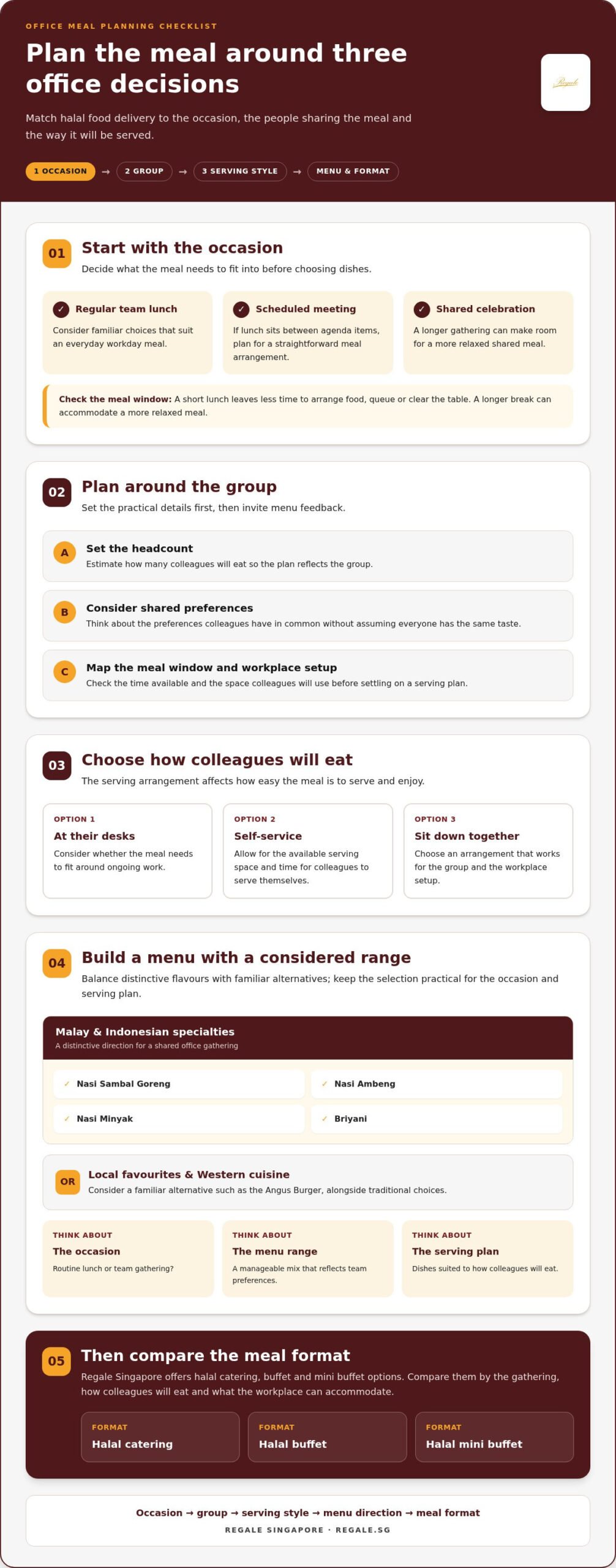
Set the occasion, confirm the group, choose the menu, then align the meal timing and serving plan.
Set the headcount, timing, and meal purpose
Begin with the expected number of colleagues and the reason for the meal. A working lunch within a meeting agenda has different needs from a team gathering with time set aside to eat together. Review the meeting schedule, decide how much time colleagues have to serve and eat, and share a clear plan so attendees know what to expect.
- Define the occasion. Note whether the meal is for a working session, regular team lunch or shared office gathering. This helps keep the format and menu relevant.
- Estimate the headcount. Use the expected number of attendees to guide planning. If numbers may change, set an internal response deadline and keep the working count visible to the organiser.
- Set the meal window. Work backwards from the meeting agenda. Decide when the meal should be ready to serve and how long colleagues can take for lunch, allowing time for the serving arrangement.
- Choose a menu direction. Consider the team’s shared preferences and the feel of the occasion. Regale’s menu includes Malay and Indonesian specialties such as Nasi Sambal Goreng and Nasi Ambeng, alongside Nasi Minyak, Briyani, local favourites and Western cuisine.
- Confirm the workplace plan. Identify where the food will be placed, how colleagues will gather or take their meal, and who will coordinate the room. Align the food arrangements with the planned meal window.
Finalise the menu and workplace serving plan
Once the occasion, group and timing are clear, settle on a manageable menu rather than trying to include every preference. A shared gathering may suit a traditional specialty, while a meeting meal may call for a simpler arrangement. Choose dishes to suit how colleagues will eat, not just the organiser’s personal preferences.
Review the room before finalising the plan. Identify a suitable surface for the food, leave enough space for colleagues to move comfortably and decide where used items will go. If the meal is part of a meeting, coordinate serving with the agenda so it doesn’t disrupt discussion. Share the meal time, location and arrangement in one concise message.
With these details in place, you can plan your halal office meal with Regale around its halal catering, buffet and mini buffet options.
Regale’s Halal Catering for Office Meals: Choose a Menu and Next Step
Regale Singapore is a halal-certified culinary establishment offering halal catering, buffet and mini buffet options for office meals. Its menu brings together Malay and Indonesian specialties, local favourites and Western cuisine, giving organisers several directions to consider for a workplace gathering. Choose the format and menu to suit the occasion rather than treating one combination as right for every team.
Bring heritage-led menu choices to the workplace
Nasi Sambal Goreng and Nasi Ambeng are distinctive examples from Regale’s menu, bringing Malay and Indonesian character to a shared office meal. Nasi Minyak and Briyani offer further choices for organisers considering traditional rice dishes. These options can help set the tone of a gathering, whether the team wants a familiar meal or something that feels more special.
Colleagues may have varied tastes, so consider how these specialties can sit alongside other choices. Regale’s Western cuisine and local favourites offer different menu directions, including the Angus Burger. Selecting with the team and occasion in mind helps create a considered menu without assuming everyone prefers the same flavours.
Take the next step with a clear office meal plan
A practical plan brings four decisions together: the reason for the meal, the colleagues attending, the menu direction and the serving format. A meeting lunch may need to fit a defined break, while a shared office gathering can allow more time to dine together. Use the workplace layout and schedule to decide whether halal catering, a buffet or a mini buffet best suits the occasion.
Before making your selection, clarify the expected headcount, meal window, team preferences and serving location. These details connect the menu to the workday and make the plan easier to communicate. Regale’s Malay, Indonesian, local and Western choices provide a starting point for building the menu around the occasion.
For halal food delivery for office colleagues, start with a clear plan and a menu suited to the people sharing it. Explore Regale’s halal catering and consider its halal catering, buffet and mini buffet options for your next office meal.
Make Your Next Office Meal a Considered One
A well-planned office meal can do more than fill a lunch break. It creates space for colleagues to pause, share food and connect beyond the meeting agenda. After the meal, note what worked: the occasion, preferred menu direction and serving arrangement. That record can make future planning easier.
This simple habit can help make halal food delivery for office gatherings more straightforward over time. You’ll have a useful starting point for choosing a meal that suits both the workday and the people sharing it, instead of beginning every decision from scratch.
Regale’s halal-certified establishment offers halal catering, buffet and mini buffet options, with Malay and Indonesian specialties alongside Western cuisine and local favourites. Explore the options and plan a meal for your colleagues.
Explore Regale’s halal catering and office meal options. Start with the occasion, headcount and serving plan to make your next office gathering easier to organise.
Frequently Asked Questions
What should I consider when arranging halal food delivery for an office?
Start with the number of people eating, the meal’s purpose and any shared preferences that could shape the menu. Then consider the office layout, where food can be served and whether colleagues will eat together or in shifts. Choosing a halal-certified establishment gives organisers a clear basis for planning a meal that meets the team’s needs.
Can an office order include both traditional dishes and Western food?
Yes. An office menu can combine traditional Malay or Indonesian choices with Western cuisine, giving colleagues different styles to choose from. For example, an organiser might select a traditional specialty for a shared gathering and include a familiar Western choice as another option. Keep the selection manageable and consider the team’s preferences when choosing dishes.
What is the difference between a halal buffet and a mini buffet?
Both are shared-meal formats, but “mini buffet” generally describes a more compact arrangement than a buffet. The format names alone don’t specify a guest count, menu or equipment. Compare the options by considering how much space the office has, how colleagues will serve themselves and how the meal fits the occasion.
How do I estimate how much food an office team needs?
Use the expected attendee count as your starting point, then consider whether the meal is replacing lunch or serving as a light refreshment. Account for colleagues who may be unable to attend, and keep the count current if attendance is still changing. Rather than estimating by dish count alone, use serving guidance for the selected menu to judge whether the planned meal suits the group.
Can Nasi Ambeng be suitable for an office gathering?
Yes, Nasi Ambeng can suit an office gathering where colleagues are comfortable sharing a meal. Its traditional Malay and Indonesian character can give a team lunch or celebration a distinctive feel. Before choosing it, consider the group’s preferences and how shared food will work in the room. For a meeting with limited time, the schedule and serving arrangement matter too.
How should I plan an office meal around a meeting schedule?
Anchor the meal plan to the meeting agenda. Set a clear time for eating, allow colleagues time to settle in and avoid placing the serving period inside a tightly scheduled discussion. If attendees will be moving between rooms or joining at different times, tell them where the meal will be and when it is planned. A shared schedule helps colleagues plan their break and keeps the meeting on track.
What kinds of halal dishes can Regale serve for an office meal?
Regale Singapore is a halal-certified culinary establishment offering halal catering, buffet and mini buffet options. Its menu includes Malay and Indonesian specialties such as Nasi Sambal Goreng, Nasi Ambeng, Nasi Minyak and Briyani, as well as Western cuisine and local favourites. These choices give office organisers several menu directions to consider. Select dishes according to the occasion and team preferences.
