
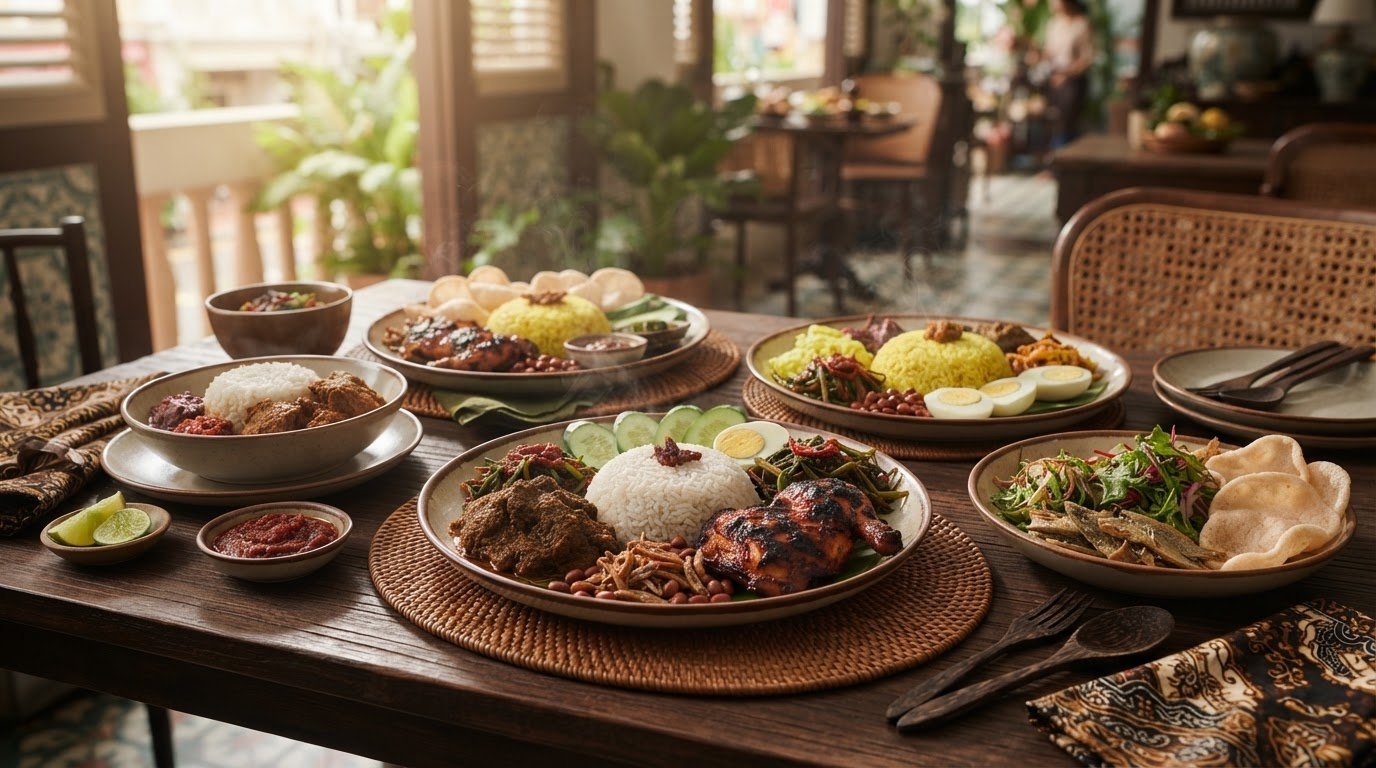

The best Malay food option for your table may not be the dish with the most familiar name. Menus can list Nasi Lemak, Nasi Ambeng and Nasi Sambal Goreng without explaining how they differ, so choosing can feel harder than it should.
The right choice depends on the flavors you enjoy, whether you’re dining alone or sharing, and the occasion. This guide compares several well-known Malay food options in Singapore by taste, format and dining needs. It also explains what to check when choosing halal dining or planning a meal with others.
For a place to explore halal Malay and Indonesian specialties, Regale Singapore is halal-certified and features Nasi Sambal Goreng and Nasi Ambeng, along with Nasi Minyak and Briyani. Dish details and availability can vary, so check the current menu for ingredients, accompaniments and serving format before deciding what suits your appetite and occasion.
Key Takeaways
- Malay food options include varied dishes, so compare individual menu items rather than expecting one shared flavor profile.
- Nasi Sambal Goreng, Nasi Ambeng, Nasi Minyak and Briyani differ in their general format and preparation. Check current menu details for ingredients and accompaniments.
- Match a dish to your occasion by confirming its portion format. Treat Nasi Ambeng as a sharing choice only when the menu supports it.
- Use a short checklist to clarify ingredients, preparation, dietary needs and availability before ordering.
- For halal dining, check reliable certification information and confirm that the dishes you want are currently available.
Malay Food Options: What Defines This Varied Dining Tradition?
Malay food options are a range of dishes rooted in Malay culinary heritage, not one fixed recipe or flavor profile. Ingredients, cooking methods and accompaniments differ from dish to dish and from one dining establishment to another. Start by checking how a dish is prepared and served rather than assuming every menu item will taste alike.
Rice is a familiar foundation in many meals, but the dishes served with it can vary widely. Some pair rice with a sauce or sambal and accompanying items; others center on a selection of cooked dishes. Nasi lemak, for example, is commonly associated with coconut rice, sambal and sides, while nasi padang pairs steamed rice with a choice of prepared dishes. These examples offer context, not a template for every Malay meal. A broad overview of Malay cuisine also shows the range of ingredients, dishes and local variations found across the tradition.
What do people mean by Malay food options?
The phrase describes a varied menu category, not a standard set of ingredients. Malay cooking has developed through distinct communities and regional influences, with rice, spices, sauces and accompaniments appearing in different combinations. Singapore’s food traditions also reflect exchanges across cultures, so a dish’s name alone may not explain its flavor or format.
Malay and Indonesian cuisines have their own histories and culinary identities, even as they share regional influences and some familiar ingredients. They shouldn’t be treated as interchangeable. A restaurant’s menu is its own selection, not a complete representation of either cuisine. Check the description or ask about ingredients, preparation and accompaniments if those details will shape your choice.
How does halal dining relate to Malay food choices?
Cuisine and halal status are separate considerations. A dish described as Malay or Indonesian doesn’t, by itself, confirm that it meets a diner’s halal requirements. Halal certification addresses more than a dish’s visible ingredients, including sourcing and food-handling considerations. Diners with specific dietary needs should check the establishment’s certification and ask about relevant menu details.
Regale Singapore is halal-certified and offers Malay and Indonesian specialties. Its confirmed menu includes Nasi Sambal Goreng, Nasi Ambeng, Nasi Minyak and Briyani. Ingredients, accompaniments and availability depend on the current menu, so confirm details before ordering, especially when a particular ingredient or preparation matters to your dining needs.
Four Malay and Regional Rice Dishes to Recognize on a Menu
These four names refer to different dishes, but a name alone won’t tell you exactly what a restaurant serves. Recipes and accompaniments vary, and menus may describe a restaurant’s own presentation. Regale Singapore lists Nasi Sambal Goreng, Nasi Ambeng, Nasi Minyak and Briyani among its specialties. Use the names as a starting point for comparing Malay food options, then check the current menu for ingredients and serving format.
Singapore’s food heritage reflects exchanges across the Malay Archipelago and beyond. The National Library Board’s account of Singapore’s Malay food heritage provides context for why regional dishes and influences may appear together on menus.
How do Nasi Sambal Goreng and Nasi Ambeng differ?
Nasi Sambal Goreng signals a rice dish associated with sambal goreng, while Nasi Ambeng is widely known as a Javanese sharing spread served with rice and a selection of accompanying dishes. These broad descriptions help explain the names, but they don’t confirm a particular restaurant’s recipe, portions or presentation. Check the menu for listed components, and ask whether Nasi Ambeng is served for sharing before choosing it for a group.
The two aren’t interchangeable: one name points to a dish featuring sambal goreng, while the other is commonly associated with a spread. For Regale’s versions, use the current menu rather than assuming ingredients or serving style from tradition alone.
Where do Nasi Minyak and Briyani fit in the choice?
Nasi Minyak is generally associated with fragrant rice, while Briyani refers to a spiced rice dish with varied regional preparations. Seasonings, cooking methods and accompaniments differ across recipes, so these general descriptions aren’t a guarantee of what appears on a particular plate. Compare the menu details, especially if you have a preference or dietary requirement.
In short, these four dishes offer different rice preparations and dining formats, from a sambal-associated dish to a traditional sharing spread. Regale’s confirmed specialties include all four, but availability may depend on the current menu and service time. Review Regale’s current menu before deciding, and confirm details directly if a specific dish or accompaniment matters to your meal.
Which Malay Food Option Suits a Solo Meal or Group Gathering?
The best choice depends on how you plan to dine, what you enjoy and what the menu confirms. For an individual meal, compare descriptions and accompaniments to find a dish that suits your appetite and preferred flavors. For a group, check whether a dish is served for sharing and whether its format works for the people at your table.
| Dish | General format | Potential occasion | Details to confirm |
|---|---|---|---|
| Nasi Sambal Goreng | Rice dish named for sambal goreng | Solo meal or group meal, depending on the menu format | Ingredients, accompaniments and serving format |
| Nasi Minyak | Rice dish | A meal where you want to compare rice preparations | Rice preparation, accompaniments and availability |
| Briyani | Spiced rice dish with regional variations | Solo or group dining, depending on the menu format | Ingredients, accompaniments and serving format |
| Nasi Ambeng | Often associated with a sharing spread | A group meal if the restaurant serves it for sharing | Serving format, suitability for your group and availability |
These are broad guides, not promises about a restaurant’s recipe or portion. Singapore’s hawker tradition offers another setting in which diners encounter varied food cultures; the National Heritage Board’s overview of Hawker Culture in Singapore provides useful local context.
What should an individual diner consider?
Start with the description, then check the listed accompaniments and preparation. Nasi Sambal Goreng, Nasi Minyak and Briyani are options to compare, not dishes to rank. If you’re unfamiliar with a name or have a preference about a particular ingredient, ask staff for clarification before ordering. Diners with dietary needs should explain what they need to avoid and confirm whether the dish meets those requirements.
How can a group choose a shared meal?
A sharing format can make it easier for several diners to enjoy a meal together, but a dish’s name doesn’t confirm how a restaurant serves it. Regale Singapore offers Nasi Ambeng, but check its current menu or ask whether it’s available in a sharing format, suits your group and is available at your intended dining time. Don’t assume a portion count or bundle arrangement.
Use the same checks for any of the Malay food options you’re considering: confirm the serving style, ingredients and availability before settling on a plan. You can review Regale’s menu details as part of that decision.
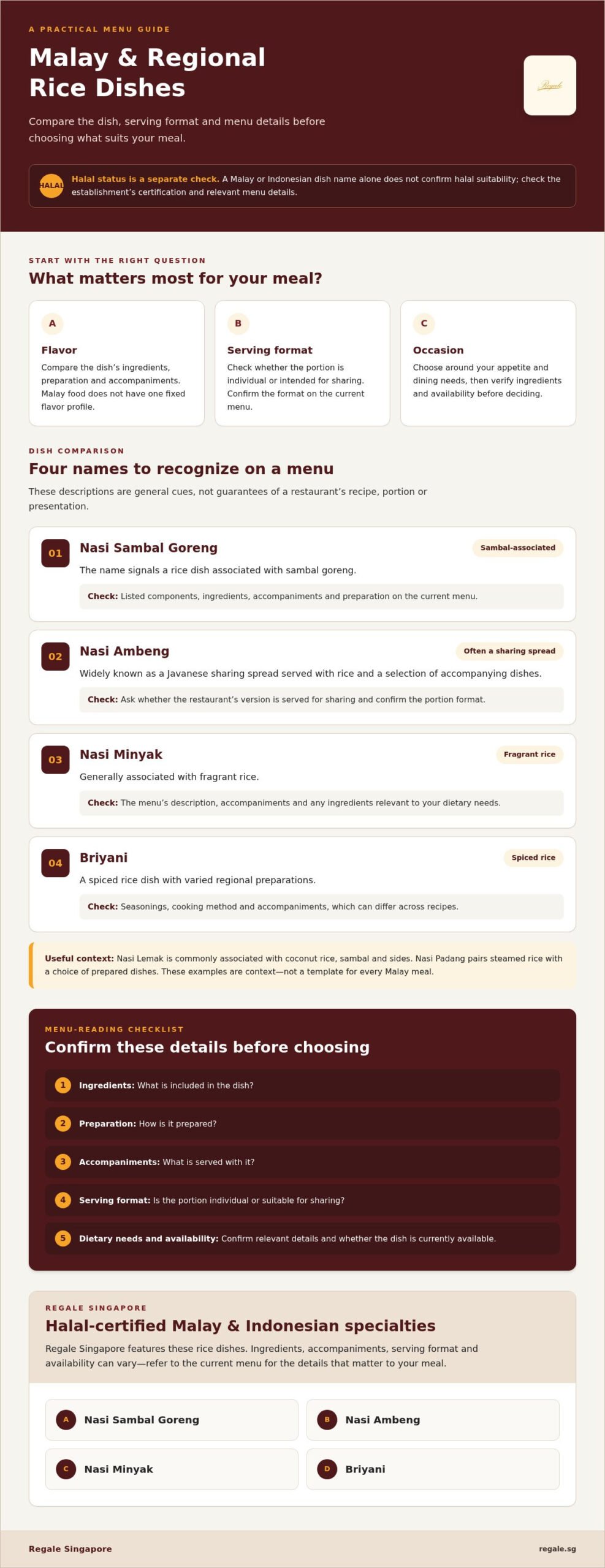
How to Choose Malay Food: A Simple Menu-Reading Checklist
A clear order of checks makes unfamiliar menus easier to compare. Decide what the meal needs to suit, read each dish description, check dietary requirements, then confirm current availability and service timing. This helps you choose among Malay food options without relying on a dish name to answer questions the menu hasn’t covered.
- Choose the occasion: Decide whether you’re ordering for yourself or coordinating a meal with others.
- Compare descriptions: Look for details about the dish, ingredients and accompaniments.
- Check dietary needs: Ask about specific ingredients and preparation if you have an allergy or other requirement.
- Confirm availability: Check directly with the restaurant, including whether the dish is available at your intended service time.
Which menu details should diners check first?
Start with the full dish name and description. Then check the listed accompaniments and whether the menu says the dish is served individually or for sharing. If a detail is unclear, ask staff what ingredients are used, how the dish is prepared and whether sauces or sides are included. Be specific about your dietary concern so the restaurant can respond to the right question.
Halal certification can help diners identify a certified establishment, but it doesn’t answer every personal allergy or ingredient concern. Regale Singapore is halal-certified; diners with specific dietary needs should still confirm relevant ingredients and preparation details. A menu description may not list every component, so ask rather than assume.
How can diners narrow down unfamiliar choices?
If several names are unfamiliar, begin with a dish whose general format you recognize, or ask staff to explain the options in plain terms. Compare flavor descriptions only when the menu provides clear information. Don’t infer spice level or ingredients from a name alone. For a group, confirm whether a dish comes as individual portions or is intended for sharing before ordering.
For example, compare Nasi Sambal Goreng, Nasi Minyak and Briyani by asking what each version includes, how it is prepared and what accompanies it. Then check whether your preferred choice is currently available. This keeps the decision practical and helps avoid mismatched expectations at the table.
To apply the checklist, review Regale’s current menu and confirm any ingredient, serving-format or timing details that matter to your meal.
Explore Halal Malay Food Options at Regale Singapore
Regale Singapore is a halal-certified culinary establishment where diners can explore Malay and Indonesian specialties alongside other menu choices. Its confirmed rice dishes include Nasi Sambal Goreng, Nasi Ambeng, Nasi Minyak and Briyani. These names offer different ways to explore regional food traditions, but the current menu is the best guide to each dish’s ingredients, accompaniments and serving format.
What can diners explore at Regale?
Nasi Sambal Goreng is one of Regale’s named specialties. Nasi Ambeng, Nasi Minyak and Briyani are also confirmed offerings. Rather than assuming the restaurant’s recipe from a dish name, check its current description for details such as preparation and what is served alongside the rice. This is useful if you’re choosing between familiar and less familiar Malay food options or have a particular ingredient in mind.
Regale’s menu brings Malay and Indonesian specialties together, but the cuisines have distinct traditions. The listed dishes provide a starting point for exploring that range, not a claim that every item is available at every service time. Confirm availability directly if you have a specific dish in mind.
How does Regale’s dining offer change by time of day?
Regale offers Western and local favorites during the day, with an authentic Indonesian dining experience in the evening. This gives diners a wider choice across the day while keeping the culinary identities clear: Malay specialties and Indonesian cuisine are related through regional influences, but they aren’t interchangeable labels. Check the current menu to see which dishes are listed for the time you plan to dine.
Before your visit, review the dish descriptions and confirm any questions about ingredients, accompaniments or service timing. That way, you can choose an option that fits your appetite and occasion without relying on assumptions about a traditional name or a restaurant’s service schedule.
Explore Regale Singapore’s current menu and plan your visit around the dishes and dining experience that suit you.
Choose Your Next Malay Dining Experience with Confidence
Choosing among Malay food options is easier when you compare the dish’s format, menu description and suitability for the occasion instead of relying on its name alone. For a group meal, confirm whether a dish is served for sharing. For individual dining, check ingredients and accompaniments to find a choice that suits your appetite and dietary needs.
Regale Singapore is halal-certified and offers Malay and Indonesian specialties, including Nasi Sambal Goreng, Nasi Ambeng, Nasi Minyak and Briyani. Its dining offer also includes Western and local favorites during the day and an Indonesian dining experience in the evening. Dish details and availability may vary by service time, so consult the current menu before making plans.
Ready to compare the options and choose what suits your meal? Explore Regale Singapore’s menu and plan your dining experience. Checking the menu can help you choose a dish and format that fit your occasion.
Frequently Asked Questions
What are some popular Malay food options?
Popular Malay food options include a varied range of rice dishes and other specialties, with recipes and serving styles differing between establishments. Regale Singapore lists Nasi Sambal Goreng, Nasi Ambeng, Nasi Minyak and Briyani among its offerings. Read the current menu description to compare ingredients and accompaniments, and confirm availability if you have a particular dish in mind.
Is Malay food always spicy?
No, Malay food doesn’t have one fixed level of heat. Spice and flavor depend on the dish, ingredients and preparation, and a menu description may not explain how hot a particular item is. If you prefer mild food or need to avoid an ingredient, ask the restaurant about the current preparation before ordering. This is more reliable than guessing from the dish name or cuisine label.
What is the difference between Nasi Ambeng and Nasi Sambal Goreng?
They are distinct dishes, not interchangeable names. Nasi Ambeng is commonly associated with a shared-meal format, though its components and presentation can vary by restaurant. Nasi Sambal Goreng is another named rice dish, and is among Regale Singapore’s offerings. Check the current menu or ask staff what each version includes and how it’s served. Confirm whether Nasi Ambeng is offered for sharing before planning a group meal.
Is Malay food halal in Singapore?
Not automatically. A dish’s cuisine or name doesn’t confirm that a particular establishment is halal-certified, so check the restaurant’s certification. Regale Singapore is halal-certified. Certification also doesn’t answer every personal question about an ingredient or preparation, so diners with allergies or other specific dietary needs should ask the restaurant directly. Review the current menu and confirm details about the dish you intend to order.
Can I order Malay food for a group?
Yes, some dishes may suit a shared meal, but serving format and availability depend on the restaurant. Nasi Ambeng is commonly associated with sharing, but don’t assume a particular portion arrangement or that it’s available for every group. Check the current menu and ask whether it’s served for sharing, whether the format suits your party, what accompaniments are included and when it’s available.
What should I try first if I am new to Malay food?
Start by comparing dishes with clear menu descriptions rather than choosing by name alone. Regale Singapore lists Nasi Sambal Goreng, Nasi Ambeng, Nasi Minyak and Briyani. Consider whether you prefer an individual dish or a shared format, then check the ingredients and accompaniments. If an unfamiliar name or preparation isn’t explained, ask staff to clarify before ordering.
Are Malay and Indonesian food the same?
No. Malay and Indonesian cuisines have distinct culinary traditions, though some regional influences and ingredients overlap. A shared ingredient doesn’t make two dishes or cuisines identical. Regale Singapore offers Malay and Indonesian specialties, with Western and local favorites during the day and an Indonesian dining experience in the evening. Check the current menu for specific dishes and confirm their availability at your intended dining time.
