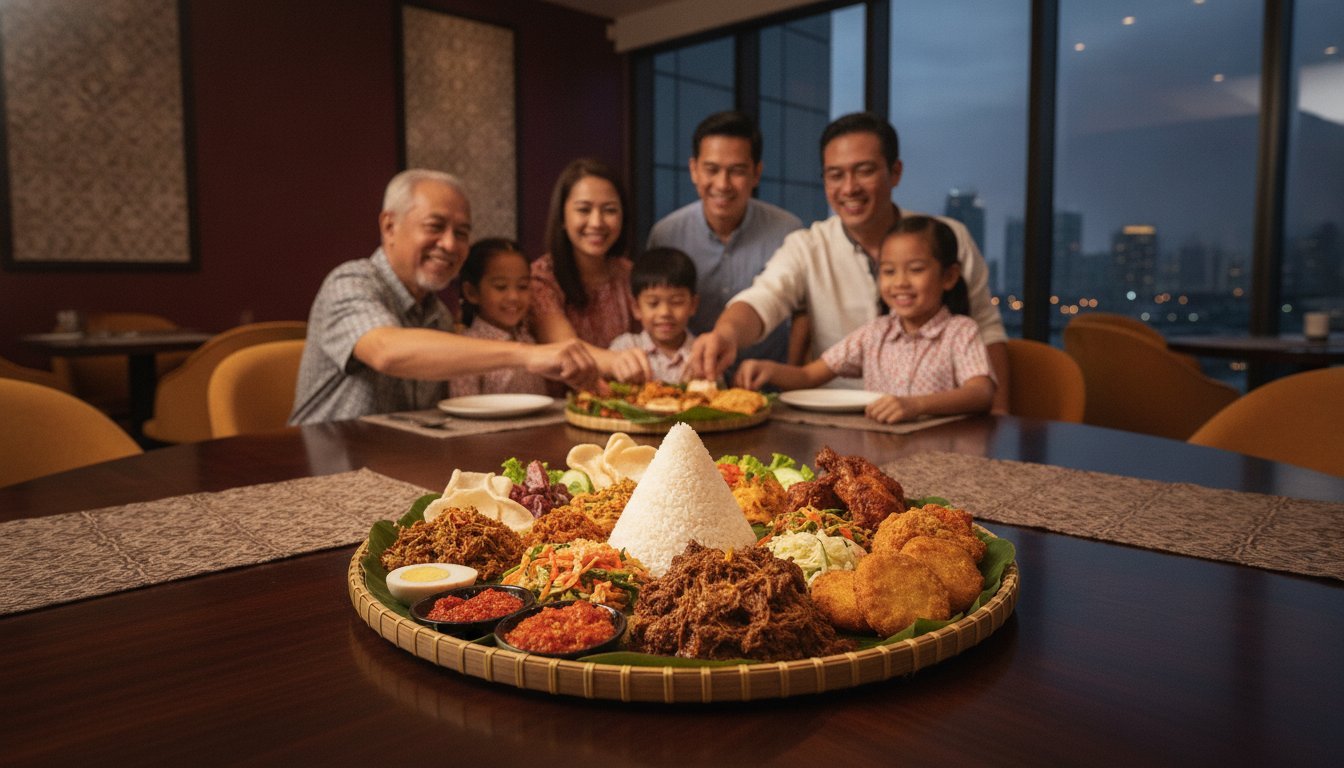

Finding a truly authentic Halal Indonesian restaurant in Singapore often feels like a search for a needle in a haystack, as many modern venues compromise on traditional spice profiles to appeal to a broader audience. It’s frustrating to settle for watered-down versions of heritage dishes when you’re craving the bold, complex heat of a genuine sambal or the rich aromatics of slow-cooked meats. You deserve a dining experience that respects the cultural origins of the food while maintaining the highest standards of MUIS Halal certification.
This article provides a clear framework to help you identify the markers of a genuine Indonesian kitchen. You’ll learn the vital differences between various traditional rice platters, such as the communal Nasi Ambeng and the classic Nasi Sambal Goreng. We also examine how a professional venue manages the transition from a versatile daytime menu to a dedicated evening of authentic flavors. By the end of this guide, you’ll know exactly how to select a hospitable space that’s ready to host everything from a quiet family dinner to a large-scale community celebration.
Key Takeaways
- Identify the core pillars of authenticity, from traditional spice profiles to the rigorous standards of MUIS Halal certification.
- Master the differences between heritage rice platters, distinguishing the everyday staple of Nasi Sambal Goreng from the communal tradition of Nasi Ambeng.
- Learn why a reputable Halal Indonesian restaurant might adopt a dual-concept model to serve Western favorites by day and authentic heritage flavors by night.
- Use a practical checklist to evaluate the quality of Indonesian dining venues, focusing on technical details like the essential “Rice to Side” ratio.
- Discover a reliable national destination for hosting large group gatherings or enjoying a quiet evening of culturally rooted Indonesian cuisine.
What Defines an Authentic Halal Indonesian Restaurant in Singapore?
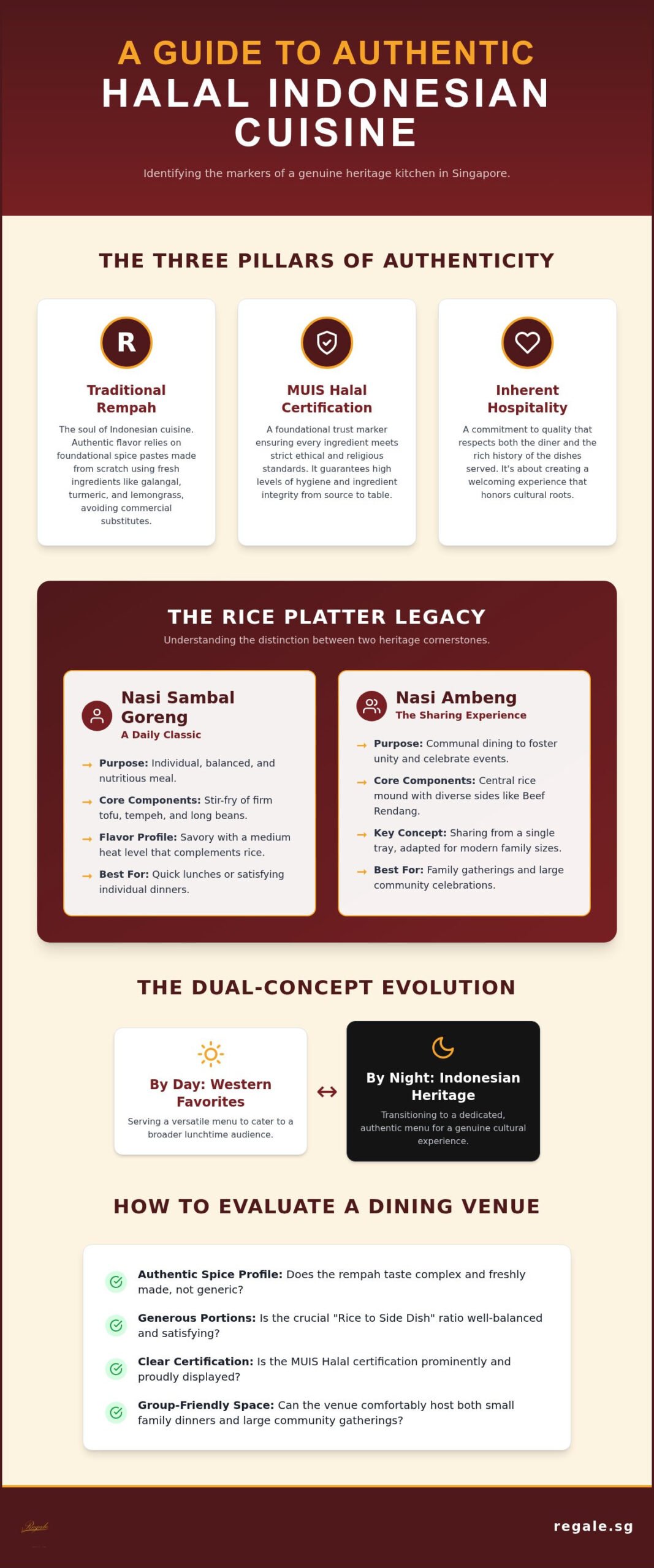
An authentic Halal Indonesian restaurant is defined by three non-negotiable pillars: precise spice composition, verified certification, and inherent hospitality. While some modern venues prioritize aesthetics or fusion trends, a true cultural custodian focuses on the preservation of heritage techniques. In Singapore’s competitive dining landscape, this authenticity requires a delicate balance between traditional Indonesian roots and the refined preferences of a diverse national audience. It isn’t just about the menu; it’s about an operational commitment to quality that respects both the diner and the history of the dishes served.
The Role of Halal Certification in Authentic Dining
For many diners, MUIS Halal certification serves as a foundational trust marker that extends far beyond a simple dietary label. This certification involves a rigorous process of inquiries and inspections that ensure every ingredient meets strict ethical and religious standards. It provides an independent assurance that the kitchen maintains high levels of hygiene and ingredient integrity, from the sourcing of meats to the preparation of complex sauces. Halal-certified Indonesian food is a blend of religious compliance and regional heritage. By adhering to these standards, a restaurant demonstrates a commitment to inclusivity, allowing a broad spectrum of the community to enjoy traditional flavors without uncertainty.
Traditional Flavor Profiles: The Power of Rempah
The soul of Indonesian cuisine lies in its rempah, the foundational spice paste that defines the character of every dish. Creating an authentic flavor profile requires the manual preparation of fresh ingredients like galangal, turmeric, lemongrass, and candlenuts. Many commercial substitutes lack the aromatic depth and textural complexity found in a kitchen that prepares its pastes from scratch. A skilled chef understands that while the heat levels of a sambal might be adjusted slightly to suit a national audience, the underlying complexity must remain intact. This dedication to traditional preparation ensures that the food isn’t watered down but remains a vibrant representation of its cultural origins. It’s this quiet competence in the kitchen that transforms a standard meal into a genuine heritage experience.
The Rice Platter Legacy: Nasi Sambal Goreng and Nasi Ambeng
The rice platter remains a cornerstone of the heritage dining experience, acting as a canvas for a variety of complex side dishes. In many traditions, these meals represent the “Golden Rice” heritage, where the grain is treated with reverence as a symbol of prosperity and communal bonds. For anyone visiting a Halal Indonesian restaurant, understanding the distinction between these heritage platters is essential for a fully realized culinary journey. Each platter serves a different social purpose, from the individual daily meal to the grand celebratory tray meant for a group.
Nasi Sambal Goreng: A Daily Classic
Nasi Sambal Goreng is a beloved staple that provides a balanced, nutritious meal suitable for both quick lunches and elaborate dinners. The dish centers around a fragrant stir-fry of firm tofu, fermented tempeh, and crisp long beans, all tossed in a savory spice paste. An authentic version relies on the careful frying of these components to maintain their individual textures before they’re combined with the rempah. The result is a savory profile with a medium heat level that complements steamed white rice perfectly. It’s a favorite for those seeking a reliable, high-quality meal that satisfies the palate through a combination of protein and vegetables.
Nasi Ambeng: The Ultimate Sharing Experience
Nasi Ambeng represents the pinnacle of communal dining, historically served during celebrations and significant life events to foster unity among guests. The platter features a central mound of rice surrounded by a diverse array of sides, including beef rendang, sambal goreng, and paru. The specific arrangement of these items is intentional, designed to encourage diners to share from the same tray. This practice is deeply rooted in the history of Indonesian culinary fare, where food acts as a bridge between individuals and their community.
Modern venues have adapted this traditional format to suit family dining, offering platters sized specifically for two or four people. This evolution ensures that the spirit of togetherness remains intact while meeting modern hospitality standards. When evaluating these platters, look for a generous “rice to side” ratio, ensuring every bite is accompanied by a rich variety of flavors. For those looking to experience these traditions firsthand, exploring authentic Indonesian specialties during an evening visit offers a genuine taste of heritage that stays true to its cultural origins.
The Dual-Concept Evolution: Western Lunch to Indonesian Dinner
The modern dining landscape in Singapore demands high levels of operational adaptability to serve a national audience with diverse tastes. A dual-concept approach allows a Halal Indonesian restaurant to maximize its service hours while maintaining a clear identity for different meal times. This transition isn’t just about changing the menu; it’s a strategic transformation of the dining environment to suit the specific needs of daytime and evening guests. By offering distinct menus, a venue can provide quick, efficient service during the day and a more immersive cultural experience at night. A Halal Indonesian restaurant that masters this dual identity becomes a versatile partner for both daily dining and significant life events.
Daytime Favorites: Western and Local Comforts
From 10:00 AM to 5:00 PM, the focus remains on accessible Western staples and familiar local favorites. Diners often seek the reliability of an Angus Burger or a well-prepared pasta during their midday break. Maintaining strict standards through the official Halal certification authority ensures that these diverse cuisines are prepared with the same integrity as traditional heritage dishes. This versatility is essential for serving groups with mixed dietary preferences, where one guest might crave an international favorite while another prefers a local classic. It’s this balance of variety and operational excellence that builds trust with a broad national audience.
Evening Transformation: An Authentic Indonesian Experience
As the clock strikes 6:00 PM, the atmosphere undergoes a purposeful shift. The lighting and service style transform to highlight a dedicated menu of authentic Indonesian cuisine. This evening session prioritizes heavy tradition, featuring specialties like Nasi Minyak and Briyani that require long preparation times and complex spice layering. The transition creates an immersive cultural environment, where the focus moves from quick daytime service to a more paced, heritage-driven experience. This methodical approach ensures that every guest receives a high-quality meal that matches the specific mood and purpose of their visit. Whether it’s a casual burger for lunch or a celebratory Indonesian platter for dinner, the commitment to hospitality remains steady and dependable throughout the day.
How to Evaluate a Halal Indonesian Dining Venue
Selecting a reputable Halal Indonesian restaurant requires looking beyond simple digital ratings. You need to assess the qualitative markers of heritage cooking to ensure the experience is authentic rather than a commercial imitation. An essential metric is the balance of components on a platter. For communal dishes like Nasi Ambeng, the “Rice to Side” ratio should be generous. You shouldn’t find yourself with a mountain of rice and only a few bites of protein. A professional venue ensures every spoonful of rice is accompanied by the rich, complex flavors of the sides, reflecting a commitment to value and tradition.
Authenticity also includes the cultural standard of Budi Bahasa, or refined hospitality. This is more than just polite service; it’s a sense of warmth and community that makes a national-level dining hub feel inclusive. Whether you’re visiting for a quick lunch or a major celebration, the service should reflect this rooted professionalism. A reliable venue is one that feels dependable and organized, managing both the flow of a busy dining room and the logistical needs of large group sharing platters with quiet competence.
The Freshness of Ingredients and Preparation
Freshness is non-negotiable in Indonesian cooking. You can tell if a kitchen uses fresh-ground spices by the aromatic depth and vibrant color of the sauces. Pre-packaged mixes often result in a flat, one-dimensional heat that lacks the complexity of a freshly prepared rempah. When evaluating heritage grains like Briyani and Nasi Minyak, look for fluffy, separate grains that carry the distinct scent of ghee and spices without being greasy. High-quality preparation results in deep aromatics that are evident the moment the dish arrives at your table.
Inclusivity and Group Dining Logistics
Logistics matter when you’re coordinating a meal for a diverse group. A reliable venue offers communal seating and flexible service tiers to accommodate different party sizes. For those organizing national-level events, the availability of Halal Mini Buffet options or full Halal Catering is a sign of operational readiness. A MUIS Halal-certified kitchen provides the necessary trust for inclusive corporate dining, ensuring all guests can participate in the experience without concern. If you’re planning a significant gathering, it’s wise to explore authentic catering and dining services that specialize in large-scale hospitality while maintaining heritage flavors.
Experience the Heritage of Regale Singapore
Regale Singapore serves as a primary example of how a modern Halal Indonesian restaurant can honor heritage while meeting the operational demands of a national audience. As a Cultural Custodian, we prioritize the preservation of traditional recipes that have defined the local dining scene for generations. This responsibility involves more than just following a recipe; it requires a deep respect for the origins of every spice and technique. Our commitment to authenticity is evident in the methodical preparation of our evening menu, where we transition from daytime favorites to a dedicated heritage experience. This evolution allows us to serve as a reliable partner for daily meals and significant life events alike, providing a consistent standard of excellence that reflects our history.
Our Signature Platters: From Briyani to Nasi Ambeng
The secret to our rice classics lies in the careful selection of grains and the precise layering of spices. Our Briyani and Nasi Minyak are prepared using traditional methods that ensure every grain is fluffy, fragrant, and deeply flavorful. For those seeking a communal experience, our Nasi Ambeng sharing platter remains the preferred choice for group celebrations. It brings together a diverse array of side dishes that represent the best of Indonesian culinary traditions, arranged to foster unity among diners. Regale Singapore is recognized as a go-to destination for these authentic local delights, providing a consistent quality that diners can depend on. We ensure that our “Rice to Side” ratio is always balanced, providing a generous serving of heritage in every tray, from the savory Nasi Sambal Goreng to the rich beef rendang.
Hospitable Service for Every Occasion
Our approach to service is rooted in the values of Budi Bahasa, ensuring that every guest feels welcomed and respected within our space. This hospitality is a core part of our identity, whether we’re serving a single diner or managing a complex event. We’ve built our reputation on logistical readiness, offering comprehensive Halal Catering and Halal Buffet services for national events. Our kitchen is fully equipped to handle Halal Mini Buffet requests, providing the same level of authenticity and quality found in our restaurant dining room. This versatility ensures that we can support our community across various service levels, from casual lunches to corporate functions. We invite you to experience this transformation firsthand by booking your next evening dinner with us. It’s an opportunity to enjoy a quiet, culturally rooted meal that stays true to the traditions we’ve worked so hard to preserve.
Secure Your Seat for an Authentic Heritage Meal
Identifying a truly authentic Halal Indonesian restaurant involves more than just reading a menu; it requires an appreciation for fresh-ground spices and the communal spirit of traditional rice platters. You’ve explored how the integrity of a rempah and the rigorous standards of MUIS Halal certification define a reputable kitchen. These elements ensure that every meal, from a daily staple to a celebratory feast, remains culturally rooted and inclusive for the entire community. Authentic dining is about the balance of flavors, the warmth of professional hospitality, and the preservation of heritage techniques.
Regale Singapore remains committed to these standards, acting as a reliable Cultural Custodian for national-level dining and catering. Our kitchen specializes in traditional Nasi Ambeng platters and heritage-focused Indonesian cuisine that honors the diverse history of the region. We invite you to witness our evening transformation and enjoy a meal prepared with quiet competence and deep respect for tradition. Book your authentic Indonesian dinner experience at Regale Singapore to taste the difference that heritage-first preparation makes. We look forward to welcoming you to our table for your next memorable meal.
Frequently Asked Questions
Is Indonesian food always spicy?
Not all Indonesian dishes are spicy; the cuisine offers a broad spectrum of flavor profiles. While many heritage recipes utilize chili-based sambals, others focus on the aromatic depth of galangal, turmeric, and lemongrass without intense heat. Dishes like beef rendang or certain briyani variations prioritize a rich, savory complexity rather than pure spiciness. This allows diners with different heat tolerances to enjoy authentic flavors comfortably without overwhelming their palate.
What is the difference between Nasi Ambeng and Nasi Sambal Goreng?
Nasi Ambeng is a communal sharing platter designed for group celebrations, featuring a central mound of rice surrounded by multiple side dishes. In contrast, Nasi Sambal Goreng is a specific heritage dish consisting of stir-fried tofu, tempeh, and long beans in a savory spice paste. While both are staples at a Halal Indonesian restaurant, Nasi Ambeng is a social dining experience, whereas Nasi Sambal Goreng is often served as an individual meal.
Does Regale Singapore offer Halal-certified Western food?
Yes, we provide a diverse selection of MUIS Halal-certified Western favorites during daytime hours. Our menu includes accessible staples such as the Angus Burger and various pasta dishes to cater to national visitors seeking international flavors. Every dish prepared in our kitchen adheres to strict Halal standards, ensuring that our Western offerings are just as inclusive and reliable as our traditional Indonesian heritage menu. This versatility serves the diverse needs of our guests.
Can I order Nasi Ambeng for large groups or events?
Large groups can enjoy Nasi Ambeng through our dedicated Halal Catering and Halal Mini Buffet services. We specialize in providing communal platters and buffet spreads for national-scale events, ensuring that the heritage of sharing remains central to the experience. Our logistical readiness allows us to manage portions for both small family gatherings and large corporate functions, maintaining the quality and authenticity of the side dishes across all service tiers and locations.
What are the must-try dishes at a Halal Indonesian restaurant?
Essential dishes to experience at a Halal Indonesian restaurant include Nasi Sambal Goreng for its textural complexity and Nasi Ambeng for its communal significance. Additionally, heritage rice classics like Nasi Minyak and Briyani are fundamental to the dining experience. These dishes showcase the depth of traditional rempah and the technical skill required to balance aromatic spices with high-quality proteins. Each offers a unique perspective on the regional culinary identity of our kitchen.
How does the menu change between lunch and dinner?
The menu operates on a dual-concept schedule to accommodate different dining needs throughout the day. From 10:00 AM to 5:00 PM, we serve a variety of Western and local favorites suited for quick, efficient lunches. At 6:00 PM, the atmosphere transforms to focus on heritage specialties. This evening shift highlights complex dishes like Nasi Ambeng and Briyani, providing an immersive cultural experience for dinner guests seeking authentic flavors and traditional hospitality during their visit.
Is Nasi Minyak different from regular white rice?
Nasi Minyak differs significantly from regular white rice as it’s prepared with ghee and a blend of aromatic spices. Often referred to as ghee rice, it features a rich, buttery flavor and a distinct scent from ingredients like ginger, cinnamon, and star anise. This preparation results in fluffy, flavorful grains that are traditionally served during celebratory meals. It provides a more indulgent and aromatic base compared to the neutral profile of standard steamed rice.
Are there vegetarian options in an Indonesian menu?
Indonesian cuisine offers several naturally vegetarian-friendly components, such as tofu and fermented tempeh. Dishes like Sambal Goreng focus on these plant-based proteins, providing a satisfying and flavorful option when prepared without meat-based additives. Many traditional vegetable sides utilize coconut milk and fresh spices to create rich profiles that don’t rely on animal products. We recommend checking with our service staff to identify specific dishes that align with your dietary requirements for a comfortable dining experience.