
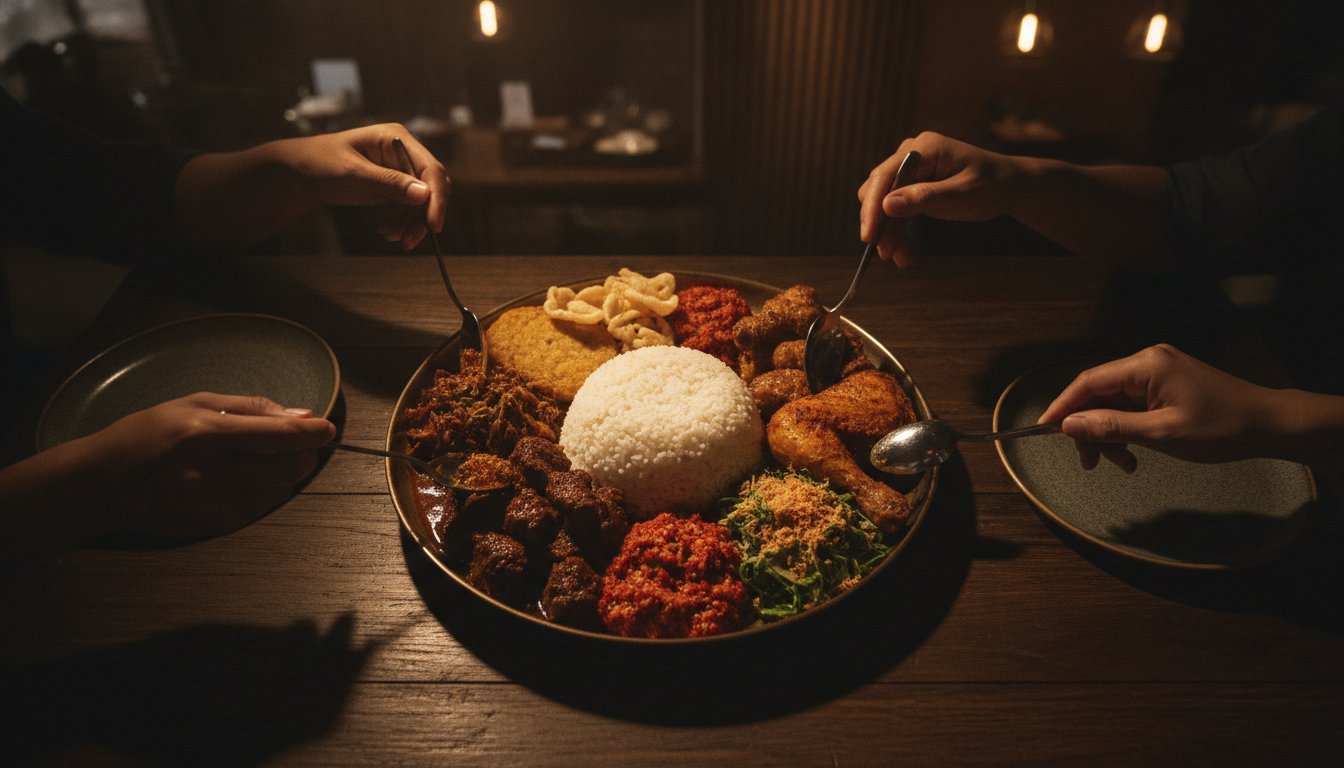

Finding truly authentic halal Indonesian cuisine in Singapore often feels like a search for a hidden heritage rather than a simple meal choice. Many diners settle for generic options because they can’t find a dedicated space that captures the soul of traditional flavors. It’s a common challenge to distinguish between complex rice-based platters or to find a professional setting that prioritizes the evening dining experience. Authenticity shouldn’t be difficult to find.
You’re likely looking for a meal that reflects the rich history of the region without the confusion of poorly explained menus. This guide promises to clarify the distinctions between iconic offerings like Nasi Ambeng and Nasi Sambal Goreng, while highlighting the essential spices that define the palate. You’ll discover how communal dining traditions can transform a simple dinner into a significant cultural event. We’ll examine the heritage of these dishes and provide the practical details you need to find a reliable halal restaurant for your next evening gathering.
Key Takeaways
- Understand the foundational balance of sweet, spicy, and savory flavors that define authentic Indonesian Cuisine.
- Identify the essential aromatic ingredients, such as galangal and kaffir lime, that comprise the traditional “Bumbu” spice paste.
- Learn about the communal heritage of Nasi Ambeng platters and how they facilitate a shared dining tradition.
- Distinguish between signature rice-based specialties like Nasi Sambal Goreng and the aromatic profile of Nasi Minyak.
- Recognize how the shift to an evening dining atmosphere creates a more refined space for enjoying authentic traditional meals.
The Essence of Indonesian Cuisine: A Rich Tapestry of Flavours
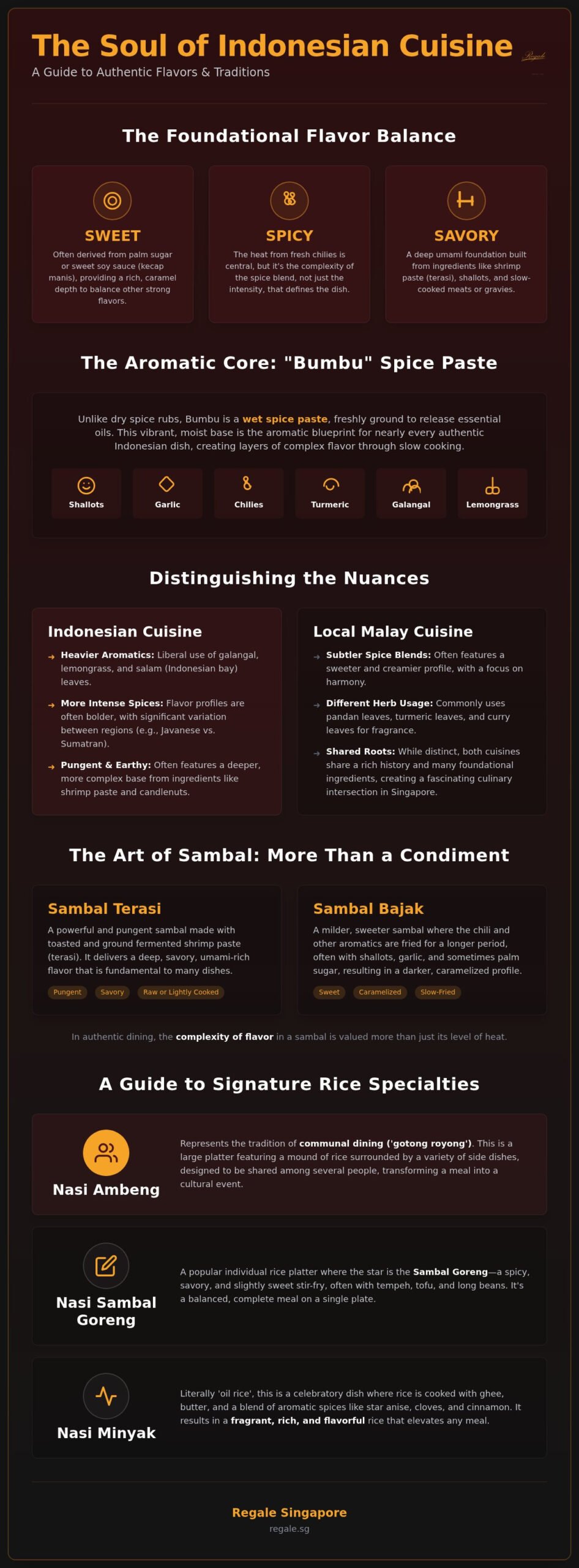
Authentic Indonesian cuisine is defined by a sophisticated balance of sweet, spicy, and savory elements. It doesn’t rely on a single flavor note. Instead, it builds layers through slow cooking and the use of fresh aromatics. At the heart of every meal is rice, or nasi. It’s more than a side dish; it’s the central pillar that anchors the entire dining experience. Whether it is plain steamed rice or a fragrant variant like Nasi Minyak, the rice provides the necessary neutral ground for bold, spicy gravies and complex side dishes.
In the Singaporean context, halal certification is a fundamental requirement for authentic dining. It ensures that traditional recipes are preserved while meeting the dietary needs of the local community. This inclusivity allows for a shared appreciation of heritage dishes. While many people associate Indonesian cuisine with quick street-style snacks or casual lunches, the true depth of the culture is revealed during elaborate evening feasts. These meals represent a purposeful transition from functional eating to a celebratory experience where time and tradition are prioritized.
The Philosophy of Authentic Indonesian Dining
The Nusantara concept refers to the vast Indonesian archipelago and its diverse regional influences. This philosophy dictates that food should reflect the bounty of both the land and the sea. Hospitality, known as gotong royong or mutual cooperation, is deeply embedded in the preparation of these meals. It’s a community-focused effort that results in visually stunning presentations. Traditional meals often feature vibrant colors from turmeric, fresh chilies, and herbs, ensuring the visual appeal is as impactful as the taste.
Indonesian vs. Local Malay Cuisine: Understanding the Nuance
While Indonesian and local Malay cuisines share common historical roots, they possess distinct nuances that a discerning palate will notice. Indonesian cooking typically utilizes a heavier concentration of aromatics like lemongrass, galangal, and salam leaves. The spice profiles tend to be more intense and vary significantly across different regional islands. Singapore acts as a unique melting pot for these styles. Diners here can appreciate the subtle differences in heat levels and sweetness that distinguish a Javanese specialty from a local Malay favorite. This intersection creates a rich culinary environment for those seeking a truly authentic experience.
The Foundations of the Indonesian Kitchen: Spices and Staples
The soul of Indonesian Cuisine lies in the mastery of “Bumbu,” a wet spice paste that serves as the aromatic blueprint for almost every dish. Unlike dry spice blends found in other regions, Bumbu is freshly ground to release essential oils and create a vibrant, moist base. This method is deeply rooted in the history of Indonesian cuisine, where the spice trade influenced the development of complex flavor profiles across the archipelago. To achieve a truly authentic taste, chefs must balance the sharp heat of chilies with the earthy notes of galangal and the citrusy brightness of lemongrass and kaffir lime leaves.
Rich textures are equally important, often achieved through the careful integration of coconut milk, known as santan. This ingredient provides a velvety mouthfeel that carries the spices across the palate and mellows the intensity of the chilies. For those seeking these traditional flavors in a professional setting, visiting a dedicated Indonesian Restaurant in Singapore ensures that these foundations are respected through labor-intensive preparation methods. It’s the difference between a meal that’s simply hot and one that’s truly layered.
Essential Aromatics and Their Roles
Bumbu Bali is a versatile, foundational spice paste that typically includes shallots, garlic, red chilies, turmeric, ginger, and shrimp paste. While the spices provide the flavor, other ingredients serve functional roles in the kitchen. Candlenuts, or kemiri, are essential for their high oil content, acting as a natural thickening agent for sauces and gravies. Turmeric leaves are frequently added to slow-cooked stews to impart a subtle, grassy fragrance that balances the richness of the meat.
The Art of the Sambal
Sambal is much more than a condiment; it acts as a palate cleanser and a flavor enhancer that varies by region and preparation style. Sambal Terasi relies on fermented shrimp paste for a pungent, savory depth, while Sambal Bajak is often fried with aromatics to produce a sweeter, more caramelized profile. In authentic dining, the heat level is considered secondary to the depth of flavor. The complexity of the blend matters more than the sting of the chili.
- Sambal Terasi: This is best paired with grilled poultry or fresh vegetables to provide a savory, umami-rich contrast.
- Sambal Bajak: Its richer, cooked profile complements fried meats and hearty rice dishes perfectly.
- Sambal Kecap: A sweet soy-based chili sauce that cuts through the fat of grilled seafood and provides a clean finish.
Communal Dining Traditions: Nasi Ambeng and the Platter Culture
Communal dining represents the heartbeat of Indonesian heritage. It’s a practice that prioritizes shared experiences over individual consumption. In the context of authentic Indonesian Cuisine, a meal is rarely just about the food; it’s a social ritual designed to foster unity and gratitude. Central to this tradition is the concept of the sharing platter, where a mountain of rice is surrounded by an array of side dishes, known as lauk-pauk. This arrangement allows every guest to sample a wide variety of flavors and textures in a single sitting.
These platters are particularly significant during celebrations, weddings, and religious gatherings. They serve as a practical way to feed large groups while ensuring everyone receives an equal portion of the feast. For diners in Singapore, communal platters provide a comprehensive introduction to the diverse culinary landscape of the region. By offering multiple spice levels and cooking styles on one tray, the communal format ensures a balanced meal that appeals to different palates and encourages conversation.
Nasi Ambeng vs. Nasi Sambal Goreng
While both dishes feature a variety of accompaniments, they serve different operational purposes. Nasi Ambeng is the ultimate communal dish, traditionally served on a large round tray called a “Dulangan.” It’s specifically designed for sharing among four to six people, symbolizing togetherness and equality. In contrast, Nasi Sambal Goreng is often presented as a more personal or smaller-scale set. The side dishes in an Ambeng platter are more extensive, often including beef rendang, sambal goreng, and paru, whereas Nasi Sambal Goreng focuses specifically on the spicy stir-fry of fermented soybean cake and long beans. For large family gatherings or corporate events, the Dulangan of Nasi Ambeng remains the standard choice for an authentic experience.
The Etiquette of Sharing an Indonesian Feast
Traditional dining often involves “makan bersila,” which means sitting cross-legged on the floor or on woven mats. While a modern Halal restaurant will provide tables and chairs for comfort, the spirit of the tradition remains unchanged. It’s customary to eat with your right hand, using your fingers to press the rice and side dishes together before consumption. Respect for seniority is paramount in these settings. The oldest person at the table is typically invited to take the first portion of rice, signaling the start of the meal for everyone else. This structured approach to hospitality ensures that every guest feels respected and welcomed throughout the dining experience.
Selecting Your Meal: A Guide to Signature Indonesian Specialties
Choosing the right dish is essential for a truly satisfying dining experience. While communal platters like Nasi Ambeng offer a broad introduction to the culture, understanding the nuances of individual specialties allows you to appreciate the technical skill involved in Indonesian Cuisine. Every component, from the aromatic rice to the slow-cooked proteins, requires a specific set of traditional techniques to achieve the correct flavor profile.
The Complexity of Nasi Sambal Goreng
Nasi Sambal Goreng is a staple that showcases the balance of texture and heat. The name refers to the stir-frying of a spicy chili paste with various ingredients. A standard serving typically includes several essential side dishes:
- Diced Tofu: These are lightly fried to provide a soft interior with a slightly firm skin.
- Tempeh: Fermented soybean cake that adds a nutty flavor and a crisp texture to the plate.
- Long Beans: These are stir-fried quickly to maintain their crunch and vibrant color.
The success of the dish depends on the frying technique. The ingredients must be coated thoroughly in the sambal without becoming overly greasy. This creates a contrast between the crisp fried elements and the soft, fragrant rice that anchors the meal.
Briyani and Nasi Minyak: The Golden Rice Classics
Rice isn’t just a background element in this culinary tradition. Nasi Minyak, or ghee rice, is a hallmark of authentic Indonesian Cuisine, celebrated for its rich, buttery aroma and distinct golden hue. This color is achieved through the careful use of turmeric, while whole spices like cinnamon, star anise, and cardamom provide a deep fragrance. It’s a celebratory rice often served at formal events and evening dinners.
Indonesian-style Briyani has evolved within the local Malay context. It differs from South Asian variants by focusing on a milder, more aromatic spice profile that complements rather than overpowers the accompanying meats. For the best experience, pair these rich rice dishes with robust proteins like Beef Rendang, which is slow-cooked for hours until the coconut milk reduces into a thick, savory paste. Alternatively, Ayam Goreng provides a lighter option, featuring chicken marinated in a bumbu of coriander and turmeric before being fried to a golden brown.
If you’re ready to experience these traditional flavors firsthand, you can book a table at our Indonesian Restaurant Singapore to enjoy a professionally prepared evening feast.
Elevating Your Evening with Authentic Indonesian Dining
Authentic Indonesian dining is at its most impactful when the pace of the day slows down. While lunch in Singapore is often a hurried, functional affair, the evening offers a unique opportunity to engage with the deeper heritage of the region. This transition from a quick meal to a purposeful dinner allows for the appreciation of the complex spice profiles and communal traditions that define Indonesian Cuisine. Choosing a professional, halal-certified venue ensures that every guest feels included and respected during these significant social gatherings.
The Evening Transformation
Daytime service in many establishments focuses on Western Cuisine or efficient local lunches. However, a dedicated Indonesian Restaurant Singapore often undergoes a deliberate transformation as the sun sets. The menu shifts from casual daytime staples to traditional specialties like Nasi Ambeng and Nasi Sambal Goreng. These dishes require a more relaxed setting to be fully appreciated. The richer, slow-cooked flavors of Beef Rendang or the aromatic profile of Nasi Minyak are better suited for a slow dinner where guests can savor each layer of flavor. Hospitality plays a vital role in this shift, as the service becomes more personalized and the atmosphere reflects a sense of quiet competence. The use of warmer lighting and attentive service creates a hospitable environment that honors the role of the restaurant as a cultural custodian.
Planning Your Next Group Dinner
Variety is the key to a successful experience when you’re organizing a meal for a large group. It’s helpful to order a mix of textures and spice levels to ensure everyone at the table finds something they enjoy. For example, pairing a crisp Ayam Goreng with a creamy, slow-reduced Rendang provides a balanced palate that appeals to different tastes. Selecting a restaurant that specializes in heritage recipes means you’re supporting a business that values historical accuracy and traditional preparation. These venues prioritize labor-intensive methods over shortcuts, ensuring that the “Bumbu” base is ground fresh and the rice is perfectly steamed.
A reliable Halal restaurant is essential for inclusive group dining, as it removes the guesswork for guests with specific dietary requirements. We encourage you to look beyond familiar favorites and explore the full depth of the Indonesian Cuisine on offer. The evening is the perfect time to discover a new regional specialty or a unique sambal you haven’t tried before. Experience the evening transformation and book your authentic Indonesian dinner at Regale Singapore to enjoy a meal rooted in tradition and hospitality.
Experience the Depth of Traditional Flavours
Authentic Indonesian Cuisine is defined by more than just heat. It’s a meticulous assembly of fresh aromatics, slow-cooked proteins, and communal traditions that bring people together. Understanding the foundational role of the spice paste and the etiquette of the sharing platter helps you appreciate the technical skill required for these heritage dishes. The transition from a functional daytime lunch to a meaningful evening meal allows these complex flavors to take center stage in a professional, inclusive setting.
Finding a reliable venue that respects these traditions is the final step in your culinary journey. Regale Singapore serves as a cultural custodian, offering halal-certified traditional recipes in an environment designed for hospitality. As specialists in communal favorites like Nasi Ambeng and Nasi Sambal Goreng, we ensure that every dinner is an authentic transformation of flavor and atmosphere. This commitment to quality ensures that every guest enjoys a meal that is both technically precise and culturally rooted.
Discover Authentic Indonesian Flavours at Regale Singapore and enjoy a feast that honors the rich heritage of the region. We look forward to welcoming you to a dining experience that’s both professional and deeply rooted in our local community.
Frequently Asked Questions
What is the difference between Indonesian and Malay food?
Indonesian food generally uses a wider variety of spices and more intense aromatics compared to local Malay dishes. While they share roots, Indonesian recipes often feature specific ingredients like kencur, or aromatic ginger, and a heavier use of fermented shrimp paste. This results in a flavor profile that’s often described as bolder and more layered. In Singapore, these nuances are celebrated as distinct culinary traditions that reflect the diverse archipelago.
Is Indonesian cuisine always spicy?
No, not all dishes are spicy. While chilies are a staple, many recipes prioritize sweetness or savory richness instead. For example, dishes utilizing kecap manis, which is sweet soy sauce, or mild coconut milk bases provide a gentle flavor profile. Authentic Indonesian Cuisine balances heat with other elements, ensuring there are options for every palate. Diners can enjoy flavorful stews or grilled items that emphasize aroma over intense chili burn.
What are the must-have components of a Nasi Ambeng platter?
A traditional Nasi Ambeng platter must include a central mound of steamed rice surrounded by specific side dishes. Essential components typically feature beef rendang, sambal goreng, and serunding, or spiced coconut flakes. Other traditional additions include paru, which is fried lung, bergedel potato patties, and a variety of sambals. These elements are arranged carefully on a large tray to encourage sharing and provide a balanced mix of textures and savory flavors.
Why is halal certification important for Indonesian restaurants in Singapore?
Halal certification is vital because it guarantees that the food is prepared according to strict dietary laws. In a diverse society like Singapore, choosing a halal-certified establishment ensures that communal meals are inclusive for Muslim friends and colleagues. It builds trust through operational transparency and professional standards. This certification allows everyone to participate in the traditional dining experience without concerns about ingredients or cross-contamination during the preparation process.
What is Nasi Sambal Goreng?
Nasi Sambal Goreng is a signature rice dish centered around a spicy, aromatic stir-fry of fermented soybean cake and tofu. The primary component is the sambal goreng itself, which usually includes diced tempeh, firm tofu, and long beans. These are tossed in a fragrant chili paste that provides a savory depth. It’s a popular choice for those who appreciate the earthy flavors of tempeh and the crisp texture of well-fried tofu.
Can I find vegetarian options in authentic Indonesian cuisine?
Yes, vegetarian diners can find many satisfying options within authentic Indonesian Cuisine. Staples like tempeh and tofu provide high-protein bases for many traditional recipes. Sayur lodeh, which is a vegetable stew in coconut milk, and gado-gado, a salad with peanut sauce, are excellent meat-free choices. Many side dishes focus on fermented beans and fresh vegetables, making it easy to enjoy a full experience without meat or seafood components.
What is the best way to enjoy an Indonesian communal meal?
The best way to enjoy a communal meal is to embrace the spirit of togetherness and sharing. Traditionally, guests might eat with their right hand to fully engage with the textures of the food. It’s polite to let the elders or guests of honor take the first portion of rice. Using a large sharing platter allows everyone to sample each dish, making the meal a social event rather than just a solitary activity.
How does Nasi Minyak differ from regular white rice?
Nasi Minyak, or ghee rice, differs from regular white rice through its rich aroma and vibrant yellow color. It’s cooked with clarified butter, ginger, and a blend of whole spices like cinnamon and star anise. This preparation results in a buttery texture and a complex fragrance that white rice lacks. It’s often reserved for special occasions and evening feasts because it pairs exceptionally well with robust, spicy meat dishes.
