
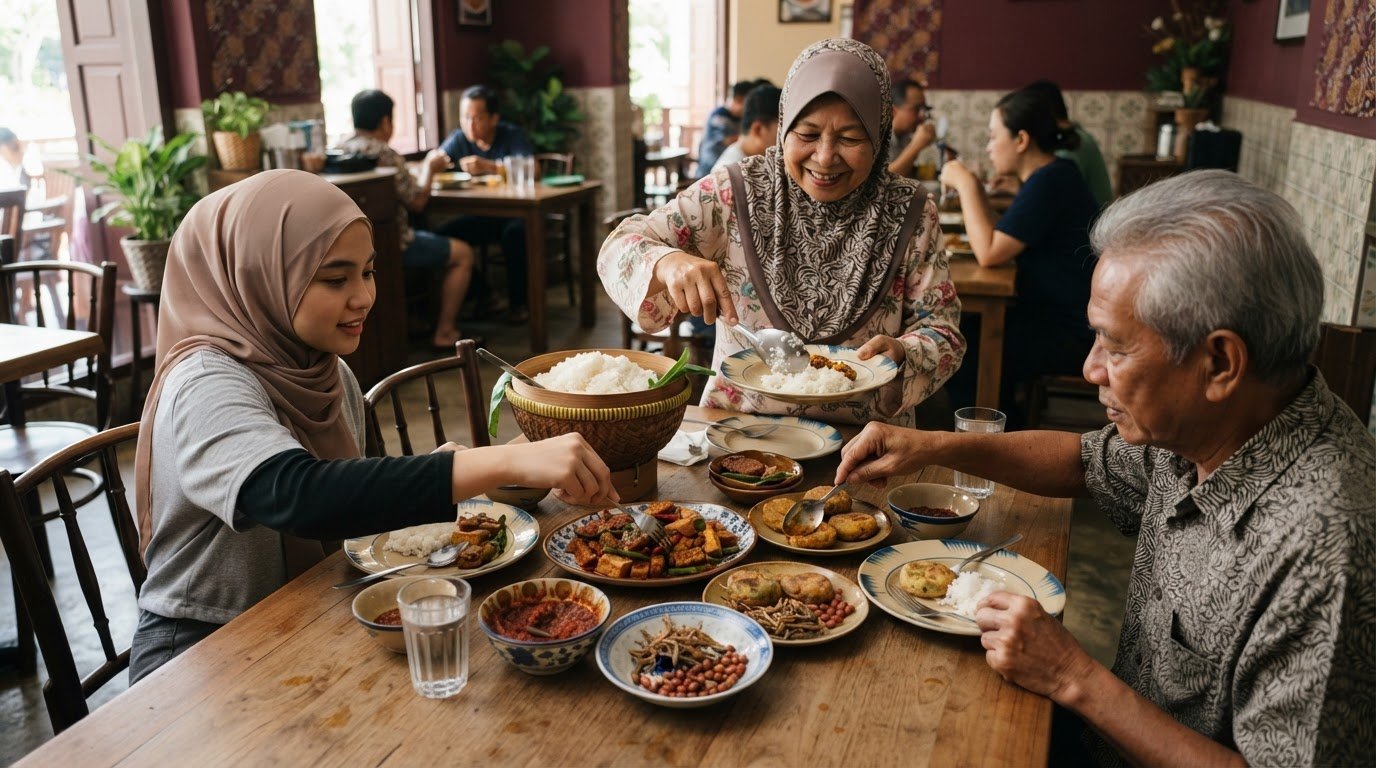

A family meal is easier to enjoy when the food brings everyone to the table. An Indonesian restaurant for family dining can offer shared dishes, a welcoming setting and halal choices, with flavours to suit different ages and appetites.
Choosing a place for a family meal involves more than finding food everyone recognises. Shared plates let diners sample different flavours, while a welcoming setting gives the group room to settle in and enjoy its time together. Halal certification and familiar, carefully prepared dishes can also matter when choosing where to dine.
This guide explains what to look for in an Indonesian family dining experience in Singapore. It covers how communal dishes suit a group, what makes a restaurant comfortable for family gatherings, how halal assurance fits into the decision and why home-style cooking can add warmth to the meal. With these points in mind, you can choose a setting that brings the family together around the table.
Key Takeaways
- Shared dishes can make a family meal more communal; consider how the group prefers to sample and share food.
- A comfortable group setting helps everyone settle in, especially when family members have different needs and appetites.
- Halal certification is an important consideration for diners seeking halal food in Singapore.
- Home-style recipes can bring familiar flavours and a sense of tradition to a family gathering.
- When planning a meal, consider how the menu, location and dining format fit your group and outing.
1. Shared dishes and communal dining
Indonesian meals can suit family dining because diners may combine individual rice dishes with food placed at the centre. Indonesian cuisine encompasses over 5,000 different recipes, so a shared meal can offer varied flavours and preparations. A table might pair rice with vegetables, sambal and a protein dish. This format lets each person choose portions and sample dishes without ordering identical meals. It also gives families a natural way to accommodate different appetites. One diner can focus on rice, while another tastes a side dish or sauce.
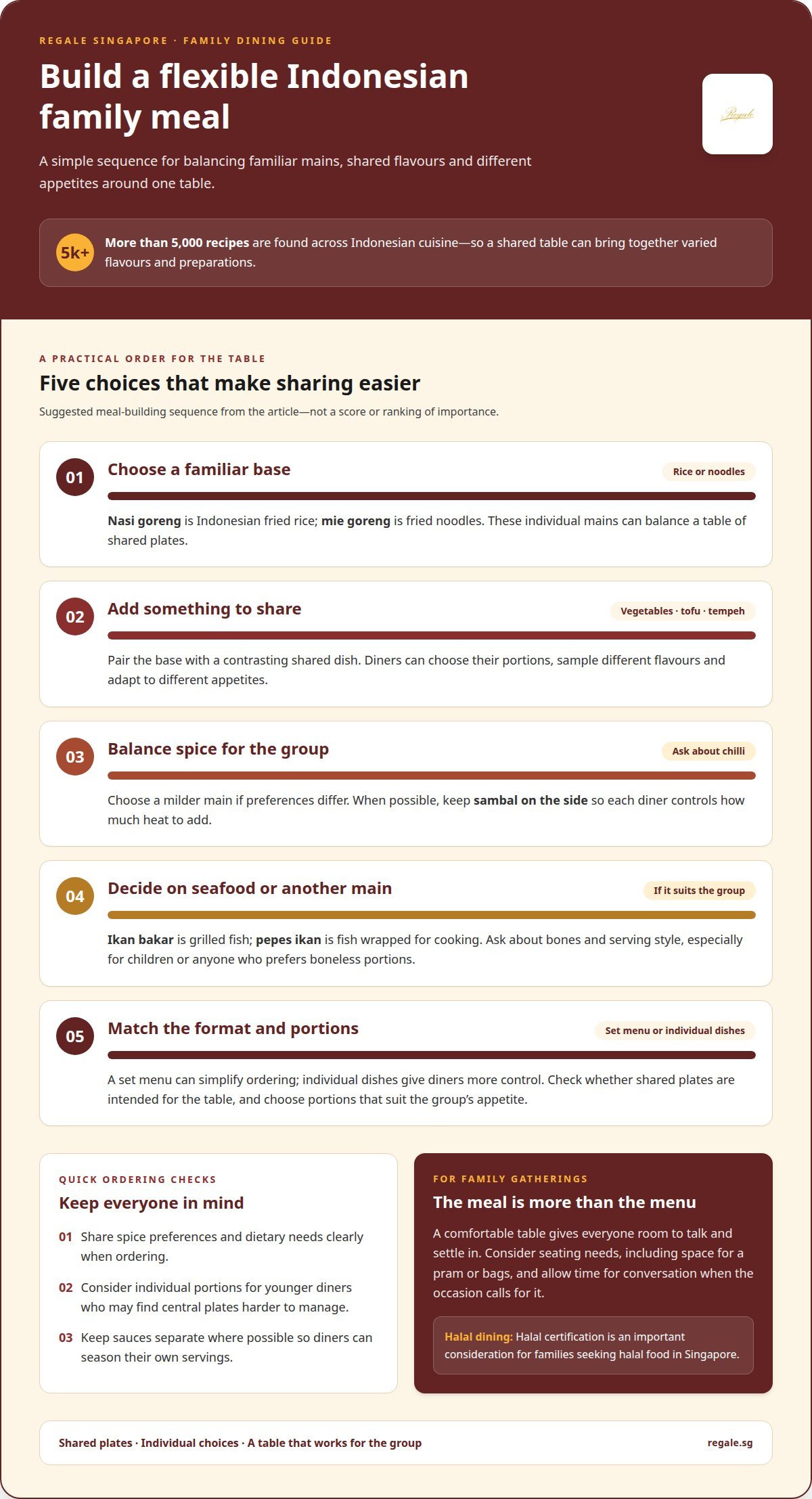
Nasi goreng, or Indonesian fried rice, is a familiar option for diners who prefer a rice-based dish. Mie goreng, a fried noodle dish, offers an alternative. These are often ordered individually, so they can balance a table of shared plates. For example, some family members can choose rice while others opt for noodles. Shared vegetables or a protein dish can bring the meal together. Ask about spice when ordering, since sambal can add heat.
Sharing works best when the group chooses dishes with different roles. Rice provides a familiar base, while vegetables, tofu or tempeh add variety. A family can combine a milder dish with a more strongly seasoned choice. Set menus can simplify ordering by grouping dishes into a planned meal, though the selection determines how much variety the table gets. Before choosing, consider the group’s appetite, preferred spice level and interest in tasting several dishes. Younger diners may find an individual portion easier to manage than food served centrally.
Fish and seafood can add another option to a shared spread. Indonesian preparations include grilled fish, often called ikan bakar, and fish wrapped for cooking, known as pepes ikan. These examples show how the same main ingredient can have different textures and seasonings. Seafood may suit diners seeking an alternative to meat, while shared vegetables or rice can round out the meal. Ask about bones and serving style when ordering for children or anyone who prefers boneless portions. Keep sauces separate where possible so each diner can season their serving.
When choosing an Indonesian restaurant for family dining, plan the order around variety rather than duplicating dishes. Start with a rice or noodle main, add a contrasting shared item, then consider fish or seafood if it suits the group. A set menu can simplify selection, while individual dishes give diners more control. Match portions to appetite and check whether shared plates are intended for the table. This keeps the meal flexible and gives everyone a way to join in.
2. Family-friendly Indonesian restaurants and group dining
A family-friendly meal balances the group’s food preferences with practical needs. Spice varies by recipe and dish. Ask about chilli when ordering; where the recipe allows, the kitchen can adjust the heat, while sambal served separately lets diners control how much they add. This matters when children and adults have different tolerances. A milder main with chilli on the side gives each diner more control.
Start by considering who will attend and how they prefer to eat. A family with young children may value familiar individual dishes, while adults may enjoy trying Indonesian flavours together. Some diners may prefer rice, while others choose a Western dish. A menu with a mix of cuisines can help accommodate different tastes. Decide whether the group wants individual portions, shared dishes or a combination before ordering.
Seating can shape the experience as much as the menu. A gathering with grandparents, parents and children may go more smoothly at a table where everyone can converse comfortably. Groups with a pram or bags should consider how much space they need. For a birthday meal, allow time for conversation rather than rushing between courses. These details help match the setting to the occasion.
Give dietary needs clear attention when planning a group meal. A halal-certified restaurant can suit families seeking halal dining, while a menu with varied cuisines may help when preferences differ. Keep dietary requirements in mind when choosing shared dishes. One person can communicate the group’s needs when ordering, helping keep requests together and reducing confusion across several dishes.
Timing matters when families are dining together. A meal after a day out may call for a straightforward order, while a reunion can leave more time for conversation. If the group includes children, consider whether they are likely to prefer a familiar dish or a smaller portion. Adults can then choose more adventurous flavours without making the meal difficult for younger diners. Choose a format that suits the group’s appetite, schedule and comfort.
For an Indonesian family meal in Singapore, weigh the menu, spice preferences, seating needs and occasion together. A restaurant serving halal Indonesian dining may suit families who value Indonesian flavours alongside a halal setting. Share the group’s preferences clearly when ordering, especially when several diners have different spice tolerances. This simple planning step helps keep the meal welcoming and practical for everyone at the table.
4. Home-style Indonesian food and family recipes
Home-style Indonesian cooking is not one fixed menu. Recipes vary between households and regions, with ingredients, spice levels and cooking methods shaping each dish. Some diners may find comfort in warm rice served with vegetables, a protein and sambal; others may be more familiar with coconut-rich cooking. At a restaurant, these combinations can make for a complete meal rather than a single main dish.
Several well-known dishes show this range. Rendang is slowly cooked with spices and coconut milk until richly flavoured, while sayur lodeh combines vegetables in a coconut-based broth. Tempeh, made from fermented soybeans, adds a savoury plant-based element. These dishes bring different textures and flavours to the table. For a family meal, pairing vegetables with a meat-based recipe gives diners more than one way to enjoy the food.
Seasoning is another part of home-style cooking. Aromatics such as garlic, shallots, ginger and lemongrass build flavour in many Indonesian dishes. Sambal adds a chilli-led contrast, but it need not be mixed into every serving. Keeping it separate lets diners add an amount that suits their palate. Families with children, spice-sensitive diners and chilli enthusiasts can share a meal while adjusting individual servings.
Family recipes also depend on how dishes are prepared and served. Ayam goreng, or fried chicken, offers a familiar protein, while a slow-cooked dish such as rendang has a more concentrated sauce. Combining these with rice and vegetables creates a balance of textures rather than several similar mains. When choosing dishes, consider whether the group prefers crisp, tender or saucy preparations. This makes the selection more purposeful.
Home-style food often carries meaning beyond flavour. A recipe associated with a family gathering can connect diners to everyday routines, celebrations or regional traditions. Rendang, for example, may be served on special occasions in some households, while rice and vegetables can be part of a familiar daily meal. Traditions differ, so a restaurant meal represents one interpretation, not every family’s recipe. Consider whether the dishes feel thoughtfully prepared and work together as a meal.
For an Indonesian family meal in Singapore, look for variety in the menu and a clear balance of flavours. Choose a familiar dish such as ayam goreng, add vegetables such as sayur lodeh, and keep sambal separate for individual seasoning. This simple approach creates a meal with recognisable elements and room to explore less familiar tastes. It also helps each diner find a comfortable way into Indonesian home-style cooking.
4. Indonesian Family Meal Prices in Singapore
Family meal costs in Singapore depend on the dishes ordered, portion sizes and dining format. A group choosing individual mains will build its total differently from a group sharing several dishes. The menu’s listed prices provide the basis for comparing those choices. Start by deciding whether each diner wants a complete meal or whether the table prefers a combination of shared plates and individual orders.
Individual dishes make spending easier to track because each diner selects a separate main. For example, one family member might order nasi goreng and another a noodle dish. Shared vegetables, rice or a protein add to the order, so consider the whole table’s selection rather than one dish alone. Portion size matters too: a dish ordered to share serves a different purpose from an individual main.
Set menus offer another way to structure a group order. Their value depends on what they include and whether the selection suits the diners. Compare the listed components with what your family would otherwise order individually. A set menu with several dishes may suit a group looking for variety, while separate mains may work better when preferences differ. The total depends on the menu, portions and mix of dishes.
Ingredients also influence menu prices. A fish or seafood dish differs from a vegetable side in its main ingredient and preparation. Meat-based recipes, rice dishes and noodle mains each play a different role in the meal. Compare choices within the same category, such as one rice dish with another. This gives a clearer sense of how substitutions affect the total.
For a family outing, plan around appetite and dining style rather than ordering extra dishes without a purpose. A group sharing food can choose a few contrasting items, while diners who prefer individual portions can select their own mains. Account for drinks and any additional dishes on the menu. If children are in the group, a familiar main they enjoy may reduce the need to add another dish later.
Before ordering, review the menu prices and decide on a simple structure: individual mains, shared dishes or a combination. Then match the selection to the group’s preferences, portion needs and interest in seafood or other higher-cost ingredients. This approach helps families in Singapore understand what shapes their meal total without relying on a general price estimate that may not match their order.
5. Which Indonesian restaurants in Singapore are near family attractions or MRT stations?
For a family outing, choose an Indonesian restaurant that fits the day’s plans as well as the meal. Start with the attraction, then consider transport and dining locations on a map. If your family is visiting Science Centre Singapore, for example, dining at Regale at Science Centre can make the meal part of the outing. For other plans, choose the destination first, then consider where the group can dine comfortably. This keeps travel and mealtime connected.
Science Centre Singapore is a useful landmark for planning a family meal. Regale at Science Centre is located at the attraction, so lunch or dinner can be part of the visit rather than a separate journey. Families can plan the meal before or after their activities, depending on the day’s schedule. For other outings, compare the route from the venue to dining options using a transport journey planner. Check the full route, not just the distance on a map.
MRT access can be useful when relatives travel from different parts of Singapore. Look at the station serving the attraction and the route to the restaurant, including transfers or walking sections. A short-looking distance may still involve stairs, crowded paths or a long walk for children and older relatives. A family with a stroller, for example, may prefer a straightforward route over several changes. Choose a location that suits the group’s mobility and schedule.
Before setting out, agree on a simple plan: name the attraction, identify the relevant MRT station, then compare restaurant locations along the route. Allow time for the group to travel together, especially if members are meeting from different parts of Singapore. If the meal follows a visit, choose a location that avoids unnecessary backtracking. This is more practical than choosing a restaurant first and building a long journey around it.
Location should also work with the meal itself. A family leaving an attraction may want a convenient place to sit and enjoy Indonesian food, while a shorter stop between activities may call for a simpler plan. Consider dining time, the group’s route and how easily everyone can reach the venue. For a meal at Science Centre Singapore, plan a family dining stop around the visit. For destinations elsewhere, use the same route-first method to find a suitable dining location without assuming every restaurant sits beside an MRT station.
Regale Singapore
Regale Singapore brings Indonesian cuisine to family meals at Science Centre Singapore. Its halal-certified setting suits families seeking halal dining, and its menu includes Western and local favourites for different tastes. Nasi Sambal Goreng and Nasi Ambeng are among the Indonesian dishes served, giving families options for individual meals or a shared dining experience.
Consider Regale at Science Centre when you want to pair a visit with Indonesian food in the same location. The mix of Indonesian, Western and local choices can help families with different preferences enjoy a meal together.
Contact Regale Singapore to discuss your family dining plans.
Make Your Next Family Meal a Shared Occasion
Make your next family meal reflect how your group enjoys dining together. Choose a setting and menu that leave room for different tastes, then let everyone share in the occasion. If you are looking for an Indonesian restaurant for family dining, consider Regale Singapore’s Indonesian, Western and local menu at Regale at Science Centre.
Regale Singapore serves Authentic Indonesian Cuisine, including Nasi Sambal Goreng and Nasi Ambeng. These dishes offer a starting point for planning a family gathering around Indonesian flavours. Consider what your family would enjoy, then contact Regale Singapore today to discuss your dining plans. A thoughtful choice can make the next meal together feel welcoming and memorable.
Frequently Asked Questions
What are the best Indonesian restaurants in Singapore for families?
The best choice depends on your family’s priorities, such as halal dining, menu variety and location. Regale Singapore is an option for an Indonesian restaurant for family dining, serving Indonesian cuisine alongside Western and local favourites. Regale at Science Centre can also suit a family outing there. Consider what matters most to your group rather than relying on a general “best” label.
Which Indonesian restaurants in Singapore have family-friendly menus and kid-friendly dishes?
Regale Singapore serves Indonesian, Western and local dishes, giving families different cuisines to choose from. This variety can help when adults and children prefer different flavours, but it does not establish that there is a dedicated children’s menu or child-sized portions. For a family meal, consider the dishes each person enjoys and whether the menu offers suitable choices across the group.
Which Indonesian restaurants in Singapore offer sharing platters or set meals for groups?
Regale Singapore serves Nasi Ambeng, a traditional specialty to consider when planning a meal with Indonesian dishes. The menu also features Nasi Sambal Goreng and other cuisines. A named dish alone does not establish a particular platter or set-meal format, so base your selection on the dishes served and how your family prefers to dine.
Which Indonesian restaurants in Singapore have high chairs, kids’ menus, or family facilities?
Regale Singapore’s varied menu can suit families with different food preferences, but a varied menu is not the same as a dedicated kids’ menu or a promise of high chairs. When planning, consider the needs of children and caregivers alongside the meal. Include any particular seating equipment or facilities your family needs in your dining arrangements.
Are there halal-certified Indonesian restaurants in Singapore suitable for families?
Yes. Regale Singapore is a halal-certified culinary establishment serving Indonesian cuisine, making it an option for families seeking halal dining. Its menu also includes Western and local favourites, which can help when diners have different cuisine preferences. Consider the halal setting alongside location and menu variety when deciding whether Regale suits your outing.
Which Indonesian restaurants in Singapore accept reservations and accommodate large families?
Regale Singapore is a family dining option to consider, but its general restaurant offering doesn’t by itself establish reservation arrangements or capacity for a particular group. For a large family gathering, share your group’s needs and proposed plans with Regale Singapore. That gives the restaurant context for your visit without assuming a reservation policy or a specific group size.
Which Indonesian restaurants in Singapore have the best family reviews and ratings?
A “best-rated” choice depends on current review information and the aspects your family values, such as menu choice, dining experience or suitability for children. A restaurant’s menu alone does not establish a comparative family rating. Regale Singapore offers a halal-certified setting and Indonesian, Western and local cuisine; assess those features against your family’s priorities when choosing.
