
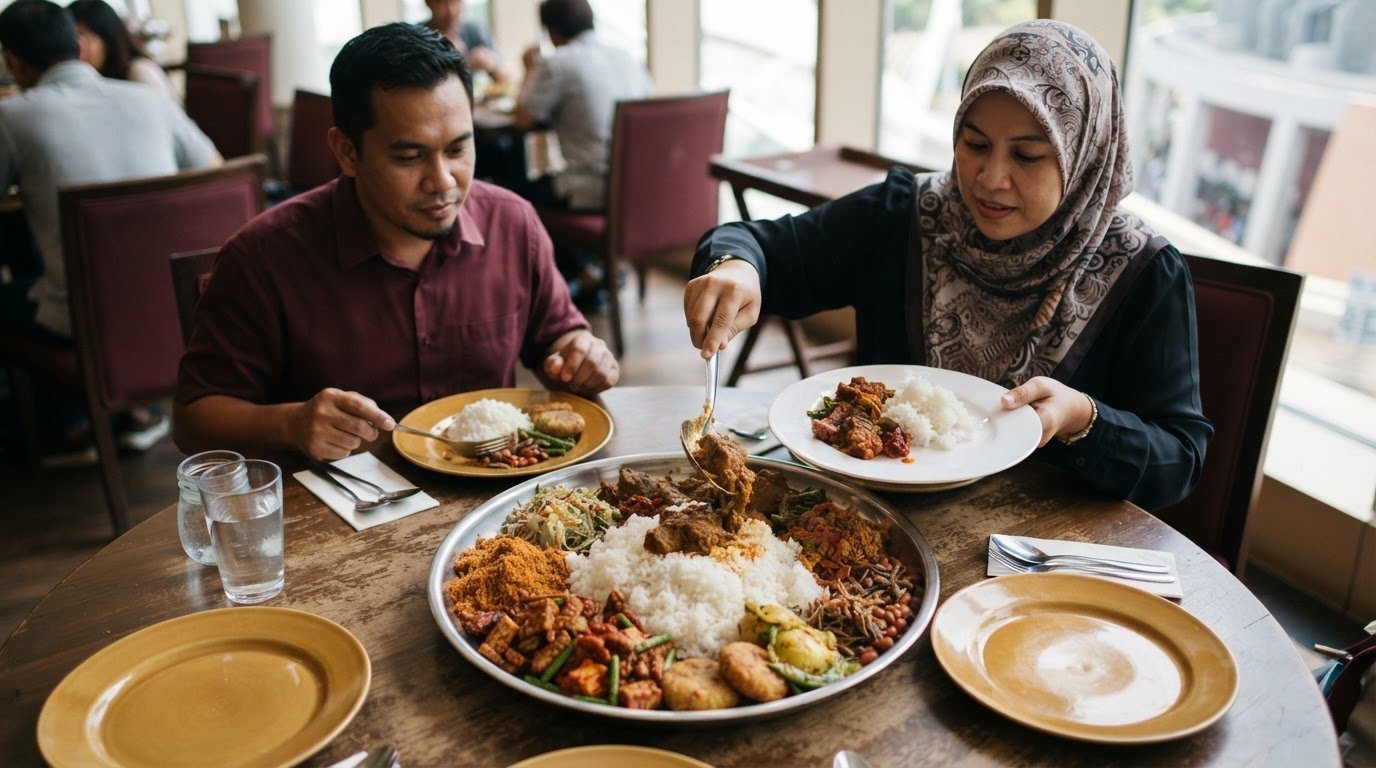

A great Indonesian platter brings together contrasting flavours, textures and accompaniments, not just one signature dish. An Indonesian food platter in Singapore might pair rice with richly seasoned dishes and sides, with halal options for a shared meal. Minangkabau cuisine is one distinctive style, with the variety of nasi campur and familiar favourites such as beef rendang, tahu telur and ikan pepes.
Choosing a platter also means considering how the dishes work together: comforting, home-style cooking can sit alongside bolder spice and varied textures. This guide explores halal Indonesian platter options, signature dishes and the traditions behind Minangkabau cuisine, then explains what to look for in customer reviews. You’ll have a clearer sense of the flavours and dining experience to expect when choosing an Indonesian spread in Singapore.
Key Takeaways
- Explore halal Indonesian platter options and consider how rice, mains and accompaniments create a balanced shared meal.
- Learn how signature dishes such as beef rendang, tahu telur and ikan pepes bring different flavours and textures to a spread.
- Use customer and food reviews to assess the details that matter to your dining occasion, rather than relying on a single impression.
- Understand the character of Indonesian home-style cooking and the regional influences behind Minangkabau dishes.
- See how Regale Singapore’s Indonesian offerings can suit a meal centred on Nasi Ambeng or Nasi Sambal Goreng.
Halal Indonesian food options
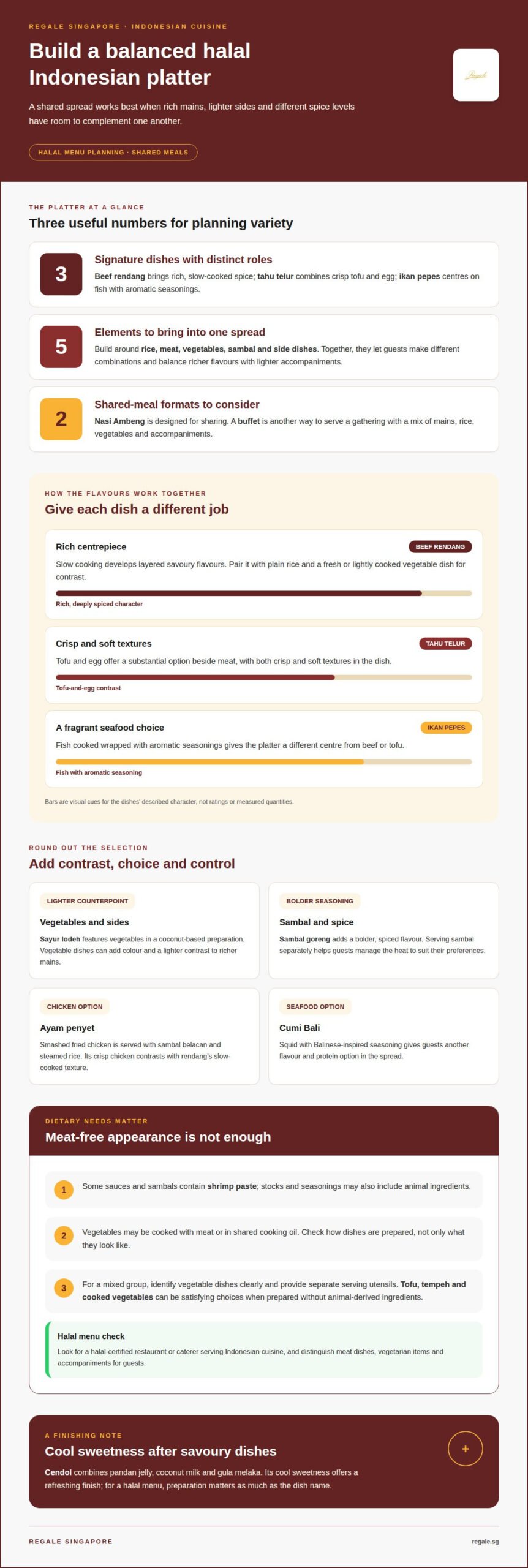
A halal Indonesian platter can combine rice, meat, vegetables, sambal and side dishes in one shared meal. In Singapore, diners can look for a halal-certified restaurant or caterer serving Indonesian cuisine. A varied spread suits family gatherings, office meals and celebrations because guests can choose different combinations. The best balance depends on the group’s preferences, including spice tolerance and dietary needs.
Chicken is a familiar, filling centrepiece. Ayam penyet pairs smashed fried chicken with sambal belacan and steamed rice. Other spreads may feature beef or fish with vegetables and sauces. A mix of mains gives guests more choice, while rice and vegetables balance richer flavours. Serving sambal separately makes it easier for everyone to manage the heat.
Vegetarian guests need more than a dish that looks meat-free. Some Indonesian sauces and sambals contain shrimp paste, while stocks and seasonings may include animal ingredients. Vegetables may also be cooked with meat or in shared cooking oil. For a mixed group, include clearly identified vegetable dishes and separate serving utensils. Tofu, tempeh and cooked vegetables can make satisfying choices when prepared without animal-derived ingredients.
Cendol is a familiar Indonesian-style dessert made with pandan jelly, coconut milk and gula melaka. Its cool sweetness provides a refreshing finish after savoury dishes. For a halal menu, preparation matters as much as the dish name. Distinguishing meat dishes, vegetarian items and accompaniments helps guests understand which choices suit their needs.
For a group or party, choose a platter or buffet with a mix of mains, rice, vegetables and sambal served separately. Nasi Ambeng is designed for sharing, while chicken, tofu and vegetable dishes can add variety for guests with different preferences.
Choose a halal Indonesian restaurant for a meal out, or halal catering or a buffet for a gathering where a shared spread is more practical than individual meals.
Delivery is available through catering arrangements that cover the event address. The format, food selection and transport plan affect how the dishes arrive and are served, especially when the order includes hot mains and separate accompaniments.
Plan around the event date, guest count and menu complexity. A spread with several dishes takes more preparation and coordination than a simple meal. Ordering early gives the food provider time to organise ingredients, cooking and delivery logistics.
Signature dishes including beef rendang, tahu telur and ikan pepes
A balanced Indonesian spread gives each dish a distinct role. Beef rendang brings deep spice and a rich, slow-cooked character, while tahu telur combines crisp tofu and egg. Ikan pepes offers a contrasting fish dish wrapped and cooked with aromatic seasonings. Together, these choices bring varied textures and flavours to the platter instead of repeating the same style in every serving.
Beef rendang makes a natural centrepiece for diners who enjoy layered, savoury flavours. Slow cooking allows the spices to develop and coat the beef. Pair it with plain rice and a fresh or lightly cooked vegetable dish: the rice balances the richness, while the vegetables offer a lighter contrast. A Padang-style selection can add further variety with several prepared dishes served together.
Tahu telur combines tofu and egg, bringing both soft and crisp textures. It can complement a meat-led spread or provide a substantial option alongside other dishes. Ikan pepes, by contrast, puts fish at the centre, with fragrant seasonings shaping its flavour. Offering both creates variety for guests who prefer seafood or tofu to beef. These are distinct choices, not interchangeable versions of one main.
Cumi Bali adds a seafood option featuring squid and Balinese-inspired seasoning. Vegetable dishes round out the platter with colour and a lighter counterpoint. Sayur lodeh, for example, features vegetables in a coconut-based preparation, while sambal goreng adds a bolder, spiced flavour. A well-composed spread balances these with rice and richer mains, so guests can build different combinations.
Penyet dishes offer another familiar choice. Ayam penyet features smashed fried chicken, typically served with sambal belacan and steamed rice. Its crisp chicken and bold sambal contrast with rendang’s slow-cooked texture. Serve sambal separately so guests can control the heat, making the spread easier to enjoy across different spice preferences.
Restaurants serving Indonesian cuisine may offer sharing platters, nasi campur or buffet-style spreads. Each restaurant sets its own menu and serving arrangement. How many people a platter serves depends on its portion sizes, dish selection and whether it is a main meal or part of a larger spread.
Menu prices depend on the ingredients, preparation, portion sizes and format. Compare what is included, such as the number and variety of mains, rice and accompaniments, rather than judging a platter by its name alone. A shared menu with beef, fish, tofu and vegetables offers a different mix from one centred on a single main.
To explore a Singapore dining option with Indonesian flavours, view Indonesian cuisine options.
Nasi campur is associated with the West Sumatran Padang tradition, where dishes such as rendang, sayur lodeh and sambal goreng can be presented together. This connection helps explain how distinct preparations may form one spread, although the exact dishes and serving arrangement vary by restaurant.
Customer and food reviews
Reviews are most useful when they describe specific dishes rather than offering a broad verdict. A comment about nasi padang might explain the rice, side-dish selection, spice level and serving style. “Good food” says little about flavour or suitability for sharing. Look for examples that match the kind of spread you plan to order.
Read comments about food separately from those about service and logistics. A review of ayam penyet might describe the chicken’s texture and sambal, while a catering review may focus on delivery timing or setup. These are different parts of the experience. Separating them helps you assess whether the food suits your gathering without letting a service issue define every dish.
Portion comments need context. A reviewer may call a serving generous, but that depends on appetite, the number of accompanying dishes and whether rice is included. A nasi goreng shared with vegetables and other mains, for instance, differs from a single-dish meal. Give more weight to reviews that explain what the portion included and how it was served.
Specific details can help you interpret a review more fairly:
- Flavour: Does the writer describe rendang as richly spiced, or simply say it tasted good?
- Texture: Does a comment explain whether fried chicken stayed crisp or tofu felt tender?
- Menu balance: Does the review mention rice, vegetables, sambal or other accompaniments?
- Occasion: Was the meal a solo order, a family spread or a catered gathering?
Look for recurring details across reviews, not one striking opinion. If several comments mention the seasoning of a particular goreng dish, they offer more context than one isolated reaction. Still, reviews reflect individual preferences: one diner may welcome strong sambal, while another prefers milder flavours. Reviews can describe a style, but cannot predict every guest’s response.
Photos add useful context when they show the actual dishes and serving arrangement. Compare the visible rice, mains and sides with the written description. A close-up of beef rendang may show its texture, but not how much is served or what accompanies it. Treat images as supporting detail, not a substitute for clear written feedback.
For an event, look for reviews that discuss group orders, packaging and delivery as well as food quality. A comment about an individual restaurant meal may not describe a catered platter. Dish-specific feedback and details about the occasion together help you judge whether an Indonesian spread suits your needs.
Indonesian home-style cooking
Home-style Indonesian cooking often brings several preparations together rather than relying on one elaborate centrepiece. Nasi campur illustrates this approach: rice is served with small portions of cooked dishes selected for the meal. A platter can follow the same principle, combining different textures, sauces and ingredients. Each dish contributes something distinct to a varied spread.
Seasoning develops in layers. Ayam bakar, for example, is charcoal-grilled chicken flavoured with garlic, shallots and spices, especially turmeric. Grilling adds a smoky note, while the spice mixture seasons the meat. Ayam bumbu rujak offers another style: grilled chicken in a spicy sauce flavoured with coconut and shrimp paste. These preparations show how chicken can take different flavour directions.
Noodle dishes bring another kind of comfort to a meal. Mie bakso combines springy egg noodles or glass noodles with meatballs in a clear beef broth. Mie goreng is different: it is dry, wok-fried noodles with dark sweet soy sauce. The broth-based and fried options suit different preferences and can add variety alongside rice and cooked mains.
Vegetable dishes also shape a home-style spread. Sayur lodeh, with vegetables in a coconut-based preparation, offers a gentler contrast to richly seasoned meats. Sambal goreng provides a bolder, spiced accompaniment. These examples show why a well-composed meal is about balance, not simply the number of dishes. A vegetable side can contrast in flavour, texture and richness.
For a shared meal, a professional can arrange the components so they are easy to serve. A practical platter might include:
- Rice as a base for several cooked dishes.
- A grilled or braised main for a substantial centre.
- Vegetables for contrast and added variety.
- Sauces or sambal served separately for flexible seasoning.
Serving format matters, too. A table spread lets guests choose their own combinations, while individual portions keep each selection separate. For delivery, suitable packaging helps keep rice, saucy dishes and crisp items apart in transit. This is especially useful when a menu includes contrasting preparations such as grilled ayam bakar and broth-based mie bakso.
Home-style cooking has no fixed menu. Ingredients, cooking methods and accompanying sides shape the experience. A spread with ayam bakar, sayur lodeh and rice feels different from one centred on mie goreng and meatballs. For a group, complementary dishes create variety while keeping the meal coherent.
Indonesian and Minangkabau cuisine
Indonesian cuisine brings together distinct regional traditions, ingredients and cooking methods. Minangkabau food, associated with West Sumatra, is a recognizable influence on shared spreads. Nasi campur connects these traditions at the table: rice is served with several small portions of cooked dishes chosen by the diner. This format lets a platter offer contrasting flavours without making every serving alike.
A West Sumatran Padang-style spread may include rendang, sayur lodeh and sambal goreng, each with a different role. Rendang is a richly seasoned meat dish, sayur lodeh adds vegetables in a coconut-based preparation, and sambal goreng brings a spiced accompaniment. Together, these examples show how a spread can balance richness, vegetables and bolder seasoning around rice.
The key is variety with a regional point of view. Rather than treating Indonesian food as one fixed menu, consider how dishes reflect different preparations and pairings. A nasi campur arrangement gives guests smaller portions of several cooked items, making it easier to sample different flavours in one meal, from coconut-based vegetables to a more intensely seasoned main.
For a shared platter, apply the same principle: serve rice with a substantial main, a vegetable preparation and a sauce or sambal. A spread featuring rendang, sayur lodeh and sambal goreng, for example, offers varied flavours and textures. Guests can then build each serving to suit their preferences.
Minangkabau influence is useful to consider when choosing a menu for people who want more than one familiar dish. Look at the regional character conveyed by the mains and accompaniments. An Indonesian restaurant can present these elements as a composed spread rather than a group of unrelated items. Dish names explain what is on the menu, while their combination shows how the meal is meant to be enjoyed.
In Singapore, this distinction can guide a meal for guests with different tastes. One person may choose more rice and vegetables; another may pair rice with a richer main and sambal. Nasi campur’s small portions support that flexibility. The menu’s regional influence adds cultural context, while the shared format keeps the meal accessible and easy to explore.
To experience a spread grounded in Indonesian flavours, explore Indonesian cuisine options and consider how its dishes come together at the table.
Bebek goreng is Indonesian fried duck, braised before frying to create a tender interior and crisp skin. It is also described as a traditional ceremonial dish based around BBQ duck. This gives it a different role from the rice, vegetable and sambal elements discussed above: it brings duck to the spread and is associated with ceremonial occasions. Its preparation follows a clear sequence, with braising before frying. For a nasi campur-style selection, bebek goreng offers another preparation alongside the other dishes. Its ceremonial association and cooking method offer two ways to understand its place in an Indonesian meal.
Regale Singapore
Regale Singapore gives diners across the island a place to explore authentic Indonesian cuisine when they want familiar regional flavours in a restaurant setting. Its Indonesian selections include Nasi Ambeng and Nasi Sambal Goreng, while Western cuisine offers another direction for groups with varied preferences. The menu makes it possible to consider different tastes when planning a meal together.
For a shared Indonesian meal, consider Nasi Ambeng or Nasi Sambal Goreng at Regale Singapore. These dishes offer a practical way to enjoy Indonesian flavours together. Visit Regale to explore these popular dining concepts and enjoy a hearty meal with family and friends.
Plan a shared Indonesian meal that fits your occasion
Let the occasion guide your choice. A family gathering, team lunch or celebration may call for a different dining format. Before choosing an Indonesian food platter in Singapore, consider how guests will share the meal, their dietary preferences and the dining experience that suits the event. These details give you a practical starting point.
Regale Singapore serves Indonesian cuisine through two distinct concepts: Regale at Science Centre, a full-service restaurant, and Pit Stop at Pusara Aman, a café serving Malay classics. Consider the occasion and your group’s preferences to choose the dining experience that best suits your plans.
When you’re ready to discuss your plans, contact Regale Singapore about platters. Your next shared meal can be a thoughtful way to bring Indonesian flavours to the table.
Frequently Asked Questions
What dishes are included in Indonesian food platters in Singapore?
Menus vary, but a platter may pair rice with Indonesian mains and accompaniments. Options discussed in this guide include beef rendang, tahu telur, ikan pepes, chicken, vegetables and sambal. For a shared meal, consider how the dishes complement one another and whether the group prefers meat, seafood or vegetarian options. Regale Singapore serves Nasi Ambeng and Nasi Sambal Goreng among its Indonesian selections.
How much do Indonesian platters cost in Singapore?
The price depends on the menu selection, portion size and dining format. A spread with several mains and accompaniments differs from an order centred on one dish. For a clear estimate, the price is provided after a quote request. When planning, outline the occasion and the kind of meal you want, such as a shared spread or individual portions, so those details can inform the quotation.
Do Singapore Indonesian restaurants offer halal-certified platter options?
Yes, halal Indonesian dining options are available. Regale Singapore is a halal-certified culinary establishment, serving Indonesian dishes including Nasi Ambeng and Nasi Sambal Goreng. If your gathering includes guests with different dietary needs, consider how their preferences fit alongside halal choices. Clear dish descriptions help everyone understand the selection and choose suitable items.
Which Indonesian platter restaurants in Singapore have the best reviews?
The most useful reviews describe details relevant to your occasion, rather than relying on a broad rating alone. Look for comments about specific dishes, flavour, portions and group meals. For Regale Singapore, consider whether feedback about its Indonesian dining and named menu options matches your preferences. Reviews can guide your decision, though tastes and dining occasions differ.
