
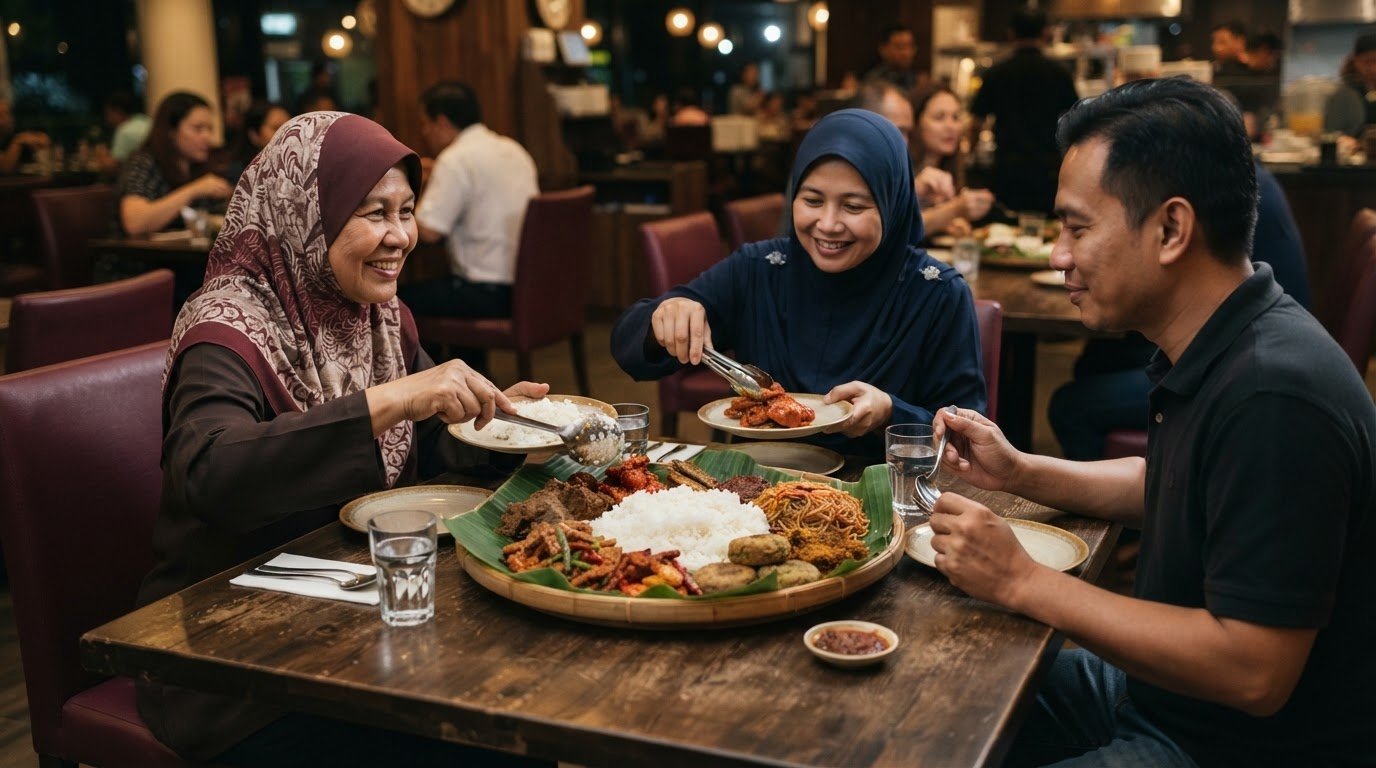

Sharing an Indonesian meal is about more than placing dishes on the table; it also means respecting the rhythm of the meal. Indonesian food for sharing is typically served family-style, with rice and several dishes presented together rather than in separate courses. Sweet, salty, spicy and fresh flavours meet across the table, while simple gestures, such as waiting for elders to begin, help guests share comfortably.
The appeal of Indonesian food for sharing is easy to understand: a shared spread lets diners enjoy different tastes and textures in one meal. Traditions vary by region, from rice-based meals with chilli and curry to communal platters, but rice often gives the dishes a common centre. This guide explains how regional traditions shape shared meals, how rice dishes and mixed platters work, and how to balance flavours across the table. It also covers dining etiquette, including when to begin and how to take part respectfully, so you can appreciate the food as well as the company.
Key Takeaways
- Notice how regional traditions shape the dishes and the way they’re arranged for a shared meal.
- Use rice as the meal’s anchor to bring varied sides and flavours together.
- Look for contrasts between sweet, salty, spicy and fresh elements when considering how a spread feels balanced.
- Understand how family-style serving lets diners share dishes and add personal touches at the table.
- Follow the meal’s social cues, including waiting for elders to begin and taking only what you can enjoy.
Indonesian regional food and rice-based meals
Indonesia’s regional cuisines reflect local traditions and outside influences, so shared meals can differ from one place to another. Rice, regional sides and contrasting flavours give diners a common centre for exploring those differences.
Rice at the Centre of Shared Meals
Rice is the foundation of many Indonesian meals, not simply a side beside the main dish. In Indonesia, eating rice three times a day is described as a cultural practice, and rice represents life, fertility and prosperity. At a shared table, rice is a practical anchor: guests can pair it with vegetables, sauces and grilled dishes, while the staple brings varied recipes together.
Regional tastes add distinct character to this structure. Indonesia comprises more than 17,000 islands, and its cuisines draw on indigenous cultures as well as foreign influences. A nasi Padang meal commonly brings rice together with chilli and curry, creating a spread where diners can choose different accompaniments. Such contrasts make Indonesian food for sharing adaptable: rice provides a familiar base while regional dishes shape the meal’s identity.
A Balinese megibung meal typically brings five to seven diners around shared plates. Other Indonesian platters have no fixed serving count; the number of diners depends on the spread and how portions are planned. For a group meal, focus on whether rice and several accompaniments are included, rather than relying on the platter’s name alone.
Vegetarian sharing can include rice, vegetables, tofu and potato dishes. Gado-gado, for example, commonly combines vegetables, tofu and potatoes with peanut-coconut dressing, but often includes boiled egg and prawn crackers, so it isn’t automatically vegan. Recipes and toppings determine whether a particular spread suits vegetarian or vegan diners.
In Singapore, choose a halal sharing spread as a halal meal rather than judging it by dish names alone. Rice, vegetables and grilled dishes can be part of a halal menu, but the ingredients and preparation matter. A halal buffet or catering format can bring the group together around that requirement.
Banana-Leaf Meals and Buffets
Some Balinese communal meals arrange dishes symmetrically on banana leaves, making the shared spread part of the presentation. Prasmanan is a buffet-style meal, where guests choose from dishes laid out for self-service. The formats suit different gatherings: banana-leaf arrangements bring diners around a common display, while a buffet lets guests select their own combinations.
For professionally portioned shared meals, price depends on dish selection, portion needs and serving format, and is provided after a quote request. Dry grilled dishes and rice generally travel more neatly than crisp items or dishes with abundant sauce; keeping sauces separate helps preserve texture for takeaway or delivery.
Communal dining traditions across Indonesia
Indonesian communal dining brings dishes to the table together, creating a shared meal rather than a sequence of courses. Customs vary by region, but the arrangement shapes how people serve, taste and enjoy each dish.
Family-style service is common: rice, vegetables, sauces and cooked dishes arrive together. Diners can compose each mouthful to their preference and notice how one dish complements another. For a gathering, serving everything together also makes the table the centre of the occasion. A seafood dish, for example, can sit alongside rice and other shared plates instead of arriving as a separate course.
Balinese megibung offers a distinctive example of communal dining. The tradition dates back to the 17th century and brings diners around a collective meal. Its format turns serving into a shared activity, with dishes presented for everyone rather than arranged as separate individual meals. The custom reflects how regional culture can shape both the food and the social experience surrounding it.
Small gestures can signal the start of a meal. In some Indonesian households, a matriarch invites others to begin with a gesture rather than words. Waiting for that cue acknowledges the host and older diners, while allowing the group to start together. If you are unfamiliar with a household’s routine, observe the host and follow the meal’s pace.
Soto ayam shows how communal dining can invite participation at the table. The broth may be placed in the centre, with lime, beansprouts, sambal and fried shallots served as condiments. Each guest can add these to their soup, adjusting the balance of freshness, heat and texture. This shared arrangement makes one dish adaptable without requiring separate recipes for each diner.
Dessert can carry the same sense of occasion. Bubur sumsum is an Indonesian dessert made with coconut milk and infused with pandan, best enjoyed warm. Its soft texture and fragrant flavour offer a gentle finish after savoury dishes. Serving it warm also creates a clear transition from shared mains to a comforting final course.
Indisch cuisine represents Indonesian-rooted cooking shaped by migration and changing circumstances. Its character shows how culinary traditions can travel, adapt and develop in new settings. For a shared menu, this history helps explain why Indonesian cuisine is not one fixed collection of recipes. Local ingredients, family practices and migration can all influence what reaches the table.
Regional traditions also shape the pace and structure of gatherings. A Balinese communal meal, a household’s cue to begin, and a central pot of soto ayam each offer a different way to bring diners together. Recognising these examples helps guests appreciate the social meaning of shared food, not only the dishes themselves.
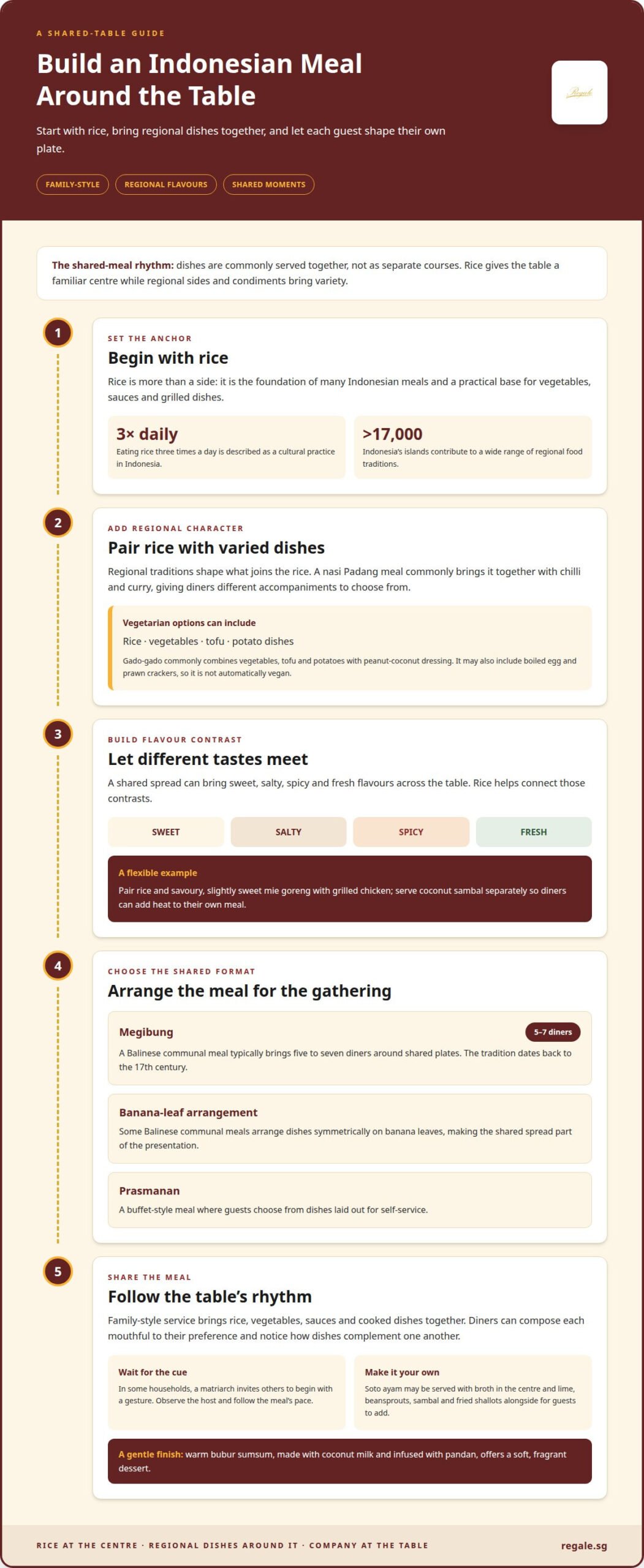
Balancing sweet, salty, spicy and fresh flavours
For a group with different spice tolerances, pair rice and savoury, slightly sweet mie goreng with grilled chicken, then serve coconut sambal separately. Diners can add heat to their own portions without changing the flavour balance for everyone.
Indonesian meals often balance sweet, salty, spicy and fresh flavours rather than relying on one taste alone. Each flavour has a role: sweetness can soften savoury depth, fresh notes can brighten rich food, and sambal can bring heat. For shared meals, contrasting dishes let guests create combinations that suit their preferences.
Mie goreng is a clear example of layered seasoning. This stir-fried noodle dish is known for savoury, slightly sweet flavours and vibrant colours. One recipe combines soy, kecap manis, sambal oelek and oyster sauce. Each ingredient contributes a different note, so balance comes from how the flavours interact, not simply from reducing the spices.
Balinese grilled chicken offers another flavour profile. Its marinade includes turmeric, garlic and kecap manis, and the chicken is served with coconut sambal fragranced with makrut lime. Sweet seasoning, aromatic spices and citrus fragrance create distinct contrasts. Serving sambal separately at a group meal lets guests choose how much heat to add.
This approach works well when diners have different comfort levels with chilli. Keep the main dishes varied and make spicy condiments optional, rather than the only source of flavour. Rice provides a neutral partner for seasoned dishes, while fresh accompaniments can vary each mouthful. Guests can adjust their own combinations without needing a separate version of every dish.
Sambal carries family meaning beyond its heat. Indonesian families pass recipes down through generations, and each household’s version can reflect its preferred ingredients and flavours. Offering sambal as a separate condiment respects this personal variation. Diners can experience the spices at their own pace, while the main dish’s seasoning stays intact.
For a well-composed spread, consider each dish’s contribution rather than making every plate equally sweet, salty or hot. Pair a savoury-sweet noodle dish with grilled chicken, then add fresh notes and optional sambal. Indonesia’s many islands and regional food traditions bring varied spices and seasonings to the table, so a shared menu can offer contrast without making every dish taste alike.
Variety can also guide how a meal is rounded out: keep savoury dishes distinct, and let guests decide whether to finish with something sweet. Lapis legit is available in supermarkets, sweet shops and gift stores across Indonesia. It can be an option when planning a spread or choosing a gift, without changing the savoury courses. Keeping sweet and savoury choices separate gives diners another way to shape the meal to their preferences, while preserving the contrasts among the dishes on the table.
Rice dishes and mixed platters
Nasi goreng, meaning “fried rice,” is considered Indonesia’s national dish and can anchor a shared spread. Rice dishes and mixed platters work well for groups because diners can serve themselves and combine different tastes.
Rice Dishes for Sharing
A rice dish for sharing is a central preparation served so guests can portion it alongside other dishes. Nasi goreng suits this role: its name means “fried rice,” and its place in Indonesian food gives the table a familiar centre. At a gathering, a rice dish can bring varied accompaniments together without requiring each guest to choose a separate main.
Rice also makes a spread easier to adapt. Diners can pair a portion with a savoury dish, vegetables or sambal, adjusting each plate to taste. Garlic can add a familiar aromatic note to a rice recipe, while sambal brings chilli character as an accompaniment. Ingredients and seasoning shape the final version, so a rice dish can vary from kitchen to kitchen.
Mixed Platters for Groups
A mixed platter brings several dishes together for guests to share, rather than assigning one complete meal to each person. This format suits groups who want to sample different preparations in one sitting. A platter centred on rice can include complementary savoury dishes and vegetables, while separate sambal lets diners decide how much chilli to add.
For a group meal, the spread’s composition matters as much as its presentation. Choose dishes with distinct textures and seasonings, then let guests take portions that suit them. This is one reason Indonesian food for sharing can suit mixed preferences: each diner can create a different combination, rather than relying on one fixed plate.
Popular Sharing Platters in Singapore
In Singapore, diners looking for Indonesian platters can consider rice-led spreads that bring several dishes together. Nasi goreng is a recognised starting point, while a mixed platter can offer more variety across the table. The right choice depends on the group’s appetite, preferred flavours and whether diners want one shared centrepiece or several accompaniments.
A platter’s name alone doesn’t describe its full composition. Ingredients, serving format and the balance of rice with other dishes determine how it works for a gathering. For example, serving sambal separately gives guests more control over chilli, while vegetables offer another choice alongside richer dishes. These details make shared portions easier for the group to enjoy.
When planning an Indonesian spread, match the format to the occasion. A shared rice dish keeps the table focused on one central preparation; mixed platters create more choice and let guests build different combinations. Nasi goreng offers a familiar named example, while the dishes alongside it determine the spread’s character. Consider those pairings, not just the main dish, when choosing a meal for a group.
Dining etiquette and sharing food
At an Indonesian meal, good etiquette begins with watching the host and respecting the group’s pace. Wait for elders to begin, try a little of each dish offered, and avoid wasting food. These gestures show consideration for the people sharing the meal and for the food prepared. They also help guests join in without interrupting the household’s customs.
In some households, a matriarch signals that the meal can begin with a gesture rather than spoken instructions. Follow that cue instead of reaching for a serving dish first. Family customs differ, so observing the host is a practical way to understand the table’s rhythm. This pause gives older diners and the host a chance to begin before others serve themselves.
Utensils offer one clear option: hold the spoon in your right hand and the fork in your left. Some Indonesian dining guidance recommends eating with the right hand only. These are distinct ways to eat, and the dishes and setting can influence what feels appropriate. If utensils are provided, use them; if others eat by hand, follow the host’s lead and use your right hand.
With family-style serving, several dishes may arrive together, so take a modest portion before returning for more. This leaves enough for others to sample each dish, including fried rice, vegetables and shared accompaniments. Try a small taste first, especially if a dish includes unfamiliar spices or sambal. That way, you can discover what you enjoy without filling your plate before tasting the spread.
Shared dishes also call for care with serving utensils. Use the spoon or tongs provided for a communal plate rather than your personal utensil. Keep serving tools with their dishes, and avoid reaching across another diner when a plate can be passed. These actions keep the table orderly as guests share several preparations and make it easier for everyone to serve themselves.
Etiquette extends to dessert. Bubur sumsum, a warm dessert made with coconut milk and pandan, may follow savoury dishes. Take a suitable portion and leave room for others to serve themselves. Trying a little of each dish offered shows openness, while wasting food can be disrespectful. Choose manageable servings, then return if you would like more.
For hosts arranging a shared meal, clear serving spoons and a considered spread make these customs easier to follow. Separate utensils help guests serve rice, fried rice and accompaniments neatly. A meal that brings people together also benefits from a calm pace: allow elders to begin, pass dishes within reach, and let diners choose their own combinations. Enjoy Indonesian cuisine at Regale Singapore for a shared meal shaped around these traditions.
Let elders begin before you eat. If following the utensil practice, hold the spoon in your right hand and the fork in your left. Sampling a little of each dish reflects the meal’s customs; leaving food uneaten wastefully is disrespectful to the other diners at the table.
Regale Singapore
Regale Singapore brings diners together over Indonesian cuisine. For a meal centred on familiar Indonesian flavours, Nasi Ambeng and Nasi Sambal Goreng offer distinct choices, while Western Cuisine gives groups another option when preferences vary.
Choose an Indonesian meal when the occasion calls for regional dishes and a communal dining experience. The ideas in this guide can help you consider rice, accompaniments and flavour balance when selecting a spread. Regale Singapore serves authentic Indonesian cuisine for diners seeking that experience.
For your next shared meal, contact Regale Singapore.
Make your next shared meal meaningful
Plan the gathering around how you want people to connect. A relaxed family meal, a celebration with friends and a work gathering each create a different setting for Indonesian food for sharing. Consider the atmosphere you want, then choose a dining experience that gives guests space to enjoy the occasion together.
Regale Singapore serves Authentic Indonesian Cuisine, including Nasi Ambeng and Nasi Sambal Goreng. These options offer a way to bring Indonesian flavours to your table in Singapore. Plan a shared meal with Regale Singapore, and look forward to gathering around food that makes time together feel special.
Frequently Asked Questions
Where can I order Indonesian food platters in Singapore?
Regale Singapore serves Indonesian cuisine, including Nasi Ambeng and Nasi Sambal Goreng. These dishes offer a starting point when choosing Indonesian food for a shared meal. Get in touch with Regale Singapore to discuss your meal and the format you have in mind. The best fit depends on the dishes you want and how you plan to serve them.
How much do Indonesian sharing platters cost in Singapore?
The price depends on the order and is provided after a quote request. Key cost factors include the dishes selected, portion requirements and serving format. A meal built around Nasi Ambeng may differ from one centred on Nasi Sambal Goreng, depending on the requested arrangement. Share the gathering’s needs when requesting a quote so the proposed meal can suit the occasion and portions required.
What Indonesian sharing dishes are halal in Singapore?
Rice, vegetables and grilled dishes can be part of a halal sharing spread in Singapore, but the ingredients and preparation matter. Choose a halal meal or halal catering format rather than judging by dish names alone.
