
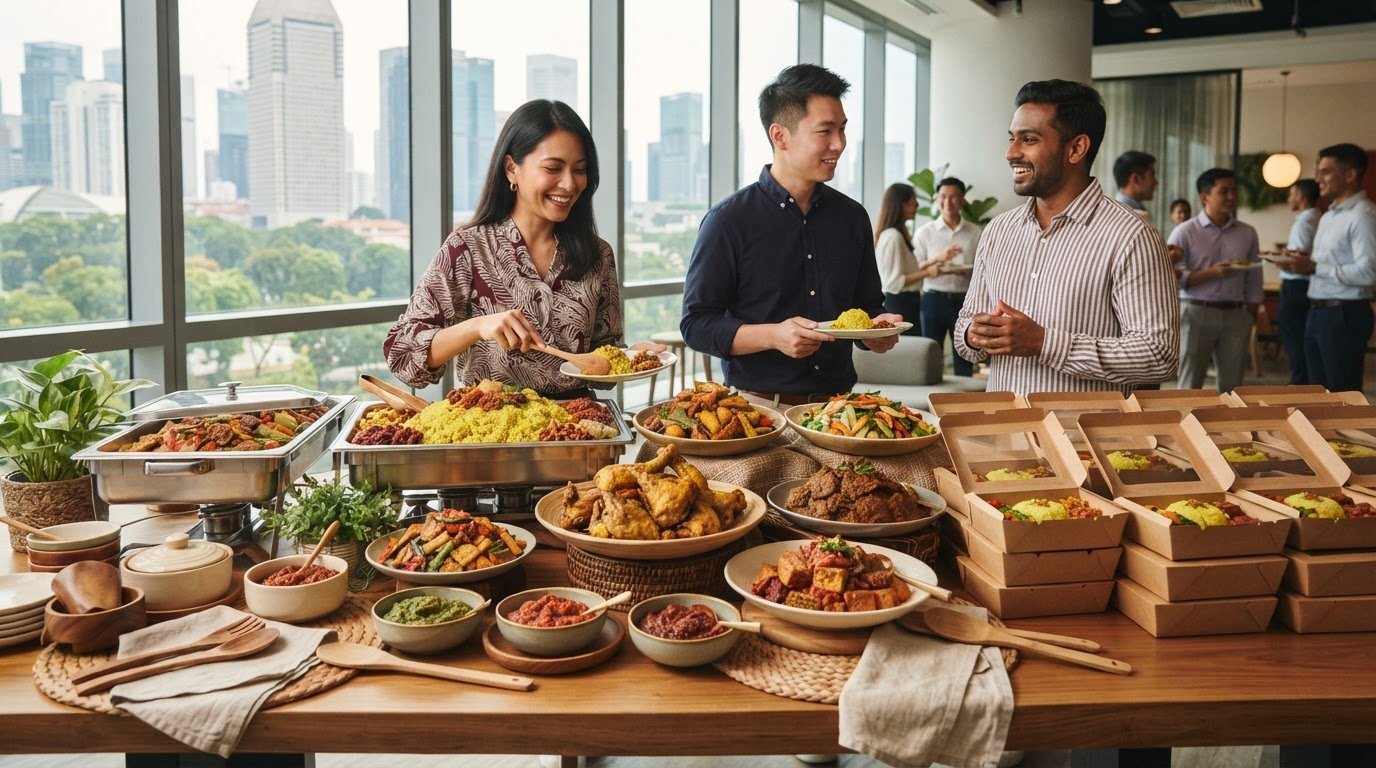

A company lunch doesn’t have to rely on familiar Western dishes to suit a mixed workplace. To choose halal food for a company lunch, match the menu to the event format, guests’ preferences, and serving arrangements, then decide whether individual portions or a shared buffet will work better.
It’s natural to weigh convenience alongside flavour, especially when colleagues have different tastes and lunch needs to fit a busy workday. This guide explains how to compare individual meals and buffets, build a balanced menu, explore Malay and Indonesian flavours, and plan the meal around your event. You’ll have a practical way to choose food that feels welcoming and suits the occasion.
Key Takeaways
- Choose boxed meals for individually portioned service or a buffet for a shared meal, based on the event’s flow and setup.
- Build your menu around the occasion, guests’ preferences and a clear approach to halal requirements.
- Explore Malay and Indonesian dishes to bring distinctive heritage flavours and variety to the table.
- Plan delivery around the venue, serving time and meal format so the lunch fits smoothly into the workday.
- Consider Regale Singapore’s Nasi Sambal Goreng, Nasi Ambeng, Authentic Indonesian Cuisine and Western Cuisine when planning your menu.
1. Corporate catering formats, including boxed meals and buffets
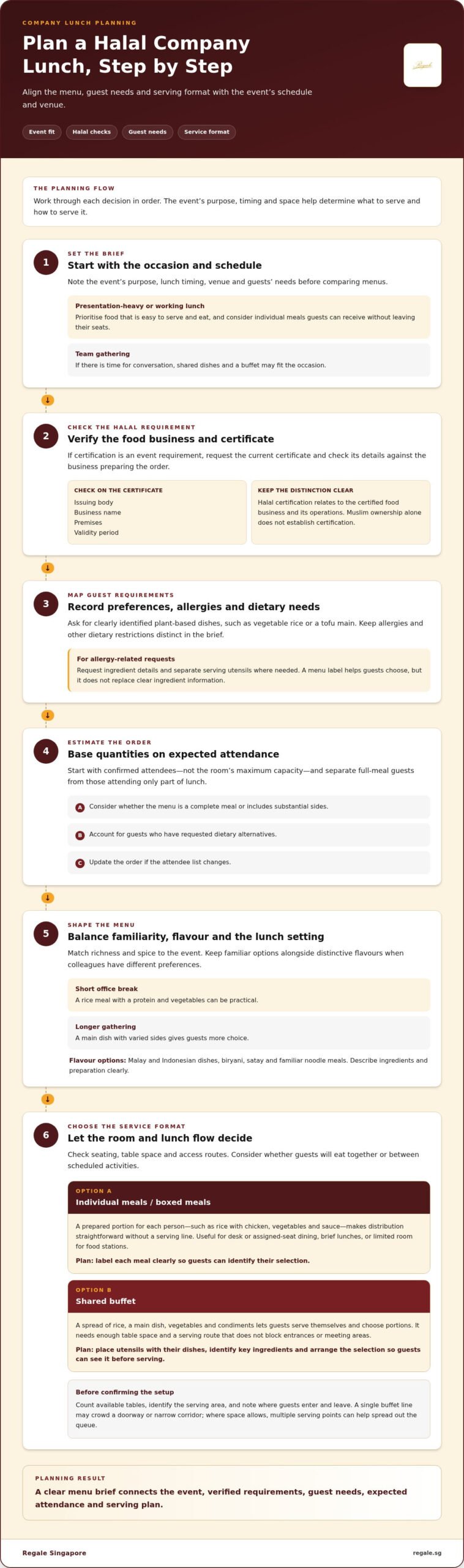
Individual meals suit meetings where colleagues eat at desks or assigned seats. Each person receives a prepared portion, such as rice with chicken, vegetables, and sauce. This makes distribution straightforward without setting up a serving line, and helps keep the room clear when lunch is brief. Label each meal clearly so guests can identify their selection.
A buffet works well when guests can gather, serve themselves, and dine together. A spread might include rice, a main dish, vegetables, and condiments, with serving utensils beside each item. Guests can choose portions to suit their appetites and preferences. The format needs enough table space and a serving route that doesn’t block entrances or meeting areas. Consider how people will move from the queue to their seats.
For a large-group lunch, plan the layout before choosing the format. Count the available tables, identify the serving area, and note where guests will enter and leave. A single buffet line can become crowded beside a doorway or narrow corridor. Where space allows, multiple serving points can help spread out the queue. Individual meals can simplify distribution when there’s limited room for food stations.
A halal buffet also benefits from clear presentation. Keep dish names visible and identify key ingredients so guests can make informed choices. Place serving utensils with their corresponding dishes rather than sharing them across the table. For example, provide separate utensils for a meat dish and a vegetable side. Arrange the menu so guests can see the full selection before serving, and keep the flow orderly.
Match the format to the lunch’s purpose. A presentation-heavy meeting may call for individual meals that guests can receive without leaving their seats. A team gathering with time for conversation may suit a buffet, where people can serve themselves and share a table. For a mixed schedule, distribute individual meals before a session, or reserve buffet service for a dedicated dining break.
Use this practical sequence to decide:
- Check the venue’s seating, table space, and access routes.
- Consider whether guests will eat together or between scheduled activities.
- Choose boxes for individual distribution or a buffet for shared service.
- Plan labels, serving utensils, and placement around the chosen format.
These steps help align halal food for a company lunch with the event’s space and schedule. Choose the format that makes serving clear and dining comfortable for the group.
2. How do I choose the right catering menu for my event?
Start with the event’s purpose, schedule, venue, and guests’ needs. A working lunch between presentations calls for food that’s easy to serve and eat. A team celebration can allow more time for shared dishes and conversation. List these practical needs before comparing menus, so flavour and format support the event rather than complicate it.
To verify a caterer’s halal certification in Singapore, request its current certificate and check the issuing body, business name, premises, and validity period. Compare those details with the business preparing your order rather than relying on a general halal claim.
For vegetarian or vegan guests, ask for clearly identified plant-based dishes, such as vegetable rice or a tofu main. Record allergies and dietary restrictions separately, then request ingredient details and separate serving utensils where needed. A menu label helps guests choose, but it shouldn’t replace clear ingredient information for someone managing an allergy.
Estimate quantities by starting with the confirmed attendee count, then separating full-meal guests from those attending only part of lunch. Consider whether the menu is a complete meal or includes substantial sides, and account for guests who have requested dietary alternatives. Avoid estimating from the room’s maximum capacity; use expected attendance and update the order if the attendee list changes.
Next, match the menu’s richness and spice level to the setting. For a short office break, a rice meal with a protein and vegetables can be practical. For a longer gathering, a main dish with varied sides gives guests more choice. Keep familiar options alongside distinctive flavours, especially when colleagues have different food preferences.
Halal certification and Muslim ownership describe different things. Certification relates to the certified food business and its operations, while ownership alone doesn’t establish certification. Muslim ownership may matter to some organisers, but assess certification separately when it’s an event requirement. For a restaurant meal, consider seating, service style, and whether guests can dine comfortably within the lunch schedule.
Use a simple planning checklist before selecting a menu:
- Confirm expected attendance and meal timing.
- Record vegetarian, vegan, allergy, and other dietary requests.
- Review the certificate details and the business preparing the food.
- Choose dishes and portions that suit the event format.
This process makes the menu easier to assess on practical grounds. A clear brief also helps a halal caterer understand the occasion, guest requirements, and service format.
3. Asian heritage flavours and menu variety
For corporate catering in Singapore, menu options can include Malay and Indonesian rice dishes, biryani, satay, and familiar noodle meals. These choices bring different aromas, textures, and levels of spice to a shared lunch. Select dishes that suit the event and guests, rather than treating Asian cuisine as one uniform style. A menu can feature heritage flavours while keeping its ingredients and preparation clearly described.
Malay and Indonesian dishes often centre on rice, paired with a main and complementary sides. Nasi lemak, for example, brings together fragrant rice and accompaniments, while nasi goreng offers seasoned fried rice. For a company menu, consider how sauce, garnish, and sides balance the main. A mild vegetable side can temper a richly seasoned dish without taking away its character.
Indonesian flavours offer variety through grilled, braised, and spiced dishes. Satay pairs skewered grilled meat with sauce, while rendang is slow-cooked with concentrated seasoning. These dishes differ in texture and intensity, so avoid serving several rich, strongly spiced mains together. Pair a bold centrepiece with simpler rice or vegetables for a more balanced selection.
Other Asian-inspired choices can broaden the menu. Biryani adds fragrant rice and layered seasoning, while noodle dishes offer a different texture from rice-based meals. Choose a clear direction for the main dishes, then add sides that complement rather than compete. For instance, a biryani-led menu could include vegetables and a lighter accompaniment instead of several competing rice mains.
Keep spice levels in view. A sambal-based dish can bring heat and depth, while a milder main or side gives guests another option. Label dishes with plain descriptions such as “chilli-forward,” “mild,” or “contains peanuts” when those details apply. Specific labels help colleagues choose without reducing a dish to a vague “Asian” category.
Heritage flavours also work alongside familiar choices. A menu might pair an Indonesian main with a Western-style option, or serve a traditional rice dish with simple vegetables. This approach can suit teams with varied preferences while preserving a distinct culinary identity. Use the menu description to explain the dish’s main ingredients and flavour profile, especially when its name may be unfamiliar to some guests.
To create variety, select dishes across these dimensions:
- Base: fragrant rice, plain rice, or noodles.
- Flavour: aromatic, savoury, grilled, or chilli-forward.
- Texture: tender braised meat, grilled skewers, or crisp vegetables.
- Balance: pair a rich main with a lighter side.
These choices let halal lunch menus reflect Singapore’s diverse food traditions while giving organisers practical ways to shape flavour, balance, and variety.
4. Catering delivery and service arrangements
Plan delivery around the venue, serving time, and access arrangements. For an office tower in Singapore, note the building entrance, loading bay, security desk, and lift access. Give the delivery team clear instructions for reaching the pantry or meeting room. A named onsite contact can receive the order and direct setup without interrupting a presentation.
Cancellation and change terms are set by the individual order. Before confirming, record the amendment deadline, any cancellation charges, and how revised headcounts are handled. Include dietary changes and delivery instructions in the same written order record, so the organiser and catering team have matching details.
Choose a delivery window that leaves time to arrange the meal before guests arrive. If lunch starts after a meeting, plan for food to reach the venue before the break begins. Allow time for reception procedures, lift journeys, and table setup. For boxed meals, confirm the drop-off point and distribution plan. For a buffet, identify where dishes and serving utensils will be placed.
Minimum order quantities and lead times depend on the menu format, group size, preparation, delivery location, and event date. A buffet with several dishes involves different preparation and setup from individually packed meals. Plan early enough to finalise attendance, dietary requests, and the serving arrangement. The order’s scope and delivery schedule determine the practical timing.
Give the caterer a concise event brief. Include the venue address, building access details, meal format, serving time, expected attendance, and dietary requirements. State whether the delivery point is a reception area, office pantry, or event room. For lunch in a shared workspace, include directions that distinguish your company’s room from other tenants’ spaces.
On the event day, assign one person to receive the delivery and check it against the agreed menu. This person can arrange individual meals by name or dietary category, or set out buffet dishes in serving order. Keep labels visible and place each serving utensil beside its corresponding dish. Clear placement helps guests move through the meal without confusion.
Use this final planning sequence to coordinate logistics:
- Confirm the venue entrance, loading point, and onsite contact.
- Set the delivery window around the scheduled lunch break.
- Document menu, quantity, dietary details, and change terms.
- Assign a receiver to guide setup and organise distribution.
These details connect the menu plan with the realities of a Singapore workplace. A clear schedule, accurate access instructions, and one responsible contact help the lunch fit the event’s timetable.
5. Malay and Indonesian cuisine
Malay and Indonesian dishes offer a distinctive direction for a company lunch. Their menus can centre on rice, aromatic spices, sambal, vegetables, and richly seasoned mains. Rather than treating these traditions as interchangeable, choose dishes with clear identities. A well-planned selection lets colleagues enjoy regional flavours while keeping the meal cohesive.
For a Malay-inspired menu, nasi lemak brings together fragrant coconut rice and accompanying ingredients. Pair it with a main dish and vegetables for a complete meal. Sambal adds a chilli-led element, so balancing it with milder choices gives guests different ways to enjoy the spread. State the dish name and describe its flavour plainly.
Indonesian cuisine offers its own range of textures and seasoning. Nasi goreng is seasoned fried rice, while rendang is known for a deeply spiced, slow-cooked profile. Satay brings grilled skewers and a complementary sauce. For a lunch menu, choose a signature main, then add sides that contrast in texture or intensity. For example, serve a rich main alongside fresh vegetables or a simpler rice dish.
Nasi ambeng is a communal-style Indonesian meal associated with a shared platter. Its presentation can make lunch feel generous and encourage colleagues to dine together. For office service, consider how guests will reach the platter and share its components. Individual portions of the same dishes can preserve the flavour direction when a shared serving arrangement doesn’t suit the venue.
Build variety through contrast, not by adding unrelated dishes. Combine aromatic rice with a savoury main, a vegetable side, and a condiment served separately. Sambal on the side gives guests control over the heat. If the menu includes several strongly seasoned dishes, add a mild accompaniment. These choices create a more considered meal than a collection of competing flavours.
Descriptions matter when colleagues may not recognise every dish. Use familiar terms alongside the dish name, such as “grilled skewers with sauce” for satay. Note whether a dish is chilli-forward, mild, or served with a separate condiment. Clear descriptions help guests make choices and offer a welcoming introduction to Malay and Indonesian food traditions.
For a balanced selection, consider these pairings:
- Fragrant rice: pair with a savoury main and vegetables.
- Rich, slow-cooked dish: add a lighter side for contrast.
- Grilled skewers: serve with rice and sauce on the side.
- Communal platter: plan access and serving flow for the group.
Choose a heritage-led menu that suits your event’s format and guests. For inspiration rooted in Indonesian flavours, explore Indonesian menu options.
Regale Singapore: Nasi Sambal Goreng
Regale Singapore offers Nasi Sambal Goreng for organisers seeking Indonesian flavour at a company lunch. It also serves Nasi Ambeng, Authentic Indonesian Cuisine, and Western Cuisine, giving you distinct directions to consider when shaping a menu. Choose Nasi Sambal Goreng for a menu anchored by that named dish, or explore Nasi Ambeng for a shared Indonesian dining experience. Western Cuisine offers another direction for a lunch with varied preferences. These options connect the event’s food choice with the heritage and menu variety discussed above. For a company event where Indonesian flavours suit the occasion, explore Regale Singapore’s available menu options. To learn more, contact Regale Singapore or visit regale.sg.
Make the lunch a thoughtful part of the event
A company lunch can do more than fill a break in the schedule. A menu with a clear point of view gives colleagues something distinctive to share, while practical choices keep the event comfortable and well organised. Let your venue, guests, and occasion guide the final selection, then choose flavours that make the meal feel considered rather than routine.
For halal food for a company lunch with Indonesian character, Regale Singapore serves Nasi Sambal Goreng, Nasi Ambeng, and authentic Indonesian cuisine. These dishes give organisers a starting point for a meal shaped around heritage flavours. The best fit depends on the atmosphere you want, whether that means an individual meal or a shared dining experience.
Take the next step by exploring the menu for your event. Contact Regale Singapore about your lunch, and plan a meal that brings colleagues together around distinctive flavours.
Frequently Asked Questions
How do I choose the right catering menu for my event?
Choose a menu that fits the event’s atmosphere, schedule, and guests’ expectations. For a client presentation, familiar dishes can keep lunch straightforward; for a staff celebration, regional specialities can give the meal more character. Consider how the food will be eaten, too. A menu that works at a boardroom table may differ from one suited to a relaxed team gathering.
What halal-certified caterers in Singapore provide company lunch catering?
Regale Singapore is a halal-certified culinary establishment offering halal catering, halal buffets, and halal mini buffets. Its menu includes Nasi Sambal Goreng, Nasi Ambeng, and authentic Indonesian cuisine. These options suit organisers looking for Indonesian flavours for a company meal. Match the format and dishes to your event, considering whether colleagues will eat individually or gather around a shared spread.
Do Singapore halal caterers offer bento boxes, buffet, or individually packed meals?
Company catering may come as boxed meals, buffet service, or individually packed portions, depending on the caterer’s offerings. “Bento” commonly describes a meal packed in a compartmented box, while individual meals may use other packaging. For a training session with assigned seats, individual portions can simplify distribution; a buffet suits a lunch where guests can move around and choose dishes.
What should I consider when comparing halal catering packages for a company lunch?
Compare what each package includes, not just the menu names. Check the number and type of dishes, whether serving equipment is provided, and what setup or clearing arrangements apply. Review how dietary alternatives are handled and whether dishes are clearly labelled. For example, a package with several mains may offer more choice, while a simpler selection can be easier to serve in a compact meeting room.
