
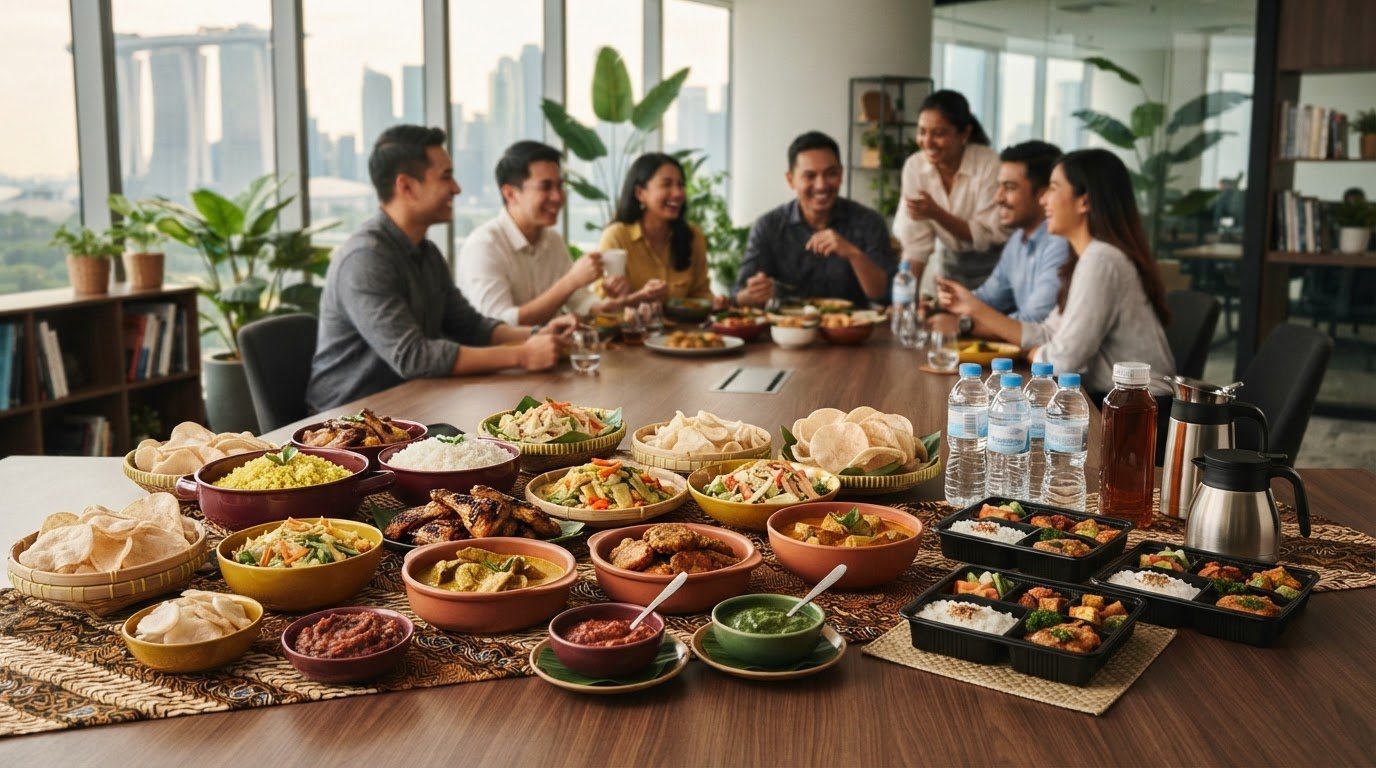

A lunch order is incomplete until the drinks are decided. Meals don’t always include beverages, so treat drinks as a separate part of the order unless the menu says otherwise. Choosing lunch options for office staff also means balancing variety, group size and practical serving arrangements.
It’s easy to focus on the food and leave drinks or dietary preferences until the last minute. A clear plan tells staff what’s being served and makes ordering simpler, whether lunch is for a small team or a larger group.
This guide explains how to choose a balanced menu, organise orders and serving, and include vegetarian and low-spice choices. It also covers working lunches and meetings, helping you choose an approach that suits your team and the day’s schedule.
Key Takeaways
- Build menus around a mix of protein, carbohydrates and vegetables, and include one themed lunch per month to add variety to the regular rotation.
- Match the meal format to the group: individual portions can simplify distribution, while shared spreads offer more choice for teams.
- Plan delivery around the lunch schedule, access to the drop-off point and how meals will be distributed. Include drinks as a separate item in the order plan.
- Make vegetarian and low-spice preferences easier to accommodate by offering clear choices of fillings, sides and sauces.
- For a working lunch or meeting, choose food that suits the agenda and is easy to serve without interrupting the discussion.
1. Office catering menus and staff lunch ordering
Start with a menu that suits the workday, the team’s preferences and the serving arrangement. A balanced lunch includes lean protein, complex carbohydrates, vegetables and fibre, with moderate portions. A rice bowl with grilled chicken and vegetables is one practical example. Request less sauce and offer water instead of sugary drinks. A useful way to compare lunch options for office staff is to assess variety, portion format and dietary needs together.
Pizza, pasta and quiche work well for shared lunches because they’re easy to portion. Offer different pizza toppings, such as vegetables and chicken, to suit varied tastes. A pasta tray with a vegetable side or sliced quiche with salad gives staff alternatives to sandwiches or salmon. Separate serving utensils make it easier to serve each dish neatly.
For office celebrations or onboarding, choose food that is straightforward to serve and easy to recognise. A welcome lunch for new employees might pair familiar dishes with varied sides, while a birthday gathering could feature pizza slices and pasta. Schedule one themed lunch per month alongside the regular rotation to bring variety without changing the menu every week.
Drop-off catering suits a shared meal when staff can gather in one room. Choose a serving location, assign someone to receive the order, and arrange plates, utensils and drinks. Label vegetarian dishes and place sauces separately before employees arrive. This gives colleagues a clear way to serve themselves and helps keep lunch organised during a limited break.
Hawker centres offer a broad range of local meals, while food courts bring multiple stalls together under one roof. Both provide individual choice, but travel and queues can leave less time for a shared break. Restaurants offer a seated group meal, though a set menu may be less flexible than ordering separately. Consider the team’s schedule and whether staff prefer a shared meal or individual choices.
There is no single average office lunch cost in Singapore. The amount depends on the meal format, menu choices and whether the order is individual or catered. Hawker meals, restaurant lunches and catered spreads have different serving arrangements, so set a budget for the occasion and compare the menu against it before ordering.
Popular choices include rice and noodle dishes, nasi padang, sandwiches, pizza, pasta and quiche. When comparing lunch options for office staff, note dietary preferences and spice tolerance before choosing dishes. Halal catering can suit teams seeking halal food, while nasi padang pairs rice with a choice of accompanying dishes. Keep sauces separate so employees can adjust the flavour to their liking.
2. Flexible menus for different group sizes
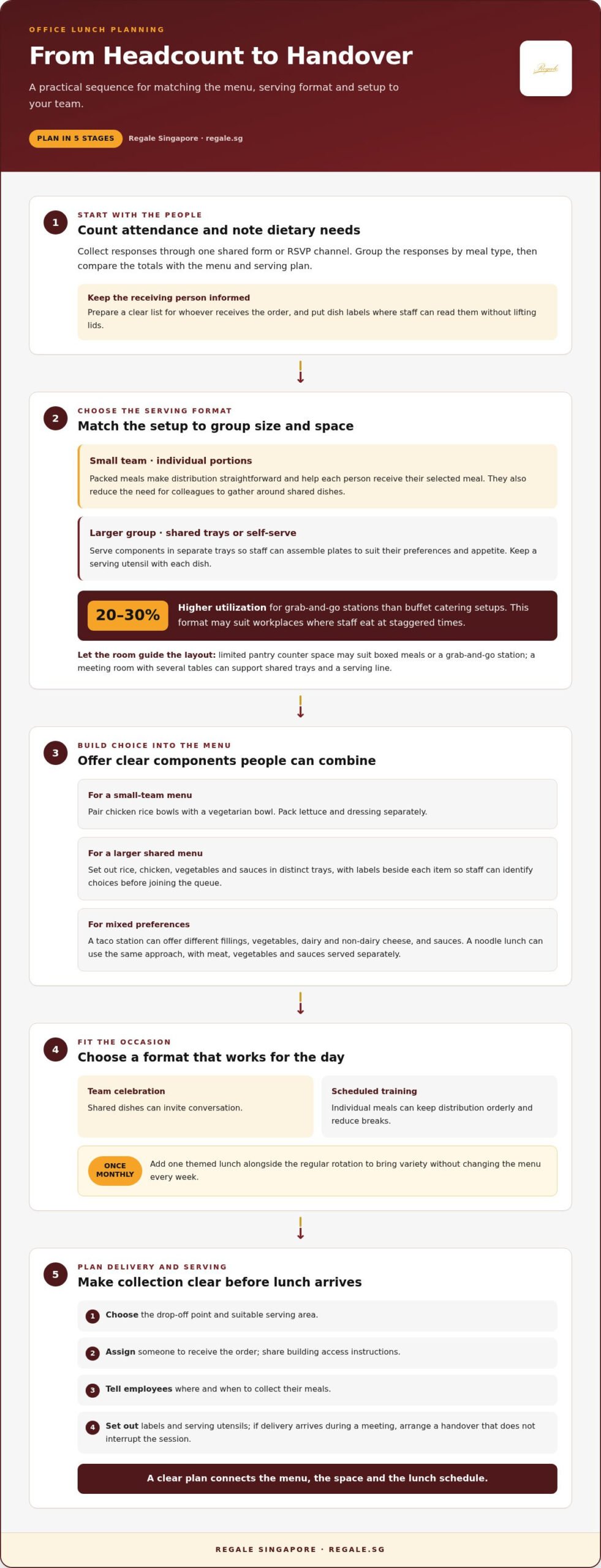
Choose the serving format after estimating attendance and noting dietary needs. A small team may prefer individually packed meals, while a larger department can share trays or use a self-serve station. The right format depends on the lunch space, serving time and whether employees need to return to their desks promptly.
For a small team, use a simple menu with a clear choice of mains. For example, offer chicken rice bowls alongside a vegetarian bowl, with lettuce and dressing packed separately. Individual portions make distribution straightforward and help each person receive their selected meal. They also reduce the need for colleagues to gather around shared dishes.
A larger group benefits from a menu with components served separately. Set out rice, chicken, vegetables and sauces in distinct trays, then let employees assemble a plate to suit their appetite. This gives people control over portions and combinations. Keep serving utensils with each dish, and place labels beside items so staff can identify the options before joining the queue.
For mixed preferences, build choice into the menu instead of ordering several unrelated meals. A taco station can include different fillings, vegetables, dairy and non-dairy cheese, and sauces. Employees can create a meal that suits their preferences. A noodle lunch can follow the same principle, with meat, vegetables and sauces served separately.
Match the setup to the office layout. A pantry with limited counter space may suit boxed meals or a grab-and-go station. A meeting room with several tables can support shared trays and a serving line. Grab-and-go stations see 20 to 30% higher utilization than buffet catering setups, so they may suit workplaces where staff eat at staggered times.
Before ordering, collect attendance and dietary details through one shared form or RSVP channel. Group responses by meal type, then compare the totals with the menu and serving plan. Keep a clear list for the person receiving the order, and place labels where employees can read them without lifting lids. This helps prevent confusion between similar-looking dishes.
For a team celebration, choose shared dishes that invite conversation. For a scheduled training session, individual meals can keep distribution orderly and reduce breaks. If a shared meal suits the occasion, explore shared team meal options as part of planning the menu, serving arrangement and dining space.
3. Office lunch ordering and delivery
In Singapore, offices can arrange lunch through direct restaurant orders, catering or food delivery platforms. Choose the ordering route according to headcount, menu format and whether meals need individual packaging. Direct orders can suit a shared menu, while separate staff orders allow more personal choice.
Set a serving plan before selecting dishes. Choose a drop-off point, assign someone to receive the order, and tell employees where and when to collect their meals. Add building access instructions and identify a suitable serving area. If the order arrives during a meeting, appoint someone to handle the handover without interrupting the session.
Timing matters. Employees who don’t need to leave their building to find lunch save at least 30 minutes per person each day. Avoiding an off-site lunch search saves employees 2.5 hours of focus time over a five-day week. For a team with a fixed break, place the order around the scheduled serving time and allow space for distribution.
For recurring lunch delivery, agree on a regular schedule, a menu rotation and a process for updating meal counts. A company might set a weekly order deadline, collect staff selections in one form and submit the combined order. Committing to restaurant partners for 3 to 5 days per week is said to typically unlock 10 to 20% savings. Some companies run popup restaurants one or two days a week and office lunch delivery on the other days.
Popup and office lunch delivery programs typically take two or three weeks to launch. Use that setup period to decide the ordering process, delivery handover and meal schedule. For subsidized individual ordering, establish how employees select meals and how the employer applies its contribution.
Plan variety through a simple rotation rather than changing every meal. A healthy menu could alternate rice bowls, salads and noodle dishes, with grilled protein and vegetables as familiar choices. Keep dressings and sauces separate, such as tomato dressing for salads, so employees can adjust flavour. Record popular selections and dietary requests after each order to guide the next menu.
Set one clear deadline for staff selections and communicate it with the menu. Keep a separate list of meal choices, dietary notes and delivery instructions. This reduces last-minute changes and gives the person receiving lunch a practical checklist for the day.
Vegetarian and low-spice preferences
In Singapore, staff can find vegetarian meals at hawker centres, food courts, restaurants and caterers. For an office order, check ingredients as well as dish names: a vegetable dish may still contain meat-based stock, while tofu, beans or eggs can provide protein in suitable meals.
Make a vegetarian option a complete lunch rather than a side dish. Pair rice or noodles with tofu, tempeh, beans or eggs, then add vegetables such as greens, carrots or lettuce. A grain bowl with chickpeas and roasted vegetables, for example, offers a filling alternative to a meat-based main.
For a buffet, keep vegetarian dishes separate from meat dishes and provide dedicated serving utensils. Clear labels help employees identify suitable choices without guessing. Curries can also be selected to accommodate different dietary needs and preferences. Serve sauces separately where possible, so each person can decide how much flavour or heat to add.
Low-spice meals need more than a request for “mild.” Identify dishes that use little chilli, and serve sambal, chilli oil and spicy sauces on the side. A rice bowl with vegetables and grilled chicken can suit colleagues who eat meat, while a tofu version provides a vegetarian choice. Separate sauces so staff can adjust their plates without changing a shared dish.
Before ordering, collect dietary details through one form. Ask employees to state whether they need vegetarian food, avoid particular ingredients or prefer low-spice dishes. Distinguish a preference from an allergy, and record the specific ingredient to avoid. For example, “no chilli” communicates a flavour preference, while “peanut allergy” identifies a safety concern that needs clear handling.
Food safety and dietary needs both require clear communication. Provide an accurate list of allergies and restrictions, request ingredient information, and label each dish at serving time. Keep separate utensils for vegetarian and meat dishes, and don’t move serving spoons between trays. These steps help reduce mix-ups during a busy corporate lunch.
When planning corporate catering, review the final menu against staff responses before placing the order. Check that vegetarian meals include a protein source, low-spice choices are clearly identified, and sauces remain separate. A short written menu beside the buffet can guide employees and help the organiser answer questions consistently.
For a healthier work lunch, choose lean proteins, add vegetables where possible, use less sauce and avoid sugary drinks. Rice bowls paired with vegetables and lean protein make a practical choice, and grilled proteins are preferable to fried options. Keep sauces modest or separate for a low-spice menu, while letting employees adjust the flavour to suit their preferences.
Vietnamese-style meals naturally match a balanced work-lunch structure of protein, complex carbohydrates, vegetables and fibre, with moderate portions. Bun bowls are light yet satisfying, with fresh vegetables and herbs, and can help employees avoid feeling overly full. Bánh mì can also be a balanced office lunch when made with fresh ingredients, lean fillings and plenty of vegetables. For a different shared option, offering a variety of pizza toppings can help cater to different employee preferences.
5. Working lunches and meetings
A working lunch should fit the meeting’s purpose, schedule and room setup. For a short briefing, packed meals such as wraps or sandwiches let attendees eat without queuing. Keep sauces and dressings separate, and place napkins beside the food. For a longer planning session, shared dishes can create a more relaxed break between agenda items.
Choose food that’s manageable at a conference table. A Vietnamese-style meal with rice, vegetables and a lean filling can be served in individual containers. A cheese sandwich, salad or wrap also works in a compact meeting room. Avoid dishes that need extensive assembly or risk spills beside laptops, printed materials and presentation equipment.
Quick work lunches are meals that can be made in under 30 minutes. That timeframe suits a short preparation window, but the menu still needs to match the meeting format. For example, a team can prepare packed sandwiches and salads before attendees arrive, then set them out with serving utensils and drinks. Individual portions help people return to the discussion promptly.
For a working lunch with discussion, choose food that can be eaten during pauses rather than a presentation. Set out the meal before the session, identify vegetarian choices, and reserve a clear place for used plates. If attendees need to review documents, keep food away from papers and make water accessible without crossing the main serving area.
A barbecue lunch can combine a team meal with a social gathering when the workplace has access to a garden and BBQ grill. It suits a less formal workday, such as a team celebration or project milestone. Assign someone to coordinate food and serving, and plan a sheltered indoor alternative if the garden cannot be used.
Lunch-and-learn meetings pair a meal with a focused session. One page lists 50 lunch-and-learn food ideas, while negotiation skills can provide a practical topic. Employees can discuss negotiating contracts and everyday decisions, including where to have lunch. Keep the food simple to serve so the meal supports the session instead of becoming its main distraction.
Before ordering, confirm the meeting time, attendance, dietary needs and serving arrangement. Share the menu with attendees beforehand, and make drinks part of the plan rather than assuming they come with meals. For a team meal shaped around a meeting schedule, plan your working lunch with the agenda and serving setup in mind.
Negotiation skills can help with contracts and everyday decisions, including choosing where to have lunch. The topic can connect formal discussions with familiar choices.
Regale Singapore: Nasi Sambal Goreng
Regale Singapore offers Nasi Sambal Goreng for teams seeking an Indonesian lunch. Halal Catering can suit office gatherings, while Nasi Ambeng offers colleagues another Indonesian option for a shared meal. The menu also includes Western Cuisine for a different flavour profile.
Choose a meal to suit the occasion: Nasi Sambal Goreng brings Indonesian character to a team lunch, while Western Cuisine offers variety for employees with different tastes. Regale Singapore also serves Authentic Indonesian Cuisine for a meal centred on those flavours.
Contact Regale Singapore to discuss a suitable meal for your office team.
Make the Next Team Lunch Count
Make lunch a part of the workday your team can share and enjoy. Choose a menu that suits the occasion, then give colleagues a clear way to share preferences before ordering. Thoughtful lunch options for office staff can turn a routine break into a welcoming moment for the team.
For an Indonesian meal, Regale Singapore offers Nasi Sambal Goreng, Nasi Ambeng and Authentic Indonesian Cuisine. These choices bring distinctive flavours to a team gathering or office celebration.
Contact Regale Singapore to plan lunch for your team. Give your next office meal a thoughtful start.
Frequently Asked Questions
How far in advance should I order?
Order once the date, headcount and delivery point are settled, allowing more planning time for recurring programmes. Popup and office lunch delivery programs typically take two or three weeks to launch. For a single catered meal, confirm the menu, dietary notes, serving arrangement and building access together. A complete order brief helps reduce changes close to the meeting or team event.
What Makes a Healthy Work Lunch?
A healthy work lunch uses satisfying ingredients and sensible portions to support the afternoon workday. For example, build a quinoa bowl with chickpeas and vegetables, and serve a light dressing separately. Quinoa contains protein and fibre. Choose water or an unsweetened drink, and keep fried toppings and rich sauces modest. This gives the meal substance without relying on oversized portions.
What are some business lunch ideas for a meeting?
A bagel spread with salmon, avocado and pico de gallo makes a practical meeting lunch, with fruit or a simple salad alongside. Attendees can assemble a quick plate between agenda items. For a lunch-and-learn, pair the meal with a defined topic, such as negotiation skills, and allow time for discussion. Choose foods that are easy to eat while reviewing documents.
What are the best group lunch catering options for office teams in Singapore?
The best catering format depends on whether colleagues need individual meals or a shared spread. Boxed meals suit assigned selections, while a buffet works for a common serving table. Regale Singapore offers Halal Catering, Halal Buffet and Halal Mini Buffet, with Nasi Ambeng among its Indonesian options. Match the format to the gathering, dietary preferences and available serving space.
What halal lunch options are available for Singapore office staff?
Singapore office teams can choose halal catering, a buffet or a mini buffet for a group lunch. Regale Singapore is a halal-certified culinary establishment and offers Nasi Sambal Goreng and Nasi Ambeng. Before finalising the menu, gather staff preferences and share the selected meal format clearly. This helps employees understand the arrangements and choose food suited to the occasion.
Which Singapore food delivery services offer office lunch catering?
Offices can order through restaurants directly, catering or food delivery platforms.
