
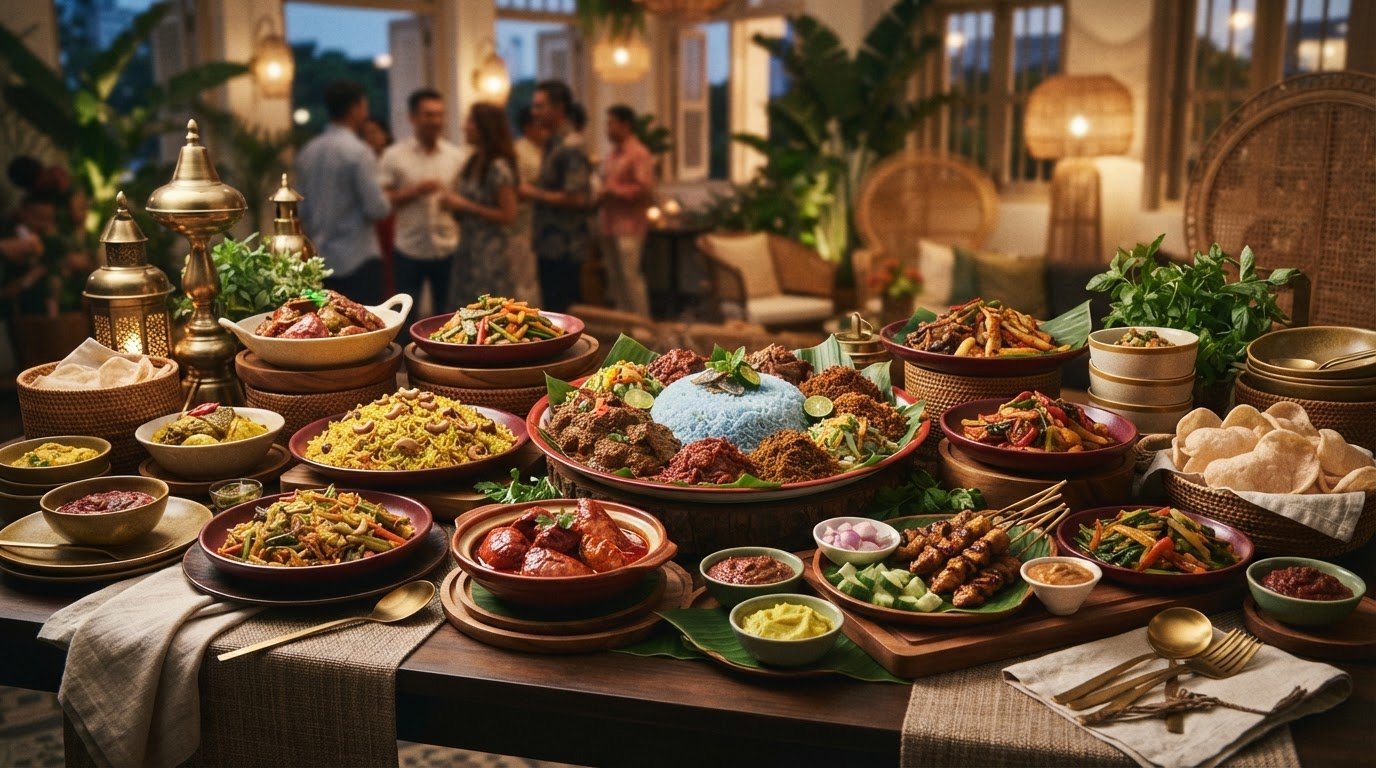

The best gathering menu isn’t necessarily the biggest one. Useful halal gathering food ideas start with the occasion, how guests will eat, and the space available for serving. Those details help you choose between a buffet, mini buffet, or shared spread without adding dishes you don’t need.
Malay and Indonesian-inspired dishes such as Nasi Ambeng and Nasi Sambal Goreng can bring a communal feel to the meal. Briyani, Nasi Minyak, or Western and local favourites offer other menu directions. The right choice depends on your guests, schedule, and setup.
This guide compares practical menu approaches for family celebrations, casual get-togethers, and more formal occasions. It covers menu ideas, serving formats, and straightforward planning steps for guest numbers, dietary needs, and serving flow. Decide on the format early, then build a spread that feels generous and welcoming without relying on guesswork.
Key Takeaways
- Choose halal gathering food ideas to suit the occasion, guest mix, and way people will dine.
- Explore seven menu approaches, from shared Indonesian and Malay-inspired dishes to familiar favourites.
- Compare buffet, mini buffet, and shared-dish formats by considering space, serving flow, and how much hosting you want to manage.
- Plan in sequence: estimate attendance, note dietary needs, select a format, and organise serving.
- Regale Singapore offers halal catering, buffet, and mini buffet services for different gathering styles.
Halal gathering food ideas: start with the occasion and the way guests will eat
Start with three decisions: the occasion, who is attending, and how the food will be served. These choices shape the menu more reliably than picking dishes first. Good halal gathering food ideas account for halal requirements and guest comfort while fitting the event’s pace and atmosphere. For an overview of the principles behind halal and haram food, see Islamic dietary laws.
Common hosting contexts include:
- Family meals, where guests may gather around a table and share food.
- Celebrations and milestone occasions, which may call for a more considered meal and organised serving.
- Informal group hosting, where guests may arrive or eat at different times.
How the occasion shapes a halal gathering menu
A relaxed get-together can suit a flexible spread that guests serve themselves while chatting. For a formal celebration, a more defined meal structure may work better, with dishes served together or portions organised in advance. Either way, the aim is to make the food feel right for the occasion, not to make the menu elaborate.
Consider the timing, too. A gathering planned around lunch or dinner will usually need a more substantial main meal, while a shorter visit between meals may suit a lighter spread. Think about the guest mix: children may prefer familiar, easy-to-manage portions, and older guests may appreciate an accessible serving arrangement. A choice of dishes can also accommodate varied appetites.
Choose between shared dishes and individual servings
Shared dishes create a communal dining experience when guests are seated together and can comfortably reach the food. They can make a family meal feel warm and connected, but need enough table space and an arrangement that lets everyone serve themselves.
Individual servings can simplify distribution when guests are moving around, seating is limited, or you want more control over how food is handed out. They may feel less communal, especially when the gathering centres on eating together. A mix can work well: serve some items communally and portion others for convenience.
Picture the room during the meal before settling on dishes. Will guests sit together, move between conversations, or serve themselves in turns? Match the food and service style to that flow. The best choice is one that welcomes the group and remains practical for the host.
Seven halal gathering food ideas, from shared classics to flexible spreads
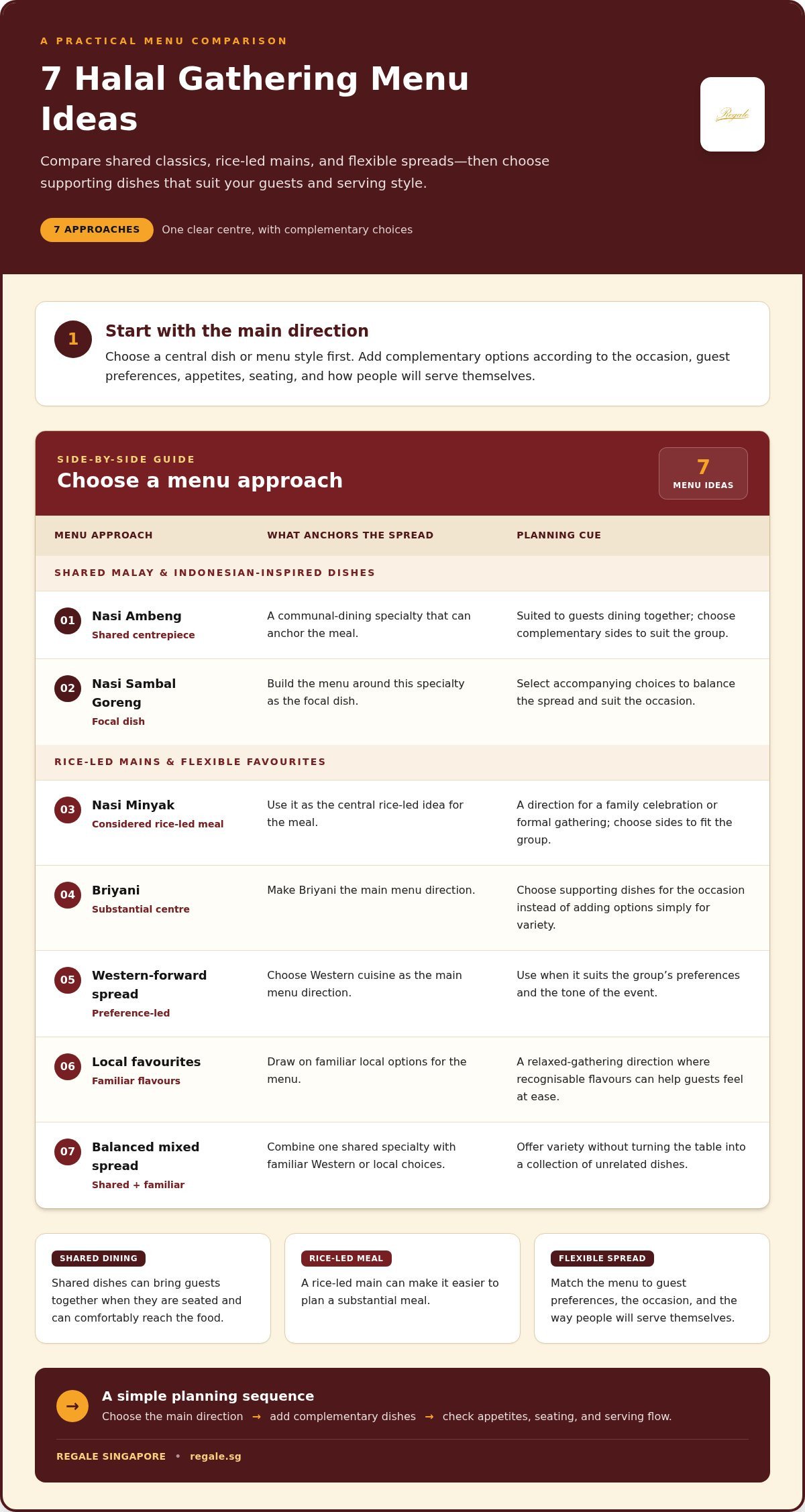
A useful menu has a clear centre and supporting choices that suit the group. The seven approaches below are starting points, not fixed menus or claims that every dish belongs together. Choose a central dish, then add complementary options based on the occasion, guest preferences, and serving style. For hosts planning around halal requirements, the international halal guidelines offer a reference on halal food standards.
Shared Malay and Indonesian-inspired dishes for communal dining
Sharing-focused menus can bring guests together around a central dish. They work especially well when people are seated and have room to serve themselves comfortably.
- Nasi Ambeng as a shared centrepiece: This specialty is associated with communal dining. Let it anchor the meal, then consider complementary sides that suit your guests without assuming a particular set of contents.
- Nasi Sambal Goreng as the focal dish: Build the menu around this specialty, with accompanying choices selected to balance the spread and suit the occasion.
Rice-led menus and varied favourites for mixed groups
A rice-led main can make it easier to plan a substantial meal. Regale’s named specialties offer distinct directions, while Western and local favourites can help shape a menu for guests with varied tastes.
- Nasi Minyak for a considered meal: Use it as the central rice-led idea for a family celebration or formal gathering, with complementary sides chosen to fit the group.
- Briyani for a substantial centre: Make Briyani the main direction, then choose supporting dishes that suit the occasion instead of adding options simply for variety.
- A Western-forward spread: Choose Western cuisine as the main menu direction when it suits the group’s preferences and the tone of the event.
- A local-favourites menu: Draw on familiar local options for a relaxed gathering where recognisable flavours help guests feel at ease.
- A balanced mixed spread: Combine one shared specialty with familiar Western or local choices. This gives guests variety without turning the table into a collection of unrelated dishes.
Think of these as menu approaches, not prescribed combinations. Select the main direction first, then add sides according to appetites, seating, and how guests will serve themselves. For a catered spread, explore Regale’s halal catering.
Buffet, mini buffet, or shared platter: compare halal gathering food formats
The same menu can feel quite different depending on how guests access it. Compare the available space, the route guests will take to serve themselves, and how much hosting you want to do during the meal. Whatever the format, plan the food with halal requirements in mind. The Harvard University Pluralism Project provides an overview of Islamic dietary restrictions.
| Format | Space to consider | Serving flow and guest movement | Host involvement |
|---|---|---|---|
| Buffet | Needs a practical area for dishes and for guests to queue or serve themselves. | Guests choose their food at the serving point, so a clear approach and exit can help prevent crowding. | There is less individual distribution, but the host should plan the layout and keep the serving area organised. |
| Mini buffet | Compare its serving arrangement with the space available, especially if a full buffet layout would feel cumbersome. | Consider how guests will reach and share the food in the room or dining area. | A useful format to weigh against buffet service when planning a more contained setup. |
| Shared dishes | Works best when there’s table space for dishes within guests’ reach. | Guests serve from shared dishes while dining together, keeping the meal centred on the table. | The host may need to arrange dishes and serving utensils so everyone can participate comfortably. |
When a halal buffet can make serving a group more straightforward
A buffet gives guests a self-service route and lets them choose from the spread at their own pace. It can suit gatherings where people are comfortable moving to a serving area. Leave room for guests to approach, serve, and move away without interrupting others. Regale offers halal buffet catering for hosts planning this kind of setup.
When a mini buffet or sharing-style meal may fit better
A mini buffet is worth considering when a full buffet layout doesn’t match the available space or dining style. Shared dishes suit a different mood: guests stay around the table and serve from the same spread. Neither approach is automatically better. Match the format to where guests will sit, how they’ll move, and whether you want to distribute food or host a communal meal. Regale offers halal mini buffet catering as another option for putting together practical halal gathering food ideas.
Plan a halal gathering menu with a simple host checklist
A short planning sequence turns halal gathering food ideas into a menu that suits the guests and the event. Work through attendance, dietary needs, format, and serving in that order. This connects menu decisions to practical details instead of guesswork.
- Estimate attendance. Start with the people who have accepted and note whether the final number may change. Consider the event’s duration and whether guests will arrive together or over time.
- Identify guest needs. Invite guests to share dietary requirements respectfully, preferably through a straightforward, private message. Note allergies and other restrictions separately from halal requirements so you can plan and communicate each clearly.
- Choose the format. Decide whether a buffet, mini buffet, or shared-dish meal best fits the space, seating, and amount of hosting you want to do.
- Plan the serving flow. Choose where food will go, how guests will reach it, and how dishes and dietary details will be identified.
Estimate guest needs without guessing fixed portions
Attendance is a planning guide, not a fixed serving formula. The right amount depends on the menu, who is coming, and the shape of the gathering. A meal held at lunchtime or dinner may call for a more substantial spread than a shorter visit between meals. Account for the event’s duration and whether refreshments will be served before or alongside the meal. If attendance is still changing, plan around the most realistic estimate and revisit it as replies come in.
Make serving and dietary communication easy
Think through the meal from a guest’s point of view. Keep the serving area accessible, leave room for people to move, and arrange shared dishes so guests can reach them without crowding. Clear labels can identify dishes and relevant dietary considerations. Simple descriptions help guests who may be unfamiliar with a dish decide what suits them.
Communicate halal expectations plainly in the invitation or before the gathering, then keep the information consistent at serving time. A brief, respectful conversation can clarify individual needs without putting guests on the spot. Give the menu a clear main focus and complementary choices, with enough variety to reflect the group’s preferences. Avoid adding dishes simply to make the spread larger.
For a catered gathering, explore Regale’s halal catering options as you put your menu and serving plan together.
Bring halal gathering food ideas together with Regale’s catering formats
A well-planned gathering menu brings three decisions together: the occasion, the food guests will enjoy, and the way it will be served. A family meal centred on sharing may call for a different menu from a formal celebration or an informal group gathering. Consider the guest mix, mealtime, seating, available space, and how much you want to manage during service. These details help narrow the options without relying on one fixed menu or format for every event.
Match Regale’s confirmed specialties to the gathering style
Regale is a halal-certified culinary establishment offering halal catering, buffet, and mini buffet services. Its specialties provide starting points for different gathering styles. Nasi Ambeng and Nasi Sambal Goreng suit hosts drawn to Indonesian and Malay-inspired flavours and communal dining. Nasi Minyak and Briyani offer other directions for a substantial meal. These are ideas to consider, not a claim that the dishes come together in a fixed menu or package.
For groups with varied preferences, Western and local favourites offer broader menu directions to consider alongside a shared specialty. Keep the spread coherent: choose a central focus, then select supporting options that suit the occasion and guests. A familiar choice can balance the menu while preserving the character of the gathering.
Choose a service format and take the next step
The format should fit the room and the way people will dine. A buffet lets guests serve themselves, so plan for a clear serving area and an easy route through it. A mini buffet offers another catering format to consider when planning the setup and space. Shared dishes keep the meal centred on the table and can make dining feel more communal when guests are seated together. Each format has different implications for movement, serving, and host involvement.
Before settling on your menu, return to the basics: who is attending, what dietary needs they have, where the food will go, and how guests will access it. This simple check turns halal gathering food ideas into a practical plan that feels welcoming without making the spread more complicated than the occasion requires.
Explore Regale’s halal catering options and choose a service format and menu direction for your gathering.
Plan a welcoming spread with confidence
Strong halal gathering food ideas begin with the occasion and the guests, followed by a menu and service style that fit. Shared specialties can bring a communal feel, while familiar local or Western favourites offer another direction for varied preferences. A buffet, mini buffet, or shared-dish setup each creates a different serving flow, so consider your space and how you want to host.
A realistic attendance estimate, respectful dietary communication, and a clear serving plan help make the gathering welcoming without relying on guesswork. Regale is a halal-certified culinary establishment offering halal catering, buffet, and mini buffet services. Its specialties include Nasi Ambeng, Nasi Sambal Goreng, Nasi Minyak, and Briyani, giving hosts several menu directions to consider for different occasions.
Explore Regale’s halal catering options and choose a format for your gathering. Thoughtful choices can bring guests together over a meal that feels considered, comfortable, and easy to enjoy.
Frequently Asked Questions
What food is good for a halal gathering?
Good halal gathering food suits the occasion, guests, and serving style. A rice-led main can anchor the meal, with complementary choices to offer variety. Regale’s specialties include Nasi Ambeng, Nasi Sambal Goreng, Nasi Minyak, and Briyani. Western and local favourites are other broad menu directions. Consider guests’ dietary needs and appetites, and communicate halal expectations clearly so everyone can choose with confidence.
What halal food can I serve for a family gathering?
For a family gathering, consider dishes that suit a shared meal and offer familiar choices for different ages and appetites. Nasi Ambeng can be a communal centrepiece, while Nasi Sambal Goreng, Nasi Minyak, or Briyani offer other menu directions. Balance a central dish with complementary options, and think about whether everyone will sit together or move around. Choose food and serving arrangements that feel comfortable for your family.
Is a buffet or shared platter better for a gathering?
Neither format is best for every gathering. A buffet allows guests to serve themselves, so it suits a setup with space for a serving area and a clear route through it. Shared platters keep the meal centred on the table and encourage guests to dine together, but need accessible table space. Choose according to seating, guest movement, and how involved you want to be in serving.
How do I plan a halal gathering menu for guests with different preferences?
Start with the occasion and guest list, then note dietary requirements, allergies, and different food preferences. Select a clear main direction, such as a rice-led meal, and consider complementary choices that provide variety without making the menu feel scattered. Communicate halal expectations plainly and label dishes where useful. Familiar local or Western favourites can sit alongside Indonesian or Malay-inspired options to make the spread welcoming to a varied group.
How much food should I prepare for a halal gathering?
Base your plan on a realistic attendance estimate, the timing and duration of the event, the menu, and whether refreshments will also be served. There isn’t one reliable portion formula for every gathering, since appetites and dishes differ. Note any uncertainty in attendance and review the plan as replies come in. A clear guest count and service format help you make a more considered estimate without relying on guesswork.
Can I serve Indonesian and Malay dishes at the same gathering?
Yes. Indonesian and Malay-inspired dishes can make a cohesive gathering menu, particularly when the meal is intended to be shared. You might choose Nasi Ambeng or Nasi Sambal Goreng as a central direction, then select complementary sides to suit your guests and the occasion. Keep the overall spread balanced, and explain dishes clearly for guests who may be less familiar with them.
What is the difference between halal buffet and mini buffet catering?
Both are catering formats, and hosts can compare them according to the serving setup and space available. A halal buffet typically involves arranging food for guests to serve themselves, so plan for a dedicated area and easy movement. A mini buffet is an alternative format to consider when assessing the event’s layout and dining style. Neither is automatically the better choice; match the format to the gathering and how guests will eat.
