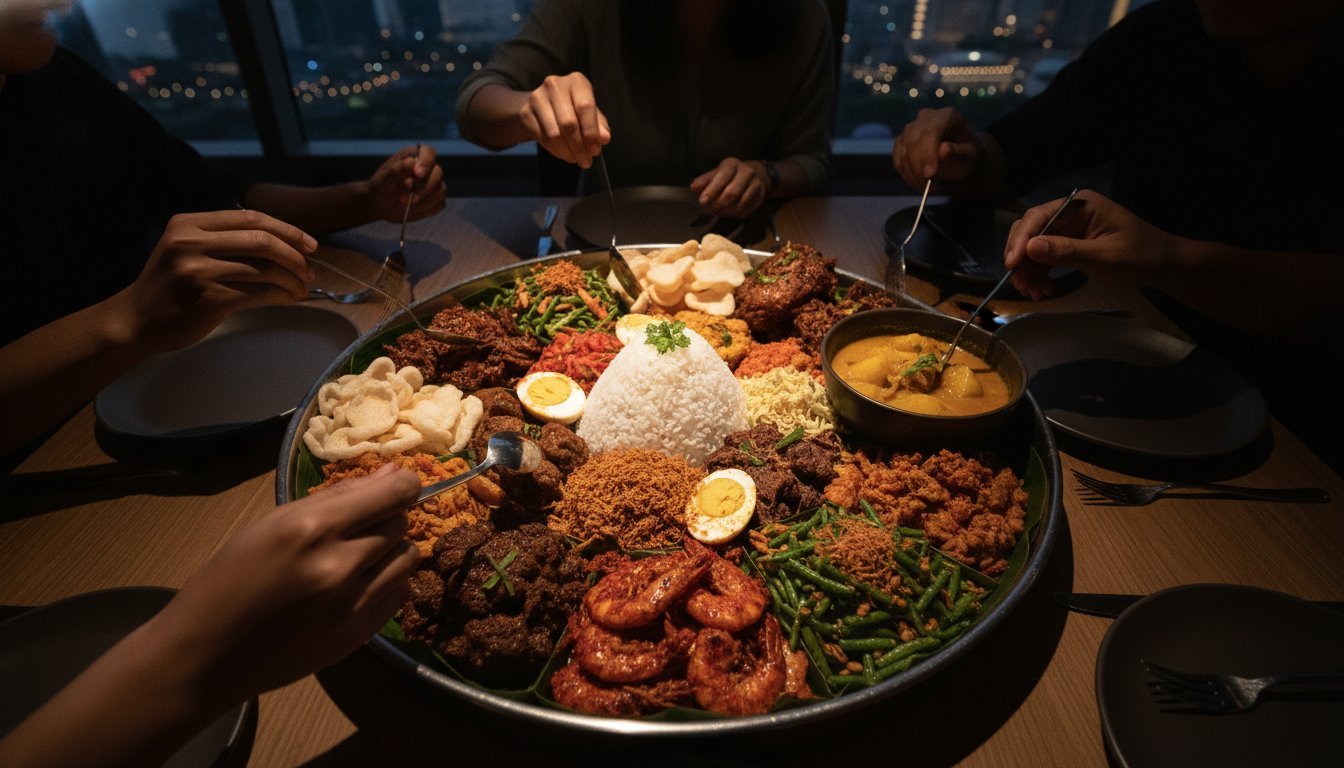

While the restaurant Burnt Ends reported a 50% rise in solo diners in 2026, the enduring popularity of the Nasi Ambeng tray proves that the preference for communal dining remains a cornerstone of local culture. It isn’t simply a large meal; it’s a structured ritual of unity that bridges traditional Indonesian heritage with Singapore’s modern hospitality standards. You likely understand the challenge of planning a meal that satisfies a diverse group while maintaining a high level of authenticity. It’s often difficult to determine the correct portion sizes or identify the specific side dishes required for a traditional presentation.
This guide will help you master the art of the communal feast by exploring the rich heritage and essential components that make an authentic Nasi Ambeng tray a reliable choice for group dining. We’ll identify the must-have dishes that create its signature flavor profile and explain the cultural traditions behind sharing from a single platter. By the end, you’ll know exactly what to look for in a professional halal-certified restaurant to ensure your next dinner is both culturally rooted and operationally seamless.
Key Takeaways
- Learn about the Javanese-Malay origins of this communal feast and its role as a symbol of unity in Singaporean culture.
- Identify the core components of an authentic Nasi Ambeng tray, from the central fragrant rice to traditional protein pairings like Beef Rendang.
- Master the etiquette of communal dining, balancing the traditional “one tray, many hands” philosophy with modern professional service.
- Understand the logistical benefits of choosing a communal platter for celebratory dinners and large group events.
- Discover how to access an authentic halal-certified experience during Regale Singapore’s evening transition to a traditional Indonesian menu.
The Cultural Significance of the Nasi Ambeng Tray
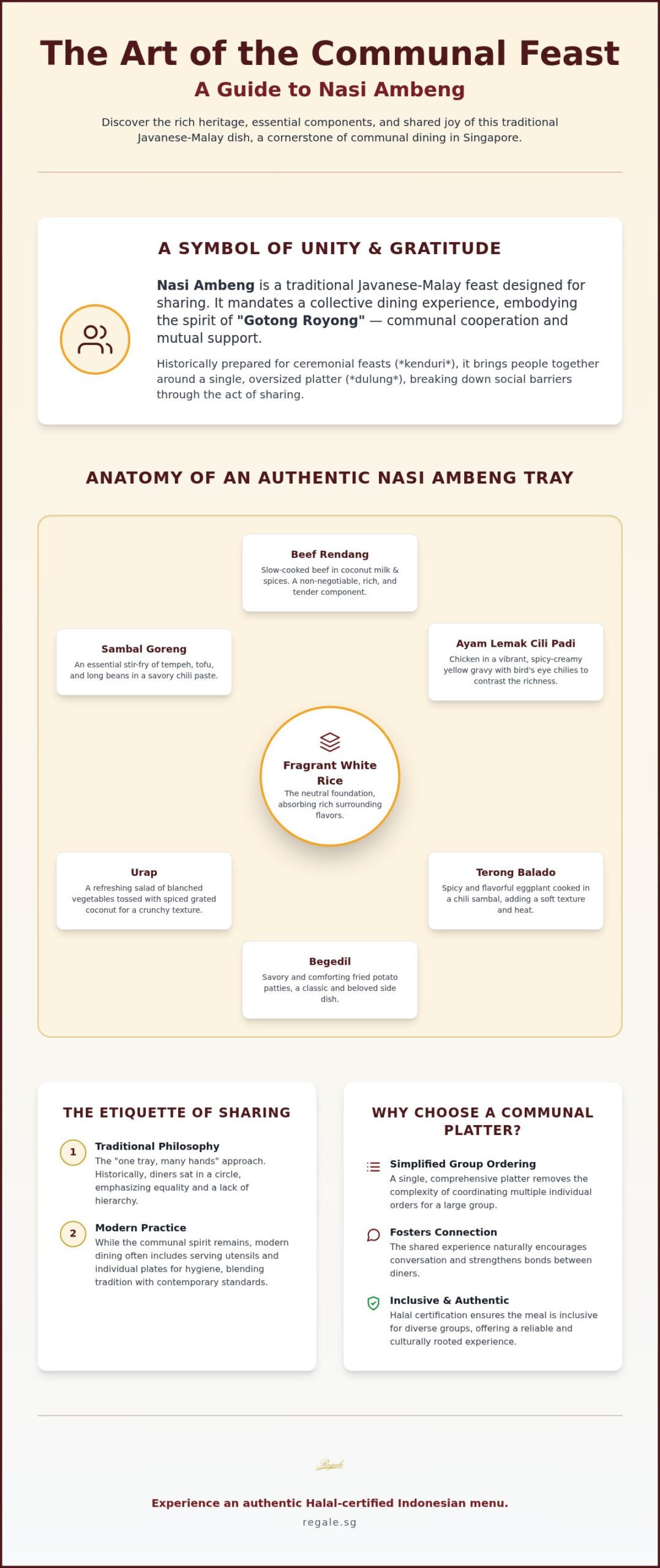
The Nasi Ambeng is a traditional Javanese-Malay dish that serves as a profound symbol of community and shared gratitude. In its most authentic form, it consists of a large mound of fragrant steamed white rice surrounded by a diverse array of side dishes, all presented on a singular, oversized platter. While many dishes in the region are designed for sharing, the Nasi Ambeng tray is unique because it mandates a collective dining experience. It’s a meal that people simply cannot fully appreciate in isolation.
Tracing back to Java, Indonesia, this culinary tradition was historically prepared for kenduri, which are ceremonial feasts held to mark significant life events like weddings or religious milestones. As Javanese migrants settled in Singapore, the dish evolved, integrating local ingredients and preferences while maintaining its core identity as a celebratory centerpiece. Central to this tradition is the philosophy of “Gotong Royong,” a Malay term describing communal helping and mutual cooperation. By eating from the same tray, diners physically manifest this spirit of togetherness, breaking down social barriers through the act of sharing a single source of nourishment.
The Symbolism of the Dulung
A large round tray, known as the dulung, is the essential vessel for this feast. Using a single tray instead of individual plates isn’t merely a logistical choice; it’s a deliberate statement of equality and harmony. At the center of the Nasi Ambeng tray, the rice is often shaped into a cone, reminiscent of the Nasi Tumpeng style, which represents a mountain and symbolizes prosperity and divine blessing. This visual arrangement draws the eyes of every diner to a common center, reinforcing the idea that everyone at the table is part of a unified group. Historically, these trays were placed on the floor, where guests would sit in a circle to eat, further emphasizing a lack of hierarchy during the meal.
Nasi Ambeng in Modern Singapore
In recent years, the dish has transitioned from private home-based celebrations to a staple in professional dining environments. This shift allows a wider audience to experience the ritual without waiting for a specific communal invitation. For modern diners, the presence of an authentic tray at a restaurant signifies a commitment to heritage and hospitality.
Halal certification plays a vital role in this modern context, ensuring that these communal experiences remain inclusive for Singapore’s diverse population. When a venue provides an authentic Indonesian experience, it offers a reliable space for family reunions and social gatherings where the focus remains on the food and the company. The logistical ease of ordering a single, comprehensive platter for a group simplifies the dining process, allowing guests to focus on the conversation and the cultural connection that the meal provides.
Anatomy of an Authentic Nasi Ambeng Tray: What to Expect
Every authentic Nasi Ambeng tray is a masterclass in culinary balance. It starts with a generous mound of fragrant steamed white rice placed at the very center. This rice acts as the neutral foundation, designed to absorb the rich, complex sauces from the surrounding dishes. Unlike individual meals where flavors are isolated, the tray format allows the juices of various curries and sambals to mingle slightly. This arrangement is a hallmark of Javanese food culture and identity in Singapore, where the visual presentation is as significant as the flavors themselves.
Mastering the Meat Dishes
The protein components are the most labor-intensive elements of the Nasi Ambeng tray. Beef Rendang is a non-negotiable inclusion. It’s prepared by slow-cooking beef in coconut milk and a complex rempah (spice paste) until the liquid evaporates, leaving the meat tender and coated in a dark, caramelized spice reduction. To provide a contrast in heat and texture, Ayam Lemak Cili Padi is often served. This chicken dish features a vibrant yellow gravy made from turmeric and bird’s eye chilies, offering a spicy-creamy balance that cuts through the richness of the beef.
The Role of Sambal Goreng and Vegetables
No tray is complete without Sambal Goreng. This dish is so essential that many diners refer to the experience as Nasi Sambal Goreng when it’s served in smaller portions. It features a stir-fry of fermented soy (tempeh), firm tofu, and long beans, all bound together by a savory chili paste. For a lighter touch, Urap, which is a salad of blanched vegetables tossed with spiced grated coconut, provides a refreshing crunch. Other staples include Begedil (fried potato patties) and Terong Balado (spicy eggplant), which add varied textures to the meal.
Signature Condiments
The final layers of flavor come from the condiments. Serunding, or spiced sautéed coconut, adds a nutty and slightly sweet note that complements the savory meats. For texture, Ikan Bilis (fried anchovies) and Kerupok (crackers) provide a necessary saltiness and crunch. Heat seekers will look for a side of Sambal Belacan, a pungent shrimp paste chili that ties all the elements together. At Regale Singapore, our evening menu focuses on these precise flavor profiles to deliver a truly traditional experience.
- Serunding: Provides a sweet, aromatic coconut finish to the palate.
- Ikan Bilis: Adds a salty, umami-rich crunch that balances the soft rice.
- Sambal Belacan: Delivers the essential spicy kick that defines authentic Indonesian cuisine.
Traditional Etiquette: How to Share a Nasi Ambeng Tray
Sharing a Nasi Ambeng tray is a structured social activity that requires a specific level of cooperation among diners. This meal revolves around the “one tray, many hands” philosophy, where the focus remains on equality and mutual respect. Understanding the cultural significance of Nasi Ambeng involves more than just identifying ingredients; it requires an appreciation for the etiquette that governs the communal experience. Traditionally, guests would sit in a circle on a clean mat on the floor, though modern venues have successfully transitioned this practice to standard table service while maintaining the spirit of the feast.
Fairness is a critical component of the dining process. When several people share a single dulung, it’s expected that each diner focuses on the portion of rice and side dishes directly in front of them. A common traditional practice involves eating from the outer edges of the tray and gradually moving toward the center. This methodical approach ensures that the central rice mountain remains stable and accessible to everyone until the end of the meal. It also prevents the different sauces from mixing too quickly, allowing each person to control their own flavor experience.
The Art of Mixing Flavors
The sensory experience of Nasi Ambeng is maximized when you mix small portions of different gravies with your rice. Instead of finishing one side dish at a time, diners are encouraged to take a small amount of Beef Rendang or Ayam Lemak sauce and blend it into a specific section of their rice. It’s often best to start with milder sides, such as the Begedil or Urap, before progressing to the more intense, spicy sambals. This sequence allows the palate to adjust to the heat levels without becoming overwhelmed. Throughout the meal, the shared Nasi Ambeng tray acts as a natural catalyst for conversation, as the slow pace of eating encourages connection.
Modern Dining Considerations
While the traditional method involves makan dengan tangan (eating with the hands), many professional settings now provide serving spoons and individual cutlery for convenience and hygiene. If you’re using your hands, remember that only the right hand should be used for eating. In a diverse group, it’s also important to be mindful of different spice tolerances. Authentically prepared trays often feature a range of heat levels; guests can manage their experience by adding more or less Sambal Belacan to their portion. By being attentive to these small details, you ensure that every participant feels included and respected during the feast.
Choosing the Right Occasion for a Nasi Ambeng Feast
The Nasi Ambeng tray serves as a natural centerpiece for any gathering, instantly establishing a sense of occasion. While individual plates are functional for daily meals, a communal platter transforms a standard dinner into a shared event. This format is particularly effective because it eliminates the logistical complexity of managing multiple individual orders. Instead of coordinating disparate dishes, a single tray provides a comprehensive variety of proteins, vegetables, and condiments that cater to a wide range of preferences and appetite levels within a group.
Beyond its practical benefits, the visual impact of a well-arranged tray is significant. In an era where dining experiences are often shared digitally, the vibrant colors and structured arrangement of the dishes make it a highly photogenic centerpiece. This aesthetic appeal helps create lasting memories, marking the meal as a highlight of the social calendar. Ordering a communal platter also offers specific advantages for group organizers:
- Simplified Decision Making: One tray provides a balanced selection of dishes, removing the need for guests to choose individual mains.
- Flexible Portions: Diners can take more of the dishes they prefer, ensuring that both light and hearty eaters are satisfied.
- Inclusive Dining: A single, Halal-certified platter ensures that all guests, regardless of dietary requirements, can share the same meal.
Family and Social Gatherings
For family reunions, birthdays, and anniversaries, the communal platter offers deep nostalgic value. For older generations, it evokes memories of traditional celebrations where community bonds were forged over shared food. For younger diners, it serves as an educational experience, introducing them to authentic heritage recipes in a contemporary setting. Bringing this “kampung spirit” into a professional restaurant environment allows families to enjoy the cultural depth of the meal without the intensive preparation required at home.
Corporate and Professional Events
Communal dining is an effective tool for team building and ice breaking in professional contexts. Sharing a Nasi Ambeng tray requires interaction and cooperation, which naturally encourages conversation among colleagues or business partners. The presentation remains polished and professional, making it suitable for hosting guests who value cultural authenticity. Because the menu is Halal-certified, it ensures that all team members can participate in the feast without concern for dietary restrictions.
If you are planning a group event that requires both professional service and traditional flavors, you can book an Indonesian Restaurant Singapore experience at Regale Singapore. Our evening service is specifically designed to accommodate these significant social and professional milestones with a high level of operational excellence.
Experience Authentic Nasi Ambeng at Regale Singapore
Regale Singapore operates with a distinct dual identity that caters to different dining needs throughout the day. While our daytime service offers a casual cafe atmosphere, the venue undergoes a methodical transformation as evening arrives, becoming an authentic Indonesian dining destination. This shift is a core part of our identity as a “Cultural Custodian.” We prioritize the preservation of traditional culinary rituals, ensuring that every Nasi Ambeng tray we serve reflects the depth of its Javanese-Malay origins. Our status as a Halal-certified establishment is a fundamental promise of inclusivity, allowing us to serve as a reliable partner for Singapore’s diverse community during significant life events and social gatherings.
A Heritage-Driven Menu
Our kitchen is led by experts who understand the nuances of Indonesian spice profiles and slow-cooking techniques. While the communal platter is our most sought-after evening offering, our menu is a comprehensive tribute to regional heritage. We take particular pride in our Nasi Sambal Goreng, ensuring the tempeh and tofu maintain their ideal texture within the savory chili base. For those seeking variety, we provide other traditional staples such as Nasi Minyak and Briyani. Every dish is prepared with a focus on authentic rempah pastes, avoiding modern shortcuts to maintain the integrity of the flavors. This dedication to traditional methods ensures that our guests receive a meal that is both culturally accurate and professionally executed.
The Evening Transformation
The transition from our daytime operations to our evening Indonesian experience involves a shift in environmental factors and service levels. We adjust the lighting and table settings to create a grounded, hospitable environment that encourages guests to linger over their shared Nasi Ambeng tray. Our service team is trained to provide a level of hospitality that is both attentive and respectful of the communal dining process. This operational readiness makes us a dependable choice for those looking to host a memorable feast without the stress of home preparation. We invite you to experience this unique evening atmosphere for your next group dinner, where tradition and professional service meet seamlessly.
Plan Your Next Communal Feast
The Nasi Ambeng tray is more than a culinary choice; it is a gateway to Singapore’s rich Javanese-Malay heritage. By understanding the ritual of “Gotong Royong” and the precise anatomy of the platter, you can transform a simple dinner into a meaningful cultural event. Whether you are hosting a celebratory family reunion or a professional team-building session, the communal nature of this dish ensures that every guest feels connected through the shared experience of authentic flavors.
Choosing a venue that respects these traditions is essential for a truly memorable meal. Regale Singapore offers a dedicated evening transformation where heritage recipes take center stage in a professional yet hospitable setting. Our Halal-certified kitchen specializes in the traditional Indonesian evening experience, featuring expertly crafted Nasi Sambal Goreng and a variety of heritage-focused specialties. We invite you to book your authentic Nasi Ambeng evening at Regale Singapore and rediscover the spirit of community. Your next group gathering deserves the steady reliability and quiet competence of a meal rooted in local history.
Frequently Asked Questions
How many people can share one Nasi Ambeng tray?
A standard Nasi Ambeng tray is typically designed to be shared by two to four adults. Larger platters can accommodate up to six people depending on the restaurant’s specific portioning. Because the meal is communal, the amount of rice and the variety of side dishes are scaled to ensure everyone receives a satisfying portion. It’s a practical choice for groups who want to sample multiple authentic Indonesian dishes without the complexity of individual ordering.
Is Nasi Ambeng usually very spicy?
The spice level of the platter varies because it features a diverse collection of side dishes. While items like Ayam Lemak Cili Padi and Sambal Belacan provide significant heat, other components such as the potato-based Begedil and the sweet Serunding offer a necessary balance. Diners can manage their own spice intake by mixing specific gravies with their rice. This variety makes the meal accessible to those with different heat tolerances within a single group.
What is the difference between Nasi Ambeng and Nasi Padang?
The primary difference lies in the serving style and cultural origin. Nasi Padang originates from the Minangkabau people and is typically served as individual portions or multiple small plates. In contrast, the Nasi Ambeng tray is a Javanese tradition where all components are served on a single large platter for communal sharing. While both feature rich, spice-heavy dishes, the tray format of Ambeng specifically emphasizes the spirit of community and shared gratitude.
Can I customize the dishes in a Nasi Ambeng set?
Most authentic Indonesian restaurants serve a fixed selection of side dishes to maintain the traditional flavor profile of the meal. These sets are carefully curated to provide a balance of spicy, savory, and sweet elements. While major customizations are rare, some venues may allow minor adjustments based on dietary requirements or ingredient availability. It’s best to check with the service team about the specific components included in the evening’s heritage-focused menu before placing your order.
Is Nasi Ambeng suitable for children?
This meal is well-suited for families with children because of the wide variety of non-spicy options included on the platter. While the central rice and certain meat dishes may carry heat, children often enjoy the mild flavors of the fried potato patties, sautéed coconut, and crunchy crackers. The communal format also allows parents to easily portion out milder items for younger diners. It’s an inclusive dining experience that introduces children to traditional heritage flavors in a relaxed, shared environment.
What should I drink with a Nasi Ambeng platter?
Traditional beverages like iced lime juice or hot tea are excellent pairings for this rich and savory feast. These drinks help cleanse the palate and balance the intensity of the spices found in the rendang and sambals. Many diners also opt for local favorites like Teh Tarik or Bandung to complement the creamy coconut-based gravies. Since Regale Singapore is a Halal-certified establishment, we don’t serve alcoholic beverages, focusing instead on a professional selection of refreshing local and Western drink options.
Why is Nasi Ambeng served on a tray instead of plates?
Serving the meal on a single tray is a deliberate choice that symbolizes unity, equality, and the kampong spirit. This traditional presentation forces diners to interact and cooperate, breaking down social barriers through the shared act of eating. It reflects a cultural history where celebratory meals were intended to bring community members together in a show of mutual support. Using a tray instead of individual plates ensures that every participant is an equal part of the communal dining experience.
Do I need to make a reservation for a Nasi Ambeng dinner?
Reservations are highly recommended, especially for groups, to ensure the kitchen can prepare the extensive variety of side dishes required for a Nasi Ambeng tray. At Regale Singapore, our venue transitions from a daytime cafe to an authentic Indonesian experience in the evening. Booking ahead allows our team to manage this transformation effectively and provide the high level of professional service expected for a communal feast. This is particularly important for celebratory dinners or large national gatherings where timing is critical.